How to sell IT services?


Selling IT services begins with understanding the specific client and their needs. Companies rarely seek a contractor simply for a new tech stack or additional developers. They need to launch a product faster, address a talent shortage, automate processes, replace a legacy system, or solve another clear business problem.
Therefore, the answer to the question of how to sell IT services usually consists of several stages. You need to select the target market, determine the ICP, formulate a clear offer, find the right decision maker, make the initial contact, qualify the lead, discuss the objectives during the discovery call, and prepare a commercial proposal. After that, you begin handling objections, following up, and negotiating the terms of the deal.
Why are IT services more difficult to sell than regular services?
In B2B, IT sales often involve high deal values and long sales cycles. Clients must evaluate the vendor before the final product is ready, and comparing two teams based solely on their technology list is nearly impossible. The CEO, CTO, Product Manager, CFO, and other employees may also be involved in the vendor selection process.
The risk for the client is also higher than with a standard service. A contractor's error can lead to launch delays, budget overruns, integration issues, or the need to rework an existing product. Therefore, IT sales rely heavily on trust, a clear process, and proven expertise.
The client buys the result, not the technology.
A team needs a tech stack to implement a project, but by itself, it rarely explains the value of the work. The phrase “we develop in React, Node.js, and AWS” means next to nothing to a company executive who wants to launch a SaaS product in five months or automate order processing.
It's easier to frame the conversation around the task. For example, instead of listing frameworks, you can explain that the team will develop a personal account, integrate it with the CRM system and payment service, and then prepare the product for the load after launch. Technical details come later, when they help inform the decision.
Why is trust especially important in B2B IT sales?
A potential client evaluates more than just the development cost. They want to understand who will be responsible for the project, how the team handles changes, what happens in the event of delays, and whether there is experience solving similar problems. Therefore, case studies, portfolios, references, real reviews, and a transparent delivery process directly influence negotiations.
Case studies with clear context are especially useful: what the client's task was, what constraints existed, what solution the team chose, and what the company's results were. A general narrative based on years of experience is less persuasive than a few projects from the same industry.
Answers to your questions
How to start selling IT services?
First, define the ICP, the specific service, and the client's problem that the team is capable of solving. Then, prepare an offer, several relevant case studies, and select one or two acquisition channels where you can regularly find companies of the desired type.
After the first contacts, record the data in your CRM and track the path from response to deal. This helps you understand whether the issue lies in segmentation, the initial message, qualification, or the commercial proposal.
Where to look for clients for IT services?
For B2B, LinkedIn, cold emails, Clutch, conferences, professional communities, referrals, and partnerships are suitable. Upwork can also be a good choice for small teams, especially for securing their first international cases.
Inbound marketing can be developed through SEO, content marketing, and expert publications. It's best to evaluate each channel based on qualified leads and actual transactions, rather than overall traffic.
How to sell IT services abroad?
International sales require English language skills, clear contractual terms, localized materials, and case studies relevant to the target market. The team must be able to explain the remote work process, the responsibilities of the parties, and the communication procedures.
It's also worth addressing time zones, payment, and technical specialist participation in meetings in advance. The more transparent the process is before the start, the less uncertainty the client will have.
How to sell IT services at a high price?
Pricing is more easily justified through specialization, relevant experience, and understanding of the client's business needs. Case studies from the same industry and a transparent process reduce perceived risk and facilitate a broader discussion of the project than simply comparing developer rates.
Don't increase prices without changing the value proposition. The client must understand why a particular team is more expensive than alternatives.
What should you write to a potential client in your first message?
Start with specific context that explains the reason for the request. Then briefly outline the potential task, demonstrate your team's relevance, and propose a simple next step, such as a short call or a few questions via email.
Don't overload your first message with a description of all your company's services. A single, clear reason to contact is usually more readable than a long presentation.
Is it worth looking for clients on Upwork?
Upwork is suitable for teams willing to work in a highly competitive environment and select projects within their specialization. The platform is especially useful when a company is looking for its first international orders and reviews.
However, relying solely on one platform is risky. As your business grows, it's worth developing your own outbound marketing, referrals, SEO, and other lead generation sources.
How many follow-up messages should you send to a client?
There's no universal number because the context of contacts varies. A few short messages at reasonable intervals are better than daily reminders without new information.
If the client has explicitly declined, there's no need to continue the conversation. If there's no response, follow-up messages can be used to clarify the status or send truly relevant material.
What to prepare before selling IT services?

It's best to start looking for clients for an IT company after setting up a basic sales infrastructure. If a salesperson doesn't understand who they're writing to and what they're pitching, sending more cold emails rarely improves the situation. The database grows, but the response rate remains low.
Before beginning active prospecting, it's important to define the target audience, develop a value proposition, prepare materials, and agree within the team on which projects the company truly wants. This approach simplifies lead qualification and helps sales managers quickly reject requests that aren't suitable in terms of budget, scale, or specialization.
Identify the ideal client
The ICP describes the company for which the service is particularly relevant. For custom development, the criteria may include industry, country, business size, number of employees, product type, presence of an in-house team, and average project budget. For a dedicated team or outstaffing, the set of criteria will be different.
The more specific the segment, the easier it is to understand the client's needs and craft a relevant message. The phrase “German SaaS companies with 20-100 employees expanding their product team” provides much more information than the general segment “business needs development”.
Who makes decisions about purchasing IT services?
The decision-maker depends on the type of project. For small custom product development, the CEO may lead the negotiations, while for corporate integration, the CTO, CIO, Head of Product, or COO are involved. In larger companies, the final decision is often made by a group of people.
One Decision Maker cares about product release dates, another about architecture and security, and yet another about budget and contract terms. Therefore, a single message for all roles reduces the quality of communication. The salesperson must understand the role of each individual and connect the proposal to their area of responsibility.
What customer problems should you look for?
The reason for contact should be related to the company's actual situation. A developer shortage, a new product launch, entering a new market, working with a legacy system, or migrating to a new infrastructure provide the salesperson with context for the conversation. This type of outreach is more meaningful than a mass email.
Common situations can be grouped as follows:
- The company is planning an MVP and is looking for a team that can take the project from prototype to first release.
- Internal development is overloaded, so the business needs to temporarily strengthen the team with specific specialists.
- A legacy product hinders the release of new features, and the existing architecture requires gradual modernization.
- Businesses want to automate manual processes and link CRM, ERP, payments, or internal services.
- The current contractor is failing to meet deadlines, so the client is considering another team to continue the project.
Once the problem is identified, it becomes easier to choose a communication channel and formulate the reason for the request. The salesperson now addresses the potential client's situation rather than opening the email with a general presentation of their company.
Create a clear offer

A good offer answers a few simple questions: who the team helps, what problem they solve, what format they offer, and how they demonstrate their expertise. The fewer generalities, the easier it is for the client to understand whether it makes sense to continue the conversation.
The practical structure looks like this: client problem → proposed solution → expected business outcome → proof of competence → next step. Specialization by industry, product type, or technology can be added to the offer if it truly impacts the quality of the service.
How to explain an IT service in simple terms?
Technical details are best translated into the language of the task. “Migration to a new architecture” can be expressed through reduced failure rates and faster feature releases. “API integration” sounds more understandable as automatic data transfer between the CRM, website, and accounting system without manual copying.
This approach doesn't require hiding technologies. Developers and CTOs will still discuss architecture, security, and the stack. First, the potential client needs to understand the problem you're proposing to solve and why your team is familiar with it.
Prepare sales materials
The minimum set depends on the average order value and the type of service, but a company presentation alone is usually not enough. B2B sales require materials that answer client questions at different stages of the deal. Some help secure a meeting, while others are used after the discovery call.
Before active lead generation, it is useful to prepare:
- a website with a clear description of the company's services and specialization;
- separate landing pages for key services and segments;
- several cases with a task, process and result;
- portfolio with relevant projects;
- a short presentation for the first acquaintance;
- structure of the commercial proposal and project evaluation;
- description of the development process and communication with the customer;
- Real customer reviews and recommendations.
Materials should support sales, not simply repeat the same company narrative. If a client asks for an example of a similar project after a call, sales should quickly send the relevant case study, rather than suggesting a generic forty-slide presentation.
How to sell IT services step by step?
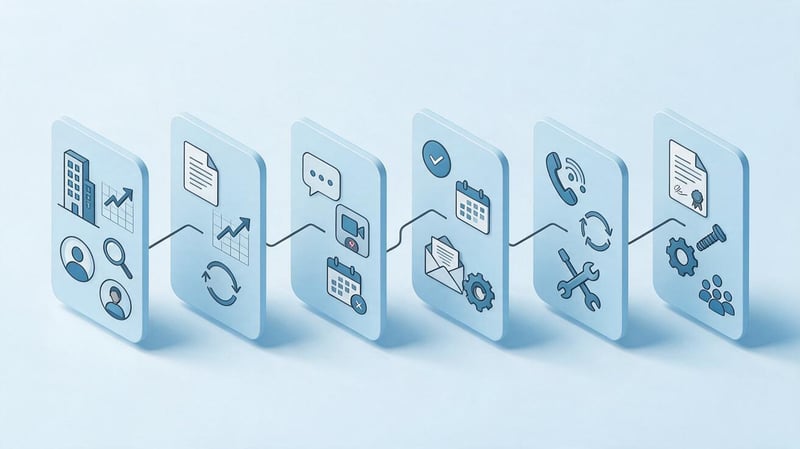
Systematic sales of IT services is structured as a sequential process. Each stage accomplishes a specific task: prospecting creates a database, outreach opens a dialogue, qualification filters out weak leads, discovery helps understand the need, and proposal translates the conversation into a concrete offer.
The process can be tailored to the company's size and market, but skipping key steps often leads to losses. For example, a commercial proposal without discovery is too general, and a meeting without preliminary client research begins with questions the seller could have answered on their own.
Step 1: Select your target segment
It's more convenient to start with one or several narrow segments. For example, the team might work with German SaaS companies seeking custom development, or with American eCommerce projects requiring integration of internal systems.
The segment should be broad enough for regular prospecting, but specific enough for personalized communication. If the offer is addressed equally to a bank, an online store, a startup, and a manufacturing company, it's difficult for the sales team to formulate a compelling reason to contact.
Step 2: Find Potential Clients
A database can be built through LinkedIn Sales Navigator, industry directories, conferences, company databases, professional communities, and in-house analytics. The source depends on the market and customer profile. For outbound sales, the quality of ICP compliance is more important than the maximum number of contacts.
For each company, it's advisable to find a suitable decision-maker and check whether their functionality is related to the service being offered. If the team is selling the development of a corporate portal, an uncontextualized email to a procurement specialist is usually less effective than contacting the product or IT manager.
Step 3: Research the company before making initial contact
Even a few minutes of research helps create a personalized email. You can review the website, job openings, company news, employees' LinkedIn profiles, recent product launches, team expansions, or entering a new market. This information provides a compelling reason to contact them.
There's no need to turn each lead's research into a separate audit. It's enough to understand what the company does, what task might be relevant, and why your proposal is relevant to the current situation. The higher the potential deal value, the more time it makes sense to invest in preparation.
Step 4: Make initial contact
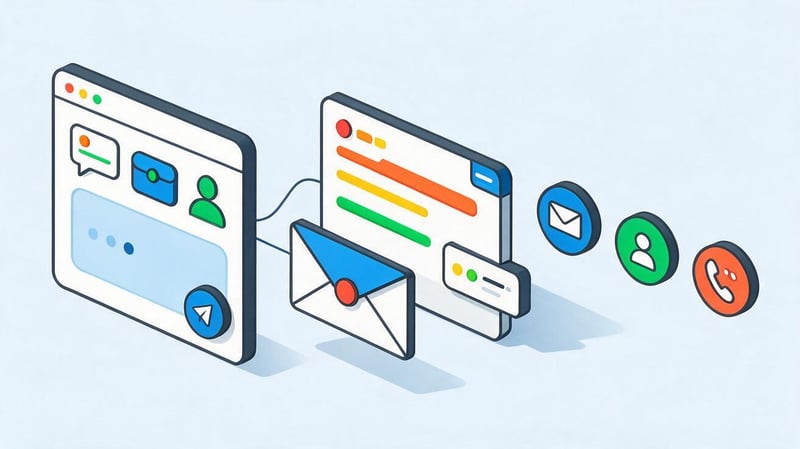
The goal of the first contact is to elicit a response and understand the client's interest. Trying to sell a large project immediately overloads the message and forces the recipient to make a decision without sufficient context. A short next step works more naturally.
For cold outreach, it's helpful to keep a single message focused on a single topic. If an email simultaneously talks about development, SEO, design, DevOps, and artificial intelligence, the value proposition is lost.
Cold email
A cold email can be structured with four parts: a brief context, the reason for contacting the prospect, a potential customer problem, and a simple CTA. For example, a salesperson notices that the company is actively hiring backend developers and offers to discuss temporarily bolstering the team.
The first email doesn't require a lengthy contractor history. A few relevant lines, one relevant case, and a specific question are usually easier to read. Mass-produced templates without any connection to the company are quickly perceived as spam.
On LinkedIn, it's best to develop communication gradually. After adding a contact, you can briefly outline the reason for contacting them and then move on to discussing the task at hand. Sending a large sales pitch immediately after accepting a connection request rarely creates a healthy dialogue.
The seller's profile also plays a role in the sale. Clients can see their experience, company, publications, and recommendations before responding. Therefore, an empty profile reduces trust, even with a good first message.
Cold calling
Cold calling is suitable for segments where the right person can be quickly identified and the reason for contacting is clear. The purpose of the call is often limited to a short conversation, testing interest, and setting up follow-up contact with the appropriate participants.
A script is useful as a reference, but a verbatim reading of the text is immediately audible. The salesperson needs to understand the service and the client's typical problems in order to react to answers and avoid reverting to pre-prepared phrases.
Step 5: Conduct a discovery call
A discovery call is necessary to understand the task before an estimate and proposal. During this meeting, sales and technical specialists clarify the current situation, expected results, constraints, deadlines, and stakeholders involved. If data is insufficient, the project estimate becomes a set of assumptions.
Before the meeting, it's best to prepare a few questions related to the specific company. The conversation is more productive when the client doesn't have to spend twenty minutes retelling information from their own website.
What questions should you ask the client?
Questions vary depending on the service, but the basic logic applies to most projects. They should explain the reason for the request and help determine whether there is a real need.
At discovery you can ask:
- What challenge does the company want to address in the coming months and why is it emerging now?
- How is this process structured today, and what limitations of the current solution are hindering the team?
- What outcome will be considered successful after the project is launched or completed?
- Is there an internal team that will be involved in development and make technical decisions?
- What deadlines are related to product launch or internal company commitments?
- How does the contractor selection process work, and who else is involved in the decision-making process?
- Is there a budget or investment range for the project?
- Has the company considered other solutions or contractors prior to this conversation?
After the meeting, the salesperson should at least understand the task, context, and next step. If the client is still gathering information without a deadline, budget, or internal project owner, the lead requires different work than a company with an approved task.
Step 6: Qualify the lead
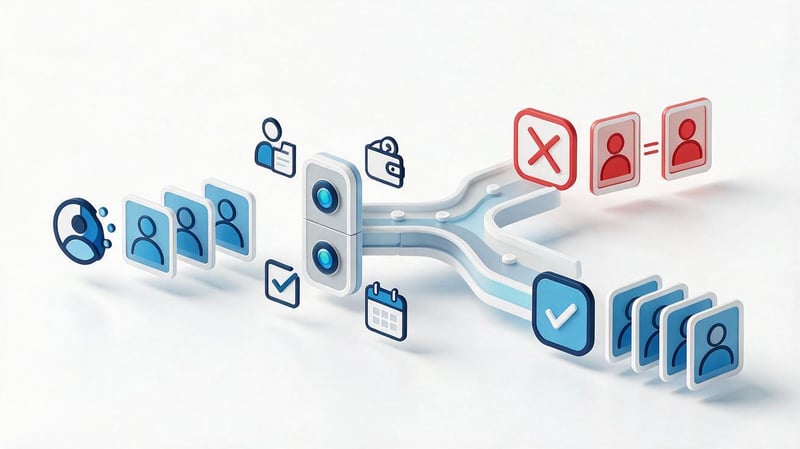
Qualification helps avoid spending the same amount of time on all incoming contacts. It's important to understand whether the request matches the company's competencies, whether there's a real need, who makes the decision, what timeframes are being discussed, and whether the project is financially feasible.
Strict qualification is especially useful when dealing with large volumes of leads. If the team is taking on projects within a specific budget, it makes sense to clarify this issue before several technical meetings. This approach saves time for both the sales team and the potential client.
Step 7. Prepare a commercial proposal
The commercial proposal should continue the previous discussion. It outlines the task, understanding of the current situation, the proposed solution, the scope, project stages, team composition, deadlines, cost or calculation method, and relevant case studies.
A good proposal is readable without further explanation. If the client has to re-examine what the price includes and what work the team will perform, the document adds new questions instead of helping them make a decision.
How to present the cost of IT services?
It's best to link pricing to the scope of work, project complexity, team composition, and contractor responsibilities. It's easier for clients to compare proposals when they understand why one option requires two developers, while another also includes QA, a designer, and DevOps.
The hourly rate is useful for calculations, but it shouldn't always be the primary consideration. For the client, the final budget, predictability of deadlines, quality of communication, and the risk of rework are more important. If the contractor only discusses the hourly rate, the conversation quickly devolves into comparing rates.
Step 8. Handle objections
Objections reveal what's holding the client back. The phrase “too expensive” could indicate a lack of budget, a comparison with a cheaper offer, or a misunderstanding of the scope of work. Therefore, it's best to first clarify the reason and then respond.
When the client says “I need to think about it”, it's worth agreeing on a specific next contact. If the client already has a contractor, you can find out why they're considering other options. If there's no budget, it's more helpful to set a possible timeframe for revisiting the issue rather than continue to press the client.
Step 9. Follow-up
Some deals require multiple touchpoints. The client may be busy, negotiating a budget, or waiting for other parties to make decisions. A single missed email doesn't provide enough information to consider the contact lost.
Follow-ups are best kept short and tied to the previous conversation. You can remind them of an agreement, clarify the status of a decision, or share a relevant case. Daily messages without a new reason quickly turn business communication into an intrusive one.
Step 10. Close the deal and transfer the client to delivery
Before starting, it's important to establish the scope, deadlines, cost, payment model, responsible parties, and communication procedures. The more uncertainty remains after the contract is signed, the higher the risk of conflicts during the work.
Sales should also convey the context of the negotiations to the delivery team. Developers should know the client's expected outcome, what constraints were discussed, and what was promised before the start. This communication reduces the risk of a gap between sales and execution.
Where to look for clients for IT services?
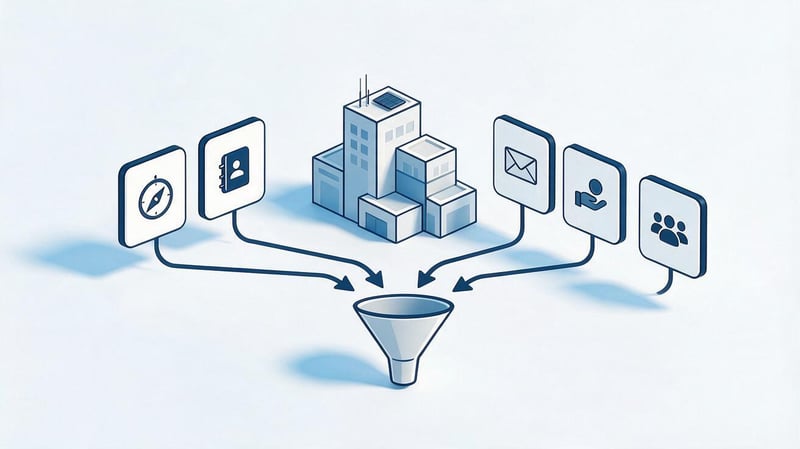
The choice of channel depends on the market, average order value, and customer decision-making processes. Some companies rely heavily on outbound sales, while others find it easier to generate inbound leads through SEO and expert content. A combination of multiple channels with dedicated analytics is usually more sustainable.
Don't launch ten channels simultaneously and then evaluate them based on the total number of applications. Each source has its own sales cycle, cost per lead, and lead quality, so LinkedIn, Upwork, organic search, and recommendations should be analyzed separately.
LinkedIn is suitable for finding B2B companies and specific Decision Makers. Sales Navigator lets you filter organizations by industry, size, geography, and employee positions, then build personalized prospecting.
Results depend on the quality of your database and the initial contact. Mass messages with identical text produce weak dialogue, even with a good number of sends. Before contacting, it's best to understand why your service might be relevant to this particular company.
Cold email marketing
Email remains a viable channel for outbound sales if the database is built around a specific ICP. The email should look like a business message addressed to a specific company, not a mass mailing to thousands of addresses.
It's useful to test segments, email subject lines, offers, and CTAs separately. If the response rate is low, the issue may lie with the quality of your email list, deliverability, the offer, or the message itself. Increasing your email volume before you understand the cause is usually pointless.
Upwork and other freelance platforms
Upwork provides access to already established demand, making it easier for small teams to secure their first international projects. The client has already posted the task and is ready to consider contractors, which shortens the initial stage of independent company search.
Competition is high, and some clients compare offers based on price. It's best to use this channel selectively: choose suitable projects, tailor your response to the task, and gradually build a portfolio within the platform.
Clutch and IT company directories
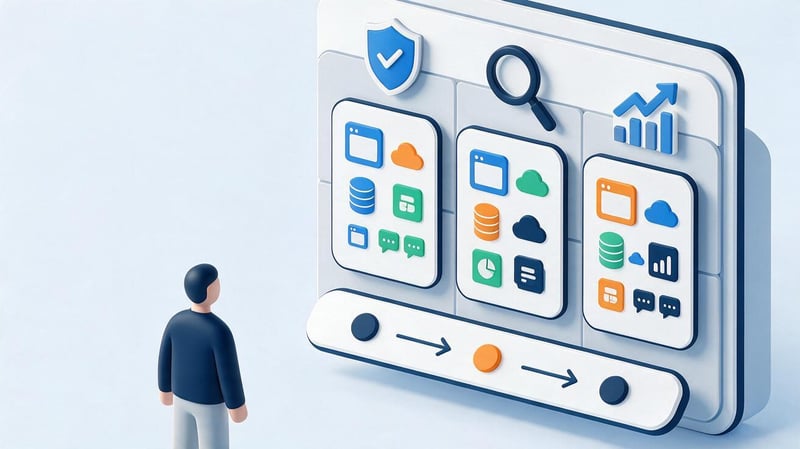
Clutch and similar directories help clients compare contractors by specialization, geography, case studies, and reviews. A well-completed profile is especially useful when a client already knows what service they're looking for.
Being listed in the directory requires regular work. You need an up-to-date description, an accurate list of services, genuine reviews, and recent case studies. A blank profile with generic phrases rarely helps when choosing between several companies.
Conferences, events and professional communities
Conferences provide access to people in a specific industry, but the results usually depend on preparation. Before the event, you can review the list of participants, select suitable companies, and schedule a few meetings in advance.
After an event, a follow-up with context for the conversation is essential. Simply adding hundreds of people on LinkedIn without further communication rarely translates into sales of IT services.
Partnerships and Recommendations
Referral sales often establish a high level of trust even before the first meeting. Referrals can come from current clients, agencies, consultants, integrators, and companies offering complementary services.
Partnerships work best when both parties understand which requests to forward to the other. For example, a design agency might refer clients to development, while an IT company might delegate branding or marketing tasks to the partner.
SEO and content marketing
SEO helps generate demand from people already searching for a service or researching a problem. This requires commercial pages, case studies, and materials that address the real-life needs of the target audience. A single, unstructured corporate blog rarely creates sustainable inbound traffic.
Content marketing also supports sales at earlier stages. Expert content can introduce a client to a company before speaking with sales and provide additional confirmation of expertise when comparing multiple contractors.
Lead SEO specialist — Gennady
I wouldn't start promoting IT services by choosing a channel. First, you need to determine who exactly the company is selling to, what problem it solves, and why the client should consider it among similar providers. Without this, SEO, LinkedIn, PPC, or cold emails will lead people to an unclear offer. In B2B IT, I first differentiate segments and offers, then select channels for them and evaluate the path to a real deal.
PR and expert publications
PR helps showcase expertise beyond your own website. Interviews, research, expert commentary, and industry media coverage can build trust in a company before initial contact or during the contractor selection process.
Publications that reach the right business segments are more effective for sales. A large reach alone says little about the channel's quality if the audience contains few potential customers.
How to sell IT services at a high price?

A higher price is easier to justify when the contractor is solving a clear problem and can demonstrate experience with similar projects. The client compares the cost with the timeframe, risks, team quality, and the likelihood of achieving the desired result.
Attempting to sell at a higher price without changing specialization and value proposition quickly comes down to hourly rate comparisons. Companies with strong industry expertise find it easier to explain pricing because they already understand the typical processes, limitations, and pitfalls of a specific market.
Sell value, not developer hours
In negotiations, it's helpful to link work to business objectives. If a project aims to replace several manual operations and reduce errors, the discussion gains a clear context. The number of hours remains part of the estimate, but the client sees the result they're paying for.
This approach requires proper discovery. Without understanding the customer's processes, it's impossible to honestly connect the solution to value, and it's easy to fall into empty promises.
Select a specialization
Specialization reduces the number of situations in which the team has to learn on a client's project. A developer who has worked extensively with eCommerce typically has a better understanding of catalogs, payments, orders, integrations, and the workload associated with this area.
The same applies to SaaS, FinTech, MedTech, and other industries. Narrow specialization helps create relevant case studies, more precisely structure marketing, and more quickly convey the team's expertise to potential clients.
Prove the expertise
Expertise must be supported by concrete materials. A good case study demonstrates the initial task, constraints, decisions made, and the outcome. A technical article can demonstrate the depth of knowledge, and a client's feedback confirms the quality of the interaction.
A few strong pieces of evidence are usually more useful than a long list of logos without explanation. Clients are better able to evaluate a contractor when they see a project that's similar to their own situation.
Don't start negotiations with a discount
Reducing costs without changing scope reduces margins and rarely explains the project's value. If the client's budget is lower than the proposal, it's wiser to discuss priorities and determine which features can be moved to the next stage.
A discount can be part of the commercial terms, but it's best to use it wisely. Automatically lowering the price after the first objection indicates that the initial estimate was flexible without objective justification.
How to sell IT services to clients from the US and Europe?

International clients evaluate the same basic factors: expertise, deadlines, cost, communication, and risks. Additionally, they consider English language, time zones, contractual terms, payment methods, and the team's ability to work remotely without constant client supervision.
For the US and European markets, localized website pages, case studies understandable to international clients, and specialists capable of negotiating in English are useful. If all communication depends on one person, this should also be taken into account when planning sales.
What cooperation models to use?
The model depends on how well the scope is defined and the degree of flexibility the client desires. It's best discussed after understanding the task, rather than using a single framework for all projects.
Below are four common options:
Fixed Price
Fixed Price is suitable for projects with fairly stable requirements and a clear scope of work. The team estimates the scope, timeframe, and cost in advance, so significant changes usually require separate approval.
This format is convenient for the client, who requires a projected amount. For the contractor, the main risk is associated with inaccurate estimates or changes in requirements during development.
Time & Material
Time & Materials is used when requirements may change as work progresses. The client pays for the team's actual time spent, and priorities can be adjusted between iterations.
This format requires transparent reporting and regular communication. It's often suitable for long-term product development, where it's impossible to detail all the tasks in advance.
Dedicated Team
A Dedicated Team is suitable for companies that need a dedicated team for long-term product development. Specialists are deeply immersed in the client's processes and typically work with their roadmap on an ongoing basis.
This model is convenient for scaling development without the time-consuming process of hiring each full-time specialist. The client must be willing to participate in managing product priorities.
Outstaffing
Outstaffing is used to strengthen an in-house team with individual specialists. The client manages the tasks and development process, while the provider is responsible for providing suitable specialists and handling the administrative aspects of the collaboration.
This format is especially logical when a business already has technical leadership and a clear process. If the client expects a fully finished, turnkey result, a different model is often more appropriate.
What should an IT Sales Manager know?

An IT Sales Manager must understand the company's services thoroughly enough to conduct initial qualification and engage a technical specialist promptly. While they don't need to write code, a basic understanding of software development helps avoid overpromising clients on timelines and features.
Business communication skills, IT lead generation, negotiations, CRM, prospecting, qualification, and follow-up are also required. For international sales, English language skills and an understanding of business communication in the target market are also required.
It's helpful for salespeople to understand the differences between outsourcing, outstaffing, dedicated teams, SaaS development, and custom development. Client requests are often vaguely formulated, so salespeople must first identify the real need and then choose a suitable collaboration model.
Common Mistakes When Selling IT Services
Most problems arise before the pricing negotiation stage. A vague segment, a weak offer, and a lack of qualification create a flood of contacts with few real opportunities. The sales team wastes time, but the sales funnel barely moves forward.
Regularly analyzing the reasons for refusals helps identify problems early. If leads respond but don't agree to a meeting, you need to look at one part of the funnel. If meetings go well but proposals aren't closed, the cause lies elsewhere.
Sell to everyone
An overly broad ICP makes communication generic. A salesperson tries to interest a startup, a bank, and a manufacturing company in a single email, even though these clients have different objectives, budgets, and contractor selection processes.
It's best to start with a few segments and compare the results. Once you have the data, you can expand the base or change the positioning.
Talk only about your company
A long story about the number of employees and the year it was founded rarely answers the client's main question: why is the proposal relevant to their needs? Information about the company is necessary, but it comes after the context and reason for contacting them.
A good message gets to the potential client's problem faster. Then you can back up your experience with a relevant case study.
Send a long first message
The initial contact should be short enough for the recipient to understand it within a few seconds. A long presentation in the body of the email increases cognitive load and forces the client to analyze the offer before interest is generated.
It's best to leave the details for the next step. After receiving a response, you can send a case study, a presentation, or arrange a meeting.
Selling technology instead of results
A list of stacks is only convincing to a technical audience when it's related to a specific task. For most business users, a list of React, Python, Kubernetes, and AWS without context doesn't explain much.
First, it's worth describing the problem and the expected outcome. The technological solution can be revealed once the client understands the project's purpose.
Don't follow-up
Clients rarely adhere to the salesperson's schedule. Meetings can be postponed due to budgetary issues, internal approvals, or other projects, so a lack of response after one email proves nothing.
A few polite follow-ups can help re-engage the conversation without pressure. After a direct refusal, it's best to end the conversation and leave the option to return later.
Don't analyze sales
Without a CRM, it's difficult to understand where quality leads are coming from and at what stage they're lost. The number of requests alone isn't enough: two channels can generate the same volume of requests but completely different revenues.
At a minimum, analytics should link the source, segment, lead status, meetings, proposals, and closed deals. Then, the decision to scale the channel is based on the actual funnel.
Reduce the price immediately
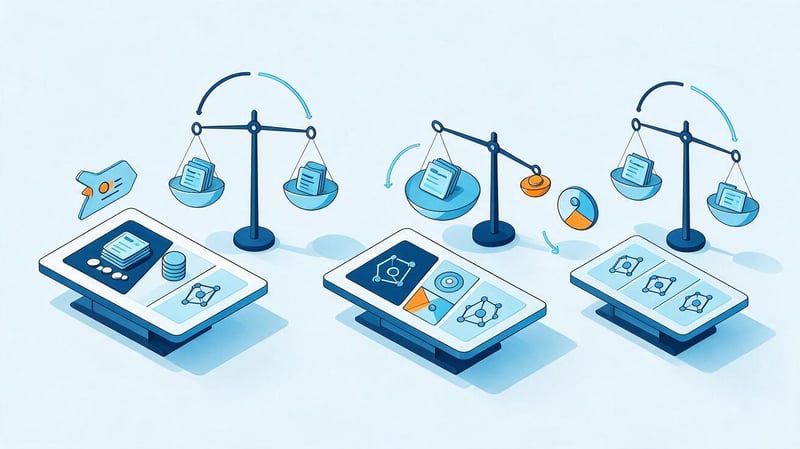
Automatically discounting after a client's initial response worsens your negotiating position. If the client finds the offer too expensive, you need to understand what they're comparing it to and whether the initial scope fits their budget.
Sometimes it's enough to split a project into phases or eliminate lower-priority functions. In these cases, budget reduction is tied to a change in the scope of work and seems logical.
An example of an IT services sales funnel
IT companies may have different names for the stages, but the general logic is similar. First, the team finds a suitable company, then tries to initiate a conversation, determines the feasibility of the task, and only then prepares a proposal.
Example of basic structure:
| Stage | What's happening | Goal |
|---|---|---|
| Prospecting | Search for companies and suitable contacts | Form a target base |
| Outreach | Email, LinkedIn, or call | Get an answer and start a dialogue |
| Qualification | Initial assessment of the request and the client | Determine lead potential |
| Discovery | Meeting with a client | Understand the task and constraints |
| Proposal | Preparing the solution and estimate | Formalize the offer |
| Negotiation | Discussion of conditions and objections | Agree on the format of work |
| Closing | Agreement and start of cooperation | Hand the project over to delivery |
For expensive corporate development, technical interviews, security reviews, procurement, and additional approvals may occur between stages. For smaller projects, some stages are completed in one or two meetings.
Sales process chart: Prospecting → Outreach → Qualification → Discovery → Proposal → Negotiation → Closing.
This diagram helps identify bottlenecks. If the database is large and there are almost no responses, the problem lies closer to segmentation and outreach. If there are many proposals but few deals, you need to analyze qualification, pricing, offers, and negotiations.
What IT services sales metrics should be tracked?
Metrics are needed to compare channels and segments with each other. There is no universally acceptable response rate or conversion rate for any IT company: the result varies depending on the service, market, average order value, and database quality.
Therefore, it is more useful to look at the dynamics of your own indicators and link them to final sales, rather than assessing one percent in isolation from the entire funnel.
Number of new leads
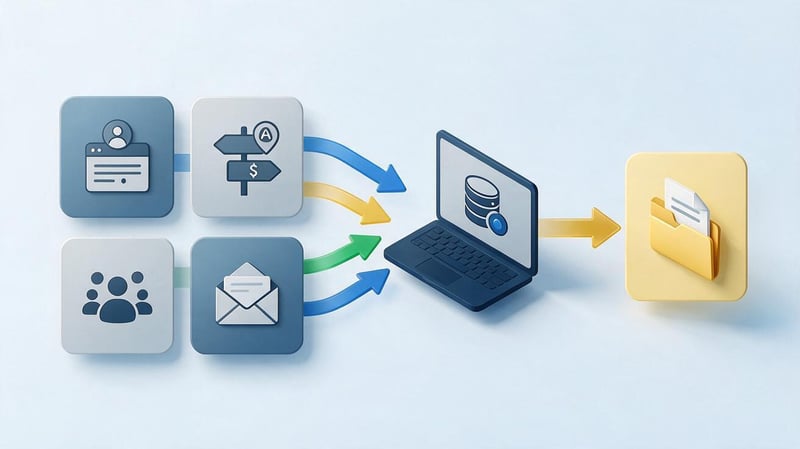
The number of leads shows the volume of incoming and outgoing opportunities over a period. It's best to break this metric down by source, segment, and service type, as a hundred weak leads may yield fewer results than ten strong ones.
It's also important to distinguish between simple contacts and qualified leads. Otherwise, database growth will look like improved sales, even though no real opportunities have been added.
Response Rate
Response Rate shows what percentage of contacts respond to outbound communications. This metric helps compare databases, email subject lines, segments, and initial message variations.
A response alone doesn't necessarily indicate interest in the project. It's helpful to separate positive responses, rejections, and neutral reactions.
Number of qualified leads
A qualified lead meets the company's key criteria and has a real task. These criteria vary from company to company, so they should be established within the sales team in advance.
This metric better reflects the quality of lead generation than the total number of contacts collected. It also helps assess how well initial qualification is working.
Conversion to meeting
Meeting conversion shows how many suitable contacts move on to a conversation. If you're seeing responses but only a few meetings, consider how clear your CTA is and whether the prospect has a reason to make the time to call.
It's useful to compare metrics across different ICPs and offers. This makes it easier to identify the segment where a company's problem more closely aligns with your offer.
Conversion proposal → deal
This metric shows how many commercial proposals result in contracts. A sharp decline may be due to poor qualification, pricing, proposal structure, or strong competition.
It's helpful to record the reasons for refusals after a proposal. Even a simple classification will gradually reveal recurring problems.
Average order value
The average order value is used to assess the value of different types of clients and channels. A channel with a small number of transactions can sometimes generate more revenue than a source with a constant stream of small inquiries.
It's best to calculate this indicator separately for services and segments. This way, the data doesn't confuse small MVPs with large dedicated team contracts.
Sales cycle length
The sales cycle is calculated from the first significant contact to the closing of the deal using a standard methodology. The higher the budget and the more complex the procurement process, the more approvals typically occur between these points.
This metric helps plan sales team workloads and forecast revenue. It also shows which segments make decisions faster.
CAC
CAC reflects the cost of customer acquisition, taking into account marketing and sales expenses according to the selected calculation model. For accurate comparison, a company should calculate this indicator consistently across all periods.
CAC itself should be considered alongside average order value, margins, and repeat sales. An expensive channel can remain profitable if it brings in large clients with long-term contracts.
To understand how to sell IT services systematically, you need to look at the entire customer journey: ICP, offer, company search, initial contact, discovery, qualification, proposal, negotiations, and closing. If one section of the funnel is underperforming, increasing the number of messages rarely solves the problem.
For an IT company, it's helpful to start with one clear segment and several measurable channels, then expand sales based on actual data. If a stable flow of organic demand is needed, Seo-Gen begins with an analysis of semantics, competitors, website structure, and commercial pages, then links SEO to specific services and target markets.


