When do you need SEO consultation?


An SEO consultation is needed when questions about a website have accumulated and the next steps are unclear. This could be due to a drop in organic traffic, the launch of a new project, a CMS change, a redesign, a contractor review, or a desire to understand which SEO tasks will provide the greatest benefit to the business.
The format of an SEO consultation depends on the task and the project's status, so the scope of the review is tailored to the specific issue in advance. Sometimes, it's enough to analyze the indexing of a single section, while other times, the specialist must simultaneously review the site structure, search queries, content, technical errors, link profile, and analytics data.
What is SEO consultation?
An SEO consultation involves analyzing a specific website situation and recommending further actions. A specialist reviews the initial data, asks clarifying questions, examines problem areas, and explains which changes should be implemented first and which can be postponed without significant risk.
This format is suitable for a business owner, marketer, internal SEO specialist, or development team. It's especially useful when the problem has already been identified but the cause remains unclear, or when independent verification of the solution is required before making a major website change.
What tasks does an SEO consultant solve?
An SEO consultant helps review the current promotion strategy, identify technical errors, and assess how well the website structure aligns with search engine demand. The analysis may also include the semantic core, search queries, landing pages, internal linking, content, meta tags, and link profile.
If the issue is related to a decline, a specialist compares the site's rankings, visibility, organic traffic, and the changes that occurred before the decline. This analysis helps to separate real causes from coincidences and formulate a clear action plan for the team.
What does the client receive after the consultation?
The consultation results in a list of specific actions tied to the identified problems and business objectives. Depending on the format, the client receives verbal recommendations, a written summary, a priority list, or a brief for a developer, SEO specialist, or copywriter.
A good result is easy to verify in practice: after the meeting, it's clear what needs to be fixed, the purpose of each edit, and who should perform it. If an issue requires a separate technical audit, semantic data collection, or a major website redesign, such work is recorded separately and assessed as part of the next task.
Answers to your questions
What is included in an SEO consultation?
Typically, a specialist will first review the site and the issues raised, then analyze the causes of the problems and suggest further actions. The specific details depend on the task, so consulting on the structure of a new website is significantly different from checking for a decline in organic traffic.
If the answer requires a separate technical audit, a large data export, or full keyword research, it's best to agree on this scope in advance. This helps maintain the depth of analysis and avoid turning a single meeting into a superficial review of all project sections.
How long does an SEO consultation last?
The duration depends on the number of questions, the site's size, and the complexity of the issue, so there's no universal time limit for any consultation. A single technical issue requires relatively little analysis, while migration, an international structure, or a review of a large store require additional preparation.
It's better to focus on the scope of the task and the expected outcome of the meeting, rather than just the length of the conversation. If there are too many questions, it's wise to prioritize them or move individual areas of analysis to the next stage.
Is it necessary to conduct a website audit before a consultation?
A full audit before a consultation isn't always necessary, as a specific issue can be tested using a limited set of data. For example, to assess redirects during a migration, a URL map, a test version of the site, and a list of priority pages to be retained are sufficient.
If the issue affects the entire project and its source is still unknown, a specialist may suggest a separate, in-depth diagnostic. In this case, the audit expands the scope of the review and creates a more reliable foundation for the subsequent SEO strategy and implementation sequence.
Is it possible to order a consultation before website development?
Yes, this format helps you check the structure, future URLs, templates, and technical requirements for the CMS in advance. Before development begins, it's easier to plan for managing meta tags, canonical tags, hreflang, internal links, and other elements that may require expensive rework later.
The consultation also helps align the project's future architecture with actual search demand. Developers receive clear template requirements, and the content team understands in advance which pages and materials will need to be prepared for launch.
Will SEO consulting help if traffic drops?
A consultation helps systematically examine possible causes and determine the next steps, but no one can promise a single specific cause in advance. A decline may be due to technical changes, indexing, structure, content, changes in demand, competitors, or analytics errors.
The specialist compares data and events, then formulates hypotheses with a clear priority for testing. This process helps avoid blind changes to the site and avoid wasting resources on actions unrelated to the real cause of performance decline.
Is it possible to check the work of another SEO contractor?
Yes, an independent specialist can evaluate the strategy, completed tasks, reports, and project dynamics over a selected period. It's helpful to provide the project history and available data to ensure that conclusions are based on facts, not just the current rankings of individual queries.
The purpose of this review is to understand the quality of the process, priorities, and rationale behind the decisions made. Following the consultation, the client can discuss the concerns with the current contractor, adjust the work plan, or reconsider the future format of cooperation.
How does a consultation differ from SEO promotion?
The consultation typically concludes with recommendations, priorities, and an action plan for a specific task or group of issues. SEO promotion involves regular website maintenance, implementing changes, monitoring indexing, developing content and links, and ongoing analysis of results.
If the team is capable of implementing the recommendations independently, a one-time review may be sufficient to achieve the goal. When ongoing work and coordination across multiple disciplines is required, systemic SEO support is more convenient.
What information should I provide to my SEO consultant?
The minimum set includes the website URL, a description of the task, project goals, and a list of issues to be addressed. To analyze trends, you may also need Search Console data, Google Analytics 4, and information about major changes preceding increases or decreases in performance.
There's no need to hand over all access rights in advance, as the dataset depends on the specific problem. The specialist should explain what information is needed for analysis and how it will be used during preparation and consultation.
How does SEO consultation differ from SEO audit and promotion?

These formats overlap in terms of specific tools, but differ in the depth of the review and the scope of subsequent work. A consultation typically answers specific questions and helps determine the next step, while an SEO audit involves a systematic website diagnostic based on a predetermined set of parameters.
SEO promotion involves regularly implementing changes, monitoring results, and managing content, links, and technical aspects. Before ordering the service, it's helpful to determine whether you need a one-time analysis, a detailed diagnostic, or ongoing project support.
| Format | Main task | What the client receives | Who implements | Work format |
|---|---|---|---|---|
| SEO consultation | Review the issues and determine next steps | Recommendations, priorities, plan | Client or contractor | One-time or periodic |
| SEO audit | Check the site status in detail | List of problems, conclusions, briefs | Client or contractor | A separate project |
| SEO promotion | Systematically develop organic visibility | Work, control, reporting | SEO team | Constant support |
The difference is especially noticeable after the work is completed. An audit provides a detailed picture of the site's condition, a consultation helps make decisions about a specific situation, and promotion requires consistent completion of tasks and subsequent monitoring of the results.
Can SEO consultation replace full-fledged promotion?
A single consultation can address a specific issue, whether the team needs answers regarding migration, structure, indexing, or contractor performance. After reviewing the information, internal specialists can independently implement the recommendations and verify the results through Google Search Console and Google Analytics 4.
If a website is large, undergoes regular development, and requires ongoing work on semantics, content, links, and technical aspects, a single meeting is usually insufficient. In this case, a consultation sets the direction, and further search engine optimization requires systematic implementation of changes and regular monitoring.
When do you need SEO consultation?
Consultations are most often sought before making an important decision or after a problem arises that the team couldn't pinpoint on its own. The higher the cost of the error, the more useful it is to test the solution before release, especially when changes affect the URL, structure, CMS, or a large number of landing pages.
A lack of transparency in current SEO is another reason to consult a specialist. If work has been ongoing for several months, but it's unclear what changes have been implemented, what has happened to traffic, and what the next steps are, an independent analysis can help reconstruct the sequence of events.
Lead SEO specialist — Gennady
I recommend seeking SEO consultations before making major changes to the site, especially before changing the CMS, structure, URL, or launching a new version. Fixing an architectural error on a test site is usually much easier than restoring rankings after reindexing. After the consultation, the client should be left with a clear action list with priorities, responsibilities, and a method for verifying the results.
Before creating a new website

Before development, it's worth checking search demand, the future site structure, categories, landing pages, and URL logic. At this stage, it's easier to determine which templates will be needed, where content should be placed, and what SEO settings should be included in the CMS before coding begins.
The ability to manage Title, Description, canonical, meta robots, hreflang, and other elements is also checked in advance. If such requirements arise after launch, developers are forced to modify existing templates, migrate pages, and retest functionality.
What SEO mistakes can be prevented before launch?
Before release, you can avoid incorrect structure, unnecessary URLs, missing landing pages, and CMS limitations that hinder search engine optimization. For JavaScript-based websites, you should also check rendering, the accessibility of the main content to search engines, and the correctness of internal links.
It's also worth checking the multilingual capabilities, URL generation rules, and future redirects between old and new pages. These decisions affect the site's indexing after launch, so it's safer to agree on them before the new project begins to be actively crawled by search engines.
Before redesigning or migrating a website
A redesign often changes more than just the appearance of pages, so before launching, it's helpful to create a list of SEO elements that need to be preserved. These include URLs, meta tags, headings, text, internal links, canonicals, structured data, and indexed blocks.
When migrating to another CMS, we additionally prepare a map of the old and new URLs, check every important 301 redirect, and test templates before opening the new version for indexing. This testing reduces the risk of duplicates, 404 pages, and the loss of important incoming links.
Why is SEO testing necessary before releasing a new version?
After launch, search engines begin to re-crawl the modified pages and re-evaluate their content, links, and accessibility. If texts disappear, URLs change, or internal links stop working at this point, the consequences may become apparent after the new version is indexed.
Pre-release testing gives the team time to fix errors before the search engine crawls the pages again. They can compare the old and new versions, test redirects, and ensure that priority pages retain the necessary SEO signals.
If your rankings and organic traffic start to decline
A drop in traffic requires checking multiple data sources, as the same trend can be attributed to different causes. A specialist looks at website changes, indexing, rankings, search demand, page loss, content updates, technical errors, and the state of analytics.
It's also useful to compare the dates of the decline with releases, migrations, structure changes, and competitor actions. If the decline affected specific sections, the analysis is done on specific URLs and queries, as domain-wide averages may obscure the true cause.
If SEO is being done, but the site is not growing

A lack of growth doesn't automatically mean all previous work was useless, but the strategy should explain the tasks completed and the expected growth rate. During a consultation, you can check the relevance of the semantics to search demand, the quality of landing pages, the technical condition, and the speed of implementing recommendations.
KPIs are assessed separately, as rankings for a limited list of queries rarely provide a complete picture of a project's status. For businesses, it's more useful to compare search traffic, landing pages, conversions, visibility, and the quality of organic search leads.
If you need to check the work of an SEO contractor
An independent review helps determine whether the actual work is aligned with the stated strategy and whether the team has a clear plan. The specialist reviews completed tasks, reports, website changes, metric trends, and the quality of recommendations shared with the developers or content team.
This analysis is based on facts and available data, resulting in a list of completed and missed tasks. The client gains an understanding of current risks and a list of issues worth discussing with the current SEO contractor before reconsidering the cooperation format.
If SEO is managed by an internal team
The internal team is well-versed in the product, development constraints, and project history, but over time, some decisions stop receiving independent review. Consulting helps validate hypotheses, identify missed growth opportunities, and obtain an external opinion on contentious technical or content issues.
This format is especially convenient when an in-house specialist needs assistance with complex migrations, structure scaling, or international SEO. After the meeting, recommendations can be immediately translated into tasks for developers, editors, and other project participants.
If your SEO budget is limited
With a limited budget, proper task sequencing is crucial, as running dozens of tasks simultaneously quickly increases costs. If the team is simultaneously changing the structure, rewriting hundreds of pages, purchasing links, and fixing technical errors, the impact of each action becomes difficult to assess.
Consultation helps categorize tasks based on risk and potential benefit, after which the team addresses critical issues first. This approach doesn't guarantee rapid growth, but it reduces the likelihood of spending money on changes that don't yet impact priority pages.
When entering a new niche, region or country
Before expanding a project, it's important to assess demand, competitors, search queries, and the structure of future sections. For international sites, additional considerations include choosing a domain, subdomains, or directories, hreflang settings, local URLs, and content relevance to the specific market.
If we're talking about a new region within a country, separate local pages and a different set of commercial factors may be required. Competitor analysis reveals what types of pages are already present in search results and what information users are accustomed to receiving on such landing pages.
What does an SEO consultant check?

The scope of the audit depends on the client's request, so a migration consultation will differ from a traffic drop analysis or a contractor review. For a complex task, the specialist will review several areas and identify the primary constraint preventing the project from moving forward.
SEO consulting is useful in situations where technical data, search engine demand, and business goals need to be integrated into a single action plan. The depth of each area is determined by the initial question, the site size, and the amount of available data.
Technical condition of the site
The technical audit covers indexing, robots.txt, sitemap.xml, canonical, redirects, 404 pages, duplicates, and content accessibility for search engines. For large projects, page depth, internal links, page load speed, and Core Web Vitals are also assessed.
On sites with active JavaScript, we check separately whether the search robot retrieves the main content and links after rendering. If the issue affects the mobile version or specific templates, we analyze specific URL examples and page behavior in different states.
Semantics and structure of the site
The structure should reflect real demand groups, and each priority page should correspond to a clear search intent. A specialist checks whether there are enough landing pages, whether search queries are distributed correctly, and whether there is cannibalization between similar URLs.
If the semantic core was compiled a long time ago, it is compared with the current product range, services, and changing market conditions. Sometimes, the lack of growth is not due to internal optimization of individual documents, but to the fact that the necessary sections are not yet present in the website structure.
Content and On-Page SEO
When checking a page, the page's Title, Description, H1, H2 and H3 structure, completeness of the response, and relevance to search intent are assessed. They also look at the natural use of keywords, thematic terms, and internal linking between logically related pages.
Content is checked alongside the page type and competitors' search results, as commercial categories and informational articles serve different purposes. Equal requirements for text length or keyword density for all document types rarely yield useful results.
Competitors
Competitor analysis helps understand what search results require and identify potential growth opportunities for a specific project. The specialist compares page structure, topic coverage, landing page types, commercial blocks, internal links, and significant differences between sites with consistent visibility.
If necessary, they check the link profile and external citation dynamics, but isolated numbers without context provide little useful information. It's far more important to understand which solutions are common across several strong sites and which are applicable to the current project.
Link promotion
Link analysis includes the quality of donors, site relevance, anchor text, link distribution between pages, and overall profile dynamics. For commercial projects, an additional check is made to ensure that a significant portion of link juice isn't directed to pages that aren't a priority for the business.
If paid placements were used, the topics of the sites and the naturalness of the anchor list are evaluated. A strong bias toward exact-match commercial anchors or a large number of weak donors should prompt a reconsideration of the strategy before further link building.
Analytics and SEO results
Data helps distinguish real changes from the subjective feeling that the site is growing too slowly. Typically, organic traffic, landing pages, site rankings, overall visibility, conversions, and metric trends for periods before and after major changes are checked.
Google Search Console displays queries, impressions, clicks, and indexation status, while Google Analytics 4 helps evaluate user behavior and target actions. If the systems are configured incorrectly, they first identify data limitations and then draw conclusions based only on the available information.
How does an SEO consultation work?
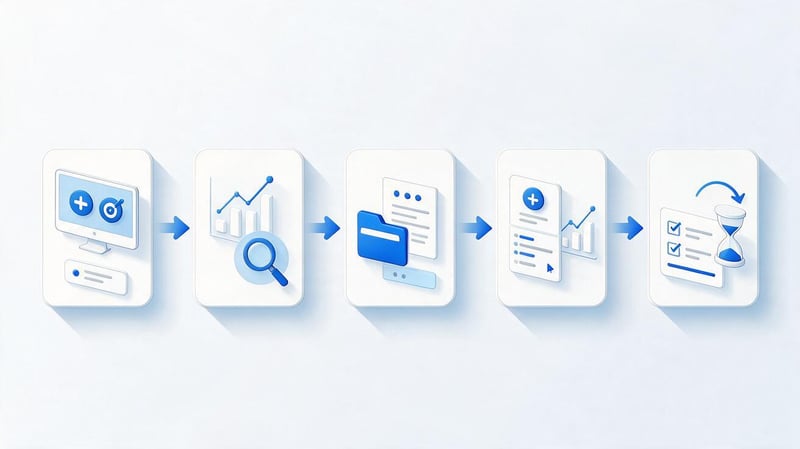
The format depends on the task, but a working consultation typically consists of several sequential stages. This structure helps prepare information in advance and avoid wasting meeting time searching for basic information that the specialist can verify before the conversation.
For a complex project, some of the analysis is conducted in advance, and the findings and controversial decisions are discussed during the meeting. After the consultation, the client should understand the next steps and have specific objectives instead of a collection of disjointed comments.
Step 1. Defining the task
First, we outline the purpose of the consultation, the current problem, and the expected outcome of the meeting. The client provides the website URL, a list of questions, a brief project history, and information about recent changes that could significantly impact SEO.
If the issue is related to a drop in traffic, it's helpful to indicate the approximate start date of the drop and list major releases. The more precisely the initial problem is formulated, the more time during the review can be devoted to the causes of the problem and possible solutions.
Step 2. Preliminary analysis
Before the meeting, the specialist reviews the pages, available data, and key working hypotheses for the problem. A few URLs are sufficient for a single task, but a more complex issue may require Search Console reports, analytics, migration information, and input from the current SEO team.
A preliminary analysis does not replace a full technical audit if the project requires an in-depth review of all templates and sections. Its scope is determined by the client's question and should be sufficient to ensure that further discussions are based on concrete data.
Step 3. Project Analysis
During the analysis, the specialist presents the identified issues, explains their impact, and answers the client's prepared questions. If multiple solution options exist, the development constraints, budget, timeline, and potential risks of each available approach are further discussed.
Each recommendation must remain relevant to the original task and the current state of the project. When a structural change, a new section, or a technical revision is proposed, the client needs to understand the rationale behind the decision and how the results will be verified after implementation.
Step 4. Forming recommendations
Recommendations are best formulated so the team can immediately turn them into actionable tasks. The wording “improve internal optimization” is too broad, whereas a request to fix canonical tags in certain templates and add links to priority categories can be passed on to the developer.
If some of the work is content-related, the specialist outlines page and search intent requirements. For technical issues, it's helpful to include URL examples, expected page behavior, and a verification method after the changes are deployed.
Step 5. Plan for further work
After the consultation, tasks are prioritized to prevent the team from trying to implement all recommendations at once. First, they fix any issues that hinder indexing or pose a high risk of traffic loss, after which they move on to developing the site's structure, content, and other areas.
| Task priority | Recommended share of attention |
|---|---|
| Critical tasks | 100% |
| High priority | 75% |
| Medium priority | 50% |
| Additional tasks | 25% |
The percentages here indicate relative priority, not budget or time share. Critical tasks should be completed first, followed by high- and medium-priority tasks.
This process connects SEO recommendations with the actual resources of the development and content teams. After implementing a large group of changes, it's advisable to test the results, record the progress, and only then move on to the next stage.
How to prepare for an SEO consultation?

Preparation reduces the time it takes to reconstruct a project's history and helps you quickly get to the root cause of a specific issue. Simply gather basic data, a list of questions, and information about events that may have impacted search traffic or indexing.
It's usually not necessary to provide the specialist with all access rights and internal documents in advance. If the task is specific, the consultant will determine what data is truly needed for the check and which materials will not affect the final conclusion.
Before the meeting, it is useful to prepare:
- website address and a list of priority sections that require separate verification;
- main business goals and pages that should generate leads or sales;
- a list of questions, problems and hypotheses that the internal team has already discussed;
- history of major changes, including website redesign, website migration, and CMS changes;
- Google Search Console and Google Analytics 4 data, if the problem cannot be verified without them;
- a list of key competitors, if the team already uses it in its work.
The more accurate the initial information, the easier it is to correlate technical events with changes in visibility and traffic. Moreover, there's no need to collect dozens of additional reports in advance unless a specialist requests them for a specific check.
What questions should you ask an SEO specialist in advance?
It's best to frame questions around a specific solution or observed problem, rather than a general desire to improve SEO. This way, the specialist will be able to provide an answer that can be used in the work, and the team will more quickly understand the expected outcome of the consultation.
Before the meeting, you can prepare the following questions:
- why organic traffic on the site's priority pages has decreased;
- why some important pages are not indexed or drop out of the index;
- whether the current website structure is built correctly and the main queries are distributed properly;
- whether additional landing pages are needed for individual semantic clusters;
- why competitors are getting more visibility for important commercial queries;
- what errors are present in the content and current internal optimization;
- whether the current SEO contractor has set the right tasks;
- what changes need to be implemented first;
- whether the planned website redesign or migration is safe;
- whether there is potential for further SEO growth in the chosen niche.
After the discussion, it's advisable to link questions to specific actions, responsibilities, and a method for verifying the results. This format reduces the risk of a situation where the consultation ends with a useful discussion, but the recommendations don't actually fit into the actual work plan.
How to choose an SEO consultant or SEO consulting company?

When choosing a specialist, consider their relevant experience, quality of analysis, and ability to clearly explain the rationale behind their recommendations. An agency format can be convenient for projects that require expertise in technical SEO, content, analytics, and link building.
Before starting work, it's helpful to learn how the preparation works, what data will be needed, and what results the client will receive after the meeting. An experienced specialist won't guarantee a specific Google ranking without a project analysis and won't offer the same promotion strategy for different types of websites.
What questions should you ask a consultant before starting work?
First, clarify the scope of the service: whether a preliminary analysis is included, whether access to analytics is required, whether a written summary will be provided, and whether subsequent implementation is envisaged. These questions help to differentiate a consultation from a full-fledged audit or monthly project support.
It's also worth asking what materials need to be prepared and how many questions can realistically be addressed in one meeting. If the task is too large, the specialist should outline the need for a separate diagnostic in advance, so as not to replace a thorough review with a superficial review of the entire website.
What promises should raise concerns?
Be cautious about guaranteeing specific rankings within a short period of time, especially when a specialist hasn't yet seen the website and data. Search results depend on many factors, so promising a fixed result without prior analysis is poorly correlated with the actual state of the project.
Another warning sign is a lack of explanation for the reasons behind the proposed changes. If a consultant recommends restructuring, purchasing links, or rewriting pages, they should explain the purpose of each action and provide a metric by which the team can evaluate the results.
SEO consultancy: consultation or ongoing support?
SEO consulting can be one-time, periodic, or integrated into an in-house team on an ongoing basis. The appropriate format depends on the scale of the project, the frequency of changes, and the availability of specialists capable of independently implementing the recommendations.
A one-time meeting is convenient for a local task, while regular maintenance is suitable for sites with frequent releases, a large number of pages, and multiple stakeholders. In both cases, it's important to define in advance the responsibilities of the consultant and the team directly involved in the implementation.
When is one consultation enough?
A single meeting is usually sufficient when a specific migration needs to be reviewed, a second opinion obtained, or a limited set of pages reviewed. This format is suitable for assessing the new website's structure and independently verifying the contractor's work based on pre-set questions.
After the consultation, the team should be left with clear actions that employees can implement independently. If the implementation requires lengthy development, a large volume of new content, and ongoing monitoring, the initial analysis becomes the starting point for further work.
When is regular SEO consulting required?
Regular support is suitable for large online stores, international projects, or websites with frequent releases and ongoing expansion. A consultant periodically reviews the team's decisions, helps prioritize, and participates in complex changes before they reach production.
This format is also used by companies that handle SEO in-house but occasionally require a specialist with experience in specific complex tasks. The in-house team maintains operational focus, while external expertise is brought in to handle architectural, technical, and contentious issues.
How much does an SEO consultation cost?

The cost depends on the site's size, the number of questions, and the scope of the preliminary check required before the meeting. Analyzing a single technical issue and consulting on a large online store require different amounts of work, so the price is usually determined after reviewing the task.
The pricing is also influenced by the niche, the number of languages or regions, the need for analytics, and the format of the final results. If the client requires a separate document, a detailed brief, or a comprehensive SEO audit, such work is estimated separately based on the actual volume.
What is not included in a standard SEO consultation?
It's best to agree on the scope of the service before work begins, as different providers put different amounts of work into the word “consultation”. A one-time review typically doesn't include automatic implementation of all recommendations, ongoing project management, or a complete redesign of the website's technical components.
A standard consultation may not include:
- implementation of all technical changes by developers after completion of the analysis;
- writing and publishing new content for all found landing pages;
- collection of a complete semantic core for each section of a large website;
- a comprehensive technical audit with verification of all templates and URL types;
- purchasing external links and ongoing work with the current anchor list;
- monthly project support and control of each subsequent implementation.
The scope of a specific service should be defined in advance so that both parties have a common understanding of the expected outcome. If the consultation reveals the need for a separate audit or long-term website promotion, such work is formalized as a separate, subsequent stage.
Is it possible to replace SEO consultation on your own?
The team can resolve some issues independently using documentation, Search Console, SEO services, and its own data. If the problem is clear and the company already has a specialist with the necessary experience, a separate consultation may not provide sufficient additional value.
An external review is useful when errors are costly, migrations are complex, traffic is noticeably declining, or when choosing between several technical solutions. An independent expert helps validate hypotheses and identify limitations that the team may have overlooked due to its habitual way of working with the project.
SEO consultant: why is it important to look at the results rather than the service name?

Consulting service names vary across markets, specialists, and agencies, so similar requests may lead to different work formats. One consultant may conduct a phone call only, another may analyze the website in advance and prepare written recommendations, and a third may regularly participate in the internal team's work.
Before placing an order, it's important to clarify what data will be reviewed, how many questions are included in the agreed-upon scope, and what the client will receive after the meeting. This approach helps compare proposals based on the content of the work, not just the service name, price, or length of the call.
An SEO consultation is useful before making decisions that could significantly impact organic traffic, and in situations where the current strategy no longer yields clear results. Analysis helps tie together data, technical constraints, and business objectives into a coherent plan for further action.
If you have a specific question about your website, please prepare the URL, the history of changes, and available project data. Contact Seo-Gen for an SEO consultation to review the situation, prioritize tasks, and pass ready-made recommendations on to the developers, SEO specialists, or content team.


