How to grow a website's backlink profile?


The backlink profile influences a website's ranking in Google, especially when companies with high-quality content and good technical optimization compete for top positions. Search engines analyze external links, considering their origin, context, and connection to the page's content.
The number of backlinks alone doesn't tell you much. A site with hundreds of mentions on relevant resources may have a stronger link profile than a competitor with thousands of links from directories and random publications.
To figure out how to build a backlink profile, you first need to check existing links, study competitors, and identify pages to promote. Then you can choose methods for getting mentions, evaluate donors, and monitor changes in search visibility.
What is a website's backlink profile and how does it affect SEO?
A website's backlink profile is the collection of external links that point to its pages from other internet resources. These links are called backlinks, incoming links, or reverse links. They appear in articles, reviews, company directories, media publications, professional communities, and other sources.
Google uses link signals when evaluating pages, although the specific weight of each signal is not disclosed. A link from a relevant resource helps the search engine discover content and can be used to evaluate its importance. For users, it serves as a link to additional information, a product, or a service.
Therefore, when working with a link profile, consider the origin of the links, the content of the surrounding text, the site's reputation, and the destination page. A single indicator doesn't provide a complete picture.
What links form a website's link profile?
A link profile is made up of all identified external hyperlinked mentions. SEO analysis considers the total number of backlinks and the number of referring domains separately.
For example, an online store received 80 links from articles on one portal and 25 links from various independent sites. The report will show 105 backlinks, but only 26 referring domains, assuming all URLs are unique and there are no additional links.
Links are also differentiated by the way they appear and their technical characteristics:
- Editorial links appear when the author independently cites useful information, research, or a company.
- Sponsored links are placed within the framework of paid publications, partner materials and advertising integrations.
- User-generated links are found in comments, discussions, reviews and messages on forums.
- Anchor links contain text that takes the user to another page.
- Anchorless links typically use URLs or neutral wording instead of search queries.
Internal linking isn't part of the backlink profile. However, it helps distribute navigation and link signals between pages on a single website, so its status is also taken into account in SEO.
Why is the quality of backlinks more important than their quantity?
Let's imagine two websites selling construction equipment. The first received 300 links from random directories, while the second received 40 mentions in construction publications, tool reviews, and articles from industry experts.
The second profile may prove more useful for promotion due to thematic connections between sources, the quality of publications, and an engaged audience. However, final conclusions can only be drawn after analyzing specific pages and website results.
When assessing the quality of backlinks, several characteristics are taken into account:
- The donor's topic must correspond to the business or content of the page to which the link leads.
- The site should publish independent materials, and not primarily advertising articles with outgoing links.
- Organic visibility helps you understand whether the resource is getting an audience from search.
- The referring page must be crawlable and contain the link in a clear context.
- The placement must make sense to the reader who might click on the link.
Don't rely solely on domain ratings from SEO services. For example, Ahrefs' Domain Rating (DR) shows an assessment of the link profile's strength based on the service's own methodology, but it's not an official Google metric.
Answers to your questions
How to build a website's backlink profile from scratch?
Start with a technical audit of your website, checking its indexation, and analyzing several direct competitors. Then, select pages for promotion and find relevant platforms where you can get your first editorial mentions.
For a new website, it's especially helpful to create high-quality informational materials and fill out company profiles in relevant directories. Once the first links appear, it's important to monitor their integrity, origin, and user traffic.
Don't try to quickly acquire a large number of backlinks through automated directories. At the beginning of your promotion, it's more useful to establish a clear process for finding quality sources.
Is it possible to build a backlink profile for free?
Yes, you can get backlinks without paying for placement through guest posts, niche communities, business directories, and editorial mentions. It's also helpful to search for publications about the company without active links and restore traffic to deleted pages.
However, free methods require time spent preparing materials and interacting with website owners. The number of mentions received depends on the quality of the submitted content and the interest of editors.
How many external links does a website need for promotion?
There's no universal number of links required to reach the top ten in Google. A site's needs depend on competition, the state of its pages, search demand, and the quality of its existing profile.
To determine benchmarks, you can compare the referring domains of several competitors and study their most significant publications. However, competitors' metrics are not a guaranteed target for your project.
How often should a website's backlink profile be audited?
It's advisable to conduct a full initial audit before launching active external promotion. Then, major changes can be reviewed monthly, especially if new publications are regularly received.
Additional monitoring is useful after site migrations, mass redirects, significant drops in organic visibility, or the detection of unusual changes in the link profile. The frequency of monitoring should be determined based on the size of the project and the scope of work being performed.
Where can I see my website's backlink profile?
For a free check of your own verified website, use Google Search Console's “Links” report. It shows the top referring domains, most popular pages, and common anchor texts.
For advanced analysis and competitor research, use Ahrefs, Serpstat, Semrush, or Majestic. Data from different services may vary, so it's best to use the same methodology for comparisons.
Do nofollow links affect SEO?
The rel="nofollow" attribute tells Google that the page owner doesn't want to endorse the linked page via a link in the usual way. Google views such attributes as hints when processing links, not as a blanket guarantee that they will be ignored entirely.
Furthermore, a nofollow link can generate clicks and help users find information. Therefore, evaluating such mentions solely based on the potential transfer of ranking signals is incorrect.
Can a sharp increase in backlinks lead to Google penalties?
A rapid increase in backlinks in itself doesn't indicate a violation of search engine rules. A large number of natural mentions can arise after a popular study, news story, public event, or successful publication.
Risks arise from the use of manipulative link schemes, including mass link buying for ranking purposes and automated link spamming. Google evaluates the origin and nature of such links, rather than compliance with a fixed daily limit.
Should you remove all low-quality backlinks?
No, mass removal or disavowal of all suspicious links is usually not necessary. Google often independently determines which links are trusted, and toxicity scores from third-party SEO services are not official search engine ratings.
The Disavow tool is designed for situations with a significant number of artificial or spam links that have led to manual actions or pose a significant risk of such actions. Before using it, it's important to thoroughly review your profile and, if possible, address any violations directly on the platforms.
Official Google guidelines: link spam rules, external link attributes and using Disavow.
When should you start building your backlink profile?
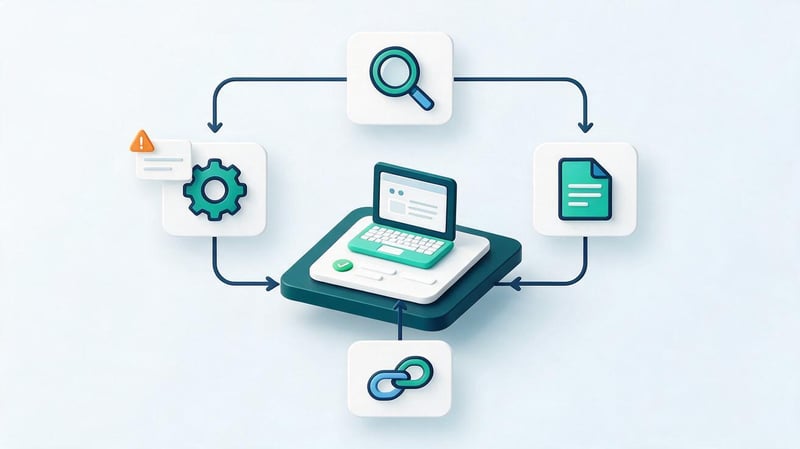
It's best to actively acquire external links after checking the site's technical condition and preparing the main landing pages. Otherwise, a significant portion of your work may be wasted: a user will click the link but encounter an error, outdated data, or an inconvenient page.
Online stores with numerous filters, multilingual sites, and projects migrated to a new CMS should be checked especially carefully. Such resources are prone to duplicate URLs, incorrect redirects, and indexing issues.
You can start with a small number of high-quality editorial mentions, while simultaneously addressing minor flaws. However, it's wiser to plan a large-scale campaign after addressing the issues hindering search engine optimization.
How to prepare a website to receive external links?
Before you begin, you should check whether the target page is accessible to Googlebot and eligible to appear in search results. In Google Search Console, you can find out whether the URL is indexed, which canonical URL Google has selected, and whether there are any crawling restrictions.
The basic technical checklist includes the following checks:
- Landing pages have correct HTTP responses and are free of unexpected 404 errors and unnecessary redirect chains.
- Primary URLs are open for indexing, and canonical points to the desired version of the page.
- Versions with and without www, HTTP and HTTPS are correctly combined via redirects if different addresses are used.
- The pages have unique Title, H1 and useful content that matches the search intent.
- The mobile version works without errors, and buttons, forms, and navigation elements are accessible to users.
- Internal links lead to relevant addresses and help you find related materials.
After technical verification, you should evaluate the landing page content. Even a publication on a reputable industry portal will be of little use to visitors if the page lacks pricing, specifications, terms of cooperation, or answers to basic questions.
Which pages should be promoted with links first?
When selecting target URLs, consider potential commercial value, current rankings, competition, and content quality. Directing most external links to the homepage isn't necessary, especially if the site has a well-developed service or product category structure.
For an online store, high-demand categories might be a priority. For a service company, it might be pages for core services. And for an information project, it might be detailed guides and research that other authors are willing to cite.
Pages that are already receiving Google impressions and are near the top 10 deserve special attention. However, increasing link equity doesn't guarantee their promotion to the top: the quality of the document, its relevance to the search query, and the strength of competitors must be considered.
It's useful to divide pages into three groups: commercial, informational, and branded. Each group should have its own link sources, anchor text, and performance indicators.
How to audit a website's backlink profile before promotion?

A link audit helps determine the current state of your profile, identify strong sources, and identify issues that should be addressed when developing a strategy. Without baseline data, it's difficult to assess how much new placements have changed your external link structure.
It's not just your own website that needs to be checked. Comparing your site with competitors shows which sites publish content on your topic, which pages receive the most mentions, and what link building methods are used in your niche.
A website's link audit begins with collecting available data, then grouping it by domain, anchor text, and landing page. After that, the quality of the sources and the dynamics of the link profile are assessed.
How to check backlinks using Google Search Console?
Google Search Console allows you to view some of the external links Google has detected for free. To do this, open a verified resource and go to the “Links” section.
The main reports are available in the external links block:
- Most popular pages show which URLs of your site are most frequently linked to by external resources.
- Sites that link the most help identify key donor domains and link distribution.
- The most common link text shows the texts used in detected external links.
The data can be exported for further analysis in a spreadsheet. Once exported, it's easy to group domains, highlight commercial anchors, and check which important pages receive minimal external mentions.
The report has limitations: Google displays a selection of detected links, not necessarily a complete list. Additionally, some links may have disappeared from their source pages, although information about them is still present in the report.
How to perform advanced analysis in Ahrefs, Serpstat or Semrush?
Specialized SEO services help you study your link profile in more detail and compare it with competitors. Typically, a good place to start is with Ahrefs, Serpstat, or Semrush, choosing a platform that provides the necessary reports and supports analysis of your region.
In the service, enter a domain, wait for the results, and then open reports on backlinks, referring domains, new links, and lost links. The data is then exported to a table for further filtering.
For each source, it's a good idea to record the donor page URL, target page address, anchor text, discovery date, and available quality indicators. If available, you can supplement the table with organic traffic and the site's topic.
Some services, including Majestic, use their own link profile evaluation metrics. While their results are useful for comparison, the results from different databases may vary due to their own crawling and data updating methods.
What indicators are checked during a backlink profile audit?

When checking, it's important to distinguish between numerical indicators and source quality characteristics. A large number of links means nothing without information about where they're located, what pages they support, and how long they've been in existence.
For regular monitoring, it's convenient to create a single table and update it after new publications. This allows you to compare data using the same methodology, without mixing results from different tools.
Number of links and referring domains
First, compare the total number of backlinks with the number of unique referring domains. If the number of links is growing rapidly while the number of domains remains relatively stable, you should check whether sitewide links have appeared in the menu, sidebars, or footer of a single resource.
For example, consider a hypothetical website with 1,000 links from five domains. In another case, the website received 120 links from 100 independent sites. These profiles differ in the diversity of their sources, although the first has a significantly higher total number of links.
However, a large number of links from a single domain does not automatically indicate a problem. A well-known industry publication may regularly cite a company's research, and such publications should be assessed separately.
Dynamics of new and lost links
A graph of link appearances and disappearances helps detect changes in your profile. When analyzing, consider both new domains and sources that have stopped linking to your site.
For example, a company acquired ten new domains in a month, but simultaneously lost eight existing ones. The resulting increase was small, so it will be necessary to investigate the reasons for the disappearance of old publications.
A sharp increase in link equity doesn't automatically mean Google will penalize you. Sometimes a company receives numerous natural citations following a study, major publication, or news event.
More attention should be paid to the origin of links, repetitive placement patterns, and signs of search results manipulation.
Anchor list and target URLs
The anchor list contains the text of external links leading to the site. For analysis, links are grouped by brand, commercial, geo-specific, diluted, and neutral wording.
Check which pages receive these links separately. If almost the entire profile is focused on the homepage, and important categories and services are not mentioned, it's worth exploring options for a more diverse distribution.
A suspicious situation arises when multiple different websites use the same commercial phrase in links to a single page. Such repetitions require verification of the origin of the publications and their content.
When analyzing a multilingual website, it's best to group anchors by language. Ukrainian, Russian, and English versions may differ in wording, so mechanical translation of commercial queries isn't always appropriate.
Donor quality and suspicious links
For each domain, it's necessary to evaluate its subject matter, indexability, search visibility, publication content, and the nature of its outbound links. Particular attention is paid to sites where the majority of content is devoted to unrelated topics and contains advertising links.
Additional signs to check may include a sharp drop in organic visibility, the mass creation of similar pages, or posts with meaningless text. None of these indicators alone prove a violation of Google's policies.
It's best to separate potentially suspicious sources into a separate list for manual review. Automatically disavowing all domains with low SEO ratings is not recommended, as they may include legitimate, small sites.
Lead SEO specialist — Gennady
When I analyze a site's link profile, I first look at where the links come from and what pages they support. Hundreds of mentions in dubious directories rarely look more convincing than a few insightful posts on relevant resources visited by interested audiences.
Then I check the number of referring domains, anchor text, organic visibility of donors, and link distribution across pages. After comparing with competitors, it becomes clearer which sources are lacking and where it makes sense to look for new opportunities.
In my work, I don't use a universal requirement to get a certain number of links every day. Different niches, regions, and website types require different approaches, and the quality of placements has to be checked manually.
How to compare a website's backlink profile with those of its competitors?
For comparison, it's enough to select three to five websites that consistently rank for key queries. It's advisable to analyze competitors of the same type: comparing an online store with a large information portal may yield few useful conclusions.
The table includes the number of referring domains, links, donor topics, primary anchor text, and pages that receive external mentions. It's also worth checking which resources link to competitors but don't yet mention your company.
Below is a hypothetical comparison example demonstrating the report format. The numbers are for illustrative purposes only and do not represent actual websites.
| Indicator | Our website | Competitor A | Competitor B |
|---|---|---|---|
| Backlinks | 350 | 1,200 | 850 |
| Referring domains | 45 | 160 | 110 |
| Thematic domains | 18 | 90 | 65 |
| Links to commercial pages | 25 | 95 | 70 |
| New domains this month | 4 | 12 | 9 |
This table highlights where differences need to be examined in more detail. If competitors are receiving mentions in specialized media, it's wise to check the terms of their partnerships with these publications rather than trying to match their overall backlink count.
How to choose high-quality donor sites for link placement?

A donor website is an external resource whose page contains a link to your website. When choosing a donor, consider its content, audience, search visibility, and relevance to the project's topic.
High SEO scores don't guarantee the usefulness of a particular publication. Sometimes, a small industry-specific resource is more suitable for placement than a large site with numerous news articles on unrelated topics.
It's convenient to keep a list of platforms with region, topic, traffic metrics, partnership terms, and landing page. This list helps ensure consistent selection and avoids random placements.
What donor SEO metrics should I pay attention to?
During the initial analysis, it's enough to check the topic, region, organic visibility, and outbound link profile. Then, open several publications and evaluate how thoroughly the editorial team processes the materials.
Below is a sample checklist for evaluating a potential platform. It's suitable for most commercial sites, but requirements may vary depending on the niche.
| Criterion | What to check |
|---|---|
| Subject | Relevance to the business or content of the publication |
| Region | Audience Geography and Search Visibility |
| Organic traffic | The presence of visits from search and their dynamics |
| Visibility | Queries and pages receiving search traffic |
| Reputation | Quality of materials, authors, editorial policy |
| Outgoing links | Subject matter of advertising publications and nature of placements |
| Indexing | Accessibility of the site and specific materials for Google |
| Conditions | Cost, placement period, link attributes |
It's best to save the verification results along with the platform's URL. This will allow you to revisit the evaluation if the posting conditions change or if you need to re-verify the publication.
Subject and regional relevance
For a Ukrainian online auto parts store, suitable sources include automotive publications, owner communities, and technical blogs. A publication in a specialized article is usually more appropriate than a link in an article about a completely different industry.
Region also matters, especially for local companies. If your business serves Kyiv, it's helpful to explore city publications, local directories, and specialized websites with a Ukrainian audience.
However, an international resource can be a suitable donor if its content is product-related or of interest to potential customers. It's important to evaluate the actual audience and content of a specific page.
Organic traffic and search visibility
Organic traffic represents an approximate number of visits from search engines when the data is obtained from a third-party SEO service. These estimates are not equivalent to the website owner's Google Analytics statistics and may differ from actual figures.
It's advisable to check not only the overall traffic volume, but also search pages, queries, and traffic distribution by country. For a Ukrainian business, a platform with a small but relevant audience may be more attractive than an international portal with unrelated traffic.
It's worth looking at visibility trends over recent months. A sustained decline may indicate resource problems, although the reasons for the change should be investigated before making a decision.
DR, Domain Authority, and other metrics
Domain Rating in Ahrefs, Domain Authority in Moz, and other similar metrics are calculated using the SEO platforms' proprietary algorithms. They help sort large lists of potential donors and compare websites within a single tool.
A DR 60 doesn't necessarily mean Google has assigned the resource a corresponding trust level. Nor can it be said that a link with a DR 40 will necessarily be more valuable than a link with a DR 20.
You can use your own working thresholds for preliminary selection, but it is better to make a final decision after checking the content, traffic, and links on a specific page.
How can I check the page where the link will be placed?
Even a good website can publish content that virtually no one reads. Therefore, evaluating a donor should continue with checking the specific URL or section where the placement is planned.
First, check whether the page is crawlable, whether it's blocked from indexing, and whether similar content is listed in Google. Then, examine the text itself: is it relevant to the topic, does it contain useful information, and is the link appropriate in the chosen context.
The next step is analyzing outbound links. If an article consists of several paragraphs and a dozen links to commercial sites on various topics, it's reasonable to avoid such placement.
You should also clarify how the editorial team labels advertising, whether publications are retained, and what changes they can make after the article is published. For paid placement, it's advisable to agree on these terms in advance.
How to grow a website's backlink profile for free?

It's possible to obtain external links without paying for publication through specialized communities, editorial mentions, business directories, and your own useful materials. However, this free method almost always requires time spent searching for sites, preparing content, and communicating with editors.
If your goal is to build links for free, it's best to start with resources where your company can truly provide value to its audience. Mass registrations in random directories and automated comment posting can generate a lot of links, but they generate almost no useful traffic.
Below are some methods you can use yourself. Some are suitable for new websites, while others work better for companies with experience, experts, and their own research.
Company registration in directories and business directories
The first available method is to create or verify a company profile in industry directories and local business directories. Platforms that clients use to search for organizations, addresses, contacts, and reviews are especially useful.
It's advisable to include your current name, website, address, phone number, business description, and business hours, if applicable, in your company profile. Contact information should match the information on your website.
Don't register on hundreds of unknown resources just to get more links. It's better to choose a few sites that are indexed, have a live audience, and publish information about companies in your industry.
For local businesses, it's helpful to additionally check their presence in mapping services and industry directories. Even if a site doesn't directly transmit a link signal, it can help potential customers find the company.
Guest posts on thematic websites
A guest article is material prepared by a company or specialist for an external website in consultation with the editorial team. A good publication answers a specific audience question and includes personal observations, examples, or professional recommendations.
Start by searching for websites that already publish materials on your topic. Review the author requirements, find the editorial contact, and suggest a few specific topics.
For a hardware store, this could be material on choosing fasteners for different surfaces, while for an accounting firm, it could be an analysis of typical errors in entrepreneurs' documents. If relevant additional information is available, the author can link to a detailed guide on your website.
It's important to avoid the mass distribution of identical articles with optimized commercial anchors. Google classifies such schemes, created primarily for the purpose of influencing rankings, as link spam.
Crowd marketing on forums and Q&A platforms
Crowd marketing involves participating in discussions where users ask questions, compare products, or share experiences. To get useful clicks, you need to find real, relevant discussions.
For example, a user might ask why their air conditioner continues to cool poorly after replacing the filter. A service representative can explain possible causes, suggest a self-test procedure, and refer you to detailed instructions if they really help solve the problem.
Messages with a single advertising link, identical text, and artificial recommendations are usually viewed with distrust. Furthermore, platform moderators may delete such posts or block accounts.
Links in user-generated content often have the rel="ugc" or rel="nofollow" attribute. This is normal for forums and does not prevent interested visitors from clicking through.
Getting links through expert content and research

One of the most promising ways to gain editorial links is by publishing information that's hard to find elsewhere. This could be your own research, survey results, industry data, detailed instructions, or helpful free tools.
For example, an appliance repair company might collect statistics on the most common malfunctions over the course of a year. If the data is collected correctly and accompanied by an explanation of the methodology, journalists and industry authors may use it with a citation.
This type of work requires preparation, but the resulting material can generate citations over time. Regular updates are especially helpful to ensure the publication remains relevant.
To start, simply choose one question that your competitors are answering superficially. Then, prepare material with supported facts, examples, and clear, citable conclusions.
Search for brand mentions without a link
Sometimes a company is mentioned in news, reviews, and professional publications without an active link to its website. Such materials can be used as a starting point for editorial communication.
Search queries with the company name in quotation marks, news checks, and brand monitoring services can help you find mentions. When analyzing, it's important to distinguish between your own pages, social profiles, and content from third-party editorial offices.
If the article genuinely talks about a company or uses its data, you can contact the author and offer to cite the original source. It's best to explain in the letter how the link will help readers, rather than requiring it.
The editors may refuse or not respond, so you can't count on getting guaranteed links. However, working with existing citations often requires less preparation than searching for completely new platforms.
Recovering lost and broken links
Links can disappear after updating articles, deleting pages, or changing the site structure. Therefore, during an audit, it's important to separately check for lost mentions and URLs that no longer open.
If an external resource links to a deleted page on your site, first determine whether there's relevant content on the same topic. If a suitable replacement exists, you can set up a permanent 301 redirect to the relevant URL.
Redirecting to the homepage instead of a missing article isn't always appropriate. The user must be directed to content that matches the original link, otherwise the visit will be useless.
If a link disappears from an external publication, you can write to the editor and offer to restore it if the source remains relevant. It's best to only contact them regarding truly useful materials, rather than turning such efforts into mass mailings.
What paid methods help grow a backlink profile?

Paid placements are used for advertising, expanding reach, PR, and audience engagement. Companies can commission publications in industry media, support special projects, or pay for expert content.
Google's rules prohibit the buying and selling of links if the primary purpose of such a transaction is to manipulate search rankings. Sponsored links must have appropriate attributes, such as rel="sponsored" or rel="nofollow."
Before deciding how to increase link equity with a budget, you should determine the expected results. For advertising publications, this could include clicks, inquiries, brand awareness, and target audience reach.
Publications in industry media and PR placements
Industry media are ideal for distributing news, research, expert commentary, and materials about a company's products. These publications allow you to reach an audience already interested in the relevant topic.
For example, a hardware manufacturer might present test results of a new model in a specialized publication. Good coverage provides readers with useful information, and the company gets additional opportunities to introduce the product.
Before approving a publication, it's important to research the media outlet's audience, content format, pricing, and advertising labeling regulations. It's also helpful to clarify whether the article will be published permanently and whether changes are expected after publication.
If the placement is paid, the link must be qualified according to Google's guidelines. Disguising the advertising nature of the content for the sake of ranking power is not recommended.
Placements through link exchanges
Link exchanges and publishing platforms collect offers from websites willing to host content under certain conditions. They simplify finding platforms, comparing prices, and communicating with resource owners.
However, a website's presence in the platform's directory does not confirm its quality. Before placing content, it is necessary to check its thematic relevance, organic visibility, publication examples, and advertising labeling requirements.
The quality of the published text should be carefully assessed. The material should be relevant to the interests of the site's readers and not consist of general statements based on a single commercial link.
When working with exchanges, be mindful of the risks of link schemes. Bulk buying of links that transfer ranking power to improve rankings violates Google's rules, regardless of the platform's price.
Outreach and partner publications
Outreach is a one-on-one approach to editorial teams, bloggers, website owners, and experts to propose collaboration. This can include guest posts, interviews, joint research, and media partnerships.
The main challenge is finding suitable contacts and crafting an offer that will appeal to a specific recipient. A generic email asking for a link is usually less effective than one with a clear subject line and an explanation of the benefits for the audience.
Before sending your letter, it's a good idea to review the editors' latest publications and check whether the topic has been covered previously. After receiving a response, agree on the format of the material, the timeframe, and the terms for link placement.
Don't build a partnership program on the mandatory mass exchange of commercial links. Creating such schemes solely to influence rankings runs the risk of violating search engine rules.
What is the difference between temporary and permanent links?
Temporary links are placed for the period specified in the terms of cooperation. After payment is completed or the agreed-upon period has passed, the site owner may remove the link or stop displaying the ad unit.
Permanent placement typically means publication without a pre-set deletion date. However, even such links may disappear after the site is shut down, editorial policy changes, or the material is removed.
Therefore, when agreeing on terms, the publication period, the procedure for making changes, and the possibility of removing the link should be clearly specified. Internal company documents should document the agreement and the publication review date.
If a link is used in an advertising post, the duration of its placement does not change the requirements for the corresponding attributes. Advertising relationships must be clearly identified regardless of the payment model.
How to create a proper anchor list to build a backlink profile?

An anchor is the text of a hyperlink that takes the user to another page. It helps users understand what information is located at the specified address, so the anchor text should match the destination page.
When developing a link strategy, it's important to examine existing wording. If external links repeatedly repeat the same commercial query, new placements with the same anchor text may reinforce the undesirable pattern.
There's no universal percentage of branded, commercial, and non-anchor links for all websites. The ratio depends on the topic, nature of the mentions, language, brand awareness, and the history of the link profile.
What types of link anchors are there?
For analysis, it's convenient to divide anchors into several categories. This grouping helps us understand which phrases naturally appear in publications and which are used primarily to promote queries.
The main types of anchors:
- Exact-match commercial anchor repeats a search query, such as “buy a hiking backpack”.
- Diluted anchor includes additional words, such as “detailed instructions for choosing a travel backpack”.
- Branded anchor contains the name of a company, website or trademark.
- Geo-dependent anchor includes a city or region, such as “tourist equipment store in Kyiv”.
- Anchorless link may look like a website address or a neutral phrase like “research source”.
There's no need to artificially distribute identical anchors according to a predetermined pattern. It's better to analyze the context of the article and choose wording that will be understandable to the reader.
With independent editorial citations, the final text is often chosen by the publication's author. Such decisions help avoid excessive profile standardization.
An example of a natural anchor list
Let's consider an online store selling hiking gear. Links to it might appear in backpack reviews, hiking preparation guides, safety materials, and publications from hiking communities.
It's natural to use different wording in different articles, especially if the resource is available in multiple languages. Anchors for each language version should be written in that language and match the content of the page they point to.
| Anchor type | Example anchor | Where it fits naturally |
|---|---|---|
| Branded | TravelPro store | A mention of the store in a hiking community post |
| Thematic | hiking backpack review | A gear review on a travel blog |
| Diluted | how to choose a backpack for a hike | A beginner's guide to hiking |
| Geo-dependent | hiking gear in Kyiv | A local guide to outdoor stores |
| Informational | hike preparation guide | An article on hiking safety |
| Anchorless | more details on the website | A forum answer or comment |
| URL | travelpro.example | A list of sources or a citation |
The name and domain are provided for example purposes only. For actual planning, you should review existing anchors, landing page distribution, and the purpose of each post.
A link to a specific language version of a page should preferably use anchor text in that language if it matches the language of the publication. Any mixture of languages should not be automatically considered an error, especially on multilingual platforms.
Why is it dangerous to overuse identical commercial anchors?
Commercial anchor text often attracts the attention of website owners because it contains targeted search queries. However, the widespread use of identical text in specially crafted publications can appear to be an attempt to manipulate rankings.
Particularly suspicious are situations where dozens of articles on unrelated sites use the same search term and link to a single commercial page. Meanwhile, the articles themselves provide no useful information to readers and are virtually indistinguishable from one another.
To mitigate such risks, it's important to pay attention to the content of publications and the origin of links. Brand mentions, links to useful materials, and natural editorial wording should appear in the appropriate context.
It's a good idea to check your anchor text list after major campaigns and whenever any unusual changes occur. If a problem is detected, you should first determine its cause and then decide on further action.
How to create a step-by-step plan for link building?

The plan helps tie together auditing, page preparation, site search, and results evaluation in a single sequence. It's especially useful for companies that haven't done external promotion before and want to understand how to build links without unnecessary expenses.
Before launching, you should determine the responsible specialist, budget, priority pages, and available resources. For new projects, it's wise to start with a small scope of work, gradually expanding the list of suitable platforms.
If you're trying to understand how to regularly build your backlink profile, it's more helpful to plan specific actions: finding contacts, preparing materials, coordinating publications, and checking published links.
Step 1: Conduct an audit and select landing pages
First, gather information about existing referring domains, primary anchor text, and the pages that receive the most mentions. Then, check the site's technical condition and identify URLs that require additional attention.
For each landing page, document the primary search intent, current visibility, competitive content, and potential commercial value. This will help explain why a specific page needs additional external citations.
At the beginning of a project, it's a good idea to create a table with baseline metrics. This will be useful for comparison later and will allow you to spot changes that aren't quantifiable in a single monthly report.
Avoid directing external links to pages with temporary errors, incorrect redirects, or outdated content. Fix the issues first and ensure the URL is ready to receive visitors.
Step 2: Analyze competitors and create a donor list
After the technical preparation, you need to study the link profiles of several direct competitors. Of particular interest are sites that already receive organic traffic to your priority topics and serve a similar audience.
The analysis identifies domains that regularly publish industry-specific materials, accept expert commentary, or host product reviews. Contact information, topics, and terms of collaboration are stored for each platform.
Next, the list is purged of irrelevant resources, questionable directories, and pages with signs of mass advertising. Good sites are categorized by the type of potential collaboration: editorial article, expert commentary, affiliate project, or advertising.
At this stage, it's important not to copy someone else's profile entirely. Competitors may have historical mentions, partnerships, and publications that are impossible or impractical to replicate.
Step 3: Determine link acquisition methods and budget

For each selected group of pages, appropriate methods for distributing materials should be identified. Research papers can be submitted to editors, local companies can be listed in industry directories, and useful instructions can be discussed in professional communities.
The cost of the work includes content preparation, contact search, negotiations, editing, and publication monitoring. Even if the link was obtained without paying the platform, the labor costs must be taken into account.
| Method | Direct costs | Key Benefits | Restrictions |
|---|---|---|---|
| Business directories | Often absent | Local audience, company information | Not all catalogs are of good quality |
| Guest articles | Content preparation | Expertise, thematic readers | Coordination and unique material are required |
| Crowd marketing | Specialist's work | Communication with a potential audience | Moderation, link restrictions |
| Expert research | Data preparation | Possibility of editorial quotations | Independent analysis is required |
| PR publications | According to the media's terms | Reach and awareness | Advertising links require labeling |
| Outreach | Search and negotiations | Individual partnerships | Not all editors respond |
The budget should include the option to replace the site if it no longer meets requirements. This flexibility helps avoid wasting resources on placements solely to meet the quantitative plan.
Step 4. Create a three-month work plan
The first quarter is a good time to fine-tune the process and test your chosen approaches. During this period, you can prepare the main pages, assemble a list of editors, begin negotiations, and evaluate the initial results of your placements.
Below is an example of task distribution, not a standard number of links. Actual timeframes and volumes depend on the complexity of the niche, the company's capabilities, and the editorial response time.
| Period | Main tasks | Result control |
|---|---|---|
| First month | Audit, technical preparation, competitor analysis, platform search | Baseline profile, donor list, landing page list |
| Second month | Guest writing, expert outreach, and brand mention management | Published materials, new domains, clicks |
| Third month | Continuation of publications, checking the integrity of links, adjusting the selection | Profile quality, referral traffic, page visibility |
A simple graph can be used to assess the dynamics. For example, the conditional sequence of the number of referring domains looks like this:
Month 1: 40 → Month 2: 47 → Month 3: 55.
These figures illustrate how to display trends, not predict SEO results. In a real report, lost domains, the quality of new publications, and changes in organic visibility should be indicated alongside the growth.
How to track the effectiveness of link building?

Once you begin posting, you should regularly check to see if the links are still active and appear in the reports of the tools you use. The date the service detects a link may differ from the actual publication date, so it's advisable to maintain your own registry.
For each placement, the donor URL, landing page address, link text, publication date, conditions, and status are stored. Additionally, user clicks can be tracked if they are measured by web analytics.
Search ranking changes should be analyzed alongside content and technical updates. Without this context, it's difficult to determine why a page received more impressions or lost visibility.
What KPIs should be used for link promotion?
The primary operational metric is the number of relevant mentions received on independent resources. However, to evaluate results, this should be supplemented with qualitative and user-based metrics.
The following KPIs can be included in the report:
- The number of new referring domains after checking their thematic relevance and quality.
- The number of published materials that have been preserved at the agreed addresses.
- Referral traffic from external publications and visitor actions after clicking through.
- Changes in search visibility and landing page positions for agreed-upon groups of queries.
- The proportion of lost links and the reasons for their disappearance from external publications.
- The costs of preparing materials and placement in relation to the result obtained.
It's convenient to check statistics monthly, maintaining the same measurement methodology. For small sites, some metrics will change slowly, so drawing definitive conclusions based on just a few weeks is not recommended.
How do you know if your link strategy needs changing?
A buildup of irrelevant publications, increased costs without generating useful clicks, or the constant deletion of previously obtained links may prompt a strategy review. These signs indicate that the selected sources or collaboration terms require re-evaluation.
You should also check if your profile is growing, but the promoted pages aren't receiving the expected organic traffic. Possible causes include content, competition, indexing, search query matching, or your overall promotion strategy.
If new links come primarily from a few similar sites, it's worth expanding your search for editorial opportunities. If you discover sponsored links without proper attributes, you should coordinate corrections with the publication owners.
Adjustments don't necessarily mean a complete halt to work. Sometimes it's enough to change priority pages, improve materials, or revise donor selection criteria.
What mistakes prevent you from building your backlink profile correctly?

Link building mistakes often stem from an attempt to quickly increase reporting metrics. This approach focuses on the number of links, while the content value of publications and audience interests go unchecked.
The most common problems arise when using automated placements, identical commercial anchors, and platforms that publish materials on virtually any topic.
The main errors include:
- Mass links from irrelevant directories. A large number of similar registrations rarely helps attract interested users and can create an undesirable link pattern.
- Buying links to transfer ranking weight. Such actions violate Google's policies if the primary purpose is to manipulate search results.
- Excessive repetition of commercial anchors. Identical optimized texts in multiple publications require verification of their origin.
- Focusing exclusively on DR. A high domain score does not confirm the quality of a particular piece of content or its relevance to the audience.
- Posting links to problematic pages. 404 errors, irrelevant redirects, and outdated content degrade user experience.
- Copying competitors' strategies without analysis. Other people's links may be related to historical publications, advertising agreements, and business specifics.
- Using one method of obtaining links. Over-dependence on a specific source limits capabilities and creates operational risks.
- Ignoring whether publications are still live. Without regular checking, a company may continue to list links that have long been removed.
- Automatic disavowal of suspicious domains. A low rating from a third-party tool does not, in itself, mean that you should use Disavow.
A separate mistake is expecting a guaranteed result from a certain number of links. Search visibility depends on many factors, so changes must be assessed in the context of the site's health.
Also, a temporary suspension of new link acquisition shouldn't be considered a standalone reason for penalties. Google doesn't publish mandatory daily or monthly backlink growth rates.
To increase your website's link profile, first review your existing profile, prepare landing pages, and research your competitors. Then, select relevant sites, offer useful content, and monitor your published links.
With a limited budget, you can start with business directories, expert articles, rebuilding citations, and engaging with professional communities. Further development will require regular editorial engagement, high-quality content, and results verification.
If you need a link profile audit or the development of an external promotion strategy, contact Seo-Gen. Our specialists will check your current links, evaluate donors, identify priority pages, and prepare an SEO plan tailored to your niche and competition.


