Link building: methods and types of links


Link building is a part of off-page SEO optimization and is responsible for developing a website's link profile. This includes finding suitable sites, acquiring external links, monitoring anchor text, selecting landing pages, and regularly monitoring existing placements. This approach is used for commercial websites, online stores, services, information projects, and local businesses.
The sheer number of backlinks alone says little about the quality of a website's backlink profile. A website may have thousands of links from a few weak domains, while a competitor receives fewer mentions, but from relevant resources with organic traffic and good search visibility. Therefore, link promotion begins with analyzing a website's profile, competitors, and pages that need strengthening.
What is link building and how does it relate to SEO?
Link building is a systematic process of acquiring external links to website pages. In English-language SEO, the terms link building, link acquisition, and backlink acquisition are used. In Russian, the terms “линкбилдинг” and “наращивание ссылочной массы” are more common.
Each external link connects a donor site to an acceptor page. When analyzing a profile, an SEO specialist looks at backlinks, referring domains, anchor text, page types, link attributes, and the dynamics of placement gains and losses. This data helps understand how well the profile matches the site's theme and search results.
What is link building in simple terms?
Link building is obtaining links to a website from other resources using a pre-determined strategy. For example, an online store might get a link from a product review, a clinic from a specialized article about a medical service, and a SaaS service from an article about business tools. The source and context of the placement are of great importance.
In simple terms, link building means a website owner negotiates with other resources for mentions or creates content that is linked to independently. Therefore, the question of “what is link building” can't be reduced to buying space in an article. Digital PR, outreach, directories, guest posts, partnerships, and crowd marketing are also included in link building.
How is link building different from off-page SEO optimization?
Off-page SEO optimization encompasses more than just acquiring backlinks. It includes analyzing a project's reputation, brand mentions, external signals, publications, link environment, and company activity on third-party platforms. SEO link building is a separate area of this work, directly related to links.
On-page and off-page website optimization address different objectives and work together. On-page optimization addresses structure, content, indexing, meta tags, interlinking, and the technical condition of pages. Off-page SEO helps develop a website's presence beyond its own domain and strengthen pages that compete in challenging search results.
Who is a link builder?
A link builder is a specialist who searches for, verifies, acquires, and monitors external links. Their work includes competitor analysis, donor database collection, outreach, editorial negotiations, anchor list preparation, publication monitoring, and lost link checking. Therefore, the search term “link builder” is considered a separate SEO specialization.
A good specialist evaluates the site before publishing and re-checks the link after publication. They look at the site's topic, region, traffic, organic traffic history, Domain Rating, outgoing links, and content quality. Link building requires attention to detail, as a high score from one SEO service alone doesn't guarantee anything.
Answers to your questions
What is link building in simple terms?
Link building is the process of acquiring external links to a website and developing its link profile. Links can appear through media publications, outreach, guest posts, partnerships, directories, forums, useful content, and natural mentions. For SEO, the quality of the source, the context of the placement, and the page the user lands on are all important.
Therefore, the expression “link building is buying links” describes only a small portion of possible methods. A strong strategy combines various sources and regularly monitors the results. The number of placements alone does not indicate how well the work is implemented.
Do you need links to promote a website?
Not every page requires links, and not in the same quantity. In low-competition search results, good content can gain rankings thanks to its content, site structure, and internal linking. In commercial niches with strong competition, external promotion usually plays a significantly greater role.
To decide whether links are necessary for website promotion, you need to study the top pages for specific queries. Compare their content, referring domains, domain strength, and internal factors. After this, you can assess how much your own website lags in terms of external signals.
How many links should you buy per month?
There's no fixed number for all websites. One project thrives with a few high-quality publications per month, while another regularly receives dozens of organic mentions thanks to news and PR. Therefore, the number of links needed for website promotion is calculated based on competitors, the current profile, and available platforms.
The main rule is not to compromise on quality for the sake of quantity. If few worthy donors are found this month, it's better to shift some of your budget than to purchase weak sites. Mass placements are only justified if each source is thoroughly vetted.
What links are considered quality?
High-quality links are usually placed on real websites with a relevant topic, good indexing, useful content, and a clear audience. It's a good idea to check the site's organic traffic, visibility, history, referring domains, and the nature of its outgoing links. Then, examine the specific page of the future publication separately.
A high DR or DA doesn't automatically make a link good. These metrics are suitable for preliminary sorting, but they don't replace manual verification. A relevant link from a vibrant regional resource can sometimes be more valuable than a publication on a larger site with no connection to the project's audience.
Is it possible to buy links for SEO?
Purchasing links for the purpose of manipulating search rankings is part of Google's link spam policy. However, paid advertising, sponsored content, and other commercial publications are a normal part of the internet. Google recommends qualifying paid links with rel="sponsored" or nofollow.
Therefore, the question “why buy links to a website” should be considered more broadly than just SEO signals. Paid publication can generate clicks, reach, brand mentions, and access to a specific media outlet's audience. Before placing an order, evaluate the platform, format, and potential results.
Where can I get links to the site?
Links can be obtained through digital PR, guest articles, outreach, industry directories, partnerships, crowd marketing, link insertion, broken link building, and useful materials cited by other authors. Additional platforms are found through competitor link analysis and regular topical searches.
When deciding where to place links to your website, first determine your audience and target page. The site should be logically related to the topic and, preferably, attract real users. A list of random websites with high metrics is less useful than a curated database of relevant donors.
What is more important – backlinks or referring domains?
Backlinks shows all found links, including multiple links from a single site. Referring domains count unique domains, so they better reflect the diversity of sources. For example, a thousand sitewide backlinks from a single portal will significantly increase the first indicator, but will only add one new domain.
For a complete analysis, both metrics are needed. Referring domains help compare the width of profiles, while backlinks show the link structure within each source. Additionally, it's important to look at the quality of donors, anchors, and destination pages, as a single number doesn't describe the entire profile.
What is a link strategy?
A link strategy is a plan for developing a website's external profile over a specific period. It specifies landing pages, types of donors, placement methods, anchor text list, budget, site requirements, and monitoring rules. Before developing the strategy, the current profile and several real SEO competitors are analyzed.
After launch, the plan is regularly adjusted based on actual data. New pages may become a priority, some sites may become unavailable, some links may be lost, and competitors may change their profiles. Therefore, a link strategy works better as a living, working document rather than a spreadsheet compiled once a year.
Why is link building necessary for website promotion?
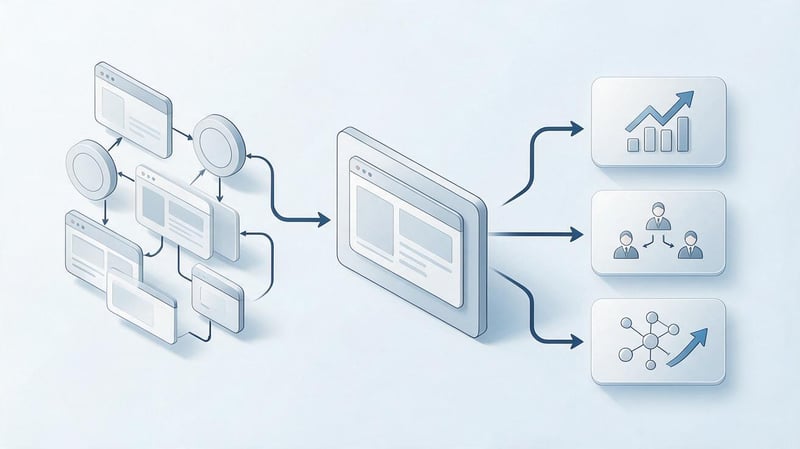
External links help search engines find pages and understand the connections between resources online. For businesses, they also provide brand mentions, traffic from interested users, and presence on sites where the target audience already resides. Therefore, website link promotion is usually associated with SEO, PR, and content marketing.
The value of a specific link depends on its source, context, and destination page. A link from a useful industry resource can drive referral traffic and support a relevant landing page, while hundreds of automated mentions in random directories often provide little benefit. A high-quality link base is built gradually and requires regular monitoring.
How do external links affect website rankings?
Backlinks remain one of the signals search engines may consider when evaluating pages and websites. However, the relationship between the number of backlinks and rankings cannot be calculated using a simple formula. Search intent, page content, the technical condition of the site, competition, internal links, and other factors all influence rankings.
To understand the impact of links on promotion, it's more useful to compare a website with real competitors in search results. An SEO specialist looks at which pages are ranking, how many high-quality referring domains point to these pages, and where the links originate. This analysis helps assess whether a particular page requires additional external support.
Has the influence of SEO links decreased?
Search engines have become better at identifying schemes created solely for ranking manipulation. Mass directories, automated profiles, repetitive commercial anchors, and spam comments provide far less reason to consider a link profile high-quality. Therefore, the diminishing influence of SEO links is most noticeable in primitive mass placement methods.
High-quality external links remain important, especially in competitive fields where strong sites have developed link profiles. The focus has shifted to thematic relevance, real resources, useful content, and a diverse source base. This is why SEO links now need to be evaluated much more carefully than they were a few years ago.
Is it possible to promote a website without links?
Backlink-free website promotion is possible for some search queries, especially when competition is low and the page responds well to search intent. New informational material sometimes ranks well thanks to strong content, proper site structure, and internal linking. There's no universal requirement to obtain backlinks for every published page.
In competitive commercial search results, the situation is usually more complex. If most of the top-ranking sites have strong thematic profiles and hundreds of high-quality referring domains, website promotion without buying links or other means of acquiring them may proceed more slowly. The decision is made based on an analysis of a specific cluster, rather than a general rule for all sites.
What types of links are used in SEO?

SEO links vary by acquisition method, anchor text, attributes, placement, and lifespan. A single link can simultaneously be an article link, a branded link, a dofollow link, and one placed via outreach. Therefore, it's more convenient to consider SEO link types based on several criteria and then evaluate their combination.
| Link type | What is it | What is it used for? | Peculiarities |
|---|---|---|---|
| Natural | Appears without a direct agreement on placement | Mentions, traffic, profile development | It is difficult to predict the quantity |
| Article | Placed within the thematic material | Context and clicks | The relevance of the article is important |
| Crowd link | Posted in a discussion, Q&A, or forum | Clicks, mentions | A natural context is needed |
| Branded | Contains the company name | Variety of anchors | Looks natural for the brand |
| Anchorless | Uses a URL or neutral phrase | Dilution of the profile | Often found in common references |
| Sponsored | Received as part of a paid publication | Advertising, PR | Requires a valid rel |
Diversifying types helps create a profile that reflects a company's actual activity. However, adding a specific link type just to get a percentage in the table isn't necessary. First, evaluate the page's purpose and suitable platforms, then choose a publication format.
Natural links and links obtained through link building
Natural links arise when the editorial board, article author, client, or another website independently cites the source. With organized link building, the company itself seeks out publication opportunities and negotiates with sites. Both options are found in a regular link profile and can attract real users.
When analyzing, it's important to understand the origin of placements. If almost the entire profile is built in the same way, with identical anchors and on sites of the same type, it appears less diverse. Natural link promotion is usually supplemented by PR, content, outreach, and other sources relevant to the business's activities.
Natural links
Natural links for promotion arise from materials that other authors consider useful. These can include research, statistics, instructions, calculators, original images, or public company data. These organic links are especially valuable when the linking page is relevant to the topic and has a real audience.
Getting natural links for website promotion is easier if the project has content that's easy to cite. A typical commercial page rarely becomes a massive link source, while a market research article or a detailed directory has a better chance of being cited. Therefore, content and link building are often planned together.
Obtained through outreach
Outreach begins with searching for websites that might be interested in expert content, commentary, or a useful resource. The specialist finds the editorial team, author, or project owner and sends a personalized proposal. Good outreach takes into account the specific website's content and explains why the material will be useful to its audience.
After approval, the format may vary: guest posting, expert column, expansion of an existing article, or new industry-specific material. The link is placed where it logically continues the text and helps the reader obtain additional information. Massive, identical emails typically yield a weak response and complicate proper negotiations.
Paid placements
Paid publication can be used for advertising, PR, sponsorship, and audience acquisition. However, Google considers purchasing links for the purpose of transmitting search signals and manipulating rankings to be link spam. For paid advertising placements, Google recommends using rel="sponsored" or nofollow.
Therefore, the question of how to buy links for a website should begin with the purpose of the placement and risk assessment. Payment for an article is common in traditional online advertising, but the way the link is presented matters. It's safer to agree on the publication format, attributes, and editorial requirements in advance than to try to conceal the commercial origin of the material.
Anchor and non-anchor links
An anchor is the visible text that the user clicks. It helps them understand where the link leads, so the anchor list is usually analyzed along with the landing pages and sources. A real profile contains brand names, page URLs, content titles, neutral words, and queries of varying degrees of commercialization.
If almost all links contain the same commercial query, the profile looks monotonous. In normal work, branded anchors, URL anchors, thematic phrases, and natural wording that fits the context of a particular article are used. There is no universal percentage distribution for every site.
Commercial anchors
A commercial anchor contains a query related to a purchase, order, or specific service. For example, a category link might contain the product name, while a service link might contain its primary commercial designation. Such wording is acceptable when it reads well within the sentence and is relevant to the destination page.
The problem arises when a single keyword is repeated en masse across dozens of different donor sites. The anchor list then becomes predictable, and placements begin to resemble an artificial scheme. It's best to use commercial wording selectively and compare its share with natural, branded, and URL-based variants.
Diluted anchors
A diluted anchor includes a topical query along with additional keywords. Instead of a short commercial keyword, the author might write “business loan terms” or “detailed instructions for setting up analytics”. This wording fits better into the sentence and provides the reader with a clear context for the transition.
Dilution shouldn't be a mechanical substitution of random words around the keyword. The anchor text should match the content of the accepting page and the phrase within which the link is placed. If the text sounds unnatural, it's better to change the wording entirely than to try to maintain the exact query at any cost.
Branded anchors
A branded anchor contains the name of a company, product, service, or project. Such links regularly appear in media publications, reviews, company directories, and partner materials. For a well-known brand, their share can be significant, as authors often cite the source directly by name.
Branded wording is especially useful in PR materials and expert citations. It helps link brand mentions to their official website without the need to artificially insert a commercial query. For a new project, branded links are also useful as part of a diverse and clear link profile.
URL links
A URL anchor shows the user the actual address of a page or domain. This format is commonly found in directories, resource lists, documents, forums, and user recommendations. The full address appears natural in places where it's easier for the author to specify the source directly, without a separate text anchor.
When checking a URL, ensure it directly links to the intended destination page. Redirect chains, old HTTP addresses, or links to deleted URLs reduce the practical value of the placement. After publishing, it's a good idea to check the response code, canonical, and the page's availability for indexing.
Anchorless phrases
Anchorless links can be formatted with the words “source”, “more”, “on the site”, “here”, or another neutral phrase. In common SEO usage, anchorless links often include links where the URL itself serves as the visible text. These variations regularly appear without the involvement of SEO specialists.
The list of phrases for anchorless links shouldn't be artificially multiplied into dozens of similar variations. The wording should fit the sentence and give the reader a clear reason to click through. If a neutral word makes the text unclear, it's better to use the source or page name.
Dofollow, nofollow, sponsored and UGC

A regular link without the restrictive rel value can be considered by search engines in their algorithms. SEO specialists use the term “dofollow” for convenience, although a separate rel="dofollow" attribute is not required in HTML. Therefore, during an audit, the link tag itself and the values specified within it are checked.
Nofollow, sponsored, and UGC help inform search engines about the nature of the placement. Their presence doesn't render the link useless to users: people can still click it, and the post can generate awareness and referral traffic. Evaluating a link solely based on dofollow is overly simplistic.
Google recommends “sponsored” for advertising and paid links, “ugc” for user-generated content, and “nofollow” remains an option for cases where a publisher doesn't want to link a page to a resource in the usual way. These values help more accurately describe the origin of a link and reduce the risk of misclassifying commercial placements.
Perpetual and rental links
Permanent links are paid for as placements with no set monthly rental period. This term doesn't guarantee the link will remain available forever. The site may shut down, the publication may be deleted, the URL may change, and the editors sometimes review old materials and external sources.
Rental links are paid for a specific period and may disappear once payments are stopped. Permanent link promotion is usually more convenient for projects that require a long-term profile without the need to renew each post monthly. However, the integrity of any publications should still be checked periodically.
Article and contextual links
An article link is placed within a full-fledged article that explores a specific topic. If the article is relevant to the site's niche and receives search traffic, the user encounters the link in a clear context. This format is often used for guest posting, PR publications, expert columns, and partner materials.
A contextual link can be placed in either a new article or an existing piece. Adding a link to existing text is often called link insertion or niche editing. Before such placement, the page itself, its visibility, the relevance of its content, and the presence of other external links are checked.
User-generated links
User-generated link building encompasses forums, Q&A platforms, reviews, thematic communities, and other sites where content is created by members. Such posts can generate clicks if the answer genuinely solves the user's problem. Crowd marketing is especially useful where the audience is actively discussing products, services, or specific needs.
Spam messages are quickly removed by moderators and perform poorly even in terms of referral traffic. Google specifically lists optimized links in forum comments as examples of link spam. Therefore, link building on forums should begin with a substantive response, and a link should be added only if it provides genuine benefit to the discussion.
What is a quality link?

High-quality links to a website are assessed based on a combination of factors. A single metric like Domain Rating is insufficient to describe the resource's subject matter, its audience, search traffic history, and the quality of the hosting page. Therefore, donor verification always involves multiple data sources and a manual review of the website itself.
| Criterion | What to check | Good signal | Red flag |
|---|---|---|---|
| Subject | Main sections and publications | Related to the project's niche | Dozens of unrelated topics |
| Traffic | Organic dynamics | Stable visits | A long decline to zero |
| Visibility | Queries and Pages | There are positions on the topic | Almost no queries |
| Content | Quality of materials | Useful original articles | Mass template publications |
| Outgoing links | Where does the site link? | Thematic sources | Selling links to any niche |
| Indexing | Presence of pages in search | New materials are indexed | Most of the site is missing |
A good link looks logical to the reader and leads to a page that furthers the topic of the article. If a publication exists solely to add a commercial URL, a high domain metric rarely compensates for the poor quality of the post itself.
Lead SEO specialist — Gennady
I don't evaluate links solely by their DR or placement cost. First, I look at whether the site has real search traffic, how well it matches the project's topic and region, which pages are visible, and which sites the donor is already linking to. A link from a vibrant, relevant resource is often more valuable than a link from a high-DR site that exists primarily to publish paid content. I also don't use a universal monthly link rate: I compare the rate with the site's current profile and competitors in the specific search results.
Thematic relevance
A thematic link is placed on a resource whose content is related to the acceptor website or the specific topic of the landing page. It makes more sense for a medical clinic to receive publications in medical media, city publications, and specialized directories than on a random website about construction or cryptocurrency.
Relevance is assessed more broadly than just a single category match. Business media may be relevant to a bank, a SaaS project, or a law firm if the specific material is relevant to the topic. Therefore, the platform is examined manually: its audience, the publication's category, related articles, and the purpose of the future mention are considered.
Real search traffic and visibility
Organic traffic helps you understand whether your website is getting visitors from search engines. Ahrefs, Serpstat, Similarweb, and other services are used for this purpose, keeping in mind that their data is only estimates. It's helpful to look at long-term trends, key pages, keywords, and the countries from which your audience comes.
A sharp drop in visibility requires a separate review, especially if it coincides with a massive publication of paid content. However, low traffic alone doesn't make a niche resource bad: a niche site may have a limited audience but still closely match the project's topic.
Domain Authority
Domain Rating, Domain Authority, Trust Flow, and Citation Flow are used to preliminarily evaluate a resource's link environment. DR is calculated by Ahrefs, DA is a Moz metric, and TF and CF are used by Majestic. These metrics are generated by third-party services and are not Google's internal metrics.
It's best to compare values within a single tool and in conjunction with other parameters. A domain may retain a high score even after losing traffic or changing its focus, so a final decision shouldn't be based on a single figure. Manually reviewing the site and its history remains mandatory.
Referring Domains – What is it?
Referring domains – the number of unique domains linking to the website or page being analyzed. One referring domain can provide one link, ten links, or thousands of backlinks. Therefore, the number of backlinks almost always differs from the number of referring domains.
For example, 500 backlinks from a single website yield only one unique referring domain. To assess the diversity of a profile, an SEO specialist typically looks at both metrics and examines strong domains separately. The query “referring domains what is it” is especially important when comparing competitors, as simply counting the number of links is often misleading.
Donor link profile

Before posting, check who links to the donor and how their profile has changed. Data on new links, lost links, anchors, countries, and referring domain dynamics is useful. Sudden, unexplained spikes sometimes indicate artificial growth or changes to the domain's history.
They also look at which sites provide the donor with most of its backlinks. If a profile consists primarily of spam directories, hacked pages, and unrelated domains, a high overall score warrants caution. A stable profile with genuine industry-specific mentions usually looks more convincing.
Outgoing links
Outbound links indicate which resources a site recommends or promotes to its readers. A legitimate website may regularly link to sources, partners, and advertisers. Systematic publication of materials on dozens of unrelated topics raises suspicion, especially if almost every text contains a commercial anchor.
When checking, it's helpful to open several recent publications and examine their structure. If articles follow the same template and link to casinos, microloans, pharmaceuticals, construction, and cryptocurrencies simultaneously, the quality of such a donor is questionable, regardless of their DR.
Website indexing and quality
A good donor site should function properly for users and search engines. They check page accessibility, HTTP codes, meta robots, canonical, site structure, internal links, and whether new content appears in search results. A technically abandoned site rarely becomes a strong source of long-term placements.
Content is assessed separately. Massive pages with repetitive structures, incoherent text, and dozens of advertising links may indicate a site created primarily to monetize publications. High-quality editorial content, authors, and a clear focus enhance the site's credibility.
Region and language of the audience
Regional relevance is especially important for local businesses and websites operating in a single country. A Ukrainian online store often benefits more from a link from a Ukrainian industry media outlet with moderate metrics than from a publication on a large foreign website whose audience doesn't overlap with its customers.
The page language is also taken into account during selection. If the Ukrainian version of the website is being promoted, it makes sense to target some of the mentions in Ukrainian and direct users to the corresponding localization. For a multilingual project, the link profile is analyzed separately by market, target URL, and language version.
The page where the link will be placed
Domain quality doesn't replace checking the specific page where the link will be placed. The article must be relevant to the link's topic, accessible to search engines, and properly integrated into the website. A page buried deep in the archive and lacking internal links has a lower chance of consistent visibility.
They also look at the number of external links, the content of adjacent paragraphs, and the placement itself. A link within a useful, topical piece is more easily understood than a random URL at the end of the text. After publication, the page should be re-checked, as the editors may change the anchor or address.
Where to get links for link building?

There are dozens of ways to get links to a website, but each project requires its own set of channels. The choice depends on the niche, country, budget, number of available media, brand strength, and the type of pages being promoted. Therefore, the question of “where to get links in link building” begins with market analysis, not a list of universal platforms.
Key sources include digital PR, outreach, guest articles, useful content, forums, industry directories, partner sites, and competitor link profile analysis. A combination of methods helps avoid dependence on a single provider and gradually expand a high-quality link base.
Digital PR and media publications
Digital PR helps generate coverage through news, research, expert commentary, and a company's own data. Journalists or industry publications need a compelling story that resonates with their audience. Therefore, good PR materials typically begin with facts, statistics, or an expert's perspective.
This type of placement can generate a link, brand mention, citation, and user traffic all at once. Sometimes editors use nofollow or even leave only the company name, but the publication still contributes to the project's visibility. Evaluating digital PR solely by the number of dofollow links is too narrow.
Outreach
Outreach is used for direct communication with editorial staff, blog authors, website owners, and partner companies. First, they identify suitable platforms, then find relevant contacts and study the resource's content. After that, they prepare a personalized offer related to a specific section or published material.
Responses are typically lower if the letter appears generic and doesn't explain the publication's value. A good proposal contains a clear topic, format, and reason why it's relevant to the site's audience. After approval, review the finished page, link, anchor, and storage conditions for the publication.
Guest articles
A guest post is prepared specifically for a third-party platform. It should cover a topic useful to its readers and meet the resource's editorial requirements. Guest posting works well in niches that include industry blogs, business media, professional communities, and companies with their own content sections.
If guest articles are mass-produced using the same template for the sake of commercial anchors, the quality of the strategy quickly deteriorates. It's better to tailor topics to the donor's audience, and use the link as a source of additional information. This way, the article remains meaningful even to readers who aren't interested in SEO signals.
Content they want to link to

Link bait is material created with natural citation and distribution in mind. Research, calculators, open statistics, interactive tools, templates, instructions, and industry rankings work well. The advantage is that the author of another publication receives a specific source to support their point.
For such content to garner organic links, it needs to be promoted to the people who actually create the content. Simply publishing the material on your own blog is usually not enough. It can also be sent to journalists, industry newsletter authors, partners, and experts who might find the data or tool useful.
Crowd marketing and forums
A link-building forum involves participating in existing topic-based discussions. A user asks a question, and a company representative or regular participant provides a substantive answer and, if necessary, cites a useful resource. This format can generate traffic for months if the topic remains accessible and well-indexed.
Permanent links on forums cannot be guaranteed, as moderators can delete posts or change the forum rules. Mass posting of identical comments with key anchors is considered spammy. Google specifically lists optimized links in forum posts as examples of link spam.
Catalogs and local directories
Directories are useful when they help users find companies, professionals, establishments, or services. For local businesses, these can include city directories, professional registries, association directories, and industry platforms. Such pages often include the company's address, phone number, website, and brief description.
Mass registration in hundreds of unknown directories is rarely justified. It's better to choose resources that have visibility, real visitors, and are relevant to the region or industry. When filling out your profile, it's important to use up-to-date company information and include a link to the appropriate language version of the website.
Affiliate sites
Suppliers, integrators, manufacturers, and professional associations often have sections featuring partners, case studies, or joint projects. If companies are truly collaborating, such mentions are logical and attract the target audience. This channel is especially useful for B2B projects.
Link exchanges with relevant sites can be considered a normal part of a partnership when users need the links. Google considers mass reciprocal exchanges solely for the purpose of influencing rankings to be link spam. Therefore, promoting a site through link exchange shouldn't turn into an automatic “you scratch my back, I'll scratch yours” scheme.
Competitor link analysis
Competitors' links help you quickly find sites that already publish materials on your topic. In Ahrefs or Serpstat, you can extract referring domains from several sites from search results and compare the overlaps. This approach is often called link gap analysis or link profile gap analysis.
Each identified domain is still manually verified, as the presence of a competitor's link doesn't indicate the site's quality. The page, traffic, region, placement method, and publishing capabilities must be examined. After verification, the database is divided into priority sites, reserve sites, and domains that should not be used.
Broken Link Building
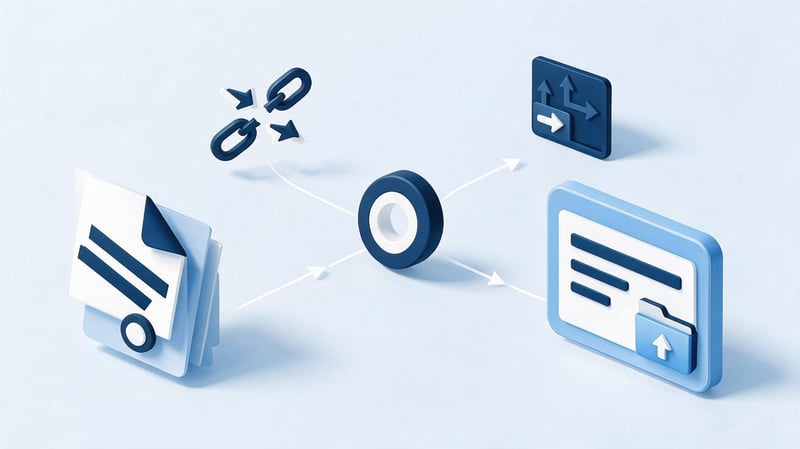
Broken link building is based on broken external links on other websites. A specialist finds a page that links to the deleted material, checks the context, and offers the resource owner a relevant alternative. This method requires good original content that can truly replace the missing source.
This type of work can't be reduced to a mass mailing to every 404 error found. First, we need to ensure that the original link is still needed for the article and that our page matches its topic. A personalized offer with a specific defect found is usually more persuasive than a standard email asking for a link.
Restoring references without a link
A company may be mentioned in news articles, reviews, ratings, and articles without an active link to its official website. Such pages are easily found by searching for the brand name and using special mention monitoring tools. After verification, you can contact the author and suggest adding an official source.
This method is especially useful for well-known companies that regularly appear in the media. It doesn't require creating a new news hook, as the publication already exists. When contacting someone, it's best to explain that the link will help the reader verify the source or redirect them to the official website, rather than demanding that the material be changed for SEO reasons.
Wikipedia, EDU, and other “strong” domains
Wikipedia link building and links from .edu domains are often discussed as separate tactics, although the domain extension itself does not guarantee the placement's value. A link should appear where the resource is truly suitable as a source. Creating artificial pages for the sake of a domain extension usually doesn't provide the benefits it's claimed to provide.
Wikipedia is particularly strict about sources, neutrality, and conflicts of interest. If a company tries to add a promotional description or its own page solely for the sake of a link, the edit may be rejected. It makes much more sense to publish original research that independent authors can use as a source if needed.
Is it worth buying links to promote a website?

The question of whether to buy links to promote a website isn't answered in the same way for every project. Paid publications are common in advertising and PR, but Google differentiates the advertising model from link purchases for the purpose of transmitting ranking signals. Therefore, before publishing, it's important to understand the purpose of the content and the platform's rules.
Purchasing links for promotion requires particularly careful verification, as the market contains many sites created primarily for the sale of publications. A high price also doesn't guarantee quality. First, evaluate the donor and the page, then decide on the format of cooperation.
What does Google consider link spam?
Google classifies link spam as the buying and selling of links to manipulate rankings, excessive reciprocal link building, automated link building, and certain mass publishing schemes. Examples also include low-quality directories and optimized links in forum comments.
Therefore, buying SEO links isn't just a matter of cost or choosing an exchange. It's important to understand how the publication is formatted and why it's being created. Trying to conceal the paid nature of the placement doesn't transform it into a genuine editorial recommendation and doesn't eliminate the potential risk.
When is paid placement okay?
Paid content is regularly used for advertising, sponsorship, native integrations, and PR. Google explicitly states that buying and selling links for advertising and sponsorship purposes is permitted, provided such links are properly qualified with rel="sponsored" or nofollow.
For a business, such a publication can be beneficial due to the platform's audience, recognition, and clicks. Therefore, evaluating paid content solely based on the SEO signal it generates is pointless. If an article is read by the target audience and generates potential customers, it can pay for itself as a marketing placement, regardless of the link attribute.
What links should not be purchased without verification?
Particular caution is required for sites without search visibility, automatically created projects, domains with sudden, unexplained declines, and sites publishing materials on any topic. You should also recheck PBNs of unknown origin, sites that have changed their subject matter, and resources with a large number of suspicious outgoing links.
When deciding which links to buy, you should first determine the minimum requirements for the donor. They check traffic, region, content quality, referring domains, indexation, and the page of the future placement. A link exchange simplifies the search for a suitable platform, but it doesn't replace manual SEO analysis of each specific domain.
How to create a link building strategy?

A link strategy describes which pages need to be strengthened, which platforms are suitable for the project, and how to monitor profile dynamics. Without such a plan, links are often distributed haphazardly: most lead to the homepage, anchors are repeated, and strong commercial URLs go unmentioned.
Link building stages are conveniently structured from analysis to placement and monitoring. First, they evaluate their current profile and competitors, then select landing pages, and compile an anchor list and a donor database. After publication, the work continues through monitoring links, rankings, and organic traffic.
Step 1: Analyze the current state of the site
Before building a backlink profile, you need to understand the starting point. Download backlinks, referring domains, anchor text, landing pages, countries, new links, and lost links. Separately, check which URLs receive the most external link juice and whether there are any old 404 links or redirect chains.
A new website may have limited data, and that's normal. An older project often has years of accumulated placements of varying quality. This audit reveals what's already in the profile, which pages aren't getting enough links, and which old issues need to be addressed before active development begins.
Step 2: Analyze your competitors
You need to select SEO competitors who actually rank high for the desired keyword cluster. A business competitor may sell the same product but have a completely different website structure and show little or no search overlap. Therefore, the list is compiled directly from the SERP.
The number of high-quality domains, performance, anchor text, target URLs, and platform types are compared across several competitors. If one site is significantly different from the others, don't copy its profile as a universal model. It's more useful to look for recurring patterns across several top search results.
Step 3: Determine priority pages
Links are distributed across pages based on their commercial value and growth potential. These can include categories, services, product pages, informational materials, and useful tools. The homepage usually receives mentions organically, so focusing your entire budget on it rarely makes sense.
For each target page, the current rankings are reviewed and compared with competing URLs. If a page is weaker in terms of content or technical optimization, internal issues are addressed first. External strengthening poorly compensates for a page that doesn't meet search intent or is blocked from indexing.
Step 4. Create an anchor list
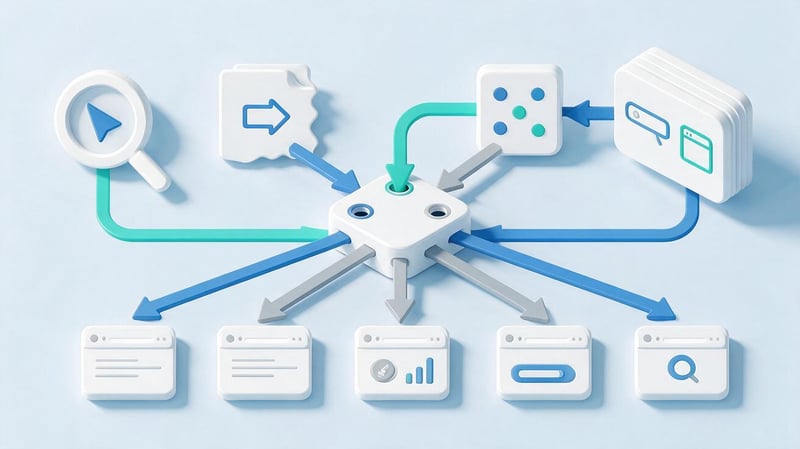
The anchor list is compiled based on the current profile, keywords, and competitor behavior. It includes branded phrases, URLs, a non-anchor link, thematic phrases, and a limited number of commercial anchors. The distribution may vary significantly for each page.
Don't apply a single percentage scheme to all projects. A large brand naturally has many brand mentions, while a young information site is more likely to feature article titles and URLs. Anchors should be regularly reviewed after new posts to ensure the actual profile aligns with the plan.
Step 5. Build a donor database
The database begins with competitors, industry media, industry blogs, directories, partners, and a standard Google search. For complex niches, specialized services and placement platforms are additionally used. It's best to save each website found along with its contact information, metrics, price, and verification results.
This creates a working history of interactions and reduces the risk of repeat outreach to inappropriate sites. If the domain has already been used, the publication date and landing page can be taken into account. This is especially useful for large volumes, when working with dozens or hundreds of potential donors simultaneously.
Step 6. Check the sites
The initial check includes topic, language, region, traffic, keyword count, and basic link metrics. A specialist then opens the site manually and examines recent articles, outbound links, and editorial quality. Automatic filtering helps narrow the list, but the final decision is best made after a manual review.
For expensive placements, stricter verification is recommended. It's useful to review traffic history, data from multiple SEO services, and the actual pages that receive visits. If a site appears questionable, giving up a single link is usually cheaper than trying to fix a weak profile after a bulk purchase.
Step 7: Determine your budget and placement rate
Link velocity describes the rate at which a link profile changes. For a typical project, it shouldn't be a fixed norm like “exactly ten links every month”. The pace depends on the current site size, domain history, brand activity, competition, and the number of truly good publishing opportunities.
If fewer high-quality sites are found in a given month, there's no point in filling the plan with random domains. Conversely, if there's a strong PR incentive, a project can receive numerous natural mentions in just a few days. Therefore, performance is assessed in the context of the actual website activity and industry.
A hypothetical example of the smooth growth of unique domains demonstrates the principle, but does not set the standard:
| Period | Referring domains | Growth vs. the first month |
|---|---|---|
| Month 1 | 20 | 0% |
| Month 2 | 23 | +15% |
| Month 3 | 27 | +35% |
| Month 4 | 31 | +55% |
| Month 5 | 35 | +75% |
This graph illustrates gradual dynamics, while specific project figures are calculated after competitive analysis. Actual growth may be uneven due to PR publications, the emergence of natural links, or the loss of old placements.
Step 8. Prepare content
Material for external publication must be relevant to the platform's audience and explore a standalone topic. If an article exists only as a shell around a link, it's difficult for readers to derive any benefit from it. Editorial platforms also more often accept materials that complement their existing content.
Before writing, agree on the topic, structure, length, and link requirements. Then, select a suitable landing page and a natural anchor. Content for a medical media outlet, a business portal, and a specialized technical blog should differ in depth, terminology, and examples.
Step 9. Post and check the link
The work doesn't end after the article is published. You need to open the published page, check the final URL, response code, anchor, rel attribute, and link accessibility for the user. If the editors changed the address or inserted a link through an intermediate redirect, this is recorded separately.
Meta robots, canonical, and page indexing are also checked. After some time, the page should be reopened to ensure the placement remains intact. This monitoring is especially necessary for bulk purchases, when manually remembering the status of dozens of publications is no longer feasible.
Step 10. Monitor the results
Link building results are assessed based on profile and landing page dynamics, not on paid publications. They monitor the growth of high-quality referring domains, lost links, rankings, visibility, organic traffic, and clicks from published content. For some projects, referral traffic leads are also tracked.
Individual placements rarely produce immediate, noticeable results, so conclusions are drawn from a series of campaigns and over a longer period. If landing pages aren't growing, you need to review not only the links but also their content, intent, internal linking, and the competitiveness of the search results. SEO always requires evaluating several factors simultaneously.
How many links do you need to promote a website?

There's no exact number that's appropriate for all websites. The number of links a site will need depends on its niche, current domain authority, project age, landing pages, and the strength of its competitors. One commercial category might struggle with sites with hundreds of unique donors, while another ranks with a much more modest profile.
Therefore, the quantity is calculated based on a competitive sample and the quality of available platforms. The cost of links to a website also cannot be estimated using a single average price: publications in small industry blogs, national media outlets, and major international publications have completely different price ranges.
What determines the required number of links?
First, they analyze websites that are already in the top positions for the target cluster. They compare links to specific landing pages, overall domain authority, and the internal structure of the projects. If a competitor is gaining rankings thanks to a strong brand and thousands of organic mentions, simply counting links to a single page will be insufficient.
The age and history of our domain are also taken into account. A young project needs to gradually build its profile, while a well-established company can receive natural citations without actively purchasing them. Whether links are needed for website promotion is decided after this comparison, as the same number is rarely suitable for two different niches.
How many links should I buy per month?
The question “how many links should I buy per month” doesn't have a universal numerical answer. For one website, a few high-quality publications might be a reasonable pace, while another project regularly receives dozens of mentions thanks to PR and a large volume of content. It's important to evaluate the overall dynamics of referring domains and the quality of each source.
It's better to base the plan on the budget and the number of suitable sites, rather than on a mandatory quota. If there are five strong donors left in the database, there's no need to add fifteen weaker ones just for the sake of a monthly report. Bulk purchasing is only justified when the quality of the screening is maintained as the volume increases.
What is more important – the number of links or referring domains?
Backlinks show the total number of links found, while referring domains show the number of unique source sites. If one portal places a thousand site-wide links from its footer, the backlinks count grows very quickly, even though there is only one new referring domain.
When analyzing SEO, it's usually more useful to look at both parameters together. The diversity of high-quality referring domains indicates the breadth of a profile, while backlinks help identify sitewide links, repeat mentions, and the structure of specific donors. Simply growing the backlink profile without taking into account the sources can create attractive figures without a comparable practical effect.
Features of link building for an online store

Link building for an online store requires working with a wide variety of page types. A store has a homepage, categories, subcategories, product pages, brands, and an informational blog. If all external links point only to the homepage, the commercial sections receive significantly fewer direct mentions.
The strategy is tied to demand and priority categories. Seasonal products, high-margin categories, and pages with good growth potential can receive special support. Informational content is used for topics that are easier for other sites to link to naturally.
Which pages to promote?
First, select categories and subcategories that match commercial queries and have growth potential. If a page is near the top, high-quality links can be part of an overall effort to strengthen it. However, it's important to first check the product range, texts, filters, meta tags, and internal linking.
Individual product cards are selectively promoted with links, as product selection may disappear or change. For a long-term strategy, categories, brand pages, instructions, and collections are often more convenient. They remain relevant longer and allow for the distribution of internal value among specific products.
How to get natural links for an online store?
An online store can publish demand research, feature comparisons, sales statistics, instructions, and useful calculators. For example, an article with data on a category's seasonality has a higher chance of getting cited than a standard product page. A good source provides the author of a third-party article with concrete facts to cite.
Another approach involves manufacturers and partners. A brand can add a store to its list of official resellers, an industry publication can use its expert, and a blogger can link to detailed instructions. Such opportunities usually arise through the collaboration of SEO, PR, and content teams.
Link Building Methods: What to Use and What Not to Use?
Link building methods vary in cost, manageability, and risks. Some require strong content and lengthy negotiations, while others allow for faster publication but require rigorous site vetting. Link building strategies typically combine several approaches.
| Method | Price | Complexity | Control | Traffic potential | SEO risk |
|---|---|---|---|---|---|
| Digital PR | Medium or high | High | Average | High | Low in editorial format |
| Outreach | Average | High | High | Average | Depends on placement |
| Guest posting | Average | Average | High | Average | Depends on the scale |
| Crowd marketing | Low or medium | Average | Average | Average | High on spam |
| Catalogs | Low | Low | High | Low or medium | Depends on the quality of the catalog |
| PBN | High | High | High | Usually low | Increased |
| Broken link building | Average | High | Average | Average | Low |
| Link insertion | Average | Average | High | Depends on the page | Depends on the scheme |
The table helps compare approaches, but the evaluation varies from project to project. For example, an industry directory might bring in many clients for a local business, while it's almost useless for an international SaaS company.
White Hat Link Building
White hat link building typically refers to methods where a link is generated through useful content, genuine collaboration, or a platform's editorial decision. This can include digital PR, expert commentary, research, high-quality guest posts, partner mentions, and the recovery of unlinked brand mentions.
The main focus of this approach is the publication's value to the platform's audience. Even without SEO considerations, the content should still be meaningful to the reader. This principle helps weed out most dubious schemes even before analyzing the technical parameters of the link.
Gray methods
Gray hat methods typically include tactics where the SEO objective has a greater influence on the link acquisition method. These can include paid editorial placements, large-scale reciprocal exchanges, some link insertion, and working with PBNs. The risk depends on the implementation, volume, and how well the placements comply with search engine rules.
Using the term “gray” as a safety mark is not recommended. If a link is purchased to convey ranking signals, Google describes this practice in its link spam policy, regardless of the quality of the article. Therefore, the decision should be based on the potential consequences, not the color of the arbitrary classification.
Black Hat Link Building
Black hat refers to aggressive schemes based on mass automation, hacked websites, hidden links, and other manipulation techniques. Such methods can quickly generate a large number of backlinks, but the quality of the sources and the control over their survival typically remain low.
For a long-term project, such schemes create unnecessary risks and complicate profile auditing. The company receives thousands of links, the origin of which is difficult to explain and control. It's much more practical to invest in platforms that have an audience, a clear editorial policy, and a connection to the business's topic.
Common mistakes in link building

Mistakes are more likely to occur when work devolves into mechanically fulfilling a quantity plan. The team buys available publications, fails to analyze the target pages, and only notices problems after the profile quality has declined. Proper monitoring begins even before negotiations with the donor.
It's useful to maintain a single placement table with the donor URL, landing page, anchor, date, cost, link attribute, and recheck result. This history helps you identify duplicates, lost placements, and page biases.
Evaluate the site only by DR
Domain Rating is convenient as a quick filter, but it doesn't tell the whole story. A site with a high DR rating can lose almost all search traffic, change its topic, or start selling articles en masse. The rating will remain attractive, even though the resource's quality has already changed.
Therefore, DR is checked along with traffic, keywords, dynamics, and link environment. For important publications, it's useful to open a historical visibility graph and a few recent articles. A few minutes of manual verification often yields more information than a long table of metrics.
Buying links without traffic analysis
A site with no organic traffic can have good link metrics, especially if the domain previously belonged to another project. Before publishing, it's important to check its visibility history and understand which pages are currently attracting users. Zero traffic requires an explanation, not an automatic rejection or agreement.
Sometimes a new industry resource hasn't yet accumulated traffic, but it publishes strong content and has a real audience from other channels. Therefore, this metric only works in context. Decisions are made based on a site review, not a single threshold value in a table.
Using too many commercial anchors
Repeating a single money keyword across dozens of links creates an unnaturally monotonous anchor profile. This is especially noticeable on young sites that have few brand mentions or URL links. Commercial anchors should be used sparingly and only where they read naturally.
Before a new placement, it's helpful to download the existing anchor text for your landing page and domain. If a certain phrase is already appearing too frequently, you can replace it with a brand, URL, or relevant phrase. This type of control takes little time and reduces the risk of accidental spam.
Post on irrelevant websites
High metrics often lead to ignoring the donor's topic. As a result, an accounting service might receive a link from a gardening article, while a medical clinic might receive a link from a cryptocurrency blog. It's difficult for users to understand the reason for such a transition, and the publication itself appears artificial.
Sometimes a broad business or news media outlet suits multiple niches, so a literal category match isn't necessary. It's important to evaluate the specific article's purpose and the section's audience. If the connection can be explained by sound editorial logic, the platform may be quite relevant.
Building a sharp mass increase in links
A large number of new links doesn't necessarily indicate a problem: a well-known company can receive hundreds of mentions after a major news story. Suspicions arise when a young, unknown website suddenly receives numerous similar placements with identical anchors on similar sites.
When purchasing in bulk, it's important to maintain quality and diversity of sources. If increasing volume forces you to lower your filters, it's better to slow down. Link velocity should be analyzed in conjunction with the reason for the links' creation and the brand's overall activity.
Don't monitor lost links
After publication, a link can disappear due to a redesign, article update, website move, or page deletion. Sometimes the editorial team changes the URL, sets a noindex, or adds a redirect that breaks the link flow. If such situations are not monitored, the actual profile gradually diverges from the report.
Lost links should be regularly downloaded from SEO services and compared with your own database. For valuable placements, you can contact the platform and clarify the reason for the change. In some cases, the link can be restored quickly, especially if the deletion occurred during maintenance.
Copy your competitor's strategy one-to-one
A competitive profile shows the market, but it doesn't provide a ready-made plan for our website. Another brand may have been around for ten years, have strong PR, and receive natural links without any agreements. Trying to replicate their current numbers in a few months leads to the wrong pace and wrong choice of platforms.
From competitor analysis, you should identify recurring patterns: types of donors, strong content, link distribution, and available industry platforms. This data is then adapted to your own website structure, budget, and priority URLs. A link strategy should always take into account the project's actual starting point.
What tools are used for link analysis?

Several backlink management services are used because their databases and calculation metrics differ. One tool may find new backlinks faster, another is more convenient for showing historical dynamics, and a third is better suited for analyzing your own website. Discrepancies between the figures are normal.
No service sees the entire internet or displays Google's internal algorithm data. Therefore, these metrics are used for comparison and to identify patterns. A decision on a specific donor is made by combining these tools with a manual review of the site.
Google Search Console
Google Search Console displays some information about links to your verified site. The reports show the most frequently linking resources, popular landing pages, and common anchor texts. This data is suitable for a basic understanding of your profile and doesn't require a third-party paid service.
GSC isn't designed for detailed competitive analysis, as you can't connect other people's websites to your account. Furthermore, the report shouldn't be considered a complete inventory of all existing backlinks. For in-depth analysis, it's usually supplemented with external SEO tools and your own placement history.
Ahrefs
Ahrefs is widely used for backlink analysis, referring domains, anchor text, and the dynamics of new or lost links. The service is convenient for studying individual competitor pages, identifying link gaps, and seeing which domains are simultaneously linking to multiple search results.
The Domain Rating metric is also specific to Ahrefs and shows the estimated strength of a domain's backlink profile within the service's system. DR is useful for sorting and comparing, but it doesn't replace traffic and topic verification. For a serious site selection, the data should always be supplemented with manual review.
Serpstat
Serpstat allows you to analyze link profiles, referring domains, and competitors within a single SEO platform. This service is convenient when semantics, rankings, and external links are already tracked in a single project. This simplifies comparing link dynamics with visibility changes.
When checking individual donors, Serpstat can be used as an additional data source. If the results differ significantly from those of another service, it's better to manually examine the domain's history. Discrepancies are often due to different internet crawl speeds and the unique databases of each tool.
Majestic
Majestic specializes in link data and is known for its Trust Flow and Citation Flow metrics. Trust Flow is used to assess the quality of a link environment, while Citation Flow reflects its quantitative strength. These metrics are convenient for comparing similar sites and spotting noticeable anomalies.
Like other third-party metrics, TF and CF are not Google metrics. A high value doesn't negate the need to check the topic, visibility, and outbound links. Majestic is best used as a source of analysis, not as an automatic filter for determining whether a site is good or bad.
Moz
Moz uses Domain Authority and Spam Score, which are commonly found in donor tables. Domain Authority evaluates the likelihood of a domain ranking competitively within the Moz model, while Spam Score indicates the presence of features statistically associated with problematic sites in the service's database.
This data helps quickly identify domains for further review. However, a high Spam Score is not proof of sanctions, and a high DA does not guarantee high-quality publication. A final decision requires reviewing the site itself and its search performance.
Similarweb
Similarweb is used as an additional source of information on audiences, traffic channels, and visitor geography. It is especially useful for large websites, where it is possible to compare the share of search, direct visits, social media, and other channels. For smaller sites, the estimated data may be limited.
If a site is attractive due to its real audience, Similarweb helps supplement SEO metrics with marketing context. For example, a strong industry media outlet may receive a significant portion of its visitors directly and from newsletters. Such a site shouldn't be evaluated solely by organic search.
How to evaluate the effectiveness of link building?

It's best to track performance at several levels. The first level shows progress: how many high-quality domains have been added, whether publications are intact, and whether links are being routed correctly. The second level links external changes to rankings, organic traffic, and landing page performance.
The third level concerns marketing: referral traffic, branded searches, leads, and company mentions. Some PR publications have little direct SEO impact, but they do generate leads and new citations. Therefore, evaluating the number of dofollow links alone leaves a significant portion of the results outside the report.
Key indicators can be conveniently monitored together:
- The growth of high-quality referring domains shows the expansion of the link profile due to new sources.
- New links and lost links help monitor the actual dynamics and survival of published materials.
- Landing page positions show changes in priority query clusters over the selected period.
- Organic traffic helps you see if the search audience for pages that have received external boosts is growing.
- Referral traffic shows real user clicks directly from sites where links are placed.
- Brand mentions help evaluate the broader impact of a company's PR and presence on third-party platforms.
It's best to monitor these metrics dynamically, comparing them with content changes, technical edits, and website updates. This way, link building isn't separated from other SEO efforts, and the causes of growth and decline are easier to isolate.
A Quality Link Checklist
Before a new placement, it's helpful to go through a consistent set of checks. This checklist reduces emotional decisions like “the site has a high DR, so we'll take it” and helps compare platforms using consistent criteria. For large volumes, the results can be saved directly in the procurement worksheet.
The following parameters are worth checking:
- Does the topic of the website or a specific section correspond to the project being promoted?
- Do the site's language and region match the page's target audience?
- Does the site have stable organic traffic and search visibility?
- Does the history show any sharp, unexplained drops in traffic?
- Which referring domains shape the donor's profile.
- Which sites does the platform regularly link to from new articles?
- Are new publications indexed and accessible to search robots?
- Do the materials have authors, editorial logic and useful content?
- Does the future article correspond to the topic of the page to which the link leads.
- How naturally the anchor reads within the surrounding sentence.
- Does the link directly point to the correct URL without unnecessary redirect chains?
- What rel attribute is used and does it match the nature of the placement?
- Can a publication bring in real interested users?
- Has this donor been tested before and what results have previous placements produced?
After verification, the decision is recorded along with the reason for acceptance or rejection. This history is especially useful after several months, when hundreds of sites appear in the database and it's necessary to quickly understand why a specific domain was rejected.
Link building begins with analyzing the site, competitors, and search results. Then, priority pages are identified, a link strategy is developed, donors are verified, and appropriate methods for acquiring external links are chosen. The quality of the source, thematic relevance, and the state of the specific page are more important than simply increasing the backlink count.
Regular monitoring helps quickly identify lost links, anchor text inconsistencies, and weak sites. If a project requires systematic SEO link promotion, Seo-Gen can begin with an analysis of the current profile and competitors, then create a placement plan for the site's priority pages.


