Methods of external SEO website optimization


Off-page SEO involves working with backlinks, brand mentions, third-party publications, reviews, and other signals that appear outside the website being promoted. These factors help search engines understand how well-known a resource is in its field and whether it is trusted by other sites.
Off-page optimization methods depend on the niche, the site's age, its current link profile, and the level of competition. Some projects may need to first clean up the effects of old link building, others may need to secure their first relevant mentions, and still others may need to expand the number of high-quality referring domains. Therefore, the work begins with analysis, and only then does it move on to placements.
What is off-page SEO and why is it needed?
Off-page SEO, or external SEO, involves activities outside the website itself that impact its authority, visibility, and link environment. Incoming links from other domains play a key role here, but backlinks are only part of the overall picture. Search engines also see which resources mention the company, the context in which they do so, and how naturally the link profile develops.
Effective external website promotion helps expand the number of high-quality touchpoints with your target audience. Users can navigate to a page from an industry article, media publication, company directory, or expert discussion. At the same time, search engines receive additional data about the resource's subject matter and its connections to other websites.
How is external optimization different from internal optimization?
Internal optimization is performed directly on the website. A specialist addresses the structure, content, headings, meta tags, internal links, technical errors, indexability, and loading speed. This work helps search engines crawl pages correctly, understand their content, and select relevant documents for search queries.
Off-page SEO focuses on the website's environment. It analyzes backlinks, referring domains, anchor text, third-party publications, brand mentions, and reputational platforms. It's impossible to completely separate these areas: a link to a weak page rarely compensates for issues with content, technical condition, or search intent.
| Direction | What is analyzed and changed? | Examples of work |
|---|---|---|
| On-Page SEO Optimization | The site itself and its pages | Content, meta tags, interlinking, speed, indexing |
| External SEO optimization | Link and information environment | Link building, outreach, digital PR, reviews, directories |
| Technical SEO | Website accessibility for robots | Canonical, robots, sitemap, redirects, duplicate URLs |
While separation is convenient for planning, the results need to be assessed together. Link profile growth makes sense when a landing page responds to a user's query, is indexed, and receives internal links from other relevant pages on the site.
What external signals are important for SEO?
When analyzing a link profile, consider more than just the total number of backlinks. Ten editorial links from relevant sites may look more natural and provide more value than hundreds of similar placements on sites with no audience. The source, context, link type, landing page, and history of the domain itself are all important.
Additionally, link acquisition speed, anchor text distribution, and the number of unique referring domains are assessed. Brand mentions, expert publications, and the company's presence on relevant resources are also checked. The DR and DA metrics help compare websites within third-party services, but Google does not use these metrics as its own ranking metrics.
Answers to your questions
What is external website optimization?
Off-site website optimization involves working with links, brand mentions, publications on third-party resources, reviews, and other signals outside of your own domain. These actions help develop your link profile, attract traffic from relevant sites, and strengthen your website's presence in your niche.
This work typically runs in parallel with on-page SEO. First, a specialist checks the technical condition and content of landing pages, then analyzes the external environment. Strong backlinks rarely correct a page that doesn't respond well to a user's query or has indexing issues.
What are the most effective off-page optimization methods?
There's no one-size-fits-all approach. Industry media and digital PR work well for some projects, while guest posts, directories, and partner sites work well for others. Information projects often receive links to research, free tools, and detailed reference materials.
In practice, off-page optimization methods are combined. This helps to obtain links from various sources and avoid dependence on a single channel. When choosing, consider the niche, competitors, budget, geography, and the project's ability to create content that is genuinely interesting to third-party sites.
What are the stages of external website optimization?
The work begins with an audit of the existing link profile. It's important to understand which domains are already linking to the site, where the backlinks lead, what anchor text is used, and whether there are any problematic placements. After this, the profile is compared with competitors in the target search results.
The next step is strategy. The specialist selects pages for promotion, creates an anchor list, searches for suitable sites, and assigns methods. Only after this preparation does the acquisition of new links and regular monitoring of their status begin.
How to identify a quality donor site?
A high-quality donor site should be relevant to the topic, have normal search visibility, and have real visitors. The language and country of the audience, the quality of publications, the domain history, and the number of irrelevant outbound links are also important. Verification should include a manual review of the site.
DR or DA can be used for initial filtering, but this metric alone is not enough. Sometimes a resource with a lower DR is better suited to a niche and attracts a larger target audience than a large, general-purpose site with a high authority score.
How many external links does a website need?
There's no fixed amount. The required volume depends on the competitiveness of the search queries, the number of pages being promoted, the existing profile, and the quality of available platforms. Two websites in the same niche may be in completely different positions due to the age of the domain and its promotion history.
Therefore, they first study search results and competitors' links. After that, they determine not just an abstract number of backlinks, but a benchmark based on high-quality referring domains, site types, and the rate at which they appear.
What is better – one strong link or many cheap links?
Comparing links solely by quantity is inaccurate. A single editorial publication on a relevant resource with a real audience can generate clicks and enhance a link profile. A large number of weak placements can increase the number of backlinks without providing comparable benefits.
However, the strategy isn't built around a single “perfect” link. A diverse profile is needed, encompassing different platforms, anchor types, and publication formats. The quality of each source remains a fundamental requirement.
Is it possible to promote a website without buying links?
Yes, some links can be obtained without paying the platform. This can be achieved through digital PR, expert commentary, partnerships, research, free tools, statistics, and other content that editors are willing to link to themselves.
This approach requires time and resources for preparing materials and communications. Furthermore, in commercial niches, completely eliminating paid formats can be difficult. The decision depends on the market, available platforms, and the chosen strategy.
Stages of external website optimization

The stages of off-page website optimization are structured in a sequential manner: first, a specialist studies the current state, then compares it with competitors, identifies landing pages, develops a strategy, and only then begins to acquire new links. This order reduces the risk of unsystematic placements that waste budget without a clear connection to the project's objectives.
Once promotion has launched, the work continues. Links may disappear, donor pages may drop out of the index, competitors may receive new mentions, and business priorities may shift. Therefore, a link strategy requires regular monitoring and adjustment based on search visibility, traffic, and link profile health.
Step 1. Audit of the current link profile
An audit shows where the promotion process begins. Using Google Search Console, Ahrefs, Semrush, or another service, a list of incoming links and domains is compiled, then their quality, type, and distribution are checked. A separate analysis is made of which website pages receive the most external links and whether this aligns with current commercial priorities.
It's useful to compare new and lost backlinks over several months. Drastic changes require separate review: sometimes they're related to technical migrations, deletion of old posts, or changes on donor sites. Also analyzed are the anchor list, the share of branded anchors, URL occurrences, commercial phrases, and standard non-anchored wording.
What problems need to be identified before starting promotion?
The first risk is a skewed link profile. This occurs when a significant portion of links point to a single page, use identical commercial anchors, or originate from similar resources. Such a profile may be the result of an old strategy, automated placements, or link purchases without prior analysis.
The second risk is related to the quality of donors. It's important to separately check resources without organic traffic, sites with a large number of outgoing commercial links, irrelevant domains, and pages that are no longer indexed. At the same time, it's useful to identify valuable lost links and backlinks leading to 404 errors or old URLs after changes to the site structure.
Step 2. Analyze your competitors' link profiles
Competitive analysis helps understand the real level of search competition. You shouldn't compare random, large industry sites, but domains and pages that regularly appear in Google for the relevant search queries. These are checked for the number of referring domains, the quality of the sites, the types of content, anchor text, and the pages that receive the most external links.
Analyzing common sources is especially useful. If several strong competitors receive links from the same industry portal, directory, or media outlet, the platform should be checked separately. However, copying someone else's profile doesn't guarantee results: some of the links may have been generated years ago, were obtained through a partnership, or are related to a different business model.
How to find opportunities to get new links?
The search uses a link gap—a list of domains that link to competitors but don't yet link to the site being analyzed. After exporting, the list is manually cleaned. It may include industry media, industry blogs, company directories, partner projects, regional portals, and expert platforms.
Each domain is checked for relevance and feasibility. A site that publishes materials about banking products may not be suitable for a medical clinic or SaaS service. Priority is given to resources where the future link appears to be a natural part of the content and can attract the target visitor.
Stage 3. Developing an external promotion strategy
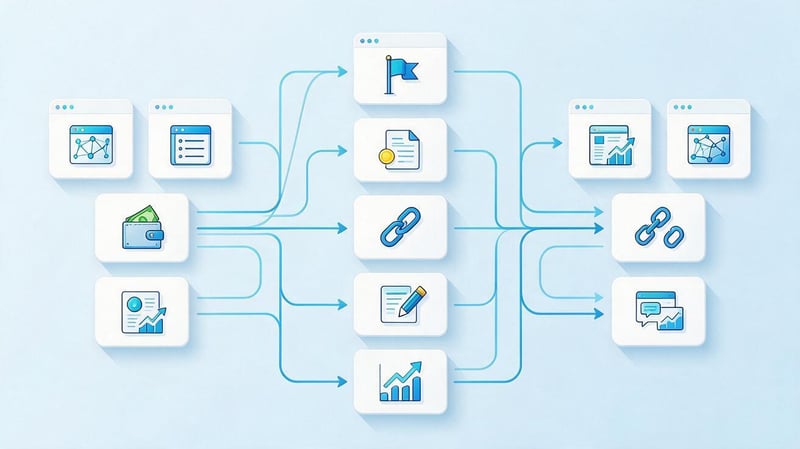
The strategy aligns off-page SEO with specific pages and business objectives. First, the URLs that need boosting are selected, then suitable donor types, anchor text, and link acquisition methods are determined. Commercial sections may require one distribution, while informational articles may require another.
They also set the pace of work and budget. A new website typically doesn't need to replicate a major competitor's backlink profile in a single month. It's much more beneficial to build consistent growth, with new referring domains appearing regularly and sources varying in type, topic, and publication format.
Which pages should be promoted with external links?
Pages should be selected based on potential, not just current traffic. A commercial URL that's already near the first page of search results may receive higher priority than a section without relevant content and visibility. For each page, the intent, competitors, internal links, and its own link profile are assessed.
In addition to commercial landing pages, external links can lead to articles, studies, calculators, tools, and other linkable assets. Such content is easier to recommend to editors and authors of relevant materials. Some of the resulting authority is then distributed within the site through natural internal linking.
Step 4. Preparing the anchor list
Anchor text is the visible text of a link that takes a user to another page. Anchor text helps understand the context of the click, so it's important to ensure its diversity when promoting external content. A link profile typically includes branded phrases, a website address, non-anchor words, informational phrases, and commercial queries.
The anchor list is prepared taking into account existing backlinks and competitor data. There is no single ratio for all projects. An online store, a local clinic, and an international SaaS service require different models. A natural link profile typically contains a large number of branded, URL-specific, and diluted phrases.
Why is it dangerous to use too many exact anchors?
While exact match keywords are convenient for a specialist, editorial links in regular publications are rarely built using this method alone. If most new placements use the same keyword, the profile begins to look artificial and monotonous. This bias is especially noticeable with a small number of referring domains.
Dilution doesn't mean mechanically replacing words with synonyms. The anchor text should be relevant to the sentence and explain to the reader where the link leads. Sometimes it's more natural to include a brand name, website address, or neutral wording. Therefore, distribution is prepared for the entire profile, not for a single batch of placements.
Step 5. Search and evaluate donor sites
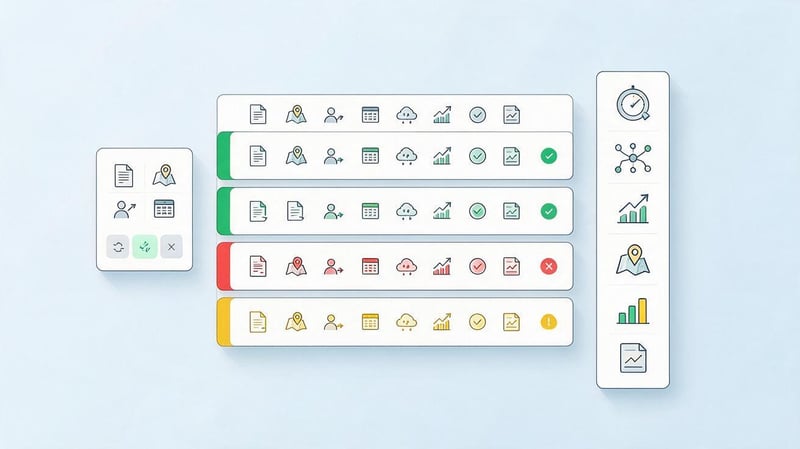
The donor site is evaluated based on several parameters simultaneously. Thematic relevance, audience geography, and organic traffic are primarily assessed. If the site is thematically related, has real visitors, and regularly achieves search visibility, a link from it usually seems more logical than placing a link on a general-purpose portal with no niche connection.
Next, they examine the content quality, traffic dynamics, page indexation, and the number of external links. It's helpful to manually open several new publications and see who owns them, whether there's an editorial logic, and how often they feature advertising. This type of review can sometimes provide more information than a single number from an SEO service.
What metrics should be used to evaluate a donor?
DR, DA, organic traffic, number of keywords, and referring domains help quickly filter a large database of sites. These metrics are derived from third-party tools, so they should be used as benchmarks. A high DR value does not guarantee quality placement, especially if a site has lost visibility or publishes content on dozens of unrelated topics.
It's useful to compare metrics over time. A sharp drop in organic traffic, a massive increase in external publications, or a large number of irrelevant commercial articles require additional verification. A niche site with moderate metrics and a vibrant audience often appears safer than a large, general-purpose resource created primarily for link sales.
Lead SEO specialist — Gennady
I don't start off-page optimization by buying links. First, I compare the site's current link profile with competitors: which pages are receiving links, where they come from, what anchor text is used, and whether the donors have real search traffic. Only then do I develop a placement plan. High DR alone isn't an argument for me – a niche site with a live audience is often more valuable than a platform with strong metrics that exists primarily to sell links.
Step 6. Obtaining and placing external links
Once the strategy is developed, work begins on specific platforms. Links are acquired through outreach, guest articles, media publications, directories, partner materials, expert commentary, and other off-page optimization methods. The format depends on the niche: local businesses benefit from regional resources, while B2B projects benefit from industry media and professional communities.
Placements are distributed over time and across landing pages. There's no need to create the same number of links every week, but sudden, artificial spikes without a clear reason are undesirable. Each new link should have a clear purpose: supporting a commercial page, reinforcing informational content, or expanding a brand's presence.
Stage 7. Monitoring results and adjusting strategy
After placement, they check to see if the link is still intact, if the donor page is indexable, and if any attributes have changed. If the backlink leads through an unnecessary redirect, to a deleted page, or to an incorrect language version, it's best to detect the problem immediately. New and lost domains are monitored separately.
The results are assessed comprehensively. A change in ranking for a single query cannot be reliably attributed to a single new link, as content, competitors, and search algorithms are all changing simultaneously. Therefore, the dynamics of a group of landing pages, organic visibility, traffic, referral traffic, and the development of the entire link profile are assessed.
Basic methods of external website optimization

Off-page optimization methods vary in cost, labor intensity, and link acquisition method. In some cases, simply adding a company to a high-quality industry directory is sufficient, while others require research, expert content, and several weeks of communication with editors. There's no single method that works for all projects.
It's best to combine multiple sources and formats. This approach helps avoid a monotonous profile and expands the brand's reach. When choosing a method, consider the topic, available budget, the value of the future page to the audience, and the possibility of receiving adequate editorial placement.
Link building
Link building involves systematically acquiring external links. A specialist searches for sites, evaluates their quality, selects a publication format, and monitors the results. When properly approached, link building is tied to content and the audience's actual interests, not the number of URLs reported.
The most sustainable strategies are built around topical relevance and diversity. Links can come from media publications, industry reviews, directories, partner materials, and original articles. Diversified sources create a more natural picture than mass-producing identical guest posts.
Outreach
Outreach begins with finding a specific platform and the person who makes publication decisions. After that, a personalized message is prepared: suggesting an article topic, expert commentary, research data, or other material that aligns with the interests of the resource's audience.
Sending a single mass email to hundreds of addresses usually yields a weak response. Editors need to understand why the offer is suitable for their website and how readers will benefit. Therefore, high-quality outreach requires manual database preparation, contact verification, and effective communication after the first email.
Guest Posts
Guest posting involves publishing original material on an external platform. A good guest article explores a standalone topic and remains useful even without a click. The link is placed where it complements the argument, provides a source, or leads to a relevant page.
Before preparing a piece, it's important to research the platform's format, the level of its content, and the interests of its audience. If an article is written solely for backlinks and doesn't adhere to the editorial policy, the value of such placement is diminished. Thematic guest posting works best with proper site selection and tailored content.
Media Publications and Digital PR
Digital PR helps generate mentions through news, research, expert commentary, and the company's own data. For example, a service can publish user behavior statistics, an agency can publish market research, and a bank can publish analytical data on popular transactions without disclosing confidential information.
Journalists and editors are more likely to link to content that contains original information or helps expand on the publication's topic. Therefore, a PR campaign can generate brand mentions, referral traffic, and backlinks simultaneously. However, a link can't be guaranteed in every editorial piece.
Crowd marketing
Crowd marketing works through thematic discussions, forums, Q&A platforms, and communities. A link is appropriate when it genuinely helps answer a user's question. If an account is created solely to post generic URLs, this format quickly turns into spam and is often removed by moderators.
A good crowd marketing campaign starts with choosing a live discussion. The author answers on topic, provides a solution, and only then adds a relevant source if the answer would be incomplete without one. Even without an active link, the presence of an expert can generate brand traffic and additional mentions.
Directories and industry listings
Directories are useful for companies with a distinct industry, region, or physical location. These can include professional associations, industry-specific supplier lists, regional business directories, and services with company listings. The main requirement is that the platform be vibrant and useful to users.
Automatically submitting to thousands of directories doesn't produce the same results. Typically, a significant portion of these resources lack an audience, haven't been updated in a long time, or contain spam. It's better to select a limited number of high-quality directories, complete your profile completely, and ensure consistency in your company information.
Broken Link Building
Broken link building is based on broken external links on other websites. First, they find the page that links to the deleted material, then check the topic of the old resource. If a suitable replacement exists on the website being promoted, the page owner can be asked to update the link.
This method only works when the materials are closely related. Suggesting a commercial landing page in place of a missing study is pointless. An editor is more likely to replace a link if the new source truly fulfills the same function and helps maintain the quality of their own page.
Linkable Assets
Linkable assets are materials that can be easily referenced as a standalone source. These include research, statistics, calculators, free tools, templates, extensive reference guides, and original datasets. They are created with the audience's real-world information needs in mind.
For example, a typical article on “what is SEO” competes with thousands of similar materials. A market-specific SEO cost study, an interactive calculator, or an up-to-date database have more incentive to earn a natural link. Such content can also be used in outreach and digital PR.
Recovering lost links and unlinked mentions
Useful backlinks disappear over time. An author might update an article, a website might change its structure, and the old page might start returning 404 errors. Regularly checking lost links helps you find valuable placements and contact the resource owner if the link can be restored correctly.
A separate category is unlinked mentions. A company is already mentioned in an article, review, or news story, but the brand name isn't linked. If linking to the official source truly helps the reader, the editors can suggest adding the URL. This request is usually simpler than cold outreach, since the brand is already present in the material.
Brand mentions
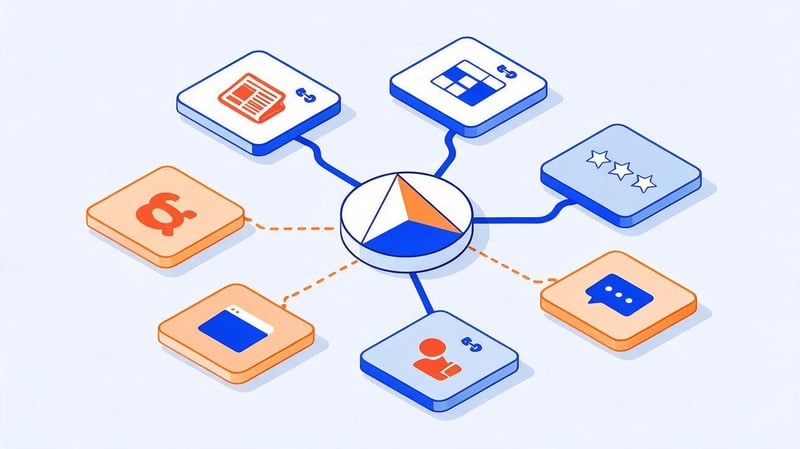
Brand mentions show where and in what context a company is discussed outside of its own website. Sources can include media outlets, industry reviews, ratings, forums, social media, and expert materials. Some mentions contain a link, while others remain plain text.
Don't automatically consider every unlinked mention a direct factor in link equity transfer. For SEO purposes, it's more beneficial to view such publications as part of a brand's overall awareness and media presence. They can attract users, stimulate branded searches, and create additional opportunities for future links.
Reputation management and reviews
Reviews influence user decisions even before they reach the official website. For local businesses, Google Business Profiles, industry directories, maps, and specialized services are especially important. Online stores also work with marketplaces and platforms where customers can compare companies before purchasing.
Asking customers to leave genuine reviews is acceptable, but creating fictitious ratings is prohibited. In addition to reputational risks, fake reviews and fictitious AggregateRatings can lead to issues with trust and structured data. Our approach is built around genuine customer experiences and the company's normal response to feedback.
Local SEO
For businesses operating in a specific city or region, part of off-page optimization revolves around local signals. These include a properly completed Google Business Profile, consistent contact information, genuine reviews, and mentions on regional resources.
NAP data—name, address, and phone number—must be consistent across sites. Regional media, business directories, city portals, and partner sites are also helpful. Local SEO is particularly sensitive to geography, so placement on a relevant city resource may be more logical than a link from a large, general directory.
Social media and working with opinion leaders
Social media helps spread articles, research, and other materials that can generate further mentions. A publication may be noticed by journalists, bloggers, or website owners, leading to additional links. This effect isn't guaranteed, but it does expand the reach of the content.
Working with influencers is similar: audience relevance is paramount. A link from a profile or social media post shouldn't be seen as an automatic transfer of SEO value. The value may lie in clicks, reach, branded searches, and subsequent distribution of the material.
What types of external links are used in SEO?

A link profile contains different types of links, and each one must be evaluated in the context of the page. Technical attributes, anchor text, placement, and source all provide different signals. Therefore, categorizing all backlinks into “good” and “bad” based on a single criterion is insufficient.
A natural profile typically contains a variety of formats. It includes branded anchors, URLs, links from articles, company profiles, user-generated content, and editorial publications. This diversity emerges naturally as a project develops and should be considered in planned link building.
Dofollow and nofollow
A regular link without a restrictive attribute is often informally called a “dofollow” link. The rel="nofollow" attribute indicates to search engines the special nature of the link. Also used are rel="sponsored" for sponsored placements and rel="ugc" for user-generated content.
Nofollow links shouldn't be automatically considered useless. They can bring in targeted visitors, help distribute content, and be a natural part of a website's profile. When analyzing, it's more important to consider the source and context rather than focusing solely on one technical type of backlink.
Anchor, branded, and non-anchor links
Anchor links use text that describes the destination page. For example, a link might contain the name of a service or an informational phrase. Branded anchors use the company name, while non-anchored versions look like a URL, “on the website”, “more information”, or other neutral text.
Different formats are needed for natural distribution. If a profile consists almost entirely of commercial keywords, it poorly reflects the typical behavior of website authors. In real publications, the brand name and resource address appear frequently, so their share should be taken into account when developing a strategy.
Natural and placed links
A natural backlink appears without prior agreement with the owner of the website being promoted. The author independently selects the source and links to it in their content. Such backlinks often include research, tools, statistics, and reference materials with unique value.
A placed link appears as a result of outreach, PR, guest posting, partnership, or other promotional process. The mere fact of communication doesn't make a link bad. Quality depends on relevance, context, platform, and the publication's usefulness to the reader.
How to choose a high-quality donor site?
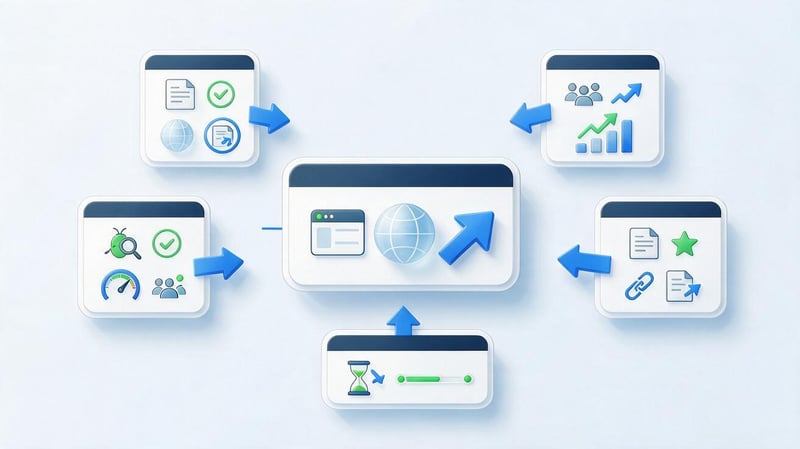
Selecting a donor site begins with the topic. The site should have a logical connection to the page or business being promoted. Then, they check the audience, organic traffic, search visibility, and domain history. It's useful to look at which sections receive visits and whether their topic matches the intended placement.
Next, the resource is checked manually. The last few articles will show how often commercial content is published, whether there is an editorial logic, and whether the site has been turned into a collection of guest posts. Indexing, outbound links, and the quality of the site's own backlink profile are also checked.
Before posting, you can use the following checklist:
- The site's theme is related to the business or content of the landing page.
- The main traffic corresponds to the desired country and language of the audience.
- Organic visibility is maintained or developed without suspicious gaps.
- The content is updated regularly and appears to be prepared for real readers.
- New articles are indexed and receive at least minimal search visibility.
- The site does not contain an excessive amount of irrelevant commercial publications.
- The link is placed within the thematic material, and not in a random block.
- The page has the potential to attract visitors who are interested in the topic.
After such verification, metrics become additional confirmation, and not the only reason to buy placement.
What's more important: DR, traffic, or relevance?
A single metric doesn't fully describe a site's quality. DR measures the strength of a site's link profile within Ahrefs' logic, but it doesn't say anything about whether a site is being read by potential customers for a particular business. High traffic also requires verification: it may be coming to pages that are completely unrelated to the desired topic.
Therefore, these parameters are considered together. A specialized resource with vibrant organic traffic and moderate DR may prove a more suitable donor than a large portal with strong numbers but dozens of unrelated categories. For a local project, the region and language of the audience are additionally considered.
What external optimization methods can harm a website?
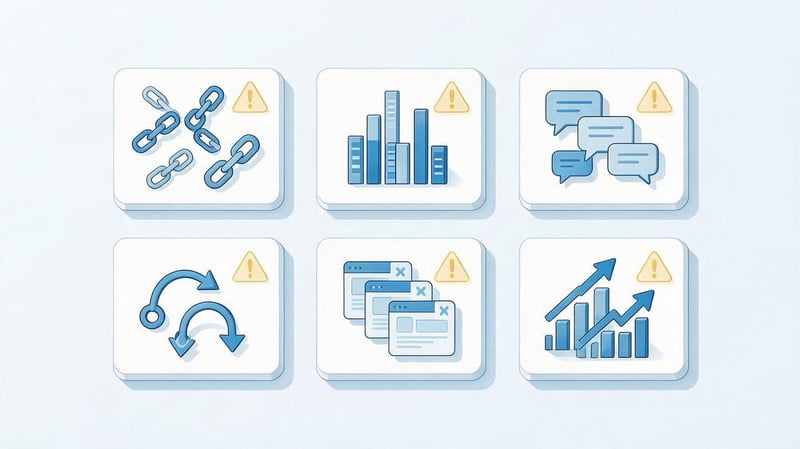
The main risk arises when attempting to replace strategy with quantity of placements. Massive backlinks from similar resources, automated directories, comment spam, and hundreds of identical anchors create a profile that is difficult to explain as a natural development of the site. Moreover, a significant portion of these backlinks do not bring in real users.
It's also dangerous to ignore the donor's topic and history. Even an attractive price or high DR won't compensate for the lack of good content and an organic audience. Growth rate, landing page distribution, and recurring placement patterns should be monitored separately.
Questionable practices include:
- bulk purchase of cheap links without manual verification of each donor;
- automatic website registration in hundreds of abandoned directories;
- posting links in irrelevant comments and discussions;
- using the same commercial anchors for most placements;
- working with websites without real traffic and stable indexing;
- concentration of almost all new backlinks on one landing page.
Such methods often produce a nice increase in the number of backlinks in the report, but the number of links itself does not indicate the real quality of the promotion.
Should toxic links be removed?
The term “toxic link” is often used by SEO services as their own risk assessment. This automated assessment shouldn't be taken as a directive to immediately remove or disavow every backlink detected. First, consider the source, how the link appeared, its context, and the scale of the problem.
If suspicious domains constitute a small, random portion of a larger, natural profile, the situation differs from the systematic history of mass spam. Link disavowal tools are used after analysis and for a clear reason, not for the sake of achieving a supposedly attractive toxicity score in a third-party service.
How to evaluate the effectiveness of off-page SEO optimization?
The off-page SEO report should show profile development and landing page changes. It's useful to track the number of new referring domains, lost backlinks, donor quality, anchor text distribution, and the share of links between priority URLs. This data explains the progress made.
Business results are assessed based on search visibility, organic traffic, cluster positions, and referrals from external platforms. Some projects also track brand demand and leads from referral traffic. This set of metrics better reflects the impact of promotion than the growth of a single third-party metric.
An example of the dynamics of external SEO control:
| Indicator | Before starting work | In 3 months | What to analyze |
|---|---|---|---|
| Referring domains | 120 | 146 | Quality and relevance of new domains |
| Lost domains | 8 | 3 | Reasons for loss and possibility of recovery |
| Landing pages with links | 14 | 23 | Uniformity of distribution |
| Referral traffic | 420 | 610 | Sites that bring real users |
It's more convenient to show the growth dynamics of referring domains as a percentage:
| Period | Referring domains | Increase compared to the previous month | Increase from the starting value |
|---|---|---|---|
| Month 1 | 120 | Starting value | 0% |
| Month 2 | 129 | +7.5% | +7.5% |
| Month 3 | 137 | +6.2% | +14.2% |
| Month 4 | 146 | +6.6% | +21.7% |
Over four months, the number of referring domains increased from 120 to 146, a 21.7% increase from the starting point. This growth should be assessed alongside the quality of new sites, changes in search visibility, and landing page results.
How long does it take for external optimization to produce results?

There's no fixed timeframe. Speed is affected by competition, domain age and history, site health, page crawl frequency, the quality of new links, and the quality of the landing pages themselves. In some niches, changes will be noticeable relatively quickly, while in others, several months of consistent work will be required.
New backlinks are also not taken into account simultaneously. First, the search engine robot must find the donor page and process the changes. Then, the signal interacts with dozens of other factors. Therefore, it's more accurate to analyze the trend across a group of queries and pages rather than wait for a guaranteed position after a specific placement.
External Website Optimization Checklist
It's convenient to check your work using a short sequence. This list helps you avoid buying links before the audit and avoid losing placements after the first campaign is complete. It's suitable as a basic outline that can then be adapted to your niche and current profile.
The basic steps are as follows:
- Conduct an audit of existing backlinks and referring domains.
- Check anchors, landing pages, and link generation dynamics.
- Compare your link profile with competitors from organic search results.
- Identify commercial and informational pages for promotion.
- Prepare a link strategy and a natural anchor list.
- Collect a database of relevant donor sites and check each resource.
- Use several methods: outreach, PR, guest posting, directories and linkable assets.
- Monitor publications after posting and track lost links.
- Compare changes in rankings, visibility, organic and referral traffic.
- Update your strategy regularly based on actual data, not on an initial plan.
After completing the cycle, work begins again with analysis of the results. The link profile is constantly changing, so an annual plan without regular monitoring quickly becomes out of sync with the search results and actions of competitors.
Off-page optimization methods yield the best results when implemented systematically: an audit reveals the initial state, competitive analysis helps identify benchmarks, a strategy determines landing pages, and donor verification filters out weak sites. After placement, all that remains is to monitor links, traffic, and search visibility.
If your website needs a clear external promotion plan, start with an analysis of your link profile and competitors. Seo-Gen will develop a strategy, identify priority pages, and show you which link building methods are suitable for the project, taking into account the niche, region, and current state of the website.


