How to conduct competitor content analysis?


Analyzing competitors' content helps you understand which pages are already gaining visibility for relevant queries, how they cover the topic, and what users expect from the content. This analysis is performed before preparing a new article, updating an old page, or revising the site's content strategy.
Simply opening a few Google results and comparing word counts isn't enough. You need to determine the search intent, analyze the H1-H4 structure, keywords, formats, expert elements, internal links, and commercial blocks. It's also helpful to look at competitors' advertising messages, as they highlight the advantages companies bring to their communications with potential clients.
What is competitor content analysis?
Competitor content analysis is a systematic comparison of the pages and content of websites competing for the same audience or ranking for the same search queries. The analysis takes into account the text, article structure, search results, organic traffic, semantic core, content format, internal linking, CTAs, and other page elements.
However, analyzing competitors' texts only covers part of the task. A good analysis includes visual materials, FAQs, tables, case studies, authorship, update date, expert commentary, and linked landing pages. This comparison reveals the competitor's overall approach to the topic and helps identify areas for growth for your own content.
Why analyze competitors' content?
The main goal of the analysis is to understand the search results' requirements for a specific cluster of queries. If most of the top-ranking pages provide detailed answers to questions about methods, tools, costs, and pitfalls, a short article with a single definition will likely underperform.
Analysis also helps identify topics that competitors cover superficially or skip entirely. This makes it easier to prepare a content plan, determine the depth of the material, and distribute keywords across individual pages.
After analysis, the following tasks usually become clear:
- what topics are regularly found among search competitors and are expected by users;
- what content formats leaders use to address complex questions and comparisons;
- which search queries require a separate page instead of one general article;
- which blocks help the user quickly find the information they need within an article;
- what questions can be addressed in more detail, more clearly, or more practically than by competitors.
The result should be a working list of solutions for a new or existing page. If after the analysis, all that's left is a table with links and word counts, much of the useful information is lost.
How is content analysis different from copying competitors?
Competitive analysis is needed to find patterns in SERPs, not to replicate someone else's page. You can't just copy someone else's wording, block sequences, tables, images, or expert opinions without revising them and providing your own foundation.
It's helpful to compare several strong pages and identify common elements. If seven out of ten articles explain tools, provide step-by-step algorithms, and answer frequently asked questions, these blocks reflect search intent much better than the structure of one specific competitor.
Your own content should address the same user request, but do so with its own logic. Clear examples, relevant data, your own experience, easy navigation, and answers to questions other sites ignore provide additional value.
Answers to your questions
How to conduct competitor content analysis?
First, select seven to ten relevant pages from search results and record the same parameters for each URL. Then, compare the intent, H1-H4 structure, topics, keywords, formats, expertise, internal links, and CTAs.
After comparison, the data is divided into mandatory elements, areas of improvement, and solutions that should not be repeated. The final result is the structure of the new page and a specific brief for the author.
How many competitors do you need to analyze?
For most informational queries, seven to ten pages of organic search results are sufficient. This sample allows you to identify recurring themes and distinguish between general patterns and the specifics of a particular site.
If the results are mixed, it's best to first separate pages by type and intent. Additionally, you can explore several industry leaders, even if they don't occupy the top positions.
How to view competitors' contextual advertising for free?
For Google, you can use the Ads Transparency Center and manually review ad results. For Meta ads, the Meta Ad Library is suitable, where you can study active ads and brand creatives.
These sources display advertising messages, offers, and landing pages. They don't provide reliable data on revenue, ROAS, conversions, or the exact campaign budget.
Should you use the same number of keywords as your competitors?
No, the number of occurrences should be related to the length, intent, and naturalness of the text. Different pages may have good rankings with different densities of the same keyword.
The primary keyword should be used in important page elements and a few relevant places within the text. Other uses are best distributed through word forms and related thematic vocabulary.
Is it possible to copy the structure of a competitor's article?
Copying a single structure creates a dependency on a specific site's decisions and doesn't reveal the overall search results pattern. It's better to compare several strong pages and identify themes that appear regularly.
After this, the structure is reassembled to suit its own intent, semantics, and content objectives. Additional blocks are added only when they help the user.
What to do after analyzing competitors?
All conclusions should be transferred to the working brief. These include H1–H4, keywords, required questions, tables, examples, FAQs, expert elements, internal links, and CTAs.
After publication, the page should be monitored for rankings, visibility, and organic traffic. If search results or intent change, the analysis should be repeated and the content updated.
Which competitors should you analyze?

The list of competitors depends on the task. Companies that a business owner considers their main rivals may not appear in Google at all for the relevant informational queries. At the same time, blogs, SaaS services, media outlets, and agencies that don't directly compete with the company for sales may also appear in the top results.
Therefore, before analyzing, it's important to distinguish between business competitors and search competitors. For SEO purposes, prioritize pages that actually rank for key queries and serve similar intent.
Direct business competitors
Direct competitors offer similar products or services to the same target audience. Analyzing them helps understand positioning, pricing, product range, promotional offers, and customer communication methods.
The content of such companies is useful to study even when individual articles don't rank high. They highlight industry-specific vocabulary, sales pitches, customer problems, and topics the business considers relevant to its services.
This isn't enough for SEO, so direct competitors need to be supplemented with search results. Otherwise, the future text will be structured around the market, but may poorly match the user's Google search query.
Search competitors
Search competitors are pages that rank for queries from the desired cluster. They should be considered when preparing the article structure, as Google already considers these documents relevant to the current intent.
For each primary query, it's useful to collect the top ten organic results, excluding pages with a clearly different purpose. Then, you need to look at which domains and URLs are repeated across multiple queries.
If the same page consistently appears for different phrasings of the topic, it's worth examining especially closely. This result often indicates that the page covers a broad cluster and aligns well with the user's overall intent.
Indirect competitors
Indirect competitors address the same information needs, although they offer a different product or don't sell similar services at all. These include directories, industry media, marketplaces, educational projects, YouTube channels, and free services.
These pages are useful for finding formats and additional questions. A media site can better explain a topic, a SaaS service can provide a convenient table, and an educational project can show a detailed action plan.
In the final analysis, indirect competitors should be separated from direct ones. Their strengths can be taken into account, but comparing commercial elements and product advantages between different types of websites requires caution.
How many competitors are enough for analysis?
For a typical informational article, seven to ten pages of organic search results are usually sufficient. This length already shows repeating blocks, typical wording, average depth of coverage, and differences between individual articles.
If the topic is complex or the results are mixed, the sample can be expanded to include two or three industry leaders. However, avoid combining informational articles, product listings, and commercial services into a single table if they address different user needs.
It's better to get eight relevant pages and thoroughly analyze each one than to collect dozens of URLs without a unified comparison system. The usefulness of the analysis depends on the quality of the sample and consistent validation criteria.
What to prepare before analyzing competitors?
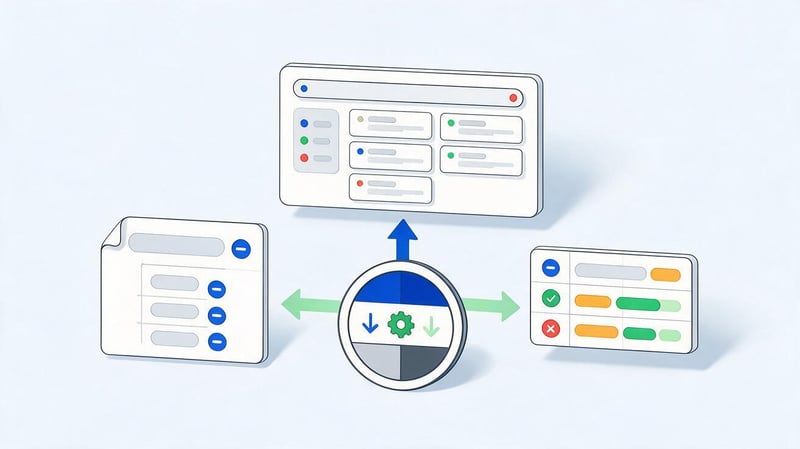
Before starting work, you need to define the queries for which the SERP will be tested and create a single table to record the results. Without such preparation, it's easy to compare different parameters on different pages and end up with a set of observations that are incomparable.
It's also worth setting a review date in advance. Search results, ads, page positions, and content change over time, so old data can't be automatically reused for a new article.
List of search queries
The semantic core of the future page becomes the foundation. It includes the main query, its word forms, thematic variations, and additional user questions. Search volume helps prioritize, but it doesn't replace manual search results verification.
For each keyword, you need to look at what type of pages Google shows at the top. If one query leads to informational articles and another to commercial services, it might be better to distribute them across different URLs.
For the current topic, the analysis includes the queries “competitor content analysis”, “competitor text analysis”, “competitor text SEO analysis”, “competitor context analysis”, and “competitor contextual advertising analysis for free”.
Competitors table
A spreadsheet is needed to consistently record metrics. It's convenient to include URLs, Title and Description, H1, H2-H4 structure, text volume, page type, intent, formats, FAQs, internal links, update date, and commercial elements.
Separate columns should be allocated for strengths and weaknesses. These fields force a more meaningful analysis of the page, rather than relying solely on technical figures.
Example of a basic table:
| Parameter | Competitor 1 | Competitor 2 | Competitor 3 |
|---|---|---|---|
| Search intent | Informational | Informational | Mixed |
| Main theme | Content | SEO | Marketing |
| Volume | Recorded | Recorded | Recorded |
| H2–H4 | Extracted | Extracted | Extracted |
| FAQ | Yes/No | Yes/No | Yes/No |
| Tables | Yes/No | Yes/No | Yes/No |
| Expertise | Author, experience | Author, experience | Author, experience |
| CTA | Type of action | Type of action | Type of action |
Once the table is filled out, you can look for repetitions and differences. Until then, conclusions are often based on impressions from one or two pages and poorly reflect actual search results.
Uniform verification conditions
All pages should be evaluated using the same methodology. If one competitor's page size is only counted for the main text, while another's includes the menu, comments, and footer, comparing page size becomes meaningless.
The same rule applies to keywords, internal links, and heading structure. The methodology should be the same for every URL, and any controversial parameters should be noted in a separate comment.
It's helpful to save the audit date and the page's key rankings. This will help you see which content has been updated and how the competitive landscape has changed during a subsequent analysis.
How to analyze competitors' texts?

The analysis begins with the page's external search engine presentation, then moves on to its structure and content. This order helps first understand the content's promise to the user, and only then assess how well the page delivers on that promise within the text.
SEO analysis of competitors' texts should be conducted in conjunction with intent. High keyword density or large text volume alone doesn't explain anything if the content addresses a different user need.
Check Title, Description, and H1
The title indicates how the page formulates the topic for search results. You should record the primary keyword, its position, additional keywords, the presence of the year, numbers, and words like “how”, “instructions”, “example”, or “step by step”.
The description is useful for assessing semantic emphasis. It can contain additional page benefits, questions, tools, or the promise of a specific result.
The H1 already presents the main topic within the document. If the title promises detailed guidance, but the H1 is too broad, it's worth checking whether the actual page content matches the search intent.
Break down the structure of H2, H3 and H4
Headings help you quickly see the flow of your content. They can be easily exported into a table and compared across competitors without having to read every page in its entirety.
After this, you can identify topics that appear repeatedly and questions that only surface on certain strong pages. Recurrence alone doesn't necessarily mean a block is necessary, but it does indicate which parts of the topic are considered significant by search competitors.
The structure of the future text should be based on this comparison. It should address the overall intent and include additional topics that help the user complete the task.
What blocks are repeated by most competitors?
Definitions, analysis objectives, competitor search methods, comparison parameters, tools, errors, and recommendations for using the results are most frequently repeated. For content analysis, these are supplemented by text structure, keywords, formats, and search intent.
If a block appears on most strong pages, it's worth checking to see if it matches the search query for the future article. Frequent repetition indicates a consistent search result pattern, but the final decision should be based on reader benefit.
It's especially helpful to look at the order of the blocks. It's usually easier for the user to first understand who to analyze, then what to check, and only then move on to the tools and conclusions.
What topics are your competitors covering poorly?
Weaknesses become apparent after comparing multiple materials. One competitor might cover SEO in detail but barely touch on advertising, while another might thoroughly explain the tools but fail to demonstrate how to turn the data into a content plan.
It's precisely these gaps that create the basis for strengthening the material. A topic should be added when it helps the user solve the original problem, not when it simply adds to the article's length.
For content analysis, the section on translating the results into a ready brief is a useful distinction. Many articles end with a list of observations, although the user then needs to understand what changes to make to the structure, semantics, and content.
Conduct SEO analysis of competitors' texts

An SEO analysis of competitors' text is necessary for comparing semantics, structure, and topic coverage. It's best to conduct this after determining the intent, so that the numbers don't distract from the page's primary purpose.
The work includes text volume, search queries, word frequency, relevance, Title and Description, H1–H4 headings, LSI vocabulary, internal links, and additional page elements.
Lead SEO specialist — Gennady
I start my analysis not with keyword counting, but with search results. First, I look at which pages Google considers relevant to the query and what intent they address, then I compare the structure, topics, semantics, and length. This approach reduces the risk of carefully optimizing text that answers the wrong user question.
Text volume
Word counts should only be compared between pages of the same type. A 20,000-character article and a short commercial landing page solve different problems, so an average between them doesn't tell much.
It's more useful to determine the length range of relevant materials and see what makes larger pages longer. Often, differences arise from FAQs, tables, examples, studies, or separate sections on tools.
When preparing your text, use the length as a guide. If the topic can be fully explored in a shorter text, there's no need to artificially add repetition or generalizations.
Keywords
Primary keywords indicate which cluster of queries a page covers. They should be combined with additional phrases, synonyms, and thematic keywords.
It's useful to compare which queries appear in the title, H1, H2, and body text. Of particular interest are phrases that are repeated across multiple competitors and closely match the page's content.
However, mechanically transferring someone else's semantics is not an option. The final list must take into account the site's own semantic core and the actual search intent of the future page.
Keyword density
Density shows the proportion of a specific word or phrase relative to the overall text volume. This metric helps identify obvious overuse or unusually frequent use of a particular term.
There's no strict standard for each keyword. Two competitors can rank well with different keyword densities, because ranking depends on a combination of factors and the page's relevance to the query.
Therefore, the percentage should be used as a diagnostic indicator. If a keyword is constantly repeated in adjacent sentences and impairs readability, it's best to replace it with a word form, a synonym, or remove it.
LSI and topic-specific vocabulary
In practical SEO, LSI typically refers to topic-related words, entities, and phrases. For this article, these include search results, SERPs, semantic core, organic traffic, website visibility, search queries, content plan, and article structure.
This vocabulary emerges naturally when a topic is fully explored. There's no need to insert each word individually into a random sentence to test the analyzer.
When comparing competitors, it's helpful to collect recurring topic groups. These help identify subtopics that might not have been included in the original semantic core.
Search intent
Search intent describes the task a user wants to accomplish after entering a query. For an informational article, this could be a definition, instructions, a list of services, a comparison of methods, or a ready-made checklist.
You need to determine intent based on actual search results. If the top results for a query include step-by-step guides, a short definition will lose out in terms of comprehensiveness.
Mixed intent should also be considered. A user might first explore a methodology and then search for a service, tool, or template for independent use.
How to conduct competitor content analysis?

After technical analysis of the text, it's time to move on to the content itself. Here, the topics, formats, expertise, depth of coverage, tone of voice, and the material's connection to other pages on the site are assessed.
This type of analysis helps understand a competitor's content strategy. One article demonstrates a specific solution, while several related materials provide insight into the topic cluster and the distribution of queries across pages.
Topics and categories
First, you need to look at what topics your competitors publish regularly. Recurring categories indicate areas that the site is systematically developing and connecting with internal links.
It's useful to highlight the main material and related articles. If an entire cluster is built around a single topic, this may explain the section's good thematic relevance.
There's no need to copy the topic list. The goal of the analysis is to understand demand, cluster structure, and audience questions, and then create your own content plan.
Content formats
A single topic can be explored through instructions, a case study, a rating, a study, a table, a video, or a tool review. The format influences ease of understanding and the depth of the answer.
It's important to document which formats are most frequently used by top-ranking pages. Tables work well for complex comparisons, lists and checklists for sequential actions, and case studies and real-world examples are helpful for demonstrating expertise.
When choosing a format, consider the query itself. A user looking for step-by-step instructions expects a sequence of actions, and a query with the word “comparison” would logically be supported by a table.
Depth of topic coverage
An article's length doesn't equal its depth. A short piece may contain precise instructions, while a long text sometimes repeats the same ideas in different words.
Depth is best assessed by the number of useful subtopics, examples, explanations, figures, and answers to related questions. It's also worth considering whether the author explains the limitations of the method and potential pitfalls.
If a competitor touches on an important issue in a single sentence, it's a good opportunity to expand on it. The additional section should provide practical benefit and remain within the original intent.
Content expertise
Authorship and sources are especially important in complex topics. It's easier for users to evaluate material when it's clear who prepared it, the experience behind the recommendations, and when the text was last updated.
It's important to check the author, their position, publication date, update date, links to research, and expert commentary. For a commercial website, real-world case studies and examples of completed work are helpful.
Expertise cannot be imitated with fictitious reviews, figures, or results. If there is no confirmed data, it is better to use an explanation of the method and transparent limitations.
Tone of Voice
Tone of Voice shows how a brand communicates with its audience. One website uses an academic style, another is brief and conversational, and a third emphasizes expert terms and detailed instructions.
When analyzing, consider sentence length, how the reader is addressed, number of terms, examples, and commercial tone. This helps you understand audience expectations within a specific niche.
There's no need to copy someone else's style. Your own style should align with your brand's positioning and remain understandable to users.
CTA and commercial elements
An informational article often leads the user to the next action. This could be a consultation, an audit, a related service, other material, a tool, or an application form.
When analyzing, it's important to note the position of the CTA, the button text, and the connection between the offer and the article's topic. An aggressive sales pitch within an informational piece can interfere with reading, so context is important.
A good CTA continues the user's task. After an article on content analysis, it's logical to offer an SEO audit, competitive analysis, or content brief preparation.
What is competitor context analysis?

Competitor context analysis considers the page's surroundings and the conditions in which the user sees the content. It takes into account adjacent SERP results, page types, funnel stage, related topics, and sales pitches.
This approach helps us understand why the same words can perform differently on different pages. It's not the individual phrase that matters, but its connection to the search query, the page structure, and the audience's expectations.
Search results context analysis
It's important to look beyond organic links in the SERP. Ads, question boxes, videos, images, and other search results elements also provide useful information.
If a search query is dominated by detailed blogs, this is a signal of informational intent. If services, catalogs, or company profiles take up most of the screen, the query may have a significant commercial component.
It's also helpful to compare the titles and snippets of the leaders. Repeated wording indicates which aspects of the topic competitors consider most important for clicks.
Page context analysis
On-site context includes breadcrumbs, categories, internal links, related content, and CTAs. All of this shows the article's place within the overall site structure.
It's important to look at where the links in the text lead and which pages link back. Good interlinking helps the user continue exploring the topic and maintains a logical connection between materials.
It's also worth checking which product is promoted after the article. This shows what stage of the funnel the material is at and what action is expected from the user next.
How to analyze competitors' contextual advertising for free?
You can start analyzing your competitors' contextual advertising for free by using public ad libraries and manually checking search results. This approach won't reveal the campaign's internal metrics, but it will provide information about messages, offers, and landing pages.
It's important to gather the commercial queries that potential customers use to search for a service or product in advance. Then, it's worth noting recurring headlines, benefits, promotions, and the wording that competitors use most frequently.
Check Google Ads
To verify Google ads, you can use the Ads Transparency Center. It's easy to search for advertisers and view published ads associated with a specific brand.
During analysis, note headlines, benefits, calls to action, and landing pages. If the same message is repeated in different ads, the company is likely placing a significant emphasis on it.
It's helpful to compare the ad with the website content. The ad's promise should be continued on the landing page, otherwise, the user experiences a gap between expectation and content.
Check Meta Ads

The Meta Ad Library helps you view active brand ads in the Meta ecosystem. For content analysis, it focuses on formats, creatives, offers, and ad message variations.
Pay attention to recurring themes and visual approaches. If a brand regularly promotes a single product or benefit, it may be related to a current commercial priority.
Library data is best used for qualitative analysis. It shows the content of the ads, but it doesn't provide a complete picture of a specific campaign's effectiveness.
Analyze search results manually
Manual analysis is especially useful for commercial queries. You need to open the search results, save the ads, visit the landing pages, and compare the ad's promise with the website's content.
It's convenient to conduct this test using the same list of queries and record the date. Advertising changes faster than organic content, so an old screenshot may no longer reflect the current strategy.
The workflow looks like this:
- collect commercial queries related to a product or service;
- check the advertising results and save the ad wording;
- write out offers, promotions, benefits and calls to action;
- open landing pages and check that the advertisement matches the content;
- compare recurring messages from multiple competitors.
After the list, you need to summarize the data in a table, separating actual observations from assumptions. This format helps use advertising as an additional source of context.
What information cannot be reliably obtained for free?
Public ads don't reveal the underlying economics of an advertising campaign. They don't reliably determine profit, ROAS, conversion, the exact advertising budget, or the actual cost of customer acquisition.
Third-party services may provide estimated values, but these estimates should not be considered actual data from your advertising account. The same applies to estimated audiences and precise campaign settings.
Therefore, free analysis is best used to examine messages, creatives, offers, and landing pages. Financial conclusions without access to internal analytics will remain mere guesses.
What tools should I use to analyze my competitors' content?

A tool is selected for a specific task, not for a comprehensive analysis. One service is better at displaying search queries, another helps evaluate traffic, and a third is more convenient for technical crawling.
Most of the basic work can be done using Google, a spreadsheet, and manual page analysis. Paid SEO services speed up data collection, but they don't replace intent and content verification.
| Task | Tools |
|---|---|
| Finding SEO competitors | Google, Ahrefs, Semrush, Serpstat |
| Keywords | Ahrefs, Semrush, Serpstat |
| Organic traffic and website visibility | Similarweb, Ahrefs |
| Structure and internal links | Screaming Frog, manual verification |
| Text analysis | Text analyzers, manual parsing |
| Social media | Popsters, LiveDune |
| Google Ads | Ads Transparency Center |
| Meta Advertising | Meta Ad Library |
| Systematization | Google Sheets, Excel |
It's not necessary to use all the services simultaneously. For a small project, search results, one SEO tool, and a table with common criteria are often sufficient.
How to present the results of competitor analysis?
The final document should answer the question of what exactly should be changed or created following the analysis. To do this, observations should be categorized and linked to future tasks.
The most convenient way to do this is with a comparison table. It quickly shows repeating blocks, differences between pages, and empty spaces that can be filled with your own content.
| Parameter | Seo-Gen | Horoshop | Sprava | Shapoval Agency |
|---|---|---|---|---|
| Intent | Practical informational: analyze your competitors' content, SEO texts, and advertising and develop an action plan | Broad informational: teach businesses to conduct a comprehensive analysis of competitors | SEO/Digital Intent: Show how to analyze competitors' websites in online marketing | Narrow informational: analyze competitors' content and use the findings in your content strategy |
| Text volume | Target volume: 16,000–19,000 characters with spaces | ≈22,800 characters | ≈15,200 characters | ≈5,100 characters |
| H2–H4 | Competitor research, text analysis, SEO, content, context, advertising, tools, results presentation, content brief, errors, FAQ | What is analysis, competitor search, comparison parameters, product range, prices, website, marketing, service, example, using results, FAQ | What is analysis, competitor search, tools, website metrics: traffic, semantics, links, structure, indexing, speed, mobile | Competitor research, what to analyze in content, funnel, topics, frequency, Tone of Voice, visuals, post-analysis actions |
| Key topics | SERP, texts, semantics, H1–H4 structure, intent, content, advertising, expertise, CTA, tools, translation of analysis into content brief | Product range, prices, target audience, positioning, website, advertising, promotion channels, service, reviews | SEO, keywords, traffic, popular pages, links, site structure, mobile, PageSpeed, advertising | Content strategy, funnel, frequency, publication topics, Tone of Voice, visual content, UGC |
| FAQ | Yes, 7 questions on content analysis, SEO, advertising, number of competitors, and next steps | Yes, an extended FAQ: analysis composition, number of competitors, free analysis, website indicators, presentation of results | A separate large FAQ is not the main part of the material | There is no separate, detailed FAQ. |
| Expertise | SEO specialist methodology, practical verification criteria, data limitations, expert commentary | A practical guide with examples and comparison tables for business and e-commerce | Strong technical SEO expertise: semantics, links, indexing, speed, mobile version | The agency has a practical view on content and social media, but technical SEO is less well covered. |
| Formats | Step-by-step instructions, lists, comparison tables, process diagram, expert commentary, FAQ | A detailed guide, tables, competitive analysis example, lists, and FAQs | A comprehensive SEO guide, including metrics, tools, and explanations. | A compact guide, table, tool lists, and recommendations |
| CTA | Proposal to conduct a competitive SEO analysis and prepare content brief for implementation | Launching or developing an online store on Horoshop | Seeking Internet Marketing and SEO Services | Commercial block “Let's discuss your project?” |
| Strengths | A narrow focus on content with in-depth SEO analysis; advertising, intent, and translation of analysis into working brief are separately covered. | Widest possible coverage, clear sequence, strong tables, real-life example, good FAQ | Strong SEO, technical website indicators, semantics, links, speed, and Mobile First | Covers the content itself well: the funnel, Tone of Voice, visuals, regularity, and topics. |
| Weaknesses | A large volume requires strict editing so that individual SEO blocks do not repeat each other. | Some of the material goes into general business analysis and further from the topic of texts and content | Content as a separate discipline is less well-developed than technical analysis of a website. | Small volume, few SEO metrics, weak SERP coverage, semantics, and technical analysis |
The comparison shows that Horoshop is better at covering a broad business intent, Sprava provides a deeper understanding of a website's SEO metrics, and Shapoval Agency is more focused on the content itself. It makes sense for Seo-Gen to combine these areas around a more specific goal: to demonstrate how to analyze competitors' content and texts, consider search intent and advertising, and then translate the results into a ready-made brief.
The workflow schedule can be represented in a simple sequence:
Competitors → SERP → structure → texts → semantics → advertising → conclusions → content brief
This structure helps avoid jumping to keywords before validating the intent. Each subsequent step builds on the data collected in the previous one.
Create a comparison table
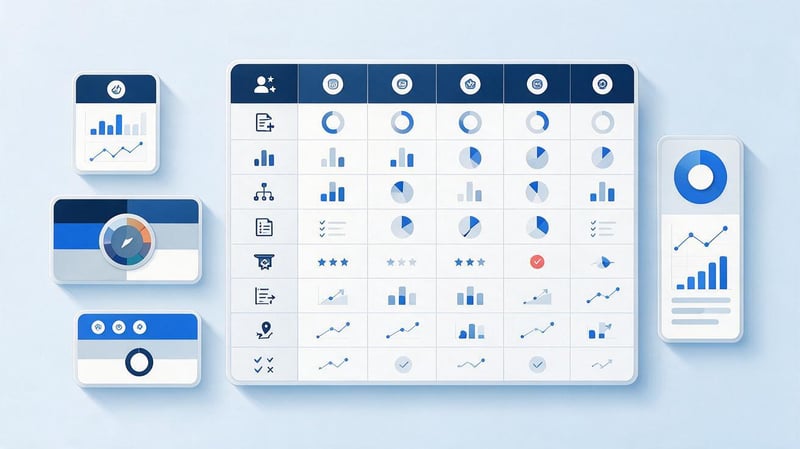
Only parameters that influence future decisions should be transferred to the table. If a metric isn't used in page preparation, its value for practical analysis is limited.
For example, the number of H2 headings is only useful when considered in conjunction with the topics of those headings. The number of internal links also means little without understanding the pages they link to.
After filling out the table, you should review it row by row. This will quickly reveal common patterns among all competitors.
Divide the findings into three groups
All conclusions can be conveniently divided into essential elements, points of improvement, and solutions that don't need to be repeated. This division immediately translates the analysis into practical application.
The first group is responsible for consistency with intent, the second helps make the material more useful than competitors, and the third protects against copying weak or outdated solutions.
Required elements
Required topics and formats are those that consistently appear on strong pages and directly address the user's needs. For example, instructions without a sequence of steps will appear incomplete.
However, the necessity should be verified through intent. If a block is frequently encountered only due to the specifics of a specific niche, it shouldn't be moved to another topic.
It's best to list these elements separately in the brief. This way, the copywriter understands which questions must be addressed.
Strengthening points
Strengthening opportunities arise when competitors provide a superficial answer, fail to provide an example, or use an inconvenient format. This could be a weak FAQ, a missing table, outdated data, or an opaque algorithm.
Strengthening should solve the user's problem, not add text for the sake of length. A good additional block shortens the path from question to clear action.
For the topic of competitive analysis, a strong point is a ready-made scheme for converting data into a structure and content brief.
What doesn't need to be repeated
Competitors use outdated methods, overloaded service lists, artificial SEO inserts, and commercial blocks that hinder reading. Their presence in the top search results doesn't mean they should be replicated.
Also, avoid copying inaccurate figures, unverified traffic estimates, or fictitious conclusions about competitors' budgets. Such data undermines the credibility of the material.
It's helpful to record the reasons for rejecting a specific solution in a worksheet. This helps the editor and copywriter maintain the overall flow of the page.
How to turn competitor analysis into a brief for new content?

After the research, you need to create a document that can be used to write a page without re-analyzing the search results. It captures the intent, structure, semantics, required blocks, format examples, and internal links.
The workflow might look like this:
- determine the main search intent for several queries;
- select a focus keyword and additional word forms;
- collect recurring themes from strong competitors;
- add questions that are poorly answered in the search results;
- form the structure H1, H2, H3 and, if necessary, H4;
- distribute keywords into relevant sections;
- determine places for tables, lists, diagrams and examples;
- prepare a FAQ on additional user questions;
- add expert elements and verifiable sources;
- plan internal linking and the next CTA.
At the end of the brief, you should specify limitations. The copywriter should understand which statements require confirmation, which keywords should not be inserted mechanically, and where it is better to use natural word forms.
A completed brief reduces the number of revisions after writing. The author works with a clear intent, a set of questions, and structural requirements.
Common Mistakes When Analyzing Competitor Content
Most errors are due either to poor sampling or an attempt to reduce the analysis to a few numbers. As a result, the page mimics the competitor's form without understanding the reason for their relevance.
Below are the errors that most often prevent useful conclusions. Each of them affects the structure of the future material or the quality of the semantics.
Analyzing only one competitor
One page represents the approach of one author and one website. It doesn't reveal a consistent search results pattern.
The minimum sample should include several strong results for a single intent. Then, common elements can be separated from individual decisions.
If one competitor is significantly different from the others, it's worth examining it separately. Sometimes this difference reflects a new presentation, while other times it's due to a different page type.
Selecting only well-known business competitors
A well-known brand can be strong in the market but receive almost no organic visibility for informational queries. This is a fundamental difference for SEO.
Search competitors should be identified using actual search results. The list can then be supplemented with large companies in the industry for positioning and advertising analysis.
This approach yields two distinct sets of data: SERP requirements and market context. Mixing them without proper labeling is not recommended.
Comparing word count only

Length is easy to measure, so it's often overemphasized. However, character count doesn't reflect the quality of the answer or the completeness of the topic.
You need to look at which blocks your competitor uses to gain additional volume. A helpful FAQ and a detailed example are more valuable than repeating the same explanation over several paragraphs.
Therefore, the average volume is used as a range, not as a mandatory target for the author.
Copying the leader's structure
A page in the top position doesn't provide a universal template. Its results can depend on links, brand, domain history, section quality, and other factors.
The structure should be compiled across multiple competitors. Recurring themes reveal a common pattern, while unique blocks are evaluated separately.
This creates an article's own logic that corresponds to the request and does not repeat specific material.
Focusing only on keyword density
Density is useful for detecting obvious spam, but it's not a primary optimization goal. Mechanical repetition of phrases quickly degrades readability.
It is better to distribute the main query between Title, H1, relevant subheadings and text, and replace the remaining uses with natural word forms.
Thematic completeness and precise response to intent provide much more information about the quality of the text than the same keyword percentage.
Ignoring ads and landing pages
The ad highlights the advantages competitors offer in the shortest possible message. This is useful material for understanding the commercial context of the topic.
A landing page helps test how the advertising promise unfolds. Sometimes the ad emphasizes price, while the landing page emphasizes service, guarantees, or speed.
It's useful to track these differences separately from SEO analysis. They help understand what messages a brand uses at different stages of the funnel.
Conducting an analysis without a final action plan
A large table alone doesn't improve content. Every significant conclusion should lead to a specific task for the page.
For example, “eight competitors have FAQs” translates into a decision to check additional questions and create your own section. “Competitors use tables” should lead to an understanding of what information is truly more convenient to compare in a table.
If a conclusion cannot be linked to a change in structure, semantics, format, or content, its priority should be reconsidered.
How often should you conduct competitor content analysis?
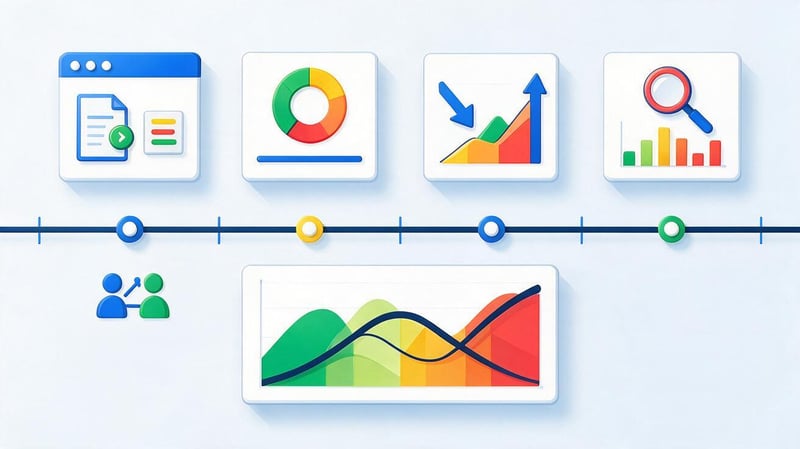
It's worth checking your competitors before creating an important new page or making a major update to an existing one. This helps you focus on your current search results, not on a structure that was relevant several years ago.
A re-analysis is also necessary after a noticeable drop in rankings or a change in intent. If services, catalogs, or commercial pages start appearing in the SERPs instead of articles, the old content format may be less relevant to the search query.
For priority clusters, it's useful to periodically review competitors, topics, and internal linking. There's no universal interval, as the rate of change depends on the niche and competitor activity.
What does SEO analysis of competitors' text include?
SEO analysis includes Title, Description, H1–H4, text volume, search queries, thematic vocabulary, keyword density, internal links, and page relevance to search intent.
SERP, semantic core, site visibility, and linked pages are checked separately. These data should be considered together, as a single metric rarely explains a page's performance.
Competitor content analysis begins with search results and concludes with a specific action plan. You need to select relevant pages, analyze their structure, semantics, formats, expertise, advertising, and internal links, and then compile these findings into a single brief.
Don't copy the volume, keyword density, or structure of a single page. It's more useful to find consistent SERP patterns, understand the weak points of the search results, and create content that consistently answers the user's query.
If you need a full competitor analysis for your website, Seo-Gen will analyze your search results, semantics, content, and page structure and prepare a ready-made brief for implementation.
More articles about SEO Promotion


