Content marketing: what is it and how does it work?


Companies publish articles, produce videos, manage social media, and send out newsletters, but content alone doesn't mean systematic work. Materials must answer real audience questions, match the stage of choice, and guide users along a clear path.
Content marketing connects user needs with business objectives through useful materials. This approach is used to attract organic traffic, familiarize audiences with the brand, build trust, generate leads, and support sales.
To understand how content marketing works, you need to consider the entire process: audience research, topic selection, content creation, distribution, internal linking, analytics, and regular updating of published materials.
What is content marketing in simple terms?
Content marketing is a systematic approach to creating useful materials tailored to the interests and needs of a specific audience. A company studies potential customers' questions, develops relevant content, and distributes it through a website, blog, social media, email, external platforms, and other channels.
Content marketing can be described in simple terms using a common situation. A person searches for an answer to a question, finds an expert article from a company, understands the topic, and remembers the source. Later, they return for more material, research the service, compare options, and only then submit an inquiry.
Content marketing works best when posts are linked and continue the user's journey. An article found via search can lead to a detailed guide, then to a case study, a service page, or other material that helps them make a decision.
What is content marketing?
The format alone doesn't determine whether a publication is content marketing. What matters is the purpose of the material, its audience, its place in the overall strategy, and its subsequent distribution method. The same article can generate search traffic, help the sales team, and be used in a newsletter.
The system may include the following materials:
- Expert articles answer user questions and attract organic traffic for informational queries.
- Practical instructions help a person solve a specific problem and demonstrate the company's competence in the chosen topic.
- Case studies demonstrate a realistic approach to work and help potential clients compare their situation with previously solved problems.
- Research and analysis provide facts that can be referenced by clients, media, and other sites.
- Videos, webinars, and podcasts help cover complex topics in a format that's accessible to a specific audience.
- Email newsletters re-engage users with useful content and maintain contact after initial brand exposure.
A corporate blog often becomes a central platform for accumulating expert content. However, content marketing isn't limited to a blog, as content typically requires distribution and integration with other channels.
What is not content marketing?

A one-off publication without a clear goal rarely yields sustainable results. If a company publishes a single article, doesn't link it to other pages, and never returns to the topic, it lacks a comprehensive content strategy.
Weak approaches include texts created solely for the purpose of repeating keywords, irregular posts without understanding the audience, promotional materials without practical benefit, and publications whose results are not measured.
A similar problem arises when editorial staff selects topics solely based on their own internal ideas. Content may be high-quality, but practically useless for promotion if the audience isn't looking for such information or the page's search intent doesn't match the search query.
How is content marketing different from advertising, SEO, and SMM?
Content marketing, SEO, SMM, and paid advertising solve different problems, although they are often used simultaneously. Separating them completely is inconvenient, as a single good article can generate organic traffic, be shared on social media, and be further promoted through advertising.
| Tool | The main task | When the result appears | What happens after work stops? |
|---|---|---|---|
| Content marketing | Attracting and developing an audience through useful materials | The result accumulates gradually | Strong content continue to receive traffic and clicks |
| SEO | Increasing website visibility in organic search | It usually takes time for indexing and ranking to increase | Some of the achieved positions may be maintained |
| SMM | Working with social media audiences | You can get a reaction quickly after publication | The reach of older publications is gradually decreasing |
| Advertising | Quickly receive impressions, clicks, and inquiries | Traffic starts after the campaign launches | After the budget stops, the flow of clicks decreases |
Linking website content with SEO is especially beneficial. Search demand helps determine topics, search results analysis reveals the expected page format, and internal linking connects informational materials with commercial sections.
Answers to your questions
What is content marketing in simple terms?
Content marketing is a systematic approach to creating useful materials for a specific audience. A company researches potential customers' questions, creates relevant content, distributes it through the appropriate channels, and analyzes subsequent user actions.
Such materials include articles, videos, research, case studies, newsletters, webinars, podcasts, and other formats. Their purpose depends on the stage of the sales funnel and the business's goals.
How does content marketing work?
A person encounters a problem, searches for information, and finds a company resource. If the resource helps them understand the issue, they can move on to other resources, case studies, or the service page.
This gradually creates multiple interactions with the brand. The content guides the audience from the initial question to a more specific choice and inquiry.
What problems does content marketing solve?
Content helps attract organic traffic, increase awareness, explain complex products, maintain expertise, generate leads, and engage with existing clients. The specific tasks depend on the business and audience.
For some projects, SEO traffic is a priority, while for others, market education or long-term sales cycle support are more important. Therefore, it's best to define goals before starting production.
How is content marketing different from regular advertising?
Advertising typically presents a ready-made offer to the audience and encourages quick action. Content marketing often relies on useful information that helps people understand the issue and gradually move closer to a decision.
Both approaches can be used simultaneously. Advertising can accelerate the distribution of strong content, while content helps continue engagement after the initial click.
What content formats work best?
The best format is determined by the user's needs and the distribution channel. A detailed guide is well-suited for a complex search query, a short video can explain a process more quickly, and a case study helps audiences evaluate a company's experience before purchasing.
Therefore, a strong strategy typically combines multiple formats. A single piece of content can be adapted for a website, social media, email, and external publication.
Does small business need content marketing?
Content marketing is suitable for small businesses if their audience has questions before purchasing and the company is willing to regularly support the content. However, the scale shouldn't be on par with a large newsroom.
Often, it's enough to select a few priority topics, effectively address search demand, and link articles to commercial pages. This approach is easier to maintain with a limited team.
How to evaluate the effectiveness of content marketing?
You should evaluate metrics that are relevant to the purpose of the article. For an SEO article, impressions, rankings, CTR, and organic traffic are important, while for a case study closer to purchase, it's more useful to look at clicks to the service page and inquiries.
Additionally, they analyze engagement, repeat visits, internal clicks, cost per lead, and assisted conversions. A single metric rarely provides a complete picture.
What goals and objectives does content marketing solve?

Content marketing goals depend on the business model, product, and project stage. Some companies need organic traffic from Google, others need to explain a new service to the market, and still others prioritize post-purchase customer support.
Therefore, it's best to define content marketing objectives before creating an editorial plan. This way, you can understand who each piece should attract, what question it should answer, and what next action it should offer the user.
Attracting targeted traffic
Website content can attract users with informational queries that can't be fully addressed by service or category pages. A user may not yet be searching for a specific company, but they're already researching a problem, solutions, prices, selection criteria, or potential pitfalls.
SEO promotion of such materials begins with a semantic core and search intent analysis. After publication, rankings, impressions, CTR, and organic traffic are tracked, and articles are linked internally to other relevant website pages.
Building trust and expertise
Before purchasing a complex or expensive service, people typically gather information from multiple sources. If a company explains the topic in detail, provides practical examples, and answers real-world questions, it's easier for potential clients to assess its expertise.
Expert content is especially useful in B2B, healthcare, finance, IT, and professional services. In these niches, users rarely make decisions after the first contact, so publications help gradually alleviate some of their questions and objections.
Increasing brand awareness
Regular, useful content increases the number of touchpoints between a company and its audience. Users may see the same brand multiple times in search results, social media, industry articles, or email newsletters before engaging with it.
Brand awareness is difficult to assess using a single metric, so it's common to look at the dynamics of brand queries, direct visits, repeat visits, reach, and mentions. These metrics are useful to analyze alongside overall lead and sales trends.
Lead and sales generation
Not every informational piece should immediately lead the user to a purchase. Some queries have a different decision-making stage: the user explores the problem, compares solution options, or tries to understand the selection criteria.
In such cases, the content's purpose is to provide a logical transition to the next piece of content or sales page. A path through an article, a comparative piece, a case study, and a service page works well if each step aligns with the user's actual interest.
Retaining existing audience
Content is just as essential after the first inquiry or purchase as before. Instructions, knowledge bases, newsletters, product updates, and expert publications help users get answers faster and return to the company when new problems arise.
Repeat engagement is especially valuable for subscription services, online stores, and companies with long customer lifecycles. Here, content helps maintain relationships without the constant use of direct advertising.
Market education
New or complex products often require some initial explanation. Potential clients may not know the technology, may not understand the differences between solutions, or may even be searching for the problem in other words.
In such cases, the content begins with basic questions and gradually leads the audience to more specific topics. This approach is useful for SaaS, financial products, healthcare services, B2B solutions, and niches where customers need time to understand the offering.
How does content marketing work?
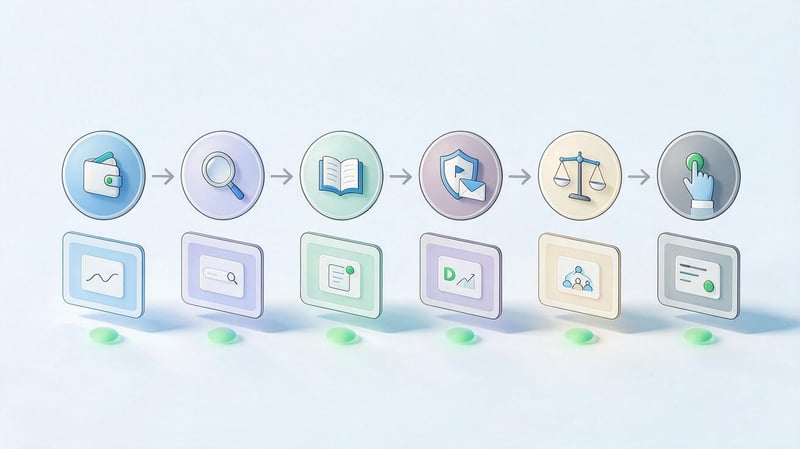
The mechanics are built around the customer journey. First, a person has a question or problem, then they search for information, read the company's materials, move on to more detailed publications, and gradually move toward a solution.
It is convenient to represent this chain as follows:
User needs → information search → useful content → brand awareness → trust → comparison of options → conversion or purchase
Each stage requires its own format. A user learning a topic for the first time rarely responds to a hard-and-fast sales pitch, while someone preparing to make a purchase may find general educational material insufficient.
Content at different stages of the funnel
A sales funnel helps connect content to the audience's current state. One piece answers a common question, another helps compare solutions, a third dispels concerns before getting in touch, and a fourth supports the customer after the purchase.
This distribution reduces the number of random publications. The editors understand in advance which stage of the Customer Journey Map a particular piece covers and what the user's next step is.
Awareness
At the first stage, a person is usually researching the problem and hasn't yet chosen a specific company. Therefore, SEO articles, basic instructions, research papers, informational videos, and terminology explanations work well here.
The content should provide a clear answer and help further explore the topic. A strong sales pitch at this stage often seems premature, so it's more logical to offer a related guide, a useful tool, or further material.
Considering solutions
Once the user understands the problem, their questions become more specific. They compare approaches, evaluate the advantages of different options, explore the limitations, and try to identify a suitable solution.
Comparisons, collections, webinars, expert articles, checklists, and detailed case studies are suitable for this stage. Here, you can discuss your selection criteria in more detail and showcase your company's experience without resorting to intrusive advertising.
Choice
Before contacting a company, people need details that help reduce uncertainty. They review prices, terms, work process, timelines, guarantees, the team's experience, and actual results from similar projects.
At this stage, case studies, service pages, feature overviews, calculators, and answers to common objections are helpful. The content should help customers make decisions and provide a clear path to conversion.
Retention and repeat sales
After a purchase, users' interests change. They seek instructions, recommendations, product updates, answers to new questions, and ways to get more out of the solution they've already purchased.
A knowledge base, email marketing, training materials, and regular updates help maintain contact. For companies with repeat business, such content impacts customer retention and the number of follow-up inquiries.
Why doesn't content marketing work right away?
Content needs time to gain reach and search visibility. A new article must be discovered by search engines, indexed, receive initial user behavior data, and gradually gain a foothold among competing pages.
The speed of results depends on the topic, competition, website status, quality of content, frequency of publication, and distribution methods. Therefore, it is impossible to define a uniform payback period for all projects.
An existing audience, email database, social media, PR, and paid promotion help speed up the process. However, even with active distribution, content marketing requires systematic work and regular analysis of results.
What formats are used in content marketing?
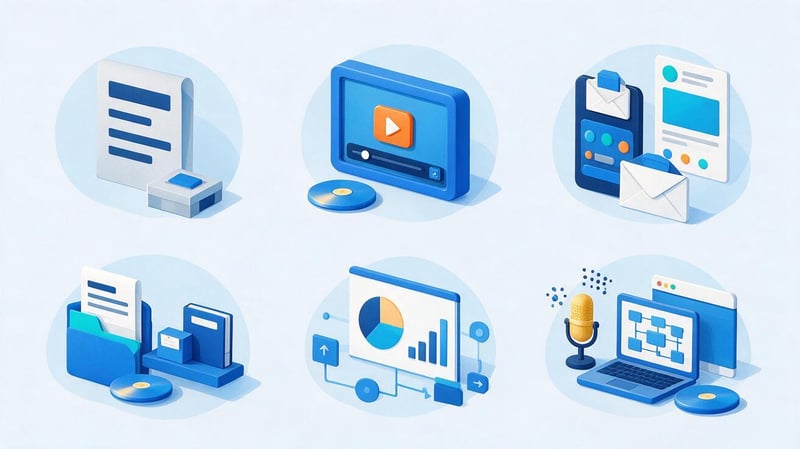
The format is chosen after determining the audience, objective, and distribution channel. The same issue can be addressed through an article, a short video, a webinar, or a series of publications, but the outcome will depend on how the audience is used to receiving information.
Therefore, a content marketing strategy typically includes multiple formats. They complement each other and help reuse strong content without constantly creating a topic from scratch.
Content for the website and blog
Content marketing on a blog typically includes SEO articles, how-to guides, case studies, research, and expert reviews. These pages are easily linked internally, organized into thematic clusters, and gradually expanded around key business areas.
Saying “website content is text and images” is too narrow a definition. In real life, it also includes calculators, tables, videos, research, interactive elements, knowledge bases, and other formats that help users solve problems.
Content marketing for articles is especially useful where there is stable search demand. After publication, the material can be updated, supplemented with new statistics, and reinforced with cross-links.
Content marketing on social media
Content marketing on social media is built around the formats of a specific platform and the behavior of its audience. Users rarely read long text there as carefully as they would a detailed search article, so the source material often needs to be adapted.
A single expert article can be transformed into a short video, a series of posts, a carousel, expert commentary, and a collection of practical tips. This approach helps increase the reach of the topic and direct interested audiences to the full article on the website.
User-generated content, or UGC, can also be included in the system. It's especially useful for brands where customers are willing to share their product experiences.
Videos and webinars
Video is suitable for topics that are easier to demonstrate with an example than to explain with extensive text. Product demonstrations, case studies, instructions, and expert answers are often easier to understand when the user sees the process or hears a specialist explain it.
Webinars are typically used for deeper engagement with an interested audience. A single webinar can then be developed into an article, short videos, an email series, and several social media posts.
Email content
Email marketing helps reengage audiences with previously published content and continue communication after initial contact. This could be a welcome sequence, a themed newsletter, a collection of materials, or a product update email.
Mailings should be tailored to the user's interests, rather than sending identical messages to the entire database. Segmentation by actions, products, and funnel stages helps make content more useful to specific recipients.
Case studies and research
Case studies help demonstrate the progress of work on a specific task: the initial situation, the decisions made, the constraints, and the resulting outcome. For high-value services, this format often addresses issues that cannot be fully addressed on a standard service page.
Research works differently. It provides audiences with new data that can be discussed, cited, and used in their own materials, so high-quality analytics can also generate additional mentions and external links.
Podcasts and interviews
Podcasts are suitable for audiences willing to consume long-form, expert-driven content in the background. Interviews allow for the inclusion of external experts and the exploration of a topic through the real-life experiences of several market participants.
These formats require regular production and subsequent distribution. Individual strong segments can be reworked into articles, quotes, videos, and publications for other channels.
What is a content marketing strategy?

A content marketing strategy describes who the company creates materials for, what problems they solve, through what channels they are distributed, and what metrics are used to evaluate results. Without these decisions, a content plan quickly devolves into a simple list of topics.
A content marketing strategy also links editorial work with marketing and business goals. The team understands in advance the purpose of a particular set of materials and what results will be considered useful.
Step 1. Define goals and KPIs
A goal must be linked to a measurable outcome. Simply saying “maintain a useful blog” doesn't say anything about the impact the business expects or how the team will know they're on track.
Depending on the project, organic traffic, lead volume, conversions, subscriptions, reach, brand demand, cost per lead, and other KPIs are used. For some content, assisted conversions are also important, as users get in touch significantly later than their first visit.
Step 2. Research your target audience
Before developing topics, it's important to understand who will be reading the materials and what questions they have at different stages of the selection process. A single service may have multiple audience segments with different motivations, objections, and knowledge levels.
It's useful to analyze search queries, customer inquiries, sales questions, reviews, and user behavior on the website. This information helps align content creation with real-world goals, not just abstract reader expectations.
Step 3. Conduct an analysis of competitors and existing content
A content audit reveals which materials are already working, what's outdated, and where there are topical gaps. Checking just the number of articles isn't enough, as traffic, rankings, internal links, conversions, and relevance to current intent are all important.
Competitor analysis helps understand search results patterns. It's important to study the page structure, depth of topic coverage, tables, FAQs, case studies, tools, content types, and weaknesses of top-ranking materials.
Step 4. Collect semantics and identify topics
Search demand helps us understand the actual wording of audience questions. The semantic core is collected by topic, cleaned, grouped, and distributed among future or existing pages.
Next, the search intent of each cluster is checked. If Google returns detailed informational articles for a query, creating a short, commercial page is usually pointless, as the document type doesn't match the search results' expectations.
Lead SEO specialist — Gennady
I don't consider content marketing separately from search demand. If a company writes useful materials but doesn't understand what the audience is looking for, the intent behind the query, and where the user should go next, a significant portion of the content is wasted. Therefore, I first look at the semantics, search results, and site structure, and only then determine the topics, content format, and internal linking.
Step 5. Create a content plan
A content plan is essential for production management and resource allocation. It helps you see what topics are being developed, what audience segments they are being created for, and what role they play in the overall promotion strategy.
For each topic, it's helpful to record the goal, audience, format, primary search query, distribution channel, responsible specialist, publication date, CTA, and performance metric. This approach simplifies content marketing management and subsequent analysis.
Step 6. Organize content production
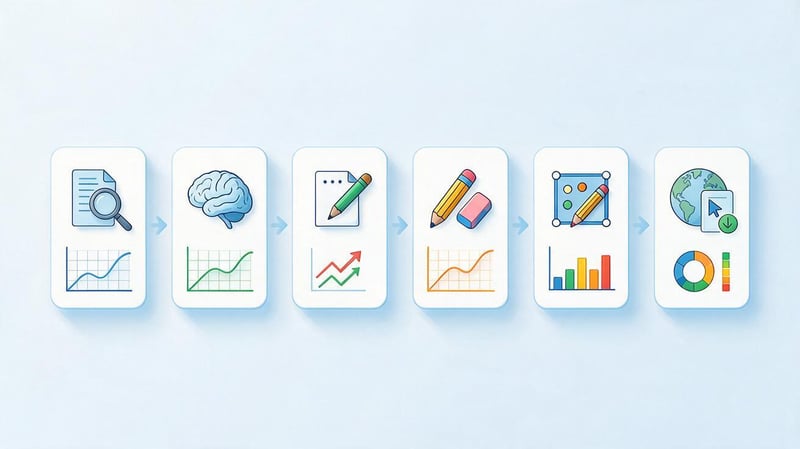
Depending on the project's scope, the content may be handled by an SEO specialist, editor, copywriter, subject matter expert, designer, SMM manager, and email marketer. For small businesses, some roles are typically combined.
The main requirement is a clear process. It's important to define who collects the data, who is responsible for expertise, who checks SEO, who edits the material, and who publishes the final version.
Step 7. Organize content distribution
Even strong content can receive little attention if a company relies solely on organic discovery. Therefore, a content promotion strategy must consider proprietary, external, and paid channels in advance.
Content distribution helps to quickly generate initial clicks and reuse materials. The choice of channels depends on the niche and audience behavior.
Owned
Owned media includes a company's own website, corporate blog, email list, company accounts, and other platforms that a business manages itself. This allows for easier control over the publication format and user journey.
These channels are especially useful for building your own audience. The more people return directly, the less dependent a company is on a single traffic source.
Earned
Earned Media occurs when content is distributed through external mentions, links, media coverage, expert quotes, or organic user recommendations.
To increase such mentions, the material needs to have intrinsic value. Research, data, case studies, and strong expert commentary usually have a better chance of organic distribution.
Paid
Paid media is used when a company needs additional reach for a specific piece of content. Paid promotion can be useful for research, webinars, important publications, or lead magnets.
Spending here should be tied to a specific goal. A simple increase in views alone rarely provides useful information about the quality of content marketing.
Step 8. Analyze the results and update the materials
After publication, work on the material continues. You need to monitor search impressions, positions, CTR, traffic, internal clicks, conversions, and changes in demand.
If an article is getting impressions but few clicks, it's worth checking the Title and Description. If there's traffic but users aren't clicking further, you need to review the interlinking, CTAs, and the content's relevance to the next stage of the funnel.
Old content also requires updating. Outdated data, examples, and recommendations gradually reduce a page's value even if it maintains good rankings.
What promotion methods are used in content marketing?

Online content marketing rarely relies on a single channel. Content can be simultaneously optimized for search, distributed via email, reworked for social media, and used in external publications.
Content marketing and promotion should be planned together. If the distribution method is chosen only after publication, some materials will reach no audience, even though resources have already been expended on their preparation.
SEO promotion
SEO helps drive stable search traffic to content that meets current demand. This includes keyword research, intent analysis, title optimization, internal linking, and technical page auditing.
The cluster approach works particularly well. Several related materials address different aspects of a single topic and provide the user with a clear path between pages.
Social media
Social media offers the opportunity to reuse existing expert content. A long article can be divided into a series of posts, several short videos, expert commentary, and individual visuals.
This format reduces the cost of producing content per unit. However, each publication must be tailored to the platform, as the same presentation rarely works equally well across different channels.
Email marketing
A newsletter helps keep users coming back to new and updated content. It's especially useful for companies with an existing subscriber or customer base.
The email should provide a clear reason to access the material. A simple notification about a new article is usually less effective than a specific benefit related to the recipient's task.
PR and external publications
Expert columns, commentary, research, and publications in industry media expand your reach and help you gain external brand mentions. High-quality, relevant links can provide additional SEO value.
Select platforms based on audience, topic, region, and actual visibility. The number of publications without assessing the source's quality says little about the outcome.
Paid promotion
Paid advertising helps quickly reach the right audience and gauge their reaction. This approach is especially useful when launching a study, webinar, comprehensive guide, or new format.
It's best to evaluate an advertising campaign based on post-click actions. Page views provide only the initial signal, while subscriptions, inquiries, and subsequent interactions demonstrate the true value of the traffic.
Content marketing for business: who is it for?

Content marketing for businesses is especially useful when customers require information before purchasing. The more complex the product, the higher the price, and the longer the decision-making cycle, the more questions a potential customer has.
The scale of the system depends on the company's resources. A small business may only need a few strong pieces of content per month, while a larger project can simultaneously manage a blog, research, email, video, and external publications.
B2B
In B2B, decisions are often made by multiple people, and the deal cycle can take weeks or months. Therefore, content helps explain the product, demonstrate expertise, and provide materials for internal discussions on the client's side.
Case studies, research, industry reviews, instructions, and comparative materials work well here. They help sell a complex service even before speaking with a manager.
Online stores
Online stores gain additional search traffic through reviews, selections, comparisons, and product buying guides. Such content can lead users to categories and product pages through relevant internal links.
Informational content is especially useful for categories where buyers struggle to choose a product based on multiple characteristics. A detailed explanation of criteria reduces uncertainty before purchasing.
Companies providing services
Services often involve a large number of preliminary questions. The user wants to understand the cost, process, timeframe, risks, constraints, and contractor selection criteria.
Expert articles and case studies help address some of these questions upfront. Then, the user moves on to the sales page with a more specific understanding of their needs.
SaaS and IT
Knowledge bases, manuals, use cases, product comparisons, and training articles are useful for SaaS projects. Users can familiarize themselves with the service before registering and then return to the documentation and practical materials once they've started working.
Content also helps reduce the support workload. If a recurring question is thoroughly covered in the knowledge base, customers can get an answer more quickly.
When might content marketing be ineffective?
A weak product can't be fixed with more publications. If customers regularly encounter problems and the company ignores feedback, new articles won't address the root cause of dissatisfaction.
Problems also arise when businesses aren't prepared to regularly maintain their content. A lack of analytics, a haphazard selection of topics, irregular publications, and poor lead generation significantly reduce the impact of content marketing.
Content marketing examples

Content marketing examples are best viewed through the user journey, as a single post doesn't tell us much about how the entire system works. We need to consider where people are coming from, what information they receive, and where they go next.
Below are several typical scenarios for different business models. Each content marketing example begins with a specific audience need.
Example for a B2B company
The company sells industrial equipment, which is difficult to select without technical expertise. A potential buyer first finds an article on selection criteria, then moves on to comparing technologies and studying a case study from a similar company.
After this, the user opens the sales page and submits a request for a quote. The content in this scenario guides the user through several steps and helps prepare them for a meaningful conversation with the sales team.
Example for an online store
The buyer is looking for information on choosing a specific product group and is directed to a detailed guide. The guide includes a comparison of features, links to categories, and recommendations for choosing a model for different needs.
The user receives an answer to their informational query and can immediately continue shopping. For the store, such content simultaneously drives organic traffic and internal linking.
Example for a service company
The company creates a useful calculator that its audience can use for free. The tool generates search traffic, natural links, and mentions because it solves a specific problem faster than a typical article.
Next to the result, the user receives a link to a detailed explanation and the relevant service. This scenario works well where the calculation is directly related to the company's commercial offer.
Example for social networks
After publishing on the blog, extensive expert content is processed into several shorter formats. The team prepares videos, a series of posts, expert quotes, an email newsletter, and a separate publication for an external platform.
A single topic receives multiple points of contact with the audience. Users seeking more details are directed to the full article on the website.
How to evaluate the effectiveness of content marketing?

Evaluation depends on the purpose of a specific piece of content. An article created for organic reach and a case study designed for a pre-purchase audience should be measured by different sets of metrics.
Therefore, analytics begins at the planning stage. For each content group, it's advisable to define a primary indicator and several additional metrics that explain user behavior.
Reach metrics
Reach metrics include search impressions, number of users, organic traffic, new visitors, and views of posts on other channels. This data shows how widely your content is being shared.
High reach doesn't guarantee beneficial business results. It needs to be weighed against audience quality, on-page behavior, and subsequent user actions.
Engagement metrics
Engagement can be measured through interaction time, internal link clicks, completions, saves, comments, and return visits. The set of metrics depends on the format and platform.
If users quickly abandon a page, the problem may be a mismatch of intent, a weak introduction, or an awkward structure. It's more useful to consider this data alongside search queries and traffic sources.
SEO metrics
For search content, we track rankings, search volume, impressions, CTR, organic traffic, and landing page dynamics. We can also monitor external links and changes in the visibility of a topic cluster.
Evaluating SEO results based on just one position is risky. A page can grow for dozens of mid-frequency queries and receive more traffic even without a single high-frequency keyword ranking in the top three.
Business metrics
Businesses care about inquiries, registrations, CPL, sales, and the contribution of content to the conversion path. For long-term sales cycles, it's useful to consider assisted conversions, as the first article is rarely the last touchpoint before a customer converts.
ROI should also be calculated only where a company can tie content production and promotion costs to results. Without proper analytics, such an assessment quickly becomes a rough guess.
Common content marketing mistakes

Most problems arise not from a single poorly written piece of content, but from a weak management system. A company can publish regularly without understanding which materials are actually helping the business and which are simply wasting the team's time.
The most common errors are:
- The company creates materials without an overall strategy, so the topics are poorly connected and do not lead the user along a clear path.
- Authors write articles solely for SEO keywords, which results in the text being less responsive to the user's actual needs.
- The team does not study the target audience and selects topics based on their own assumptions instead of actual demand.
- Competitors are copied without analyzing their intent, so similar headlines appear on the site without any additional practical value.
- After publication, the material is not distributed in any way, although some of the audience can be reached through email, social media, and external platforms.
- The results are not analyzed, so the team continues to produce topics that have not generated useful traffic or conversions for a long time.
- Old articles have not been updated for years, although information, links, examples, and search demand gradually change.
- Publications come out chaotically, so the editorial process is constantly dependent on the free time of individual employees.
- Content is assessed solely on direct sales, ignoring its impact on the early stages of choice and assisted conversions.
Correcting these errors begins with an audit. It's important to understand what materials already exist, what demand they meet, what drives traffic, and where users stop interacting.
Where to study content marketing?
The basics of content marketing can be learned through professional books, industry blogs, courses, and hands-on work on a real project. Theory helps you understand the terms and approaches, but without audience analysis, data, and your own publications, knowledge quickly becomes abstract.
When choosing a course, it's helpful to look not at the number of lessons, but at the curriculum and practical assignments. Good materials should explain strategy, audience engagement, content production, SEO, distribution, and analytics.
Content marketing courses and training
A content marketing course should be chosen based on the tasks a person plans to accomplish after completing the course. If the work involves a website, the program should cover search demand, content structure, semantics, and results analysis.
Content marketing courses for editors may focus more on content planning, working with authors, and editorial policy. Courses for content marketers typically also cover distribution, analytics, sales funnels, and business metrics.
Content marketing courses are more useful when they include practical application using real data. Learning content marketing without working with analytics and publishing provides less insight into why one topic produces results while another fails to attract an audience.
Michael Stelzner's book on content marketing
Michael Stelzner is known for his book “Content Marketing: New Methods for Attracting Customers in the Internet Age”. It examines working with expert content, attracting an audience, and distributing materials online and through social media.
Michael Stelzner's Content Marketing is interesting as an early systematic approach to audience development through useful publications. However, some tools and channels have changed over time, so the book would benefit from supplementing with relevant materials on SEO, analytics, and modern platforms.
If a user searches for queries like “Michael Stelzner content marketing”, it's best to direct them to legal publications and official sources. Searches with PDF or FB2 versions of the book don't require hosting illegal copies.
How long does it take to see results from content marketing?
There's no universal timeframe, as results depend on competition, site health, publication frequency, content quality, and the channels chosen. A new site and a project with an established audience will progress at different speeds.
For SEO content, indexing and current domain visibility also play a role. Therefore, it's best to evaluate results over several months rather than just one week after publication.
Content marketing works best when publications address real audience questions and clear business objectives. Semantics help find demand, site structure distributes topics across pages, distribution attracts audiences, and analytics reveals which materials should be developed further.
If content is being created for search engine optimization, it's best to start with an analysis of the current website, competitors, semantic core, and previously published materials. Seo-Gen helps you build such a system: from demand research and content strategy to SEO optimization, interlinking, and performance evaluation.


