ASO specialist: who are they and what do they do?


A mobile app may be user-friendly, useful, and technically sound, but users still won't find it. In the App Store and Google Play, apps compete for audience attention, search rankings, and installs. An ASO specialist is responsible for managing this visibility.
They research search queries, study competitors, optimize app profiles, and analyze user behavior. We'll explore the tasks included in their responsibilities, the skills required for the job, how much they can earn, and where to begin learning the profession.
Who is an ASO specialist and why does a business need one?
An ASO specialist specializes in optimizing mobile apps for the App Store and Google Play. Their job is to help target audiences find an app in the store, understand its benefits, and decide whether to install it.
The work begins with researching the product, users, and competitors. Then, the specialist selects search queries, prepares metadata, participates in graphics development, and evaluates the results of changes. Organic installs, the quality of the acquired audience, and app store conversion are important for businesses.
What is ASO and how does it work?
ASO stands for App Store Optimization – the optimization of mobile apps for the App Store and Google Play. It's a mobile marketing approach focused on improving app search visibility and how the app is presented to users.
When a user searches for “task scheduler”, the store displays apps it deems relevant to the search. Their rankings are influenced by various factors, including the relevance of text data and product quality signals.
An ASO manager researches audience queries and selects wording that aligns with the app's capabilities. They also work with the app's icon, screenshots, and other card elements to help users evaluate the product before installing it.
What business tasks does an ASO specialist solve?
Companies want their app to be found by people who actually need its features. A specialist helps increase the product's presence in relevant search results and improve conversion rates.
For example, an English learning app might get a lot of views but few installs. This could be due to a weak description, unclear screenshots, or a failure to meet audience expectations. An ASO specialist analyzes these issues and suggests changes.
Another scenario is when an app converts well but receives almost no organic traffic. Here, the priority is semantic research, metadata management, and evaluating search query competition.
Answers to your questions
What is an ASO specialist in simple terms?
An ASO specialist helps a mobile app find users through the App Store and Google Play. They study search queries, improve the app's profile, and analyze how well visitors convert into users.
Their work involves writing, graphics, analytics, and testing changes. The specific responsibilities depend on the company and the application's objectives.
Is it possible to become an ASO specialist without IT experience?
You can begin training without any previous experience working in a tech company. You'll need to master the basics of ASO, learn how to analyze competitors, and prepare several practical assignments.
For your first job, it's helpful to have a portfolio with clear research and proposals. Having academic projects helps demonstrate skills even without commercial results.
How long does it take to train an ASO specialist?
The duration of training depends on initial preparation, the intensity of the lessons, and the amount of practice. Basic concepts can be mastered relatively quickly, but independent performance of work tasks requires additional experience.
Some specialized programs require several months of training. After completing the course, the specialist continues to study the tools and changes to store policies.
Do you need to know programming to work in ASO?
Most initial ASO tasks involve semantics, metadata, graphics, and analytics. These typically don't require in-house software development.
At the same time, technical literacy helps communicate with developers and understand product limitations. SQL or automation skills are useful for specific analytical tasks.
Where can I learn the basics of ASO for free?
You can start with the official Apple Developer documentation and Google Play Console Help. Freely available articles, training videos, and materials from companies developing ASO tools are also helpful.
To reinforce the theory, select several apps and compare their store listings yourself. This analysis helps you understand what knowledge you still need to master.
How does an ASO specialist differ from a mobile marketer?
A mobile marketer may be responsible for the overall user acquisition strategy, advertising channels, and product growth metrics. An ASO specialist focuses primarily on app presence in stores and app store conversions.
In small teams, the responsibilities of these specialists sometimes overlap. Therefore, when choosing a position, it's important to examine the specific scope of responsibilities rather than relying solely on the job title.
Is it possible to work remotely as an ASO specialist?
Many ASO tasks are completed using online services, spreadsheets, and project management systems. Therefore, remote work is possible in both agencies and product companies.
The format of employment depends on the employer's requirements and the team's organization. Some specialists also work freelance, working with multiple applications simultaneously.
What does an ASO specialist do?
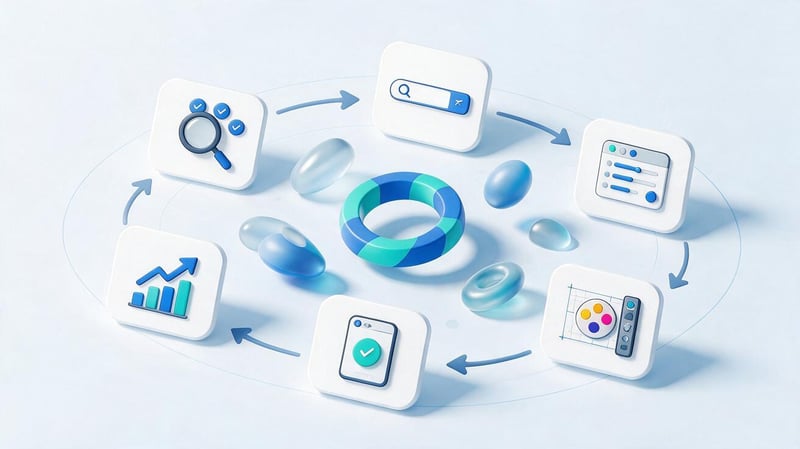
An ASO specialist's responsibilities vary depending on the company, product, and stage of its development. In a small team, one employee may be responsible for semantic research, metadata, analytics, and assigning tasks to the designer. In larger products, responsibilities are distributed among several specialists.
The work typically follows a recurring cycle: research, hypothesis development, implementation of changes, and evaluation of results. After each update, the specialist analyzes the metrics and determines what tasks should be completed next.
How does an ASO specialist analyze the market and competitors?
Before optimization, it's important to understand which apps already hold prominent positions in the chosen category. A specialist compiles a list of competitors based on relevant queries and evaluates how they present their products to users.
The study includes app titles, descriptions, graphics, localizations, reviews, and search visibility trends. It also examines the characteristics of category leaders and products competing for specific search queries.
For example, several popular expense tracking apps may feature automatic payment categorization in their first screenshots. If the product being reviewed supports this feature, the specialist will suggest checking how clearly it's presented in the app's card.
The analysis results in a list of hypotheses with rationale and expected impact on metrics. Copying a competitor's design without understanding the target audience usually doesn't provide a reliable basis for optimization.
How does a specialist collect a semantic core and optimize metadata?
A semantic core is a set of search queries that potential users use to search for an app. To prepare it, a specialist studies the product, competitors' offerings, and the language used by the target audience.
Each query is assessed based on relevance, popularity, and competition. The semantics are then grouped by user intent: for example, the queries “expense tracking” and “family budget” may relate to the same app but reflect different needs.
Based on the research, the ASO specialist prepares the card's text fields. However, the App Store and Google Play guidelines differ, so optimization for the two stores is performed separately.
How is metadata generated for the App Store?
In the App Store, the app title, subtitle, and Keywords field play an important role. According to Apple documentation, the title and subtitle are limited to 30 characters each, and the Keywords field is limited to 100 bytes.
The specialist distributes relevant queries across available fields, avoids unnecessary repetition, and considers the meaning of each element. The title should remain human-readable, even if it includes an important search query.
Preparing metadata for the app's language versions is a separate task. Localization takes into account the audience's actual search queries, language specifics, and field limitations. A literal translation of the original metadata does not guarantee a suitable result.
How is metadata optimization different in Google Play?
Google Play uses an app title, short description, and full description. The title is limited to 30 characters, the short description to 80, and the full description to 4,000 characters, according to the store's current guidelines.
Unlike the App Store, the standard Google Play product card doesn't have a separate Keywords field. Therefore, relevant search terms are seamlessly incorporated into the title and description, maintaining clarity and relevance to the product's capabilities.
A specialist ensures that the text explains the app's purpose and does not consist of repeated keywords. Google Play limits misleading wording, irrelevant references to other apps, and excessive repetition of words.
How does an ASO specialist work with app graphics?
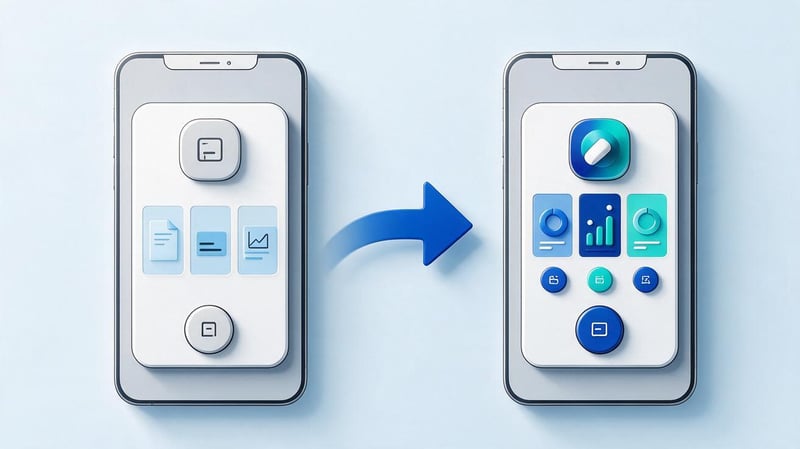
Visual optimization encompasses the app's icon, screenshots, videos, and other graphic elements. Users often evaluate the design even before opening the full product description.
The specialist determines which features and benefits should be showcased first. Then, they prepare the designer's specifications: which screens to use, what message to convey, how to distribute text emphasis, and what store constraints to consider.
For example, in a trip planning app, the first screenshot might show the route creation, and the second one might show the cost distribution among participants. This sequence helps users quickly understand the product's capabilities.
After the graphics are prepared, a specialist evaluates their compliance with the actual interface and store requirements. It's advisable to test changes through experiments, as a visually appealing design doesn't always convert better.
Why do we need localization, reviews, and ratings?
Users in different countries may search for apps with the same features differently. During localization, a specialist researches local search queries, adapts metadata, and ensures the app card design is understandable to the target audience.
Graphics may also require changes: translation of captions, different use cases, or adjustments to the order of benefits. The specialist considers the language, market specifics, and user expectations, maintaining a consistent product positioning.
Reviews help us understand what users like about the app and what issues hinder their continued use. Repeated complaints about registration or payment may be grounds for passing the issue to the product team.
Rating management must comply with store policies. Buying reviews, artificially inflating ratings, and other methods of manipulating user signals put apps at risk of sanctions.
How are A/B tests conducted and ASO effectiveness measured?
A/B testing helps compare design variations and assess the impact of changes on user behavior. For example, a specialist can test which sequence of screenshots best explains the app's benefits.
The work begins with a specific hypothesis and the selection of a metric. After that, variants are developed, the experiment's audience is determined, and the resulting data is analyzed. It's advisable to change one key element to make the results easier to interpret.
The Google Play Console offers experimentation with graphics and localized descriptions. In the App Store, the Product Page Optimization feature is used to test card design options, including icons, screenshots, and videos.
The decision to implement a variant is made taking into account statistical reliability, data volume, and audience characteristics. If the differences between the variants are not convincing enough, the specialist may continue the research or develop a new hypothesis.
What performance metrics does an ASO specialist track?
The set of KPIs depends on the product's goals and available analytical data. Typically, a specialist considers search rankings, app impressions, card views, organic installs, conversions, and rating dynamics.
Metrics need to be analyzed together. For example, an increase in installs after an advertising campaign can't be automatically attributed to metadata changes, as multiple acquisition channels could have influenced the results.
Lead SEO specialist — Gennady
In my work, I separate two tasks: achieving product visibility for relevant search queries and ensuring that this traffic leads to targeted actions. The same principle applies to ASO. If an app's rankings have increased, but the number of installs hasn't changed, I don't consider that a complete result. First, you need to understand how relevant the search queries are to the product, then evaluate the app's profile, graphics, and conversion. It's the combination of semantics, analytics, and testing that makes an ASO specialist's work effective.
Therefore, an ASO report should include not only ranking changes but also user acquisition metrics. Additionally, completed work, experiment results, and future tasks should be recorded.
What's the difference between an ASO specialist, an SEO specialist, and an ASA manager?
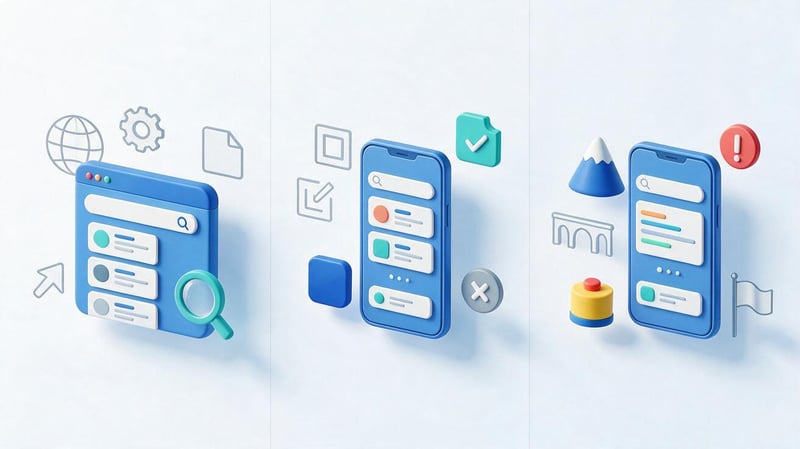
SEO, ASO, and ASA are all related to search marketing, but they utilize different platforms and audience acquisition methods. These approaches can overlap when working on a single product, especially when a company is developing a website and a mobile app.
It is more convenient to consider the differences based on the main task of each specialist and the channel they work with.
| Direction | The main task | Channel |
|---|---|---|
| SEO | Improving the search visibility of a website and its pages | Google, Bing and other search engines |
| ASO | Improving app visibility and conversion rates on its card | App Store, Google Play |
| ASA / Apple Ads | Managing Paid User Acquisition | Apple Ads placements |
What do SEO and ASO have in common?
Both areas require understanding user search intent, competitor analysis, and working with text relevance. Specialists research semantics, plan changes, and evaluate results based on data.
An SEO specialist transitioning to ASO is already familiar with query grouping, search results analysis, and content optimization principles. However, they must also thoroughly study the specifics of app stores, metadata limitations, and available analytics.
SEO focuses on the technical condition of a website, page indexing, and internal linking. ASO typically involves other tasks, including app page optimization and collaboration with the product team.
What is the difference between ASO and ASA?
ASO is aimed at increasing an app's organic visibility and increasing its product page conversion. ASA is traditionally referred to as App Store search advertising, although Apple renamed Apple Search Ads to Apple Ads in 2025.
An advertising specialist manages campaigns, bids, budgets, targeting, and paid acquisition metrics. An ASO specialist primarily works with search semantics, metadata, graphics, and organic analytics.
In some companies, both functions are performed by a single employee with the title of ASO/ASA Specialist. This format requires additional knowledge of paid advertising and the ability to evaluate the results of various user acquisition channels.
What skills does an ASO specialist need?

The profession requires analytical training, an understanding of mobile products, and the ability to work with various data. The specialist must explain their proposals to the team, assess constraints, and select tasks with a clear purpose.
To start a career, it's enough to master basic professional skills and learn how to apply them in practice. More complex tasks, including strategy development and experiment management, usually emerge as experience increases.
What hard skills are needed for this job?
Professional ASO skills involve market research, card optimization, and performance evaluation. Employers may have varying requirements depending on the scale of the app and the structure of the marketing team.
Most often, a specialist needs to have the following skills:
- Collection of semantics. Find relevant queries, evaluate their popularity and group them by search intent.
- Competitor analysis. Explore the rankings, metadata, graphics, and features of apps in a selected category.
- Text optimization. Prepare titles, subtitles and descriptions taking into account the rules of a specific store.
- Analytics. Work with visibility, installation, and conversion metrics to identify possible causes of changes.
- A/B testing. Formulate hypotheses, design experiments, and interpret results reasonably.
Skills in working with spreadsheets, preparing technical specifications, and researching user feedback are also useful. International projects will require an understanding of localization and the specifics of different markets.
What soft skills help achieve results?
An ASO specialist regularly interacts with people responsible for different parts of the product. Therefore, the ability to clearly formulate tasks and explain decisions impacts the speed of change implementation.
Analytical thinking helps you spot patterns, and attentiveness reduces the likelihood of errors in metadata and reports. Independence is essential for planning studies and identifying the causes of changes in indicators.
Creativity is useful when developing hypotheses for app graphics and positioning. However, proposals should be based on product features, user needs, and the results of previous experiments.
It's equally important to be calm about unsuccessful tests. If a new design option yields worse results, the specialist records the findings and adjusts the future work plan.
Are English and programming required?
English is often required for reading documentation, working with international services, and communicating with foreign colleagues. On projects involving multiple countries, it also helps with localization research and analyzing English-speaking competitors.
Language proficiency varies depending on the job opening, so there's no universal requirement for all ASO specialists. For independent entry, it's helpful to be able to read technical materials and understand the interfaces of work tools.
Programming isn't usually part of an ASO manager's basic responsibilities. It's much more helpful to have a basic understanding of analytics, metadata structure, and experimentation principles at the outset.
Knowledge of SQL, report automation, or basic API work can be useful in large product companies. These skills expand a specialist's capabilities, but they don't replace an understanding of app search engine optimization.
What tools does an ASO specialist use?

The choice of services depends on budget, scope of tasks, and availability of internal product data. For a small app, some research can be done manually, but for regular work across multiple markets, specialized platforms are more convenient.
These tools help you collect search queries, research competitors, track metrics, and plan experiments. When choosing a service, consider the feature set and limitations of a specific pricing plan.
Semantic and competitor analysis tools
Specialized ASO platforms are used to study search visibility. They help identify keywords, monitor app rankings, and assess the competitive landscape.
Well-known solutions include ASOMobile, AppTweak, Asodesk, and Sensor Tower. Each service has its own set of features, data sources, and access conditions.
For a study project, you can start by analyzing public app cards and store search suggestions. Then, it's useful to compare the results with data from a professional tool and understand how it evaluates search query popularity.
Analytics and testing tools
Developers receive data about their apps through App Store Connect and Google Play Console. Additional analytics systems help study acquisition sources, installs, and subsequent user behavior.
The main tools and their purposes are presented in the table.
| Tool | What is it for? | Stage of work |
|---|---|---|
| ASOMobile | Semantics, competitors, positions | Study |
| AppTweak | Market and search visibility analysis | Study |
| Asodesk | Working with keywords and reviews | Optimization |
| Sensor Tower | Mobile market research | Competitive analysis |
| App Store Connect | Metadata, Analytics, and Experimentation | Implementation and control |
| Google Play Console | Card management and testing | Implementation and control |
| AppsFlyer | Attribution and acquisition analysis | Analytics |
A specialist doesn't necessarily need to work with all of these systems simultaneously. It's more important to understand what data is needed to solve a problem and how reliably the chosen service provides it.
Where does an ASO specialist work and who do they interact with?
ASO specialists work for product IT companies, marketing agencies, and mobile development teams. Some specialists manage multiple projects independently and provide services on a freelance basis.
The work format influences the number of applications, the depth of product immersion, and the degree of responsibility for the outcome. Before choosing a position, it's helpful to review the team structure and the tasks specified by the employer.
How is working in an agency different from working in a product company?
At an agency, a specialist can simultaneously manage apps from different categories, such as financial services, educational products, and mobile games. This work helps them quickly become familiar with various niches and promotion approaches.
At the same time, it's necessary to manage time between projects, coordinate changes with clients, and prepare regular reports. The depth of access to analytics often depends on the agreement with the client.
In a product company, a specialist typically focuses on a single application or group of products. They collaborate more closely with developers and analysts, participate in update discussions, and can see the long-term impact of their decisions.
The choice between an agency and a product depends on professional interests. Some professionals thrive on a variety of tasks, while others are more interested in in-depth work with a specific application.
What specialists does an ASO manager interact with?
Changing an application profile often requires the participation of several employees. The ASO manager formulates the task, explains the purpose of the changes, and distributes the necessary materials to colleagues.
The designer prepares screenshots and icons, the copywriter helps with the text, and the developer is responsible for technical changes to the product. The analyst may be involved in setting up measurements and verifying the resulting data.
A product manager helps align priorities with the app's development plan. A user acquisition specialist is responsible for paid user acquisition and can use ASO research results when planning advertising campaigns.
Team coordination is especially important when entering new markets. Changes to text, graphics, and functionality must align with the app's actual capabilities.
How much does an ASO specialist earn in Ukraine?
Salary depends on experience, task complexity, employment format, and company. Proficiency in English, international project experience, and the ability to independently manage an optimization strategy also influence the terms.
To assess current salary levels, review open positions on Ukrainian job platforms such as DOU, Djinni, and Work.ua. Compare offers based on the publication date, responsibilities, and whether the salary is pre-tax or post-tax.
Salary ranges from older publications may poorly reflect the current market situation. Figures from publications in other countries, where employment conditions and income structures differ, should be treated with particular caution.
What are the differences between Junior, Middle, and Senior ASO specialists?
Career levels typically reflect an employee's autonomy, task complexity, and responsibility for results. Job titles may overlap, although the actual requirements of employers will differ.
| Level | Main tasks | Independence |
|---|---|---|
| Junior ASO | Collection of semantics, competitor analysis, report preparation | Works with a mentor |
| Middle ASO | Card optimization, testing, and results analysis | Handles areas independently |
| Senior ASO | Strategy development, task prioritization, working with multiple markets | Responsible for strategic decisions |
A junior specialist typically performs individual tasks and gradually masters analytical tools. At the Middle level, independent work with hypotheses is expected, while a Senior specialist typically participates in product development planning.
Advancement between levels depends on experience in problem solving and the quality of results. Length of service in the profession alone does not guarantee promotion.
How to become an ASO specialist from scratch?
You can begin training as an ASO specialist independently using open-source materials and training projects. For the first steps, it's enough to understand the principles of store operations, learn how to collect semantic data, and conduct basic competitor analysis.
It's important to gradually move from theoretical study to practical tasks. Employers will value a clear analysis of the application and well-reasoned proposals rather than a long list of completed webinars without any practical examples.
Where to start training an ASO specialist?
A beginner is better off taking a sequential approach: first learning how the stores work, then learning the tools and preparing their own project. This approach helps connect individual learnings with real-world work tasks.
There's no need to buy multiple courses and subscriptions to professional platforms at once. Open documentation, app cards, and accessible training materials are sufficient for getting acquainted with the profession.
Step 1: Learn the Basics of the App Store and Google Play
Start with the structure of stores and the main elements of the app card. Understand what text fields each platform provides, what search results look like, and what information the user sees before installing.
Review Apple and Google's official requirements for metadata, graphics, and advertising language. This will help you avoid mistakes when preparing your first assignments.
Then select several apps from the same category and compare their designs. Pay attention to their titles, descriptions, initial screenshots, and differences between language versions.
Step 2: Mastering Semantics and Analytics
Choose an app with clear functionality and prepare a short list of search queries. Try to categorize them by meaning, determine their relevance, and identify competitors within each group.
The next step is to study the metrics available in the stores' analytics systems. It's important to understand the differences between impressions, card views, installs, and conversions.
It's also helpful to learn Google Sheets or Excel for data processing. Spreadsheets are essential for collecting keywords, comparing competitors, and preparing reports.
Step 3. Practice on a real or educational project
For your first project, you can use an app that's available in the store and has sufficient data for analysis. It's advisable to choose a product with familiar features to make it easier to assess how well the queries match.
Prepare a competitor overview, semantic core, and metadata change suggestions. Additionally, create a technical specification for new screenshots, explaining each hypothesis.
If you don't have access to internal analytics, outline the limitations of the study. Don't present the estimated increase in installs as a confirmed experimental result.
Step 4: Preparing a portfolio and finding your first job
Your portfolio should include a training audit, a semantics table, and examples of card optimization. For each project, include the original task, the data used, and the rationale behind the proposed changes.
Even without commercial experience, you can demonstrate how consistently you analyze the app and formulate conclusions. It's helpful to specifically describe what metrics would be needed to test your hypotheses after implementation.
When looking for your first job, consider internships, Junior ASO positions, and related positions in mobile marketing. Carefully review job posting requirements and be prepared to explain solutions from your portfolio.
Where can I get training to become an ASO specialist?
You can master the profession through independent study, specialized courses, and mentored internships. The choice depends on your initial preparation, budget, and the amount of time you're willing to devote to learning.
For an independent start, use the official materials Apple Developer and Google Play Console Help. They help you understand store requirements and available optimization options.
Additional information can be found in training materials from Asodesk, ASOMobile, AppTweak, and other relevant services. When reviewing older articles, be aware of changes to store interfaces and policies.
Paid ASO courses are useful for those seeking a structured program and feedback. However, a certificate alone does not confirm the ability to analyze applications and make effective decisions.
How to choose ASO courses and training programs?
First, review the curriculum and check how thoroughly both app stores are covered. A good curriculum should include semantics, metadata, visual optimization, analytics, and practical exercises.
Pay attention to the instructors' experience and the availability of feedback on completed assignments. It's helpful to clarify in advance what tools will be needed and whether paid subscriptions are included in the cost of training.
Evaluate the final project separately: will it allow you to prepare materials for your portfolio and address your own mistakes? Promises of guaranteed employment should be considered in conjunction with the specific terms of the program.
If the training involves working with real-world applications, clarify the data access format. This will help you understand what practical skills you'll gain during the course.
Is it possible to become an ASO specialist without experience?
It's possible to start a career without prior IT experience, especially if you have an interest in analytics and mobile apps. For initial positions, employers may consider candidates with course projects and a basic understanding of the tools.
Experience in SEO, content marketing, analytics, or design helps one master specific tasks more quickly. However, those with other professional backgrounds can also pursue careers through self-study and internships.
The key at the initial stage is to learn to explain your own decisions. For example, why certain queries were chosen, what errors were found in the card, and what needs to be measured after changes.
When preparing a test assignment, it's best to honestly identify data limitations and propose a method for obtaining them. This approach demonstrates an understanding of the study's limitations and reduces the risk of unfounded conclusions.
What does the work of an ASO specialist look like in practice?
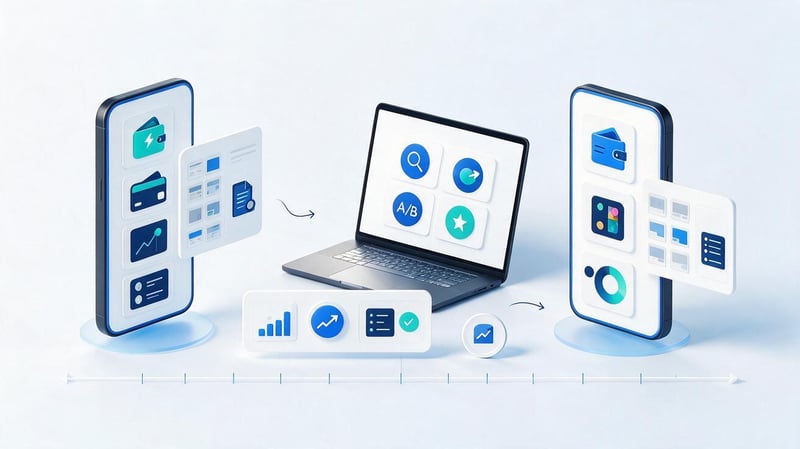
Consider a personal finance app that regularly receives search traffic but has a low install rate. The team suspects that users don't understand the product's benefits based on its current design.
The specialist studies search queries, compares the card with competitors, and analyzes available metrics. He notices that the first screenshots show secondary settings, while the main expense tracking features are shown much later.
To test the hypothesis, a new sequence of images is prepared. The first screen shows the addition of expenses, the second shows the distribution by category, and the third shows statistics for the selected period.
The changes are approved by the designer and product manager, after which the team launches the experiment. The results are evaluated using the selected metric and the statistical reliability of the comparison.
This example is hypothetical and illustrates the workflow. The actual effectiveness of such a change depends on the audience, the quality of the design, and the results of the testing.
What mistakes do new ASO specialists make?
Beginning specialists often focus on individual card elements and don't sufficiently consider the overall purpose of the product. Because of this, changes may appear logical but poorly align with search demand or user expectations.
Common errors include the following situations:
- Irrelevant semantics. The specialist selects popular queries, although the application's functionality does not meet the audience's expectations.
- Literal localization. Metadata is translated without researching how users actually search for the app in the selected country.
- Several changes at once. The team updates the name, icon, and screenshots, making it difficult to determine the impact of each element.
- Focus only on positions. Increased visibility is perceived as a success without assessing installs and conversions.
- Misinterpretation of tests. The decision is made on the basis of a small amount of data or differences that cannot be considered convincing.
To prevent such errors, it's essential to define the work's purpose and evaluation criteria in advance. It's advisable to record all changes along with dates, hypotheses, and the results of subsequent analysis.
Gradually, this approach helps the specialist better understand audience behavior and choose more informed optimization directions.
An ASO specialist focuses on mobile app search visibility, app card optimization, and performance analysis. Knowledge of the App Store and Google Play, skills in semantic analysis, and practical experience in app research are required to begin this career.
If you're developing a mobile product and want to understand what's hindering its organic performance, contact Seo-Gen for an ASO audit. We'll examine your search visibility, metadata, and app page design, identify issues, and provide optimization recommendations.


