PR article: what is it and how to prepare it?


A PR article helps a company explain its position, showcase its experience, and gain external mentions. Such material can improve brand awareness, reputation, website traffic, brand traffic, and the link profile if the topic is relevant to the audience and the publication is placed in a suitable media outlet.
PR comes in a variety of formats: expert articles, interviews, case studies, research, company news, or image publications. The choice depends on the PR campaign's goal, the newsworthy occasion, and the platform's editorial policy. Let's explore what PR is, how to prepare a PR text, where to publish an article, and how to verify the results after publication.
What is a PR article?
PR stands for Public Relations. A PR article is a piece of material through which a company, expert, or brand communicates useful information to an audience and receives public mentions in the media, a specialized publication, a blog, or another media outlet.
If someone is searching for the definition of PR, they need a clear answer: it's systematic work with reputation, public messaging, and audience relations. A PR article occupies a special place in this work, as it provides space for facts, case studies, research, examples, and expert commentary.
How is a PR article different from a regular advertising article?
Advertising material often leads the reader to a specific product, service, or offer and is built around a commercial benefit. A PR article typically begins with a topic, problem, research, or practical experience, so the brand appears in a context that is understandable and useful to the audience.
The difference is clearly visible in the publication's purpose, delivery, and expected outcome. PR and advertising can be used in the same campaign, but to the reader, they present differently and require different approaches to content.
| Parameter | PR article | Advertising article |
|---|---|---|
| Main task | Reputation, recognition, expertise | Sale of goods or services |
| Presentation | Informational, expert, native | Commercial, with direct offer |
| Brand mention | In the context of the topic and facts | In the center of the material |
| Main result | Reach, trust, clicks, mentions | Leads, sales, conversions |
For businesses, this means that PR advertising and traditional advertising require different evaluation criteria. In one case, reach, platform quality, audience response, and brand mentions are important, while in the other, cost per lead and direct sales are more important.
How is a PR article different from a press release?
A press release announces a specific event: a product launch, branch opening, partnership, research, or other newsworthy event. Its purpose is to quickly convey the facts to the editorial team and provide a basis for reporting.
A PR article explores a topic in greater depth and can remain relevant for significantly longer. It features analysis, expert commentary, explanations, examples, tables, case studies, and links to additional sources, making this format often used for systematic media promotion.
Answers to your questions
What is a PR article in simple terms?
A PR article is a piece of content that helps a company communicate its expertise, experience, research, or important event in a context that's useful to the audience. It's published on owned and external platforms, including media outlets, specialized websites, and industry blogs.
Unlike a direct advertising message, such a publication is often built around a topic, problem, data, or practical experience. The brand appears naturally within the material and supports the main idea with concrete facts.
How is a PR article different from an advertisement?
Advertising typically leads to a direct sale and is built around the offer, price, or benefits of a product. A PR article often leverages expertise, facts, case studies, research, and the brand's public presence in a suitable information context.
Both formats can be used simultaneously, but their objectives and evaluation criteria differ. For PR, the quality of mentions, reach, reputation, clicks, and long-term presence of the material online are particularly important.
Where can I publish a PR article?
You can publish an article in an industry publication, news outlet, specialized blog, expert column, or on your own website. The choice depends on the topic, audience, region, language, and editorial guidelines of the specific platform.
If the task is related to SEO, additional checks are made for page indexability, domain quality, traffic, and link conditions. News sites are suitable for actual newsworthy topics, while expert content is best directed to specialized publications.
How to publish an article in the media?
First, you need to select relevant platforms and research their requirements, then propose a topic to the editor and briefly explain its value to the audience. After approval, you prepare the final material, including links, images, data, and expert commentary.
Before publishing, it's a good idea to check whether a link can be added, what anchors are allowed, and whether the article will be permanently accessible. After publishing, the publication should be reviewed, added to the report, and included in further analysis of the results.
Is it possible to place a link to a website in a PR article?
Yes, as long as the link is relevant to the topic of the material and the site's rules. It could lead to a study, case study, service page, catalog, company website, or other relevant source that provides the reader with additional information.
The editors may change the anchor, add the nofollow or sponsored attribute, or limit the number of links. It's best to agree on these terms before preparing the final version of the article and paying for placement.
Do PR articles help SEO promotion?
PR publications can support SEO through external links, referral traffic, brand mentions, and additional pages in search results. Results depend on the quality of the platform, the content of the material, indexing, and the relevance of the selected landing page.
One publication doesn't guarantee a boost in rankings or traffic. For a sustainable result, you need high-quality placements, a strong website, and a solid technical SEO foundation.
How many links should a PR article have?
There's no fixed number, as it depends on the length of the article, the topic, and the specific editorial guidelines. Links should help readers obtain additional information and lead to truly relevant pages.
If a short text contains multiple commercial links with identical anchors, the content quickly begins to look artificial. It's wiser to use fewer links, but make each one logical in its context.
How do you know if a PR publication has worked?
First, you need to compare the actual results with the publication's objective. For a reach article, they look at views and mentions, for SEO, they check links and indexing, and for a traffic campaign, they analyze clicks and conversions.
It's also useful to track brand queries, direct visits, and audience response on social media. This set of metrics provides a more complete picture than just the number of views.
Why does a business need PR articles?

PR publications are used when a company needs to increase the number of high-quality mentions, explain a complex product, support the launch of a new business line, or showcase a team's expertise. To achieve this, the material must be relevant to the audience's interests, and the publication must be published in a location where that audience can actually be found.
A single PR article rarely achieves several major objectives equally well, so before preparing it, the primary outcome is determined. This could be brand awareness, company PR, online article promotion, website traffic, a high-quality external link, or support for an expert reputation.
Brand recognition
When a brand regularly appears in industry-specific media, industry blogs, and expert publications, audiences begin to recognize the name and associate it with a specific topic. This effect is especially noticeable in niches with long transaction cycles, where potential clients research the market well before their first contact.
Consistency in publications is crucial for recognition, while random publications on unrelated resources produce less predictable results. A media plan helps distribute topics, platforms, and newsworthy events so that a company doesn't repeat the same PR text across dozens of websites.
Reputation and expertise
An expert article gives a company the opportunity to demonstrate its approach, explain a complex topic, and support its findings with facts. Real case studies, analytical data, expert commentary, and, if any, proprietary market research are helpful.
A brand's reputation depends on the quality of the platform and the content of the publication. A weak ad copy on an irrelevant site usually offers little benefit, even if it contains a link, whereas a content-rich piece in an industry media outlet can become a significant point of contact with the target audience.
Clicks and new inquiries
A media publication can generate referral traffic if the topic aligns with readers' interests and the link leads to a relevant page. UTM parameters are convenient for measuring clicks when the platform's guidelines allow such parameters in the URL.
The number of clicks doesn't fully reflect the impact of a PR campaign, as some people will return later through search or direct traffic. Therefore, it's important to consider brand queries, conversions, new mentions, and changes in direct traffic alongside clicks.
PR articles and website promotion
PR articles can support website promotion through external links, additional mentions, and traffic from relevant resources. Publications where the topic, audience, context, and target page are logically linked are more effective.
Website PR shouldn't be reduced to mass-purchasing placements. For SEO, the quality of the link profile, natural anchor text, page indexability, organic site traffic, and the absence of obvious signs of link spam are all important.
What types of PR articles are there?

The format of the material is chosen after determining the goal, audience, and platform. A single newsworthy occasion can be presented as a news story, an interview, a case study, or a research study, but editors and readers will perceive these types of PR differently.
For PR texts, it's best to decide in advance what role the brand plays and what benefit the reader will receive. This helps avoid situations where the material reads like a paid advertisement and doesn't meet the editorial requirements.
Expert article
An expert article is built around practical knowledge: a specialist explains a problem, analyzes mistakes, demonstrates a methodology, or answers frequently asked questions from the audience. In this format, it's appropriate to mention a brand through the team's experience, project data, or commentary from a subject-matter expert.
Expert publications are convenient for digital PR because they can be linked to other company materials and used in content marketing. A good guest post retains its value after an active PR campaign ends and can generate traffic from search engines.
Case study
A case study demonstrates a real-world task, the process, and the resulting outcome. Figures, deadlines, constraints, and initial conditions are more useful here than general estimates, as they allow the reader to understand how applicable the company's experience is to a similar situation.
If some data cannot be disclosed, it's best to clearly state the limitations and avoid replacing the figures with vague wording. This approach makes the material more compelling and reduces the risk of the case being perceived as a sales pitch.
Interview
An interview is appropriate when a company has an expert, founder, or executive with experience that is relevant to the publication's audience. Questions should explore the expert's professional position, solutions, mistakes, and observations, rather than repeating the brand's presentation.
This format is convenient for use with social media PR, as individual responses can be adapted into short posts, cards, or videos. The original interview remains a standalone piece of media, preserving the context of the statements.
Study
Research attracts attention when a company has proprietary data, survey results, or statistics on a significant sample. The data collection method, study period, and sample size should be clearly stated so that the reader understands the origin of the findings.
Such materials may receive additional external links and mentions, as journalists and authors need primary sources of data. If you don't have your own statistics, inventing a study for PR purposes is unacceptable.
Image article
An image-building article explains a company's values, approach, technology, or experience through a specific topic. An image-building article, for example, built around a real customer or industry problem, is usually more persuasive than a long list of brand advantages.
For example, a manufacturer can explain how quality control technology has evolved over the years and what indicators have been improved. This material provides substance and simultaneously helps the audience understand the company's approach to work.
News PR material
News coverage is essential when a company has an event that is significant to the market or a specific audience. This could be a product launch, a partnership, a study, a branch opening, a major event, or a change that directly impacts customers.
News publication requires a short and clear summary: what happened, when, who it affects, and why the event is noteworthy. If the news is only relevant to the company itself, the editors may offer commercial placement or reject the material.
How to prepare a PR article?
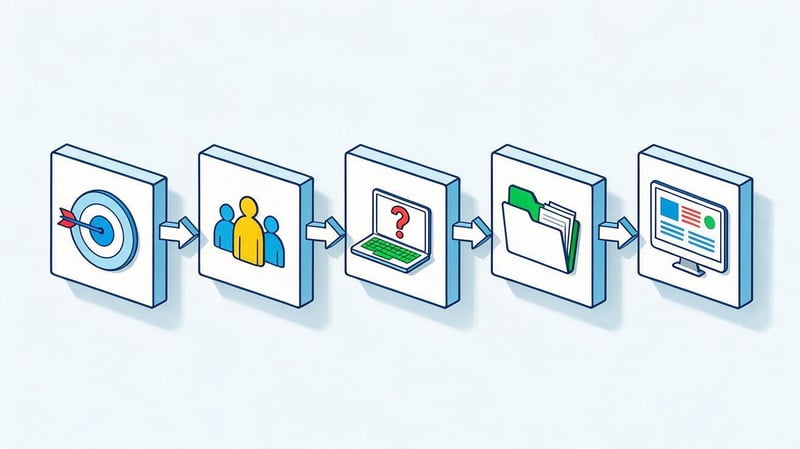
Preparation begins with the goal and source material, and only then does the team move on to the text itself. When the audience, topic, platform, and expected outcome are clear in advance, PR materials are more accurate and require fewer edits after submission to the editor.
For complex niches, it's helpful to gather data before starting work: expert commentary, examples, documents, statistics, and links to primary sources. This reduces the amount of generic language and helps you write PR text that stands up to editorial review.
1. Determine the purpose of the publication
The goal should be as measurable as possible for a specific PR campaign. For example, a company might want to get a mention in an industry media outlet, drive traffic to a research page, support a product launch, or enhance brand awareness among a specific audience.
Setting several equally important goals at once will quickly lead to a lack of focus and overload. It's best to choose a primary objective and consider additional outcomes as supporting ones, tracking them separately.
2. Define your target audience
Before preparing your topic, you need to understand who will be reading the material and what problem they are trying to solve. The target audience influences the vocabulary, depth of explanation, examples, presentation format, and choice of publication platform.
A B2B publication can use more industry terminology and figures, while a mass media publication will require more detailed explanation of the professional context. This type of text customization is more useful than mechanically adding search queries to every paragraph.
3. Choose a topic and a newsworthy occasion
A good topic emerges at the intersection of the interests of the company and the platform's readers. An editor is more likely to accept a piece if it contains clear innovation, data, experience, a relevant issue, or practical benefit to the audience.
The statement “Company X has become a market leader” without supporting evidence conveys almost nothing to the reader. The topic “How buyer behavior has changed: data from 2,500 orders” already provides a topic and promises concrete evidence.
4. Collect source material
Before writing, you need to gather statistics, case studies, expert commentary, photographs, documents, and links to primary sources. If you're planning a market research project, it's worth outlining the methodology in advance and checking whether the data used is publishable.
Source material helps remove the sales pitch and make the material more useful to the audience. For a complex topic, it's better to spend more time gathering information than to compensate for it later with lengthy generalizations.
5. Structure your PR text

Structure maintains the flow of the material and helps the editor quickly understand what answer the reader will get. In most cases, a headline, lead, a few key points, facts, examples, a conclusion, and a clear CTA are sufficient.
For long PR materials, it's a good idea to distribute facts among sections in advance and eliminate repetition. This will make the PR text read faster, and key arguments won't get lost in similar paragraphs.
Headline
The headline should communicate the topic and give the reader a clear reason to open the article. A specific statement with a fact, question, or useful promise is usually better received than a loud, empty phrase.
Clickbait can increase open rates, but it quickly reduces trust if the text doesn't deliver on its promise. This is especially sensitive for PR, as the publication is directly linked to a brand's reputation.
Lead
The lead, in a few sentences, explains the problem, context, and reason to read further. There's no need to rehash the entire article or immediately list the company's benefits, which will be repeated later in the main body.
A good lead helps the editor understand the focus of the article and keeps the reader engaged after the headline. For a complex topic, you can add one strong fact or a short conclusion that sets the stage for the rest of the text.
Main part
The main body develops the topic sequentially: problem, facts, explanation, examples, and conclusions. It's best to divide long text with H2 and H3 headings, and use tables and lists where they truly enhance comprehension.
If the material contains figures, the source and period of the data must be indicated. If the opinion of a specialist is cited, the reader should understand their role, experience, and professional context.
Company mention
The brand name should be introduced where it is linked to a fact, case study, research, or expert commentary. Frequent repetition of the company name without a meaningful reason quickly makes the text appear promotional and undermines audience trust.
For an image-building publication, a few precise references are usually sufficient if the rest of the story demonstrates expertise through facts and content. This approach is easier to coordinate with the media editor.
Call to action
The CTA depends on the platform and the purpose of the article. It could be a link to a study, case study, service page, catalog, consultation form, or another resource that logically continues the article's theme.
The call to action should be consistent with the editorial policy and the context of the material. If the platform prohibits commercial CTAs, it's better to limit yourself to a relevant link to the source or a discreet mention of the company.
How to optimize a PR article for SEO?

SEO optimization of PR materials begins with a proper structure, a relevant topic, and content that matches search intent. Keywords help search engines determine the topic of a page, but their frequent, mechanical repetition makes the text harder to read.
To promote articles, a combination of a relevant platform, high-quality content, accurate links, and an indexed page is crucial. This placement can work through search results, referral traffic, and external mentions simultaneously.
Keywords
Queries should be used where they naturally align with the section's purpose. Phrases like “PR article”, “media publications”, or “online article promotion” can be incorporated organically if the material truly answers the relevant questions.
There's no need to repeat an exact match in every paragraph or tailor a phrase to fit the text with language errors. Word forms, synonyms, and related LSI phrases help expand on the topic and maintain the article's natural rhythm.
Headings and structure
There should be one H1 on the page, and the remaining blocks are best organized using sequential H2, H3, and H4. This hierarchy helps readers quickly scan the material and understand where the answer to a specific question lies.
A heading should be relevant to the section's content and not promise anything that isn't present in the text. If it's phrased as a question, it should end with a question mark, and the first paragraph should immediately provide a direct answer.
Links in the PR article
An external link should be useful to the reader and lead to a page that logically continues the topic of the article. It's wise to use different types of anchors for your link profile: branded, non-anchored, diluted, and naturally themed wording.
You can publish an article with a link only after checking the rules of the specific platform. Some media outlets use nofollow or sponsored attributes, limit the number of URLs, and change anchor text according to their editorial policies.
Can I use UTM tags?
UTM tags help you see clicks from a specific PR publication in your analytics system. This is useful when a company publishes articles on multiple platforms and wants to compare referral traffic, user engagement, and subsequent conversions.
Before publishing, it's worth checking whether the editorial team allows parameters in links. If UTMs are removed, the traffic source can be analyzed using the referrer, landing page, and data from the web analytics system used.
Lead SEO specialist — Gennady
I view a PR article as a publication that should have several clear objectives and measurable results. Good placement provides a brand with mentions, targeted traffic, and a high-quality external link. A random donor site chosen for a single backlink usually brings much less benefit to both SEO and PR.
Where to place a PR article?

The platform is selected based on the topic, audience, region, and website quality. You can publish your article online on an industry media outlet, a news site, a specialized blog, a corporate resource, or any other platform where the material resonates with readers' interests.
A list of websites shouldn't be compiled solely based on publication cost. For PR and SEO, it's important to consider search visibility, actual traffic, the quality of existing content, indexability, link conditions, and the resource's relevance to the business's topic.
Industry media
Industry media provide access to audiences already interested in a specific market or professional topic. For B2B, finance, technology, medicine, and other specialized niches, such publications often attract more relevant readers than mainstream platforms.
Before submitting material, review the sections and recent articles. This helps you understand what topics the editors accept, what kind of content they expect from the author, and whether a specific publication is suitable for the chosen PR task.
News sites
News resources are suitable for events with a clear newsworthy reason. Publishing a story is easier when the event concerns a market, clients, region, or a significant change within an industry, and the editor can quickly verify the key facts.
If the material doesn't contain news, it's better to offer an expert article, research, or commentary. Trying to pass off advertising text as breaking news often results in rejection or a suggestion to switch to a commercial format.
Thematic blogs and media
Thematic blogs often have lower overall traffic but a more targeted audience. For a niche service, such a platform can provide high-quality traffic, guest posts, and more natural brand mentions within the relevant context.
Before publishing, it's important to check the author, publication frequency, search visibility, and the quality of previous guest articles. The site where the articles are published should be live, indexed, and relevant to the business topic.
Own website
A company blog is suitable for publishing research, case studies, expert materials, and expanded commentary. Such pages can be developed through internal linking, content updates, and organic traffic from search engines.
However, publishing on the company's website does not replace media promotion. An external platform provides access to a new audience and creates additional, independent brand exposure online.
Social media
Once an article is published, it can be reworked into a social media post, a series of cards, a short video, or an expert quote. This content distribution extends the lifespan of the material and helps generate additional audience engagement without having to develop a new topic from scratch.
Online PR is often built around multiple channels simultaneously. Social media, email, a company's website, and media outlets can all support a single news story, but each channel requires its own presentation format.
How to choose a platform for publishing a PR article?

Article publishing platforms should be compared across several parameters. The topic, actual traffic, content quality, region, language, and publishing conditions all combine to provide a more accurate picture of a resource's value for a PR campaign.
For SEO, organic visibility, indexability of content, link profile, and spam level are additionally assessed. This approach helps weed out article hosting sites that exist primarily for the purpose of mass link sales.
Topic and audience
The platform should be related to the product, industry, or interests of the target audience. Media with lower traffic sometimes produces better results if its readers more closely match the potential customer profile.
For multilingual campaigns, it's important to consider the language and region of the audience. It's best to prepare PR materials for Russian, Ukrainian, and English separately, maintaining natural wording for each language version.
Real traffic and visibility
It's helpful to verify high claimed reach against available data, as a platform's advertising statistics may not reflect its search visibility. It's worth looking at traffic trends, branded queries, and the presence of published articles in search results.
For SEO, the organic traffic of a specific domain and the quality of the pages that are already receiving traffic are important. Formal domain authority metrics alone are not enough for site selection.
Website quality
A good donor site updates regularly, has a clear structure, and publishes content for a real audience. Pages should be indexed, open smoothly on mobile devices, and not be overloaded with a large number of similar advertising posts.
Before publishing, it's a good idea to manually check several materials. If a site is filled with articles with identical commercial anchors, weak text, and random topics, the platform should be evaluated with caution.
Placement terms
Before payment, you should clarify the length of the material, the number of links, the link type, image usage rules, the publication deadline, and the possibility of editing after release. Article publishing platforms often vary significantly in these terms.
You also need to find out whether the content will remain on the site permanently and whether the URL might change after publication. For long-term PR and SEO, these conditions have direct practical implications.
Editorial policy
Editorial policies define style, acceptable topics, link formats, and content requirements. Some media accept prepared guest posts, while others rely on in-house editorial staff, expert commentary, or specially prepared materials.
Before submitting, it's worth reading the author requirements and a few recent articles. This reduces unnecessary edits and helps you immediately understand how well the chosen topic suits the specific media editor.
How to publish an article in the media?

If you need to figure out how to publish an article in the media, it's convenient to break the process down into stages: select platforms, find contacts, prepare a proposal, agree on a topic, write the article, and review the page after publication. This process reduces wasted effort.
You can use your own media databases, communicate directly with editors, or use an article publishing service. The choice depends on the scale of the PR campaign, the budget, and whether the company requires a one-off publication or regular work with dozens of sources.
Prepare a media database
The media database should include the name of the platform, topic, region, language, editorial contacts, requirements, cost, and link placement rules. For large campaigns, it's useful to also record the status of negotiations, the person responsible, and the date of the last contact.
A separate database of journalists is useful for pitching topics and obtaining expert commentary. It's best to store contacts alongside notes on the areas of interest to a particular author and the formats they work in.
Prepare a proposal for the editor
An editor prefers to receive a short letter with a few topics than a long, ready-made article without prior approval. The message should explain why the material is suitable for the publication's audience and what specific information the expert can provide.
If a company wants to publish an article on the site for free, the value of the topic becomes especially important. The editors accept such materials when they enhance the site's content and genuinely meet the interests of its readers.
Agree on the topic and requirements
Before writing the final version, it's important to agree on the length, structure, deadline, links, images, and brand mention format. This is especially important if the material is being prepared for a major media outlet with strict requirements for authors and sources.
This stage saves time for both parties and reduces rework. The copywriter receives clear guidelines, and the editor has a clear idea of what material will be reviewed.
Check your post after publishing
After publishing, open the page and check the title, text, images, links, author name, and final URL. If the publication is meant to support SEO, separately check the indexing of the publication and the integrity of the agreed-upon link attributes.
It's also helpful to ensure that each link leads to the correct landing page. A mistake in the address can significantly reduce the results of even a strong publication on a high-quality resource.
Distribute the published material
The finished publication can be used on social media, in email newsletters, in the “Media About Us” section, in presentations, and on expert profiles. This helps expand your reach and gives your prepared material additional points of contact with the audience.
Re-sharing is especially useful for research, case studies, and interviews. A single piece of content can be adapted for multiple channels, preserving the facts and core message without completely duplicating the text.
How does a PR article help SEO promotion?

The connection between PR and SEO manifests itself through links, mentions, clicks, and additional pages in search results. Publication on a high-quality platform can drive people to the site directly and simultaneously expand the domain's link profile.
However, link promotion requires a careful approach. Mass placement of identical anchors on weak resources creates unnecessary risks, so the quality of the donor, relevance, and naturalness of the context are more important than the number of published articles.
External links
An external link can lead to the homepage, a service, a study, a case study, or other useful material. The landing page should logically continue the topic of the publication, otherwise users are more likely to close the site immediately after clicking.
It's best to use different wording for the anchor list and avoid repeating the commercial exact-match in each placement. Branded, diluted, and anchorless links usually look more natural within editorial PR materials.
Referral traffic
Referral traffic shows how many users came from an external publication. Its quality can be assessed by engagement, subsequent page views, events, and conversions on the website after the referral.
Even if an article receives few clicks, it may still generate mentions, links, or branding effects. Therefore, evaluating a publication based on only one data source is insufficient for a comprehensive PR report.
Branded queries and mentions
A series of posts increases the number of times a user encounters a company's name in various sources. Later, some of the audience searches for the brand directly, returns through organic search, or visits the website without an advertising link.
For analysis, it's useful to track the dynamics of brand queries and the emergence of new mentions. This data helps understand how PR is performing beyond direct referral traffic.
Indexation and long-term effect
If a page remains accessible and indexed by search engines, the content can generate impressions and clicks months after publication. This effect is especially characteristic of expert articles, instructions, research studies, and materials with consistent search demand.
After publishing, it's a good idea to check the URL indexation and link integrity. If the page is later deleted, blocked from search, or moved without a redirect, the expected long-term results will be reduced.
How to evaluate the effectiveness of a PR publication?

Before launching a PR campaign, you need to define several KPIs related to its main objective. For a single article, these could be views and clicks, while for a series of articles, these could be increases in mentions, brand searches, referral traffic, and high-quality external links.
There's no universal metric, so it's best to compile a PR report from multiple sources. Web analytics shows clicks and conversions, search tools help monitor visibility, and mention monitoring records new publications about the company.
The following indicators can be used to evaluate the result:
- views and reach of published material, if the platform provides such data;
- referral traffic, clicks with UTM tags and user behavior after the click;
- leads, registrations, applications or other conversions related to the purpose of a specific material;
- new external links, brand mentions and the appearance of additional pages in search results;
- the dynamics of brand queries and the visibility of the landing page after a series of placements.
After collecting the data, the results should be compared with the original publication goal. If the article was prepared for expertise and reach, the number of leads shouldn't be the sole criterion, and for a traffic campaign, the lack of clicks requires a separate analysis.
What is a PR campaign and what role do articles play in it?
A PR campaign integrates the goal, audience, messages, channels, publications, events, and analytics for a specific period. A PR article in such a system can be one of the materials that supports the overall news story and works in conjunction with other PR efforts.
If a user is searching for a PR company or a PR agency, it's important to distinguish between the terms. A PR agency provides PR services, while a PR campaign refers to a set of planned communications activities linked by a common goal and evaluation system.
PR on the Internet
Online PR includes online media, industry-specific blogs, expert columns, social media, opinion leaders, and the company's own media. Channels are selected based on the audience, budget, topic, and type of message to be conveyed.
Online PR tools produce the best results when they are linked by a common logic and a single news story. Individual publications can be supported by newsletters, social media, website content, and collaboration with journalists.
PR technologies also include monitoring mentions, media planning, preparing expert commentary, working with editors, and analyzing results. The specific set of tools depends on the campaign's objectives, so there is no universal framework for all companies.
PR in social networks
PR on Instagram, Facebook, and other social media is built around brand public communication, audience reaction, expert content, and newsworthy events. This format can complement media publications and help accelerate the dissemination of content after its release.
Questions like “what is PR in Stories” or “what is PR on Instagram” usually relate to promotion through content, recommendations, and mentions. It's smarter for businesses to incorporate social media into their overall PR strategy rather than manage it as a collection of random posts.
What mistakes are made when preparing a PR article?

One common mistake occurs when a company writes content primarily about itself, with little regard for the reader's interests. Such content is difficult to place in a reputable media outlet, and once published, it rarely receives organic traffic, citations, or additional mentions.
Another group of errors relates to site selection and SEO. Even meaningful content loses some value if it's posted on an irrelevant site, blocked from indexing, or supplemented with multiple unnatural commercial links.
The most common problems are:
- an overly promotional presentation, in which the company's advantages are repeated in almost every semantic block;
- weak evidence without statistics, examples, quotes from experts, and verifiable primary sources;
- the same PR text for different media outlets without taking into account the audience’s topic and editorial policy;
- choosing a platform based solely on the cost of publication or one formal SEO metric;
- search query spamming and repetition of identical commercial anchors in different materials;
- lack of analytics, UTM tagging, and verification of the published page after release;
- publications for the sake of link count without any connection to the brand's theme or the interests of the target audience.
After preparing, it's helpful to reread the material from the perspective of an editor and a potential client. If removing the company name makes the article lose all meaning and useful information, the topic and source material should be refined before submitting.
When should you outsource the preparation and placement of PR articles to an agency?
An agency is useful when a company needs to regularly work with multiple platforms, authors, and editorial teams, but there's no dedicated specialist within the team to manage the entire process. This format requires constant attention to topic selection, media planning, material preparation, negotiations, placement, and monitoring of results.
PR services are also justified if publications are SEO-related and require simultaneous consideration of donor quality, anchor text, landing pages, indexing, and analytics. Here, PR and marketing intersect with content, link building, and website search engine optimization.
The PR manager's responsibilities in such a project include communicating with editors, managing newsworthy events, monitoring content, and reporting. The SEO specialist is responsible for the quality of sites, links, target URLs, and search engine metrics, so separating the roles helps ensure more precise control over results.
If a single website publication or a single news item is required, a company can work directly with the editorial team. When dozens of relevant platforms, regular website PR, and a systematic PR report are required, working through an agency reduces the number of disparate processes within the team.
A good PR article begins with a clear goal, a relevant topic, and facts that genuinely interest the audience. Then, a platform is selected, editorial requirements are agreed upon, the article is prepared, links are checked, and the results are evaluated against pre-selected metrics.
For systematic PR promotion, publications should be linked to SEO, content, and link building within an overall strategy. At Seo-Gen, work begins with an analysis of the topic, landing pages, and suitable platforms, after which you can prepare a media plan and move on to the initial placements.
More articles about SEO Promotion


