SEO strategy: how to create a website promotion plan


Promotion often begins with individual tasks: rewriting the title, publishing articles, fixing technical errors, purchasing links. Each action can be useful on its own, but without a common sequence, it's difficult to understand why one task is being completed now while another is postponed for three months.
An SEO strategy establishes this sequence. It links the current state of the website, search demand, competitors, business goals, team resources, and measurable KPIs. As a result, the website owner and SEO specialist have a clear work plan with priorities, deadlines, and performance evaluation criteria.
What is SEO strategy?
An SEO strategy is a long-term plan for website development in organic search. It outlines promotion goals, benchmarks, competitive environment, priority areas, technical tasks, content, link building, and the metrics by which the team will evaluate changes.
A good strategy takes into account the project's constraints. If a developer can only implement tasks every two weeks, the editorial team publishes five materials per month, and the link budget is limited, this context should influence the work sequence. A plan that cannot be implemented with the available resources quickly loses practical value.
How is an SEO strategy different from a regular work plan?
A work plan typically addresses the tasks that need to be completed in the near future. It may include fixing redirects, preparing texts, collecting semantics, setting up analytics, and other specific actions. Such a list is useful for managing ongoing work, but it doesn't always explain the rationale behind the chosen order.
An SEO strategy sets a broader context. It reveals which areas are a business priority, where the site falls short compared to competitors, which pages can achieve faster growth, and what resources are required for implementation. Monthly sprints, editorial plans, and developer tasks are then formed based on this strategy.
| Work plan | SEO strategy |
|---|---|
| Contains specific tasks for a certain period | Determines the direction of promotion and the order of actions |
| Answers mainly the question “what to do” | Explains why a task should be performed and when it is a priority |
| Often planned for a month or sprint | May span several months and be reviewed regularly |
| It can exist without a single KPI system | Links actions to measurable metrics and business goals |
| Doesn't always take into account the market and competitors | Based on site data, demand, competitors and available resources |
Why does a business need an SEO strategy?
Without a common framework, a team can easily waste time on low-impact tasks. For example, it's easy to spend weeks improving blog articles even though commercial categories are blocked from indexing or lack internal links. A strategy helps first remove constraints that hinder growth and then scale up successful areas.
For businesses, the strategy offers another advantage: promotion becomes a manageable process. You can understand in advance what work requires a developer, how many pages need to be prepared, what budget is needed for link building, and what KPIs will be used to evaluate organic traffic. This simplifies budget planning and reduces the number of chaotic SEO edits.
Answers to your questions
What is SEO strategy in simple terms?
An SEO strategy is a plan for website development in organic search, based on data, demand, and business goals. It defines which pages need to be improved or created, which technical issues need to be fixed, how to manage content and links, and what metrics to use to evaluate results.
This document helps prioritize tasks. The team understands what needs to be done now, what can be moved to the next stage, and what data will be needed for further decisions.
How to create an SEO strategy yourself?
You need to start with your business goals and analyze current metrics. Then, conduct an SEO audit, study competitors, compile a semantic core, cluster queries, and distribute them among pages.
After this, a technical plan, content strategy, internal linking plan, and link building plan are developed. All tasks are assessed based on impact and cost, transferred to the roadmap, and linked to KPIs that will be regularly monitored.
What period does an SEO strategy cover?
It's usually convenient to plan key areas several months in advance, while large projects can form a year-long roadmap. However, detailing each month for the entire period isn't always practical, as some decisions will change based on new data.
The immediate stages are planned in more detail, while the later stages are left flexible. After completing key tasks, the team compares the forecast with the results and refines the next priorities.
How is an SEO strategy different from an SEO audit?
An SEO audit captures the current state of a website and identifies technical, content, and structural issues. It helps determine what's currently hindering the project or what requires improvement.
The strategy combines the audit results with business goals, semantics, competitors, and resources. Based on this data, the workflow, budget, KPIs, and website development directions are determined.
How often should you review your SEO strategy?
Key metrics should be monitored regularly to detect deviations and changes in demand. A full review is conducted after sufficient data has accumulated, major milestones have been completed, or significant changes in the business have occurred.
Additional verification is required after changing the CMS, redesigning, launching new business lines, entering a new market, or making major changes to the website structure. In such cases, previous priorities may no longer be relevant to the current situation.
Is it possible to promote a website without an SEO strategy?
Individual SEO tasks can yield results even without a formal strategy document. For example, fixing a critical indexing error is beneficial regardless of a long-term plan.
Problems arise with scaling. Without a system, it's more difficult to allocate budgets, compare areas, and communicate priorities to the team. The larger the site and the number of project participants, the more pronounced the need for a common workflow becomes.
When should you develop an SEO strategy?

The best time depends on the project's status. For a new website, it's best to develop a strategy before finalizing the structure. For an existing resource, the starting point is an analysis of current visibility, pages, technical limitations, and existing statistics.
It's also worth reconsidering your approach when your business undergoes significant changes. Entering a new region, expanding your product range, changing your CMS, redesigning, or launching a new product line all change your initial data. In such a situation, the old plan may retain some useful tasks, but the workflow will need to be re-evaluated.
Before launching a new website
At the development stage, it's easier to build the architecture around search demand right away. The semantic core shows which categories, services, and information sections will be needed. Clustering queries helps understand which topics should have separate URLs and which can be covered on a single landing page.
This approach reduces the risk of redesigning the site after launch. The team defines URL rules, section structure, internal linking, canonical tags, meta tags, and requirements for indexed pages in advance. The developer receives clear technical requirements, and the copywriter receives a list of landing pages and a content plan.
For an already working website
For an existing project, the strategy starts at point A. You need to understand which pages are already receiving impressions and clicks, where positions are near the top ten, which sections are losing organic traffic, and which queries aren't covered by the existing structure at all.
Websites that have gone through several years of unsystematic promotion require special attention. They often suffer from cannibalization, duplicate URLs, weak internal linking, and articles that compete with commercial pages. In such situations, growth often begins with reworking the existing structure rather than creating new content en masse.
When does strategy need to be revised?
Website metrics change gradually, so the strategy must be flexible. Changes in demand, the emergence of a strong competitor, the launch of a new category, changes in product margins, or a significant discrepancy between forecasts and actual results may trigger revisions.
There's no need to completely rewrite the document every month. It's more convenient to regularly review KPIs and the status of key hypotheses, and conduct a more in-depth review once sufficient data has accumulated. For seasonal projects, it's useful to compare results not only with the previous month but also with the same period last year.
What do you need to prepare before creating an SEO strategy?

Before a technical audit, it's important to gather initial project data. An SEO specialist needs to understand the priority products, regions, audiences, team constraints, and user actions considered beneficial to the business.
After that, you can move on to the numbers. You'll need data from Google Search Console, Google Analytics 4, position tracking systems, and other sources used in the project. The more accurate the initial picture, the easier it will be to rank tasks by impact and urgency.
Business goals
The goal of “increasing SEO traffic” is too broad for a work plan. A website may have dozens of sections, but the business only needs leads for a few services in the coming months. In this case, the relevant clusters are prioritized, even if other areas could generate more informational traffic.
Before starting work, it's important to define target products, regions, seasonality of demand, average lead value, and actions that count as conversions. For an online store, this could be purchases and adding to carts; for a B2B project, qualified leads; and for a local service, calls and appointments.
Current site data
Google Search Console helps you evaluate impressions, clicks, CTR, queries, and pages already participating in search. Google Analytics 4 shows user behavior and post-click conversions. These data should be considered together, as increased visibility without meaningful on-site actions doesn't always yield the desired results for a business.
Additionally, they check the site's rankings, indexed pages, existing content, and link profile. If analytics were recently set up, some decisions will have to be made based on a limited sample. It's best to document this in the strategy upfront and schedule a re-check once the statistics have accumulated.
Resources and Constraints
SEO depends on several team members. Technical optimization requires a developer, content strategy requires an editor and copywriter, and improving commercial pages can affect design, analytics, and product logic. Therefore, the resource requirements must be considered even before creating a roadmap.
If development is only available for a few hours a month, technical tasks will have to be strictly prioritized. With a limited content budget, it's best to first strengthen pages with existing demand. A link strategy is also built based on the budget, the project's theme, and the quality of the available platforms.
How to create an SEO strategy step by step?

Practical work begins after collecting initial data. The sequence may vary depending on the site, but the basic steps are generally the same: goals, audit, competitor analysis, semantics, structure, technical tasks, content, links, priorities, and analytics.
The stages are interconnected. For example, query clustering influences structure, structure determines the need for new pages, and a technical audit determines whether a search engine robot can crawl and index them properly. Therefore, the individual components of the strategy need to be integrated into a unified system.
Step 1: Define Goals and KPIs
First, you need to describe the result the project expects from organic search. For one site, the priority will be increasing sales in a certain category, for another, increasing the number of non-branded leads, and for a third, expanding search visibility in a new region.
A goal should be linked to measurable metrics. Simply saying “improve SEO” isn't helpful for evaluating progress six months from now. It's much more useful to identify priority categories, current traffic and conversion volumes, expected growth trends, and any constraints that could impact momentum.
What KPIs should I use?
The set of KPIs depends on the business model. Typically, they track organic and non-branded traffic, rankings, visibility, CTR, number of pages with clicks, conversions, cost per lead, and organic search revenue. For informational projects, they also look at the depth of topic coverage and the number of pages consistently receiving clicks.
A single metric shouldn't replace the overall picture. A page might rise from 20th to eighth position, but still receive almost no traffic due to low demand. In other cases, rankings may change slightly, but CTR and conversions increase after refining the snippet and the commercial offer.
Step 2: Conduct an SEO audit of your website
An SEO audit reveals the current technical and search engine status of a project. Its purpose, as part of a strategy, is to identify limitations that prevent pages from being crawled, indexed, passing relevance, and competing in search results.
The review should conclude with a prioritized list of issues. A report of several hundred items without an impact assessment creates additional work for the team. It's much more useful to understand which errors are currently blocking growth, which need to be corrected in the next step, and which can be left for later.
What should I check in the technical part?
They check robots.txt, sitemap.xml, canonical, redirects, 404, GET parameters, duplicate URLs, HTTP and HTTPS version availability, loading speed, Core Web Vitals, and mobile version accuracy. For multilingual sites, they also analyze hreflang and language URL consistency separately.
You should also check your site's indexation, Title, Description, H1, internal links, page depth, and Schema.org microdata. If an important category is only accessible via several intermediate pages, the issue may lie not in the category text, but in the architecture and distribution of internal weight.
How to determine the criticality of errors?
The first level includes issues that prevent the search engine robot from retrieving or indexing the desired URL. This includes erroneous disallows, incorrect canonicals, redirect chains, and other technical limitations affecting important pages.
The second level focuses on structure, relevance, and internal optimization. Next come UX, speed, and conversion issues, after which minor improvements are considered. This system helps the developer prioritize tasks and avoid wasting a sprint on minor fixes when critical bugs are present.
Step 3: Analyze SEO Competitors

Search competitors are websites that regularly occupy visible positions in the desired clusters. These may not be the same as traditional business competitors. For example, a commercial company sometimes competes in search results with media outlets, catalogs, marketplaces, or industry portals.
Competitor analysis is essential for understanding the market. It reveals what types of pages rank, how thoroughly the topic is covered, what functional elements appear in search results, and how strong a website must be to achieve sustainable visibility.
What to analyze from competitors?
They compare the website structure, the number and type of landing pages, key clusters, title, description, H1, and the volume and structure of the content. They also evaluate FAQs, tables, calculators, filters, forms, images, videos, and other elements that help the user solve a problem.
In addition to content, internal linking, link profile, publication dynamics, commercial blocks, and E-E-A-T signals are checked. The result should be a list of search results patterns and growth points for your own website. Copying someone else's page is no substitute for understanding search intent.
Step 4. Collect and cluster the semantic core
The semantic core is compiled around products, services, user problems, and product-related information topics. Queries are based on frequency, seasonality, regionality, and user intent. Once compiled, the phrases are categorized into clusters.
Search results may contain different spellings of the same topic, including “SEO strategy”, “seo strategy”, “SEO strategies”, and “seo strategies”. There's no need to create separate pages for these variations. They describe the same intent, so they work within a common cluster and are expressed using natural word forms.
How to work with search intent?
Intent indicates the response a user expects to receive after a search. The phrase “what is an SEO strategy” typically requires informational material with an explanation and step-by-step algorithm. The query “order an SEO strategy” is closer to a commercial page with terms of work and a clear CTA.
If incompatible intents are mixed on a single URL, the page may serve both audiences poorly. Therefore, after clustering, it's important to check the search results and determine the appropriate format: article, category, product page, service, calculator, or another landing page type.
Step 5: Design the website structure
After clustering, queries are associated with specific URLs. The resulting map shows existing pages, missing landing pages, and clusters for which multiple competing content has already been created.
At this stage, it's useful to use Content Gap: compare your own reach with your competitors and identify topics that the market already covers with dedicated pages. Then, check whether these pages are truly needed by users and match the business. Expanding your structure simply for the sake of URL growth isn't a good idea.
How to build internal linking?
Internal linking connects related materials and helps distribute traffic between pages. For large sections, a hub/cluster model is convenient: the main topic page links to more specific materials, which then link back and to each other where the connection is useful to the reader.
Internal link anchors should explain where the link leads. Systematic interlinking also reduces the depth of important pages and helps search engines find new URLs faster. Links added without context simply for the sake of quantity provide little benefit to the user.
Step 6: Create a technical optimization plan

After the audit, technical issues are turned into a working plan. First, indexing and crawling limitations are addressed, followed by critical duplicates, canonical tags, redirects, and structural errors. After that, we can move on to meta tags, interlinking, speed, microdata, and additional improvements.
For each task, it's helpful to specify the affected URLs, the expected outcome, the performer, and the verification method. The phrase “fix canonical” is too general for development. A working specification should include specific pages, the current issue, the required behavior, and the acceptance criteria after implementation.
Step 7: Develop a content strategy
A content strategy is built around demand and the site's structure. It includes new commercial pages, articles, updating existing content, and eliminating URL overlaps. The content plan also serves as a work schedule for the production of specific materials.
The number of publications alone doesn't indicate the quality of a strategy. If a site has strong pages on page two of search results, updating them may be prioritized over releasing ten new articles. The decision is made after analyzing the demand, rankings, and potential of each cluster.
What to include in the content plan?
For each piece of content, it's helpful to specify the URL, primary cluster, search intent, page type, priority, and estimated preparation date. Additionally, include the Title, H1, H2-H4 structure, internal links, and factual information requirements.
Page status also needs to be recorded. The editor should be able to see whether the content is being prepared, approved, published, or updated. This plan helps coordinate the work of the SEO specialist, copywriter, and developer and reduces the risk of duplicate pages.
How to take E-E-A-T into account?
For expert topics, it's important to show who is responsible for the material and what data the conclusions are based on. Real case studies, authors with proven experience, reliable sources, the update date, company information, and transparent terms of service are helpful.
E-E-A-T shouldn't be turned into a mechanical checklist with identical sections on every page. Requirements vary by topic. A medical article requires a more rigorous review of expertise and sources than a technical guide to changing a URL, although author quality and information accuracy are essential in both cases.
Step 8: Develop a link strategy

The link profile is analyzed relative to competitors and specific pages being promoted. It's important to understand what types of donors are found in the niche, what content receives natural mentions, and how evenly external links are distributed across the site.
Link building includes guest posts, industry-specific platforms, digital PR, brand mentions, and other suitable formats. For each placement, the source's topic, language, region, actual traffic, and site quality are assessed. The anchor text is distributed naturally, without constantly repeating the commercial keyword.
Why can't you just focus on the number of links?
A hundred links from weak and irrelevant sites shouldn't automatically be considered stronger than a few high-quality mentions. To evaluate this, you need to consider the placement context, thematic proximity, visibility of the source, traffic, and the page receiving the link.
External links are also distributed across different URL types. If the entire budget is spent on a single commercial page with identical anchors for months, the profile looks artificial. The link strategy should consider branded, diluted, thematic, and anchorless options.
Step 9: Prioritize and assess resources
Once the tasks are collected, they need to be compared based on impact, urgency, and implementation cost. A critical indexing issue usually receives higher priority than improving the text on a page that is already consistently ranked high.
It's helpful to divide the backlog into four levels: critical, high, medium, and low priority. Within each level, dependencies on development and other teams are taken into account. This structure reduces the risk of content being ready, but the page being delayed for months due to unfinished technical work.
What to do if your budget is limited?
With a small budget, they first fix errors that prevent search engines from properly accessing important pages. Then, they strengthen URLs with existing demand, especially pages near the top ten and commercial sections with high conversion rates.
After this, the main gaps in the structure are closed and only then are new areas scaled. This order doesn't guarantee the same results for every project, but it helps prevent the budget from being scattered across dozens of loosely related tasks.
Step 10: Set up analytics and regularly adjust your strategy
After implementing the work, you need to measure changes and compare them to the baseline. For this, use Google Analytics 4, Google Search Console, a rank tracker, and internal dashboards. The report should include metrics that align with the strategy's goals.
The work cycle is sequential: data helps formulate a hypothesis, the team implements a change, then measures the impact and decides on the next iteration. If the hypothesis fails, there's no need to defend it because of the time spent. The strategy is adjusted based on actual data.
Lead SEO specialist — Gennady
I don't start an SEO strategy with a to-do list. I first understand where the site is coming from, what areas bring in revenue, and who the project actually competes with in search results. After that, the audit, semantics, content, and links are compiled into a clear, prioritized plan.
What are the types of SEO strategies?

There's no single strategy for all websites. A new project and a large online store have different starting points, so the same set of tasks will yield different results. The type of strategy is determined by the site's condition, business model, search demand, and available resources.
The basic elements remain the same: technical clarity, clear structure, relevant content, internal optimization, links, and analytics. What changes most is the share of resources the team devotes to each block.
Strategy for a new website
A new website starts with almost no search history, so the focus is on the foundation. First, they gather semantics, design the structure, define URL rules, create key landing pages, and set up the technical foundation for indexing.
At the same time, the initial information clusters and external promotion plan are being developed. At the start, it's especially important to avoid creating unnecessary URLs and duplicates. It's easier to prevent architectural errors before launch than to migrate dozens of pages and set up a complex redirect map later.
Existing Website Growth Strategy
An existing website already has data, so the strategy can be based on actual rankings, traffic, and conversions. Often, the fastest-growing pages are those that rank near the top ten and already match the intent, but are inferior to competitors in terms of content, links, or internal optimization.
They also check for cannibalization, outdated content, and pages without internal support. Some content can be combined, some updated, and others removed with proper redirection. This approach frees up resources and makes the structure clearer.
SEO strategy for an online store
An online store has a large number of similar URLs, so special attention is paid to categories, filters, product cards, and faceted navigation. It's important to determine in advance which filters should be indexed and which ones create duplicates and create unnecessary crawling load.
For product cards, they check how removed items are handled, Product markup, specifications, and reviews. Scaling the Title and Description allows for templates, but they must use data from a specific page and not create identical meta tags for hundreds of URLs.
Local SEO Strategy
Local promotion links a website to a specific service region. This may require regional pages, a properly completed Google Business Profile, local search queries, reviews, and consistent contact information.
Creating a separate page for each city without a real presence or offering is not recommended. The geographic structure should reflect the actual business model. Local links and mentions help confirm the company's connection to the region if they are obtained from relevant and real-world sites.
How to create an SEO promotion plan for 3-12 months?

The roadmap translates strategy into a schedule. It shows when the team addresses critical technical issues, launches new pages, begins scaling content, and tests the results of initial hypotheses.
The exact timeframe depends on the site's size, competition, and the speed of implementation. Therefore, the calendar is best used as a guideline rather than as a promise of a specific position by a specific date. Tasks within stages can be adjusted based on new data.
| Period | Main works | Expected result of the stage |
|---|---|---|
| 1 month | Analytics, SEO audit, competitors, semantics, critical fixes | Point A is clear and the main technical limitations have been eliminated |
| 2–3 months | Structure, on-page SEO, meta tags, new landing pages, interlinking | The site is starting to better cover priority clusters |
| 3–6 months | Content scaling, link building, updating strong URLs | The coverage of semantics and the number of pages with visibility increases |
| 6–12 months | Expansion of clusters, refinement of successful areas, new hypotheses | The team is scaling up the directions that have confirmed the results |
The work schedule shouldn't interfere with changing priorities. If a serious indexing issue is discovered in the third month, it must be addressed before the scheduled publication of a minor article.
How to evaluate the effectiveness of an SEO strategy?
The assessment is based on several levels. First, they look at search visibility, then actual clicks, and then link them to business results. This approach helps distinguish between seemingly positive ranking gains and changes that actually impact sales or leads.
It's best to compare metrics across individual clusters and page types. Overall site traffic may grow due to the information section, while commercial categories remain stagnant. Without segmentation, such growth is easily misinterpreted.
Visibility
At the visibility level, we monitor impressions, rankings, number of queries, and the number of pages appearing in search results. These metrics help us identify changes before they fully impact traffic.
It's useful to track the distribution of queries across ranking ranges: top 3, top 10, top 20, and below. If the number of queries in the top 20 is growing but they're not moving into the top 10, you need to analyze specific pages and the reasons for the lag.
Traffic
The next level includes organic traffic, non-branded traffic, CTR, and new users. It's advisable to analyze brand demand separately, as increased brand awareness can increase organic traffic even without significant improvements in SEO for commercial clusters.
CTR helps evaluate a snippet's relevance to a search query. If a page receives many impressions in good positions but few clicks, it's worth checking the title, description, intent match, and the search results themselves.
Business result
For a commercial project, the final assessment is based on leads, sales, revenue, and conversions. With proper analytics, you can calculate CPL, CPA, and ROI for organic channels and compare the dynamics of individual categories.
An increase in traffic without an increase in useful actions requires further analysis. Perhaps the share of informational queries has increased, the quality of the audience has changed, or the landing page does a poor job of moving visitors to the next step.
What are the most common mistakes made when developing an SEO strategy?

Most problems stem from improper work sequencing. A team can complete many tasks while still making slow progress toward its goal if priorities are set without data or decisions are made separately for each area.
Checking for common mistakes is useful before approving a roadmap. It helps identify weaknesses in the strategy before implementation consumes months of work and a significant portion of the budget.
Strategy without business goals
If priority is determined solely by search volume, the team may focus resources on topics with low business value. Therefore, SEO goals should be linked to products, regions, and target user actions.
At the same time, information demand can't be ignored. It can support commercial initiatives, expand topic coverage, and attract audiences early in the selection process. The solution depends on the specific project's funnel.
Copying competitors
Competitive analysis reveals the standards of the search results, but it doesn't explain the entire strategy of another business. Another website may have a different budget, product range, domain age, and team capabilities.
It's worth using recurring patterns: page type, depth of disclosure, structure, useful blocks, and interlinking methods. The specific solution should be adapted to your website and search intent.
Promoting all pages at once
Trying to improve hundreds of URLs simultaneously usually spreads resources thin. The developer ends up with a long backlog of tasks, the editorial team prepares too many materials, and links are distributed without a clear logic.
It's better to define a limited set of priority clusters, obtain data after the initial changes, and then expand the work. This approach simplifies measuring results and helps quickly identify erroneous hypotheses.
Lack of prioritization
Even a good audit loses practical value if all issues are given equal urgency. Fixing a minor ALT error shouldn't compete for resources with an error that prevents the commercial section from being indexed.
For each task, it's important to assess its potential impact, urgency, cost, and dependencies on other work. Once assessed, the backlog becomes clear to the entire team.
Content without intent analysis
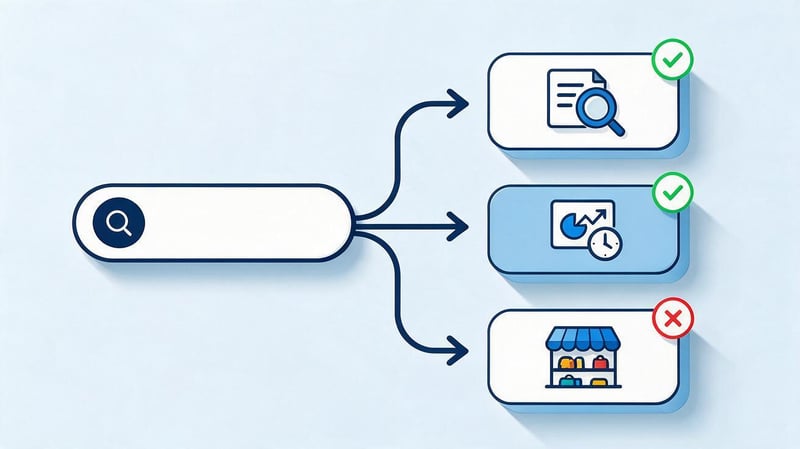
A text can be high-quality and detailed, but still rank poorly if the page format is incorrect. An informational article rarely replaces a commercial category for a search with a clear intent to buy or order a service.
Before preparing the brief, you need to review the search results, determine the dominant page type, and understand what the user wants to get after clicking. Then, the structure and content are formed.
Bulk link purchasing without donor evaluation
The number of placements doesn't compensate for the poor quality of sites. Irrelevant sites without a real audience may generate formal links, but they don't support a long-term link building strategy.
Before posting, the topic, language, region, traffic, visibility, and nature of existing content are checked. Price is considered in conjunction with quality, not separately.
Ignoring technical SEO
New content and links don't solve crawling issues, duplicates, or incorrect canonicals. If the search engine receives conflicting signals, new materials may also perform worse than expected.
Therefore, the technical aspects are tested before content is scaled. Critical errors are fixed first, while minor improvements are carried over to the next stages.
Lack of analytics
Without proper analytics, the team only sees part of the picture. Rankings may be increasing, but it's impossible to tell whether conversions and revenue have changed. Or, conversely, the business may be receiving more leads, even though the average ranking for a large set of queries has barely changed.
Before launching large-scale work, it's important to validate your goals, events, traffic sources, and the tracking of key conversions. This will make it easier to evaluate the results after a few months.
Strategy without regular review
Search demand, competitors, and the website itself change. Therefore, a document drawn up a year ago and never verified against actual data gradually loses its relevance.
Revision doesn't mean a constant change of direction. First, evaluate the results of the hypotheses, then adjust priorities and add new tasks where proven growth opportunities emerge.
Should AI search and GEO be considered in your SEO strategy?

AI search and GEO should be considered in information sections, but basic technical and content work remains essential. The page must be indexed properly, match the search query, have a clear structure, and provide a meaningful answer to the user.
Materials benefit from precise wording, a logical heading hierarchy, clear entities, authorship, sources, proprietary data, and a correct Schema.org. These elements simultaneously aid standard search and systems that extract information fragments from open pages.
There's no need to create a separate text specifically for each AI system. It's better to improve the factual accuracy, structure, and expertise of materials to make them easier to interpret and cite.
SEO Strategy Checklist
Before starting work, it's helpful to run through the strategy using a short checklist. This helps ensure the document covers not only the content or technical aspects, but also the goals, resources, analytics, and subsequent monitoring of the results.
If several points are not yet ready, the strategy can be launched in stages. It's critical to understand what data is missing and when the team plans to obtain it.
- Business goals, priority products, regions and target user actions have been defined.
- KPIs have been selected to evaluate search visibility, traffic, and business results.
- Analytics is set up, including Google Search Console and the necessary events in Google Analytics 4.
- A technical audit of the site was conducted and critical limitations for indexing were identified.
- Search competitors, their structure, content, links and commercial elements were studied.
- The semantic core has been compiled, and queries have been distributed across intents and clusters.
- Missing landing pages were designed and possible intersections between URLs were checked.
- A technical plan, content plan, and internal linking scheme have been drawn up.
- An external promotion plan has been prepared with requirements for donors and an anchor list.
- Tasks are prioritized based on budget, team, and implementation complexity.
- A roadmap for several months with clear checkpoints has been created.
- The frequency of reports and strategy revisions based on actual data has been determined.
After reviewing, the list should be converted into a calendar of specific tasks. Then the strategy becomes a working document that can be simultaneously worked on by the SEO specialist, developer, editor, and project owner.
How long does it take to develop an SEO strategy?
The time frame depends on the site's scale, number of languages, regions, categories, and the scope of available analytics. A small service website and an online store with hundreds of thousands of URLs require different levels of audit and competitive analysis.
The quality of the source data also affects the duration. If analytics are configured incorrectly or there is no position history, some indicators will first need to be restored or collected from scratch.
A working SEO strategy begins with goals, data, and an understanding of the site's current state. From there, you can sequentially address technical limitations, semantics, structure, content, on-page optimization, link profile, and analytics.
A good plan remains flexible enough to accommodate implementation results and market changes. If a website requires a systematic promotion plan, Seo-Gen will analyze the project, competitors, and search demand and develop an SEO strategy with priorities, KPIs, and a workflow.


