How to do link building: a step-by-step guide for beginners


Link building is a basic part of off-page SEO optimization. It helps a website gain backlinks from other resources, brand mentions, user traffic, and a stronger link profile. Results depend on which pages are promoted, which donor sites are selected, how the anchor text list is compiled, and how consistently the work is carried out.
If you're trying to figure out how to do link building in practice, you shouldn't start by buying random placements. First, you should check your current backlink profile, compare it with competitors, select priority pages, collect sites, filter out weak domains, and determine the appropriate link acquisition format.
This type of work requires analysis, negotiations, careful site review, and regular monitoring of existing content. These same tasks are part of the link builder's responsibilities, so a practical understanding of the process is helpful for both the website owner and the novice specialist looking to master a specific area of SEO.
What is link building and what does a link builder do?
Link building is the systematic process of acquiring external links to website pages. The link source may be a specialized media outlet, a thematic blog, a directory, a forum, a partner site, an expert article, a study, or any other resource where the placement appears appropriate and aligns with the page's content.
The site from which a link originates is usually called the donor, and the page receiving the link is called the acceptor. The analysis takes into account backlinks, referring domains, anchor text types, dofollow and nofollow attributes, site geography, and the quality of the pages hosting the links.
A good link profile develops gradually and includes a variety of sources. If placements appear only on sites of a single type, lead to a single page, and use identical commercial anchors, the profile appears uniform and poorly reflects the project's natural development.
What tasks does link building solve?
The primary goal of SEO link building is to strengthen pages that need to compete in organic search results. Search engines evaluate links in conjunction with content quality, the technical condition of the site, page relevance, user behavior, and other signals.
Links can also generate direct traffic. A publication in a relevant media outlet, directory, or useful discussion can generate referral traffic regardless of ranking fluctuations. For a brand, this provides an additional point of contact with the audience, especially if the user encounters the company name on multiple independent resources.
As part of a systematic approach, link building helps solve several problems:
- Strengthen priority commercial and informational pages that lack external signals;
- expand the number of high-quality referring domains and reduce dependence on a few sources;
- receive thematic brand mentions on sites where the desired audience is already present;
- create additional entry points through articles, directories, expert publications and communities;
- Maintain a link strategy when launching new sections, services, categories, and landing pages.
However, backlinks don't compensate for a weak page, indexing issues, or technical errors. If a URL is blocked from indexing, has an incorrect canonical, or contains weak content, increasing link equity alone won't fix the problem.
Who is a link builder?

A link builder is responsible for finding, verifying, and acquiring external links. In small teams, these tasks may be performed by an SEO specialist, but at larger volumes, this work is usually separated into a separate function with its own donor database, outreach process, and publication monitoring system.
A link builder's workday rarely consists solely of corresponding with website owners. A significant portion of their time is spent analyzing competitors' backlinks, searching for new sites, checking organic traffic, reviewing donor pages, and working with spreadsheets.
Typically, a specialist performs the following tasks:
- analyzes the project's link profile and identifies current weaknesses;
- studies competitors' external links and looks for repeatable placement patterns;
- collects donor sites from search results, databases, media, and backlink reports;
- checks the topic, search visibility, traffic and quality of the site;
- looking for contacts of editors, website owners and placement managers;
- conducts negotiations, agrees on the format, cost, anchor and target URL;
- submits technical specifications for the article and monitors the published material;
- checks page indexing, link availability and changes to its attributes.
The larger the project, the more important consistency is. Without a unified placement table, it's easy to buy a link on the same domain again, use the same anchor text multiple times, or lose publication information after a staff change.
What's the difference between a link builder and an SEO specialist?
An SEO specialist is responsible for a broader range of tasks: technical audit, website structure, semantics, content, indexing, internal linking, commercial factors, and off-page optimization. A link builder typically works within the latter area and focuses more deeply on platforms, contacts, and link placements.
In practice, the boundary depends on the size of the team. In a small agency, one specialist might simultaneously develop a strategy and seek donors, while in a large project, tasks are divided between an SEO specialist, a link builder, an outreach manager, and a content writer.
Separating responsibilities helps maintain control over the details. The SEO specialist determines which pages and queries need to be boosted, and the link builder translates this task into specific placements with clear parameters, deadlines, and statuses.
Answers to your questions
How to do link building for a beginner?
A beginner should start with a small project and work through the entire process step by step. First, check your current backlinks, find competitors, collect their referring domains, and manually review dozens of potential sites.
After this, you can create an anchor list and begin outreach. It's best to do your initial placements in small batches to learn how to verify agreements, indexing, and link integrity.
At the same time, it's worth maintaining a common spreadsheet. In a few weeks, it will show which platforms are suitable for the project, which formats provide responses, and at what stages the main errors arise.
Is it possible to do link building on your own?
Yes, a website owner or SEO specialist can independently search for donors and negotiate placements. The main limitation is time, as manual website verification, correspondence, and publication monitoring require regular work.
For a small project, a hands-on approach helps better understand the niche and competitors. As the project grows, some tasks are usually delegated to a link builder or agency to avoid distracting the SEO specialist from technical and content-related tasks.
Regardless of the format, the process must remain transparent. The project owner must have a list of domains, target URLs, anchors, prices, and published pages.
How many links should you post per month?
There's no fixed number for all websites. The required rate depends on the domain's history, the number of existing referring domains, the project's size, the competitiveness of the niche, and the activity of top-ranking websites.
For calculations, it's useful to look at how quickly your competitors are growing. If they're consistently acquiring new, high-quality domains, this metric can be used as a benchmark.
A sudden increase in placements without analysis is rarely justified. It's better to work at a predictable pace and regularly reassess it after evaluating the results.
How do you know if a donor site is high-quality?
Start with the site's subject matter, language, and geography. Then, check organic traffic, search visibility, referring domains, domain history, and the quality of recent publications.
After checking the automatic metrics, it's essential to manually open the site. Check what topics are being published, how frequently the resource is updated, and whether it has become a platform for mass-market commercial articles.
The indexing of new materials is also checked. If new pages regularly appear in search results and the resource itself maintains stable visibility, the donor appears significantly more reliable.
What is better: one strong link or many cheap ones?
Comparing links solely by quantity and price is inaccurate. A single, relevant publication in a strong industry media outlet and a dozen links on weaker sites serve different purposes and have different quality.
When budgeting is limited, it's smarter to choose sites that undergo basic validation for their content, traffic, indexation, and link profile. Cheap placement isn't profitable if the page is never indexed or the site quickly loses visibility.
It's best to evaluate your entire profile holistically. It should include a variety of sources, and each major purchase should have a clear justification.
Are nofollow links necessary?
Nofollow links are found on major media outlets, forums, social media platforms, and other sites that limit the transmission of link signals. There's no need to completely exclude such mentions from your strategy.
They can generate referral traffic, brand mentions, and additional visibility. Furthermore, a natural profile rarely consists solely of dofollow links.
When purchasing a placement, it's important to know the attribute in advance, as it affects the price. However, automatically rejecting any nofollow placement deprives the project of some valuable platforms.
How long does link building work?
It's impossible to determine an exact timeframe in advance. The result depends on the initial state of the site, the quality of its pages, the competitiveness of its queries, the speed of indexing new publications, and other SEO work.
Some pages respond more quickly, while others require several months of consistent improvement. Rankings can fluctuate due to updates from competitors and search algorithms, so short-term gains can't be attributed to a single link.
It's best to evaluate a campaign over a sufficient period of time. The publications themselves should be checked immediately, and the dynamics of referring domains, rankings, and traffic should be monitored regularly.
How to become a link builder without experience?
First, you should master the basics of SEO, learn to read backlink reports, and understand key donor metrics. After that, you should move on to practice and independently check at least a few dozen websites.
The next step is to gather a donor database, prepare an anchor list, and write a few outreach emails. If you manage to secure actual publications, you can add them to your anonymous portfolio.
For a first position, demonstrating that a candidate understands the process and can explain their decisions is usually sufficient. Deep expertise develops through working with a large number of projects and niches.
How to Do Link Building: A Step-by-Step Process
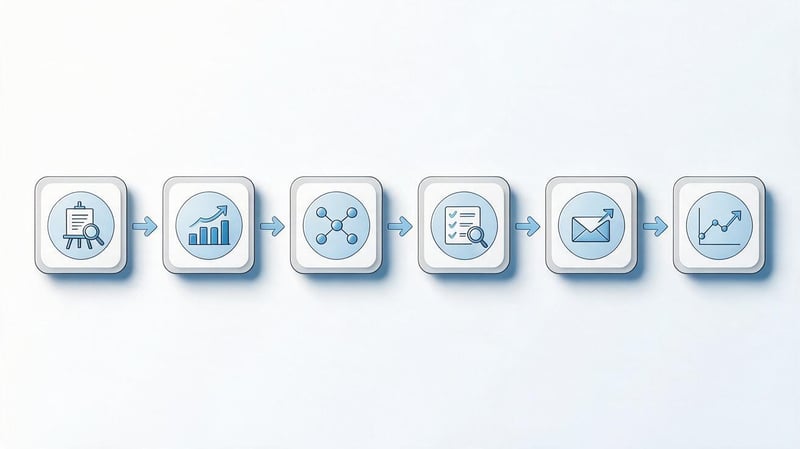
It's more convenient to build a workflow from analysis to placements, and then to re-checking the results. This order reduces the number of accidental purchases and helps you understand the purpose of each link, the page it leads to, and its role in the overall strategy.
If a project is launching external promotion for the first time, some time will be spent creating its own database of platforms and setting up tables. As the project continues to work, this database becomes an asset for the team: good donors, editorial contacts, pricing history, and past placements are already known, so re-analysis takes less time.
Below is a basic process that is suitable for most commercial projects. While individual steps can be expanded depending on the specific niche, the logic remains the same: analysis, planning, search, verification, placement, and control.
Step 1: Define goals and pages for promotion
First, you need to determine which URLs truly need external links. Spreading your budget evenly across all pages is rarely practical, as different URLs vary in search demand, competition, current rankings, and commercial value.
For an online store, categories and subcategories may be a priority; for a service business, service pages; for SaaS, commercial pages and useful informational materials. Blog articles also receive backlinks if they attract links naturally or are used as linkable assets.
When choosing priorities, it is worth considering:
- the presence of target queries and real search demand for the page;
- URL positions and distance to the first page or top of the search results;
- the number and quality of external links from direct competitors for the request;
- the commercial potential of the page and its role in the funnel;
- internal linking and the presence of links to this URL within the site;
- language and region of the page, especially when working with multilingual projects.
After this, a list of target URLs and a preliminary budget are generated. Each new link should be tied to a specific page, not randomly distributed across the site.
Step 2: Check your current link profile

Before a new placement, it's important to understand what external links the site already has. To do this, analyze backlinks and referring domains, anchor text distribution, link acquisition dynamics, the main donor countries, and the pages that receive the most external mentions.
Lost links deserve special attention. Sometimes good content gets deleted, the URL changes without a redirect, or the editor replaces the link after updating the article. Restoring a high-quality link once it's been earned often requires fewer resources than finding a new donor.
When auditing, it is useful to check:
- the total number of referring domains and their dynamics for the selected period;
- website pages with the largest number of external links;
- distribution of branded, commercial and non-anchor entries;
- dofollow, nofollow, sponsored and ugc share;
- suspicious domains with a sharp increase in outgoing links;
- sites that have lost traffic or are no longer indexed properly.
This audit provides a baseline picture. Without it, it's easy to strengthen an already over-optimized anchor or continue to build links to a page that already receives the bulk of the external link equity.
What do you need to get after the audit?
The audit results should be presented in a workable format, not just a collection of graphs within Ahrefs or another tool. The team needs a clear list of issues and priorities that can be used to create a placement plan for the next period.
In the final table, it's worth recording the number of high-quality referring domains, the strongest landing pages, weak URLs, predominant anchor text, and lost links. It's also useful to note domains that require manual review due to low quality or irrelevant topics.
After the audit it should be clear:
- which pages already have a sufficient volume of links relative to competitors;
- which URLs are noticeably lagging behind and require additional external promotion;
- what types of anchors are used too often or too rarely;
- Which domains can you try to restore after losing a link?
- Are there any sharp jumps that require further analysis?
This data becomes the basis for the subsequent link strategy. At the next stage, it is compared with competitors and realistic benchmarks are refined for each group of pages.
Step 3: Analyze your competitors' link profiles

It's best to select competitors for link analysis based on actual search results. A well-known brand in the same industry may have a different product range, geography, or promotion model, so its profile isn't always suitable as a benchmark.
For each priority page, you can collect several sites that consistently rank high for the relevant queries. Then, using Ahrefs, Semrush, or Serpstat, you can check the backlinks, referring domains, and pages receiving external links.
It's especially useful to look for recurring patterns. If several competitors receive links from industry media, regional directories, or a certain type of expert publication, this pattern deserves special attention.
The analysis should record:
- the number of unique domains for each competitive page;
- the rate of emergence of new referring domains in recent months;
- typical anchors and share of brand mentions;
- sites that link to several competitors at once;
- pages and materials that attract the most backlinks;
- Guest posting, digital PR, crowd marketing, and partner publications.
After downloading, you usually end up with a large list. It needs to be cleaned of irrelevant, technical, and obviously spammy domains, and then the suitable options are transferred to the database of potential donors.
Which competitor links are worth repeating?
Copying a competitor's entire link profile is pointless. The downloads contain technical domains, old redirects, aggregators, automatically generated pages, and other sources that are not suitable for new placement.
Platforms that are relevant to the project's topic, receive organic traffic, and publish content for a real audience are more attractive. If the same industry resource links to several strong competitors, it's worth adding it to the priority group for outreach.
It's also worth seeking out donors with whom you can secure comparable placements. A competitor's publication in a major media outlet may be part of a PR campaign that's difficult to replicate directly, but a similar format can be achieved through expert commentary, research, or a feature article.
A good database is built around achievable opportunities. It should include sites you can actually contact, agree on a format, and obtain a relevant link without mechanically replicating someone else's profile.
How to determine the required link building pace?
There's no universal monthly link count. One project already has hundreds of referring domains and competes with major brands, while another has just launched and operates in a local niche with a small number of strong websites.
A benchmark can be obtained by comparing your current profile with your competitors. If several top-ranked sites consistently acquire new domains each month, their dynamics can help you understand the true scale of their work in the niche.
When planning, take into account:
- current age and history of the domain;
- the number of existing high-quality referring domains;
- average growth of links among competitors;
- number of promoted pages;
- affordable budget and cost of placements;
- Team resources for outreach, content, and publication control.
It's best to review your pacing regularly. Budget allocation may change after changes in rankings, the launch of new sections, or the emergence of strong competitors.
Step 4. Collect a database of donor sites
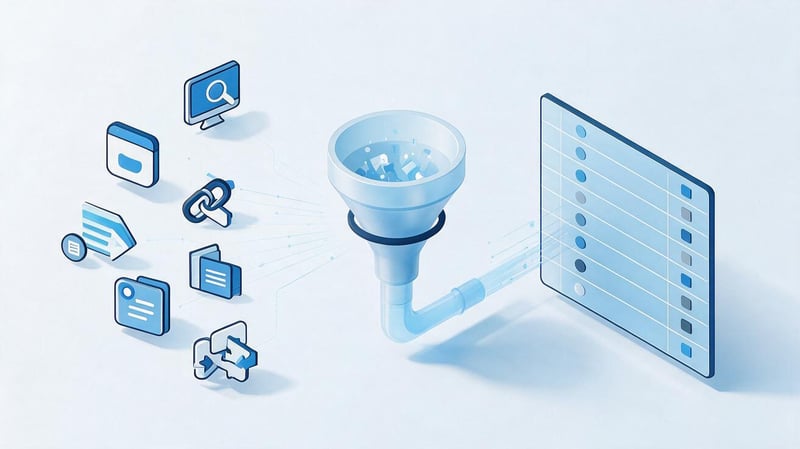
Potential donors are found through competitors' backlink reports, search results, directories, niche blogs, media outlets, partner projects, and the agency's own database. The more sources used, the less reliance on a single exchange or a limited list of platforms.
Google search remains a viable option. Search queries related to niche topics, guest posts, industry articles, and expert publications help find sites not listed in ready-made placement catalogs.
A collected domain can't be immediately transferred to the procurement plan. First, it must be manually verified, its relevance assessed, and a suitable collaboration format determined.
For convenience, donors are divided into groups:
- industry media and specialized information sites;
- large general-interest media with suitable sections;
- local resources of the required region and language;
- blogs of companies from related niches;
- directories and aggregators with a real audience;
- forums, Q&A and thematic communities;
- partner sites where co-hosting is possible.
After the initial collection, qualification begins. At this stage, most weak domains are usually weeded out.
What data should be entered into the donor table?
The spreadsheet should store information that helps make decisions and reconstruct the work history months later. A single column with the domain and price is insufficient, as the team will quickly lose the context of previous negotiations.
It's useful to separate technical indicators, contact information, and placement details. Then the table can be filtered by country, topic, cost, negotiation status, and link type.
The minimum set of fields looks like this:
| Field | What to record |
|---|---|
| Domain | The main domain of the donor site |
| Subject | Main niche or suitable section |
| Language and country | Content language and target region |
| Organic traffic | Estimated traffic from SEO tool |
| DR / DA | Third-party authority indicators |
| Referring domains | Number of domains linking to the site |
| Contact | Email, contact form or editorial contact |
| Price | Publication price and additional conditions |
| Format | Guest post, PR, crowd, directory or other type |
| Attribute | Dofollow, nofollow, sponsored or ugc |
| Target URL | Page of our website |
| Anchor | Agreed link text |
| Status | Contact, negotiations, paid, published |
| Publication URL | The final page after placement |
| Indexing | Current page status in search |
After publication, the same spreadsheet is used for monitoring. This approach is simpler than creating separate documents for procurement, content, and monitoring.
Step 5: Check the quality of each donor

A high Domain Rating alone doesn't guarantee anything. A website can have a strong historical link profile but receive almost no organic traffic, publish content on unrelated topics, and sell hundreds of outbound links.
The audit should combine automated metrics and manual review. Metrics help quickly filter out certain sites, but the final decision is best made after analyzing the site itself, recent publications, and search visibility.
Be especially wary of domains with sharp drops in traffic, suspicious increases in the number of pages, and large amounts of unrelated commercial content. These signs don't always indicate a bad site, but they do require further investigation.
Subject and relevance
The closer the platform is to the project's topic, the easier it is to seamlessly integrate a link into the content. For a medical website, it makes more sense to publish on a medical portal, a regional media outlet with a health section, or a patient resource than on a website about construction.
General-interest media outlets can also be suitable if they have a relevant section and a real audience. It's important to look not only at the domain's main page but also at the section where the material will be published.
When manually checking, it's worth opening a few recent articles. If a site consistently publishes topics like casinos, loans, medicine, cryptocurrency, and home improvement without editorial logic, the quality of such a source raises questions, regardless of the attractive metrics.
Relevance is assessed in the context of a specific page. For a local service, a small regional resource may be more useful than an international site with a high DR that is irrelevant to the target market.
Traffic and search visibility
Organic traffic shows whether a website is receiving real visitors from search. The number itself depends on the tool and doesn't match the website owner's Google Analytics data, so it's best to use it as a benchmark.
It's useful to look at trends over several months or years. Steady growth and a large number of ranking pages usually look better than a short-term spike after which the site loses almost all visibility.
When analyzing, it's worth checking the traffic countries. If a project operates in Ukraine, and the donor receives almost all organic traffic from an irrelevant region, the value of such placement decreases.
It's also helpful to open several pages that receive traffic. This helps you understand what content is driving your site's rankings and whether its actual topic matches its stated purpose.
Link metrics
Domain Rating, Domain Authority, and Trust Flow simplify the initial comparison of sites. These metrics are calculated by third-party services using their own formulas and are not Google metrics.
DR is useful for assessing the strength of a domain's backlink profile within Ahrefs, DA is used in the Moz ecosystem, and Trust Flow is linked to the Majestic model. Values from different systems cannot be directly combined or compared as a single scale.
In addition to aggregated metrics, it's worth looking at referring domains, the quality of incoming links, and profile dynamics. A site with a high DR, primarily achieved through old redirects or questionable sources, requires manual verification.
A strong donor usually looks logical on several parameters at once: it has search visibility, normal content, thematic pages, and a clear link profile.
Website indexing and quality
Before publishing, it's worth checking whether the site's new content is indexed. If new articles don't appear in search results for weeks or a significant portion of the site is excluded from the index, publishing may not deliver the expected value.
You should also check the technical condition of the pages. 5xx errors, constant redirects, massive duplicates, and chaotic canonicals reduce the site's credibility as a long-term donor.
Content quality is assessed manually. Articles must be readable, relevant to the site's topic, and appear as content for the audience, not as a collection of texts created solely for the sake of outbound links.
It's also a good idea to check the integrity of old publications. If articles from a year ago have been deleted, closed, or moved without redirects, the risk of losing the new link will be higher.
Geography and language
For regional SEO, the source language and country are of practical importance. Ukrainian businesses benefit from being present on Ukrainian resources, local media, industry-specific websites, and platforms whose audiences align with the project's target geography.
When promoting a website in multiple languages, it's best to distribute links between the corresponding versions. It makes more sense to link Ukrainian content to the Ukrainian page, and English-language content to the English version, if the website supports this structure.
Geography doesn't mean all international websites should be excluded. A strong English-language industry media outlet can be beneficial for a Ukrainian company operating in foreign markets or selling its product globally.
The main rule is to match the audience, topic, and purpose of the post. A high domain score alone doesn't compensate for the lack of such a connection.
What link building methods should I use?

Link acquisition methods vary in cost, speed, scalability, and content requirements. For most projects, it's best to combine several approaches so that your profile isn't dependent on a single placement type or a single group of sites.
The choice of method depends on the niche and resources. A team with strong expertise can obtain links through digital PR and research, local businesses actively use regional platforms and directories, and an agency with a developed donor base scales guest posting and outreach.
Below we discuss the main formats that are found in competitive profiles and used in practical work.
Outreach
Outreach begins with finding a suitable website and the person who makes the decision to publish. This could be an editor, project owner, content manager, or partnership specialist.
After this, a personalized message is prepared. The more specifically the message relates to the specific platform, the higher the chance of receiving a meaningful response and moving on to discussing the terms.
A typical chain looks like this:
- find a thematic site and a suitable section;
- determine the contact information of the editorial office or the responsible employee;
- prepare a short proposal with a clear reason for contacting us;
- agree on the topic, format, cost and terms of the link;
- prepare the material and submit it for publication;
- check the page after posting and save the URL in the database.
Outreach doesn't scale well with a completely manual approach, so teams rely on templates, CRM, and automation. However, it's best to personalize the message itself, otherwise it quickly becomes a mass mailing with no connection to a specific website.
How to write your first outreach letter?
The first email should quickly explain who's writing and what's being offered. A long company history and several paragraphs of compliments usually obscure the essence of the request.
At first, it's enough to address the person by name, if known, and mention a specific material or section of the website. Then, briefly describe the proposal and ask whether the editors are considering this format.
A working email typically contains:
- the specific reason for contacting this particular site;
- a clear format of cooperation without hidden conditions;
- a topic or idea of the material that is suitable for the site's audience;
- information about who is preparing the content;
- question about editorial requirements, deadlines and cost of placement.
It's best to adapt the text to the website's language. If the editorial team works in Ukrainian or English, sending a mass email in Russian will immediately reduce the quality of communication.
Are follow-up letters necessary?
Some editors don't respond to the first message due to workload, vacations, or a large volume of incoming emails. A careful follow-up at a reasonable interval helps reconnect without having to search for the contact again.
The follow-up email should be shorter than the first. It's enough to remind the recipient of the subject and confirm whether they were able to review the offer, without pressure or daily messages.
If there's no response after several attempts, it's best to move the contact to the appropriate status and return to them later. Repeatedly sending the same email damages the sender's reputation and may lead to spam complaints.
The follow-up history should be recorded in a shared database. This way, another employee won't start the same conversation from scratch a few weeks later.
Guest articles

Guest posting involves publishing a full-length article on a third-party website. The link is placed within the article or in the author bio, if the site's editorial policy allows this format.
A quality guest article should be relevant to the donor's topic and address the needs of its readers. If the material is written around a single commercial anchor, it's harder for the editor to accept the text, and the link itself looks artificial.
The process typically involves agreeing on the topic, structure, length, and number of references. Some editors require exclusive material, proprietary images, expert commentary, or additional fact-checking.
After publication, the final version of the page needs to be reviewed. The editor may change the anchor, URL, add nofollow, or remove some text, so the agreed-upon terms are always verified against the actual result.
Crowd marketing
Crowd marketing works through discussions on forums, Q&A platforms, niche communities, and in comments where users are genuinely looking for an answer. A link appears within a helpful post if it complements the recommendation and helps users obtain more information.
The main problem with crowd links arises when identical comments are posted en masse. Such messages are quickly deleted by moderators, and the accounts lose credibility within the community.
Before posting, it's best to review the site's rules and several active threads. A good comment first answers the question and then, if necessary, links to material that covers the topic in more detail.
For local and narrow niches, crowd marketing can also generate referral traffic. The user is already engaged in a relevant discussion, so clicking on a relevant link feels natural.
Digital PR
Digital PR is built around newsworthy stories, research, expert commentary, statistics, and materials that are of interest to editors in their own right. In strong campaigns, a link appears as a source of data or additional information on the topic.
This approach requires more preparation than simply buying an article. You need to gather data, find an interesting angle, prepare a commentary, and pitch the material to journalists or industry media.
Working formats can include market research, company statistics, industry forecasts, interactive maps, and expert commentary. The more unique the information, the more reasons the editorial team has to cite the original source.
Digital PR rarely produces the same results every month. Some newsworthy events receive wide coverage, while others remain largely unnoticed, so this channel usually complements more predictable link building methods.
Linkable assets and linkbaiting
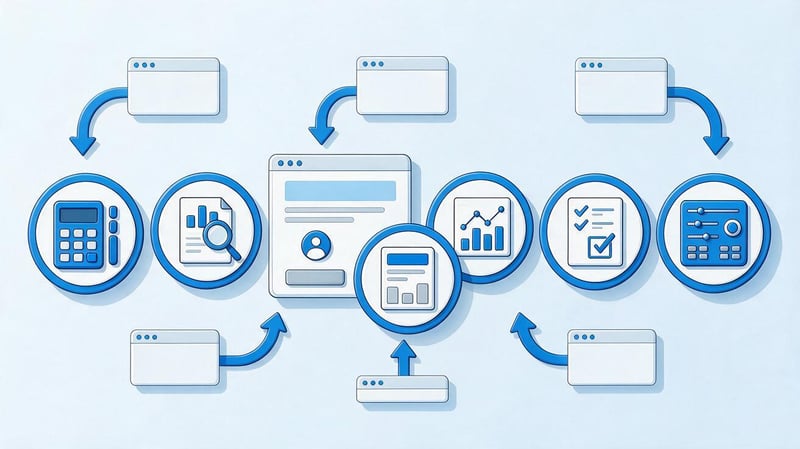
A linkable asset is created so that other sites can use it as a resource or useful tool. This reduces dependence on constant paid placements and increases the chance of receiving natural backlinks.
Materials with unique value perform best. A rewritten review from a publicly available source rarely warrants an external link, as similar information already exists on dozens of websites.
Suitable formats may include:
- industry research with proprietary data;
- a statistics page that is updated regularly;
- free calculator for a specific task;
- document or worksheet template;
- a detailed checklist with practical criteria;
- interactive map, catalog or comparison;
- an open source tool that solves a specific user problem.
After publication, linkable assets still need to be promoted. Outreach to editors, experts, and authors of relevant materials helps them get initial mentions and initiate further distribution.
Broken Link Building
Broken Link Building is built around an existing link to a page that has stopped working. If a relevant website has a link to deleted content, the page owner can offer a relevant replacement.
First, they use specialized tools or a crawler to find external links leading to 404 and other unavailable URLs. Then they check what content was on the old page and whether a truly comparable alternative can be offered.
The sequence looks like this:
- Find a topic page with a broken external link.
- Check the old URL and content of the removed material through available sources.
- Prepare or select a relevant page on your website.
- Find the contact information for the page owner or editor.
- Report a broken link and suggest a suitable replacement.
This method requires manual verification, as a formal match to the topic doesn't guarantee usefulness. If the new page is inferior to the old one or only partially matches the context, the site owner is unlikely to change the link.
Directories and local platforms
Directories remain valuable in niches where users genuinely search for businesses by category and city. This is especially true for Local SEO, medical organizations, restaurants, service companies, and businesses with physical locations.
There's no point in registering in every available directory. It's better to select sites that are indexed, receive traffic, and contain real company listings.
It's best to keep your profile consistent with key information: name, address, phone number, website, and business hours. Discrepancies between profiles create confusion for users and make it difficult to update information later.
Directory links rarely form the basis of an entire strategy. They are used as one type of citation, along with relevant publications, PR, partner materials, and other sources.
Paid publications
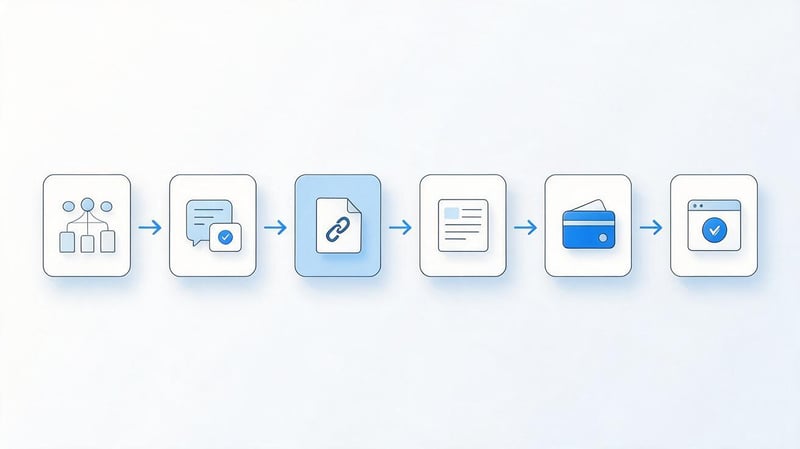
Paid placement is widely used in practical link building, especially when editors openly sell sponsored or affiliate articles. Price alone doesn't indicate the quality of the platform, so the donor is vetted according to the same criteria as any other website.
It's best to get the exact terms and conditions before paying. You need to understand whether the article will be permanent, what attributes the link will have, whether the desired URL and anchor can be used, whether writing is included in the price, and whether additional marking is possible.
After publication, the following should be verified:
- correctness of the link and target page;
- anchor and surrounding text;
- rel attribute;
- availability of material for search robots;
- absence of unnecessary redirects;
- page indexing status after some time.
Keeping track of pricing history is also helpful. If the same website appears with different intermediaries, the team can choose the most profitable placement source.
Link exchange and partner publications
Partners, suppliers, customers, and companies from related niches can sometimes naturally link to each other. For example, a SaaS service's integration partner hosts a compatibility page, while a manufacturer lists an official distributor.
Such mentions have a clear purpose and value for the user. Problems arise when dozens of unrelated sites exchange links en masse to artificially boost their rankings.
A reciprocal link in itself doesn't make a placement bad. It's important to consider the context, subject matter, and scale of the scheme, and to avoid situations where the same exchange is repeated across multiple resources.
It's convenient to search for partnership opportunities within existing business connections. Often, such publications require less negotiation and appear more natural than cold outreach.
PBN and other risky methods
A PBN is a network of websites controlled by a single owner and used to transfer link juice to other projects. These networks use separate domains, content, and infrastructure, so maintenance requires significant resources.
The main risk stems from the artificial nature of the scheme. If a search engine identifies the network as manipulative, the value of the links may decrease, and related projects may face additional problems.
A beginner link builder would benefit from first mastering donor analysis, outreach, guest posting, digital PR, and working with real-world platforms. These skills are applicable to a wider range of projects and provide clear practice in verifying sources.
Risky approaches also include mass automated linking, comment spamming, and posting on obvious link farms. In a long-term strategy, it's best not to use such sources as the basis for a profile.
How to create an anchor list?

An anchor is the visible text of a link. It helps the user understand where the link leads and simultaneously contributes to the overall context of the page's link profile.
An anchor list is usually compiled before large-scale placements begin. It records the target URL, anchor types, acceptable wording variations, and previously used combinations.
The anchor mix can't be determined by a single, universal formula. The niche, domain history, brand demand, and current profile vary across projects, so it's safer to base your analysis on the actual website and competitor data.
What types of anchors should I use?
Branded anchors contain the name of the company, product, or website. For real businesses, they look natural because editors and users often link to the source's name.
Anchorless links use the page address or neutral words like “source”, “more”, and other appropriate phrases. Commercial anchors include the target query, such as the name of a service or category.
Additionally, partial-match anchors are used, where the keyword is included within a longer, natural phrase. Geo-specific keyword combinations can be used for local promotion if they match the context of the publication.
The choice depends on the page and the donor. In an editorial article, a branded or neutral anchor often looks more natural than a precise commercial construction.
Why can't you use only precise commercial anchors?
If every new link contains the same commercial phrase, the profile begins to look monotonous. Natural mentions of a site are usually generated by different authors, so the link texts vary.
Over-optimization is especially noticeable on small websites with a limited number of referring domains. Several dozen identical anchors for a single service can take up too large a share of the profile.
When planning, it's best to analyze existing links. If there are enough commercial anchors, new placements can be divided between branded, URL, partial, and neutral options.
The phrase itself must fit the sentence. Forcibly inserting an exact keyword into an article reduces readability and often raises questions from the editor.
How to choose an anchor for a specific page?
First, you need to determine the intent of the target URL. A service's sales page, an informational guide, and a homepage require different wording because the user expects different content after clicking through.
The anchor should also match the language of the publication. A Ukrainian-language article with a Russian commercial anchor looks unnatural for no apparent reason, especially if the site has a separate Ukrainian version of the page.
It's helpful to consider the surrounding sentence. The link should read like a normal part of the text and not force the author to restructure the entire paragraph around the key phrase.
For each new publication, it's worth checking the anchor history of the target URL. This reduces the likelihood of duplicates and helps maintain a more diverse profile.
How to check a published link?

The work isn't over once the article is published. Even if the editor has sent the article's URL, the final version may differ from the approved version: the anchor changes, a redirect appears, nofollow is added, or the link points to the wrong page.
It's best to check immediately after publication and repeat later. Some changes occur several months after a website update, section move, or redesign.
The basic checklist includes:
- open the publication without authorization and check the page response code;
- make sure the link leads to the correct HTTPS address;
- check the anchor and surrounding text;
- see rel: dofollow, nofollow, sponsored or ugc;
- make sure the URL is not closed via noindex;
- check for blocking in robots.txt;
- look at the canonical and make sure it doesn't point to other material;
- check for the absence of unwanted transitions via third-party redirects;
- save the publication URL and posting date;
- later check the page's appearance in the search index.
If the terms differ from those agreed upon, it's best to contact the editors immediately. After several months, it's usually more difficult to reconstruct the correspondence details and obtain corrections.
How to evaluate the results of link building?
The number of published links indicates the volume of work accomplished, but not the quality of the result. To evaluate, you need to look at which domains were acquired, which pages were boosted, and how the project's search performance changed.
Link promotion works in conjunction with other factors, so when analyzing, it's impossible to automatically attribute every change in ranking to a specific publication. A page's content changes simultaneously, competitors update their websites, and search engines recalculate search results.
It's better to use a set of indicators and monitor dynamics over a longer period. This makes it easier to see the overall effect and adjust your strategy.
Growth of referring domains
Referring domains show the number of unique domains linking to a website. This metric is often more useful than the total number of backlinks, as a single resource can create hundreds of technical links through a template or sitewide blocks.
Growth should be assessed alongside quality. Ten new, strong, niche-focused websites may be more valuable than hundreds of random domains from irrelevant directories.
It's useful to compare your performance with your competitors and your own historical growth rate. If your profile hasn't grown for a long time, while top-ranked sites are consistently acquiring new domains, this could be an argument for increasing external promotion.
However, the sharp increase also requires explanation. It could be due to a successful PR campaign, viral content, or a massive influx of low-quality links.
Target page positions

After placements, it's worth monitoring the queries and URLs for which the plan was created. Overall site growth says little about the results of a specific link campaign if links were directed to several priority pages.
It's convenient to compare rankings by query groups. For example, you can analyze online store categories, informational articles, and service pages separately, as competition within these segments varies.
Short-term fluctuations shouldn't be interpreted too quickly. It's better to consider the trend alongside content changes, technical edits, and search results updates.
If a page shows no response for a long time, it's worth re-checking its quality and search intent. The limitation may lie within the URL itself, rather than in the number of backlinks.
Organic traffic
Organic traffic helps us understand whether increased visibility is leading to real visits. This can be done by comparing landing pages before and after a period of active work, taking into account seasonality and changes in demand.
On informational pages, growth can occur faster if the content is updated and receives additional links. For commercial queries, results often depend on the competition and strength of other pages in the search results.
It's worth analyzing not only overall traffic but also its distribution. If the majority of the growth came from URLs that weren't involved in the campaign, the result can't be attributed to link building.
Google Search Console and GA4 data help supplement rankings with real impressions, clicks, and user behavior.
Referral traffic
Some links are valuable even without a noticeable impact on rankings. If a post is on a highly visited page and matches the audience's interests, users go to the site directly.
Referral traffic is especially useful when placed in specialized media, directories, partner materials, and active communities. These clicks demonstrate that the link is not just an SEO profile element.
For analysis, you can use GA4 with correct source attribution. If a site regularly generates engaged visitors and conversions, its value should be taken into account for repeat placements.
Weak referral traffic doesn't render a link useless. Many editorial publications receive few direct clicks but remain high-quality sources of mentions.
Link preservation and indexing
Links sometimes disappear after an article is updated, a website is redesigned, or editorial policy changes. Therefore, large projects periodically check the integrity of already paid and approved publications.
Automatic monitoring systems help detect URL deletions, response code changes, and link loss. A specialist then manually reviews the situation and decides whether to contact the site owner.
It's also a good idea to monitor indexing. If a page doesn't appear in search results for a long time, check robots, noindex, canonical, section quality, and the donor's internal links.
The history of such checks is useful when choosing platforms for the next period. A donor who systematically deletes old publications is given a lower priority, regardless of the initial metrics.
What tools are needed for link building?

Link building involves several types of tasks, so a single service is usually insufficient. Profile analysis requires SEO tools, contact search requires dedicated databases, monitoring requires spreadsheets or a CRM, and technical verification requires crawlers and browser extensions.
A beginner doesn't necessarily need to pay for all the popular services right away. At an agency, access to them is often provided by the company, and for a training project, you can start with a limited set and free Google Search Console data.
The basic set can be distributed as follows:
| Task | Tools |
|---|---|
| Backlinks analysis | Ahrefs, Semrush, Serpstat |
| Donor screening | Ahrefs, Serpstat, Similarweb, Majestic |
| Google Data Analysis | Google Search Console, GA4 |
| Technical verification of pages | Screaming Frog |
| Search for contacts | Hunter, Snov.io |
| Outreach | Email and specialized outreach services |
| Donor tracking | Google Sheets, Excel or CRM |
| Checking indexing | Google Search Console and search operators |
A tool speeds up the process, but it doesn't replace manual evaluation. Even a detailed report won't show how natural a website looks unless a specialist opens the articles and checks the site themselves.
Common mistakes beginners make in link building
Most mistakes stem from attempts to shortcut the analysis stage and move quickly to purchasing. As a result, budgets are spent on sites that appear strong based on only one metric or are inconsistent with the page being promoted.
The second set of problems arises from a lack of record-keeping. If a team doesn't record anchors, contacts, and post history, errors begin to recur within a few months.
Below are some typical situations that should be monitored from the very beginning.
Select donors only by DR
A high DR helps quickly identify sites with a strong link profile, but it doesn't indicate audience quality or relevance. A domain may have a high DR metric due to its old history, a large number of redirects, or links that are poorly related to the current content.
Before publishing, you should still open the site, look at recent articles, and check the traffic. For a niche project, a resource with a lower DR but stable visibility and a suitable audience often makes more sense.
It's also worth evaluating outbound links. If a site publishes commercial articles on dozens of unrelated topics, a single high number shouldn't determine the decision.
Metrics act as a filter, and the final selection requires multiple metrics and manual review.
Buying links from sites without traffic
A lack of organic traffic may indicate issues with the domain's quality, indexation, or history. It's important to understand the cause before purchasing, rather than automatically assuming that any site without traffic is bad.
A new, specialized project may not yet have time to gain visibility, while an old domain that has experienced a sharp decline requires a much more careful assessment. A trend chart and review of ranking pages can be helpful here.
The combination of a high DR and almost zero search traffic looks especially suspicious. Such a site should be checked for redirects, subject matter changes, and the quality of incoming links.
For most commercial placements, it's safer to choose resources that have clear organic visibility and live content.
Ignore the subject and geography

A link on a major website may look attractive based on metrics, but have little connection to the project being promoted. For local businesses, the geography of the audience is often more important than the additional difference in DR.
If a company operates only in Ukraine, constant publications on random foreign resources with no relevant thematic connection require an explanation. For an international SaaS company, the situation is different, as the target audience is spread across several markets.
The topic is also determined by the section. A national media outlet with a strong specialized section may be more suitable than a narrowly focused site with weak content.
Each donor should be assessed based on a specific task, not a universal rating.
Use one type of anchors
Constantly repeating the same commercial keyword makes a profile predictable and poorly reflects natural brand mention patterns. Users, editors, and partners typically use different wording.
An anchor list helps pre-emptively distribute branded, neutral, URL, and partial matches. Commercial phrases are also used if they fit the context and don't take up a disproportionate share.
Before a new placement, it's a good idea to check your existing anchors. This is especially important for small URLs that don't yet have many referring domains.
Diversity should emerge naturally, not through the artificial generation of dozens of strange synonyms.
Posting too many similar links
If your entire budget is spent on guest articles of a single format, your profile becomes limited. Real websites receive mentions from a variety of sources: partner pages, directories, media outlets, blogs, reviews, and communities.
Diversity also reduces dependence on a single provider. If an exchange changes its terms or a group of platforms loses visibility, the entire strategy will continue.
This doesn't mean you have to use every available method every month. Formats are chosen based on your niche, budget, and available resources.
The main thing is not to turn link building into repeating the same placement on dozens of similar sites.
Copy all competitor donors without verification
A competitor's backlink profile contains useful ideas, but it also includes junk, old technical links, and random mentions. Simply downloading a list of domains doesn't constitute a ready-made placement plan.
Each platform needs to be re-evaluated for its current visibility, subject matter, and conditions. A site could have been high-quality several years ago, but then changed ownership and transformed into a resource with mass paid publications.
Also, not all competitor links are available for replication. Some are acquired through partnerships, PR, proprietary projects, and historical connections.
Competitor analysis is best used as a source of opportunity rather than as a copying guide.
Do not check published links
After payment, it's easy to close the task and move on to the next donor. A few months later, it turns out that some articles have been deleted, several links have been nofollowed, and one links to an old URL after the page was moved.
A quick post-publication review takes little time and helps correct errors while the editor remembers the agreement. A late request often requires a second search for the contact and correspondence history.
Regular monitoring is useful for high-value placements. If a link disappears, a specialist immediately identifies the problem and can contact the platform.
Without such control, the placement table shows the number of paid articles, but does not reflect the actual state of the link profile.
Do not maintain a single database of placements
Disparate documents make scaling difficult. One employee stores contacts in email, another stores prices in a spreadsheet, and a third only knows the history of conversations from personal emails.
A unified database allows us to quickly check whether we've posted on a domain before, what anchor text we used, and how much the publication cost. It also helps us compare offers from different providers.
This is especially important for agencies, as a single donor may be suitable for multiple clients. It's important to consider the platform's subject-matter limitations and not transfer the terms of one project to another without verification.
A good database will save more resources over time than the initial table setup.
Evaluate the result only by the number of links
The “20 links received” metric says nothing about the quality of a campaign. Five strong, relevant publications may be more valuable than several dozen random pages with no traffic.
It's best to show referring domains, donor quality, target URLs, anchor text, and indexing status in the report. Rankings, organic traffic, and referral traffic are also analyzed.
Quantity remains a useful operational metric because it helps monitor plan execution. However, it cannot be used as the sole criterion for success.
Strong reporting always shows where the budget was spent and which pages received external reinforcement.
Do mass non-personalized outreach
A template saves time, but completely identical emails quickly lose effectiveness. The editor sees that the sender didn't visit the website and simply inserted the domain into the pre-written text.
It's enough to personalize the key part: address the message by name, mention the relevant section, and suggest a topic that's relevant to the specific audience. This takes more time, but it opens the conversation with a clear context.
Bulk sending also increases the risk of your email domain being marked as spam. It's best to monitor your email volume, database quality, and responses.
If a contact is clearly unsuitable, it's worth removing them from the queue instead of trying to send a standard email again.
How to become a link builder?

If your goal is to understand how to become a link builder, it's best to start with basic SEO and hands-on work with real link profiles. Theory without downloads, manual verification of donors, and correspondence with sites is quickly forgotten.
The entry threshold into the profession is relatively clear: you need to master the tools, learn to analyze websites, and confidently work with spreadsheets. Then, you should complete the entire cycle on a training project or a small real-world project.
A link builder has to work with both numbers and people. Domain analysis requires attention to detail, while outreach and negotiations require strong written communication and the ability to negotiate terms.
What does a beginner link builder need to learn?
First, you need to understand how search engines find pages, what indexing is, and how off-page optimization differs from on-page optimization. Without these basics, it's difficult to understand why one link is useful while another is practically meaningless.
Next, it's worth studying backlinks, referring domains, anchor text, link attributes, and key metrics. At the same time, it's useful to learn how to read Ahrefs, Serpstat, or Semrush reports and check the data manually.
The basic set of topics includes:
- search intent and page types;
- external and internal links;
- dofollow, nofollow, sponsored and ugc;
- anchor list and main types of anchors;
- indexing, meta robots and canonical;
- Domain Rating, Domain Authority and other third-party metrics;
- competitor backlink analysis;
- Basics of outreach and donor verification.
After the theory, you should move straight to small practical tasks. For example, select five competitors, download their domains, and manually check the first hundred sites.
What hard skills does a link builder need?
The most important hard skill is the ability to evaluate a platform and explain the decision. A specialist must understand why a particular site is suitable for the project, the risks involved, and which placement format is most natural.
The second important skill is data-related. Large data exports need to be cleaned, filtered, duplicates identified, prices compared, and information from multiple sources combined.
The practical set includes:
- Ahrefs, Semrush or Serpstat for external link analysis;
- Excel and Google Sheets for working with large tables;
- formulas, filters and duplicate search;
- basic understanding of HTML and link attributes;
- checking server responses, canonical and meta robots;
- contact search and outreach;
- compiling an anchor list and monitoring landing pages;
- preparation of simple reports based on the received links.
You don't need to know every SEO tool at once. It's much more important to confidently perform the full cycle of at least one set of services.
What soft skills does a link builder need?
Link builders constantly communicate with editors, website owners, and colleagues, so written communication is just as important as technical skills. Unclear writing leads to lengthy correspondence and errors in the terms.
Careful checking of URLs, anchor text, and prices is essential. One incorrect row in the table can result in a link being placed to the wrong page or a duplicate payment for the same domain.
The following qualities become useful:
- systematic approach when working with hundreds of sites;
- the ability to conduct multiple conversations without losing context;
- accuracy when filling out tables and statuses;
- calm negotiations on price and terms;
- competent written communication in the language of the site;
- the ability to quickly check information before making a decision.
These skills develop through practice. After reviewing hundreds of domains, a specialist quickly spots the typical signs of weak sites and dubious offers.
How to get your first hands-on experience?
To get started, simply choose a small website and go through the full cycle without a large budget. Even if the actual placements are limited, the analysis and preparation already provide material for a portfolio.
First, you need to find competitors and download their backlinks. Then, gather 50-100 potential donors, manually check each one, and categorize them into suitable, questionable, and weak ones.
After this, it's time to create an anchor list, find contacts, and prepare several versions of the outreach letter. If you can obtain real publications, you should check them and present the results.
It's helpful to conduct a training project in the same way as a client project. Then, when applying for a job, you can demonstrate not just theoretical knowledge, but a complete workflow.
What to add to a beginner link builder's portfolio?
A portfolio should demonstrate the specialist's thinking. A simple list of domains is not enough, as employers want to understand how the candidate selects platforms and makes decisions.
You can prepare an anonymized case study with a few tables and brief explanations. If the project is for a client, confidential prices, contacts, and internal data should be concealed.
A good set includes:
- an example of an analysis of two or three competitors;
- a table of potential donors with selection criteria;
- a list of reasons why some sites were excluded;
- An example of an anchor list for several pages;
- one or two versions of outreach letters;
- examples of published links with permission;
- final report with clear statuses.
Such a portfolio demonstrates the full work cycle. Even a small volume is more convincing than a collection of terminology without practical examples.
Where should a link builder look for their first job?
SEO agencies are the most likely to hire newcomers because they handle multiple projects simultaneously and have a constant stream of site auditing tasks. This format helps quickly identify different niches and website types.
Job titles may include Junior Linkbuilder, Outreach Specialist, SEO Assistant, or Off-Page SEO Specialist. The title varies by company, so it's best to use multiple options when searching.
There are also positions within product teams and online stores. These specialists work more deeply on a single project, but the number of different niches will be smaller.
Before applying, it's helpful to prepare a small portfolio and be prepared for a test assignment. Typically, they test your ability to find donors, evaluate their quality, and briefly explain your choice.
How to grow after a Junior Linkbuilder position?
After the basic level, a specialist can delve into outreach, digital PR, strategy, or broader SEO. The focus depends on which aspect of the job is most interesting: analysis, negotiations, team management, or comprehensive promotion.
Middle and Senior Linkbuilders are typically responsible for more than just individual placements. They plan budgets, define selection criteria, supervise junior specialists, and participate in strategy development.
Further roles may include Outreach Specialist, Link Building Team Lead, Off-Page SEO Specialist, and SEO Specialist. With a strong understanding of the technical and content side, the transition to comprehensive SEO is quite natural.
For growth, it's helpful to maintain your own knowledge base: common mistakes, evaluation criteria, successful email formats, and examples of strong placements. This history speeds up decision-making on new projects.
Checklist: How to Start Link Building from Scratch

Before your first placement, it's helpful to run through the entire process using a short checklist. This reduces the likelihood that your team will immediately start buying links without proper analysis and be forced to revise their strategy within a few months.
The sequence looks like this:
- Identify priority pages and queries for external promotion.
- Check your current link profile and existing referring domains.
- Find direct SEO competitors for the desired groups of queries.
- Download backlinks and clear the list of technical and weak domains.
- Estimate the average growth dynamics of links in a competitive group.
- Collect a separate database of potential donor sites.
- Check the subject matter, geography, traffic, and search visibility of each site.
- Create an anchor list taking into account existing external links.
- Find contacts and prepare personalized outreach.
- Agree on the format, cost and conditions of placement.
- Check the published URL, anchor, attribute, and page indexability.
- Monitor link integrity, rankings, and organic traffic.
This sequence is convenient to use as a team workflow. After a few months, you can add your own criteria, price limits, country requirements, and an internal ranking of verified platforms.
Link building launch schedule
For a small project, the launch cycle can be spread over four weeks. This isn't a mandatory calendar, but rather a convenient example of a sequence in which analytics is performed before mass outreach.
| Period | Main tasks |
|---|---|
| Week 1 | Profile audit, page selection, and competitor analysis |
| Week 2 | Downloading backlinks, searching and checking donors |
| Week 3 | Anchor list, contact search, and outreach launch |
| Week 4 | Coordination of publications, link checking and database updating |
After the first month, the process becomes cyclical. Analysis of new competitors and donors occurs in parallel with negotiations, publications, and monitoring of existing links.
Lead SEO specialist — Gennady
When link building, I evaluate a site based on more than just its DR number. First, I look at the topic, geography, and actual organic traffic, then at visibility trends, page quality, indexing, and outbound links.
A high metric for a website that publishes content on any topic and receives almost no search traffic doesn't in itself make it a good donor. A site that aligns with the project's audience, has a solid history, and posts content in the appropriate context is much more useful.
I also don't start by asking where to buy more links. I first identify the pages that really need a boost, analyze the competitors, and only then create a donor list, placement rate, and anchor text list.
This system helps you control your budget and understand the role of each publication. If a link isn't tied to a specific task, its value is difficult to assess, even with a good domain score.
Link building works best as a sequential process: auditing your current profile, analyzing competitors, finding donor sites, manual verification, anchor listing, outreach, placement, and ongoing monitoring. If you skip the initial steps, external promotion quickly devolves into a series of random purchases that are difficult to evaluate and scale.
It's helpful for a beginner link builder to go through this cycle independently on at least one project. This practice gives you an understanding of link profiles, teaches you how to use SEO tools, and demonstrates the decisions you actually have to make every day.
If a project requires systematic link building, it's best to start with an audit of your current backlinks and a comparison with your direct competitors. After that, you can create a list of priority pages, donor criteria, and a placement plan that aligns with your actual SEO goals.


