How to find and identify a company's competitors?


Competitors are often identified by memory: the business owner names a few well-known companies, the marketer adds websites from the first page of Google, and then the list is considered complete. This approach misses smaller players, new companies, marketplaces, local businesses, and alternative products that buyers are actually choosing between.
To figure out how to find a company's competitors, you first need to define the market, audience, and client objectives, then check search results, maps, directories, advertising, social media, and SEO services. Once you've identified the companies, you need to filter them. The final list should include those with whom your business actually shares similar product, audience, geography, or search demand.
Who is considered the company's competitor?
A competitor can be considered a company, product, or other solution to a problem that a client is considering simultaneously with your proposal. Two companies may operate in the same industry but appeal to different audiences, sell products at different price points, and have little overlap.
Therefore, when identifying competitors, it's important to look beyond just the industry. Compare the product, customer need, target audience, price segment, geography, sales channels, and service delivery format. This approach helps distinguish true competitors from companies that are only formally similar.
Direct competitors
Direct competitors offer identical or very similar products and services to the same target audience. Buyers can choose between these companies within a single decision and compare price, terms, product selection, delivery times, reviews, or service quality.
For example, two dental clinics in the same area with similar services and prices would be direct competitors. For an online athletic shoe store, its direct competitor would be another specialized store with similar brands, delivery to the same regions, and a comparable average order value.
Indirect competitors
Indirect competitors offer a different product or format but meet the same customer need. They're easy to miss if you're only looking for companies with a similar product range or the same type of service.
For example, a restaurant competes with more than just other restaurants. Customers can choose from ready-made meal delivery, a meal kit, or a supermarket deli. Each offer is different, but they all solve the same problem: people need a meal without the need for extensive preparation.
Potential competitors

Potential competitors are companies that aren't yet directly operating in the desired segment but could quickly enter it. These are typically large players in adjacent categories, chains from other regions, or companies with the resources to expand their product range.
It's useful to keep such a group separate. A potential competitor shouldn't occupy the same place as a direct rival in the main table, but their presence helps assess market changes and identify brands that might compete for the same audience.
Substitute goods and services
A substitute solves the same client problem in a different way. For example, for personal training at a fitness club, a substitute could be an app with exercise programs, a home gym, or an online trainer.
Substitutes are especially noticeable when people choose not a specific product type, but a result. If a buyer needs to quickly get to another city, they compare trains, buses, cars, and planes. Companies in these categories sell different services, but they participate in the same choice.
What is the difference between a direct competitor and a substitute?
The difference is determined by the nature of the offering and how it solves the customer's problem. A direct competitor offers a similar product, while a substitute addresses the same need through a different product, technology, or service format.
| Criterion | Direct competitor | Substitute |
|---|---|---|
| Product | Identical or very similar | Another product or format |
| Target audience | Usually matches | May match completely or partially |
| Customer needs | The same | The same |
| Selection scenario | Compare similar offers | Choosing between different solutions |
| Example | Two dental clinics | Dentistry and home whitening system |
Both groups are useful for competitive analysis, but comparing them using identical parameters isn't always appropriate. For direct competitors, it's logical to compare prices and product range, while for substitutes, it's better to examine the reasons why customers choose an alternative solution.
Answers to your questions
How to find a company's main competitors?
First, define your product, audience, geography, and price segment, then check commercial queries on Google, maps, marketplaces, catalogs, and social media. Additionally, use SEO services to find websites with overlapping keywords and search visibility.
After collecting the data, filter the companies by their degree of overlap. The key companies should be those that the client might actually consider simultaneously with your offer.
How to identify direct competitors?
Direct competitors offer a similar product or service to the same audience and operate in the same market. They typically share similar geographic locations, price ranges, purchasing methods, and main reasons customers get in touch.
A criteria table is helpful for checking. If a company matches only in industry but serves a different audience or segment, it's best not to consider it a direct competitor.
How do direct competitors differ from indirect ones?
Direct competitors offer a similar product or service, so buyers compare several similar offerings. Indirect competitors solve the same problem with a different product, method, or format.
For example, two fitness clubs would be direct competitors. An online app offering home workouts could become an indirect competitor, as customers might choose it over visiting a club.
How many competitors do you need to find?
Five to ten priority companies are usually sufficient for the initial analysis. This sample can include direct and indirect competitors, and several strong sites can be identified as SEO competitors.
The overall worklist can be significantly broader. The key is to conduct a detailed analysis on a limited group; otherwise, the comparison becomes superficial and time-consuming.
How to find a company's competitors online for free?
Start with Google, Google Maps, marketplaces, catalogs, social media, and reviews. Test various commercial queries and identify companies that appear regularly in multiple sources.
For advertising, you can use the Meta Ads Library. The free data is sufficient for a basic list, although specialized SEO services provide more information about site intersections in search results.
How to find website competitors?
Gather your main commercial keywords and see which domains regularly rank for the same queries. Then check for overlap using Ahrefs, Semrush, or Serpstat.
When doing so, distinguish between company websites, marketplaces, directories, and information resources. They may all be SEO competitors, but analyzing them as identical businesses would be a mistake.
Can an SEO competitor not be a business competitor?
Yes, this situation occurs regularly. A catalog, marketplace, or information portal may rank for the same queries and receive a share of search traffic, even though its business model is significantly different.
For SEO, such a website needs to be analyzed for its structure, pages, and content. For business comparisons of prices, services, and products, it's best to consider it separately.
How often should you review your competitor list?
The list should be reviewed several times a year and further updated after the launch of a new product, expansion into a new region, or significant changes in search results. In rapidly changing niches, checking may be required more frequently.
There's no need to completely rebuild your database each time. Simply check the key players, add new companies, and remove those that no longer intersect with your market.
Why should a company look for competitors?

Researching competitors is essential before launching a business, expanding into a new region, developing a product, revising prices, changing positioning, and preparing a promotion strategy. Without such verification, it's easy to focus on a few well-known brands and miss companies that are already receiving the search traffic they need or actively engaging with the same audience.
A list of competitors helps you evaluate the market and understand what standards customers have already developed. You can compare product range, price range, sales methods, delivery terms, advertising channels, reviews, and customer communication methods.
After the search, it's easier to move on to a full-fledged competitor analysis. At this point, it's already clear which companies deserve in-depth study and which can be left as a secondary group for monitoring.
The practical result of the search can be reduced to several tasks:
- identify the key players with whom the client actually compares the company;
- find strong sites that occupy prominent positions in organic search results;
- identify indirect solutions and substitute products that take away some of the demand;
- see new companies operating in a specific region or segment;
- prepare a basis for analyzing prices, content, SEO, advertising, and positioning.
A long list of companies alone is of no value. Once collected, it needs to be refined, categorized by type, and the top companies selected for further research.
How to find your company's competitors: a step-by-step algorithm?
It's best to use multiple sources simultaneously. Searching only on Google reveals those who are visible in search results, but may miss strong offline businesses. Social media is good at highlighting active brands, but doesn't provide a complete picture of organic search activity.
The workflow begins with defining the market, then moves on to search queries, search results, maps, directories, advertising, and analytics services. At each stage, the identified companies are added to a single table to later remove duplicates and check for overlap.
Step 1: Define your market and target audience
Before searching, you should briefly describe your business. It's enough to specify the product, customer type, region, price range, and the problem the buyer is trying to solve. The more precise the description, the easier it will be to distinguish a real competitor from a similar company.
For example, the definition “we sell furniture” is too broad. An online store selling affordable ready-made furniture in Kyiv competes with different companies than a manufacturer of custom designer furniture does. The product category is the same, but the target market, purchase timing, price, and customer behavior differ.
For an initial check, it is convenient to answer a few questions:
- what product or service is purchased most often and what problem it solves;
- who makes the purchasing decision and what characteristics are critical for them;
- in which cities or countries the company operates;
- what price segment the bulk of the product range belongs to;
- through which channels a client can place an order or receive a service.
After this review, a working market description is created. This will be needed in the next stages, when dozens of similar companies appear on the list and irrelevant ones need to be quickly weeded out.
Step 2: Create a list of search queries
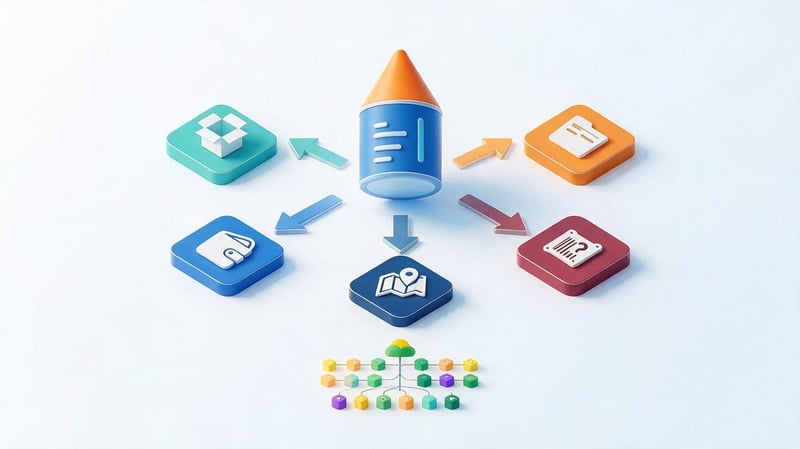
Search queries reveal the market through the eyes of the customer. People rarely Google the exact official category name used by the company itself. They search for a product, service, solution to a problem, price, location, or specific feature.
When searching, it's best to use commercial queries, product categories, service names, and geographic combinations. Local businesses should consider adding the city and district, online stores should consider categories and popular products, and B2B companies should consider service names and customer needs.
For example, a dental clinic wouldn't just check the search query “dentistry Kyiv”. It would also need to look at “cavity treatment Kyiv”, “dental implants Kyiv”, “pediatric dentist Kyiv”, and other services that generate inquiries.
The broader the semantic core at this stage, the more accurate the list of SEO competitors will be. There's no need to collect thousands of keywords. For initial research, the main commercial groups that reflect key business areas are sufficient.
Step 3: Find competitors through Google
Enter the collected queries into Google and note the companies that regularly appear in the search results. A single site in the top position for a single query doesn't necessarily make it a major competitor. Domains that appear across multiple commercial groups are much more interesting.
It's best to consider organic search results and ads separately. A company may have almost no SEO visibility but regularly purchase ads and actively compete for the same audience. Another business may get its clients primarily from organic search.
For each website you find, it's helpful to record the search query and source. Later, you can see which companies appear most frequently and how they intersect with your website.
Which search results should be taken into account?
The search results include company websites, online stores, marketplaces, aggregators, catalogs, and information projects. Not every domain in the top ten is a direct business competitor, but they may all be competing for the same search demand.
For example, an online store can compete with a large marketplace on Google, even though their business models are very different. For SEO purposes, such a platform remains a competitor because it ranks for the same commercial queries and receives clicks from potential buyers.
It's best to indicate the result type in the table. This will help avoid confusing direct competitors with aggregators, directories, and information resources during further comparison.
Step 4: Use Google Maps
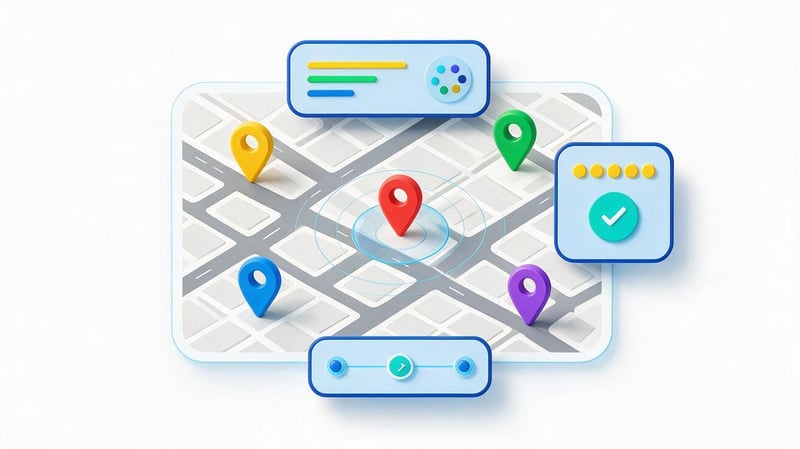
Google Maps is especially useful for clinics, dentists, restaurants, salons, service stations, law firms, stores, and other local services. It often hosts businesses that aren't widely featured in organic search results but have a significant following in their area.
You can search by primary category, service, and geographic search. When browsing for the first time, pay attention to the location, service offerings, number of reviews, profile categories, and website links.
A high rating alone doesn't determine a competitor's strength. A smaller company with a large number of reviews may operate in a different price segment or serve a different part of the city. Therefore, Google Maps data should be compared with the market criteria identified in the first step.
Step 5: Check marketplaces, aggregators, and company directories
In product niches, marketplaces help identify sellers of similar products and brands. In the service sector, industry catalogs, ratings, directories, and specialized platforms play a similar role.
These platforms are also useful because they showcase companies without strong websites of their own. A business can receive the majority of its orders through a marketplace or aggregator and spend little time on SEO for its domain.
When searching, record the company name, profile or website link, product range, geography, and price range. This information will later help you determine whether the seller you find is a major competitor or overlaps only in a specific product category.
Step 6: Find competitors on social media
Instagram, Facebook, TikTok, YouTube, and LinkedIn help find companies that rely on content and paid promotion. This channel works especially well in niches where purchasing decisions are driven by visual choices, expertise, or personal branding.
You can search by service name, product category, geography, hashtags, and platform recommendations. After finding several relevant profiles, the algorithms usually start showing similar accounts.
Don't evaluate a competitor solely by their follower count. For the initial list, a product, audience, and market fit are more important. Profile activity, engagement, and advertising formats will become more valuable during a detailed competitive analysis.
Step 7: Look at your competitors' ads
The ads show companies that are currently willing to pay to attract customers from a specific segment. These brands can be found in Google searches for commercial queries, and in the Meta Ads Library, you can check the companies' active ads on Facebook and Instagram.
At this stage, there's no need to delve into creatives, offers, and landing pages. The main goal is to identify additional players that may not have appeared among the top organic search results.
If one company regularly appears in search advertising, social media, and organic traffic, it should be prioritized for further analysis. This overlap indicates a systematic approach to multiple acquisition channels.
Step 8: Use SEO services

Ahrefs, Semrush, Serpstat, and Similarweb help you find competing websites using data that's difficult to gather manually. Depending on the service, you can see keyword overlap, similar domains, search visibility, pages with traffic, and an approximate distribution of channels.
For SEO purposes, comparing domains based on common semantics is especially useful. If two websites rank for a large number of the same commercial queries, there is significant overlap in search results between them, even if the business owners don't consider each other direct competitors.
Data from these services should be used in conjunction with manual verification. An automated list can include large portals, marketplaces, directories, and information sites that compete for search queries but operate on a different business model.
Why might SEO competitors differ from business competitors?
An SEO competitor is a website that ranks for the same queries and receives a portion of the same search traffic. However, it may sell a different product range, operate using a different model, or not be a direct seller at all.
For example, a specialized online equipment store might see a large marketplace in the search results. Customers compare offers on both platforms, so there's overlap at the business level. In other cases, the top positions are occupied by an information catalog that sells nothing but siphons organic traffic.
Therefore, it's useful to divide the list into at least two groups: business competitors and SEO competitors. This way, when analyzing prices, you won't have to compare a store with an information portal, and when analyzing search results, a strong portal won't be overlooked.
Step 9: Ask clients who they considered besides you
Clients often name competitors who are difficult to find using standard methods. They may have come through a recommendation, compared offers in a closed professional community, or considered a completely different approach to solving their problem.
During the conversation, it's enough to ask a few simple questions: which companies were considered before purchasing, why the client compared them, and what alternatives were on the list. Responses can be easily recorded in a CRM or a separate spreadsheet.
This method is especially useful for B2B, complex services, and expensive products with long purchase cycles. After a few dozen responses, it usually becomes clear which names are repeated and which companies the market truly perceives as alternatives to yours.
Lead SEO specialist — Gennady
I start my competitor search not with a list of brands the business owner already knows, but with the product, audience, geography, and actual customer search queries. After that, I check Google search results, ads, maps, directories, and SEO services.
I finalize the list by selecting companies that have a real overlap with the business in terms of product, audience, or client objectives. I also identify SEO competitors separately: they may not be direct competitors of the business, but they still capture the same search demand. This approach provides a working sample instead of a random selection of websites.
How do you know if the company you found is really your competitor?
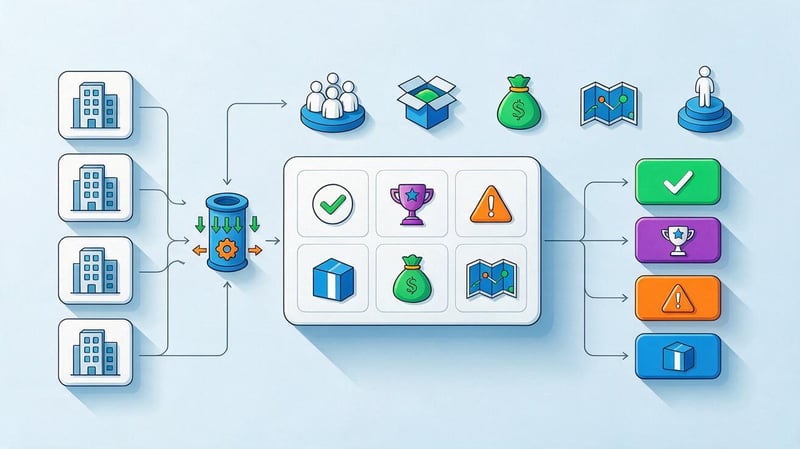
After collecting the data, the resulting list is usually too large. It will include direct competitors, local companies, marketplaces, aggregators, major brands from adjacent segments, and sites that only overlap on a few keywords.
Each company should be screened using the same criteria. The key parameters are target audience, product, customer needs, price, geography, and sales channels. The more matches, the higher the priority the company is for further analysis.
Compare target audience
Two companies may sell a similar product to completely different customers. For example, a manufacturer of office furniture for large companies and a retailer of inexpensive desks for home use operate in a similar product category, but rarely share the same customer choice.
Compare customer type, budget, purchasing motive, product requirements, and decision-making process. If the audiences have little overlap, it's best to keep such a company in a supplementary group.
Compare the product or problem it solves
First, check your product range and service offerings. If your offerings completely overlap, the likelihood of direct competition is high. If there's partial overlap, consider which categories drive the most demand for each company.
Evaluate the problem being solved separately. This is where indirect competitors and substitutes come into play. A customer may reject your product not in favor of a similar offer, but by choosing a different way to achieve the desired result.
Compare price segment
Price influences the range of alternatives a buyer considers. A budget furniture store and a premium designer furniture showroom may operate in the same category, but they rarely compete for the same customers.
A complete price match isn't required. It's enough to define a range and check the extent to which the offers overlap. If the difference is systemic and significant, it's more reasonable to consider the company an indirect or niche competitor.
Check your geography
For local businesses, geography often becomes one of the main filters. A dental clinic in Lviv might be useful as a website example or SEO structure for a clinic in Kyiv, but these companies don't compete directly for the majority of clients.
Online stores have broader boundaries, but geographic coverage still needs to be verified. Differences in delivery, language, currency, and payment terms can separate markets even with virtually identical product ranges.
Compare sales channels
One business accepts orders through a website, another generates most of its sales through marketplaces, and a third operates through brick-and-mortar stores and social media. While offering the same product, these companies may compete in different ways.
Sales channels are useful to consider when developing a strategy. If a strong competitor is actively acquiring customers through a channel the company is currently ignoring, this becomes a separate area for research.
Assess the degree of intersection
After checking, it's convenient to assign a conditional type to each competitor. This approach simplifies working with a large table and avoids comparing companies that only share one characteristic.
| Criterion | Company A | Company B | Company C |
|---|---|---|---|
| Similar product | Yes | Partially | No |
| Same audience | Yes | Yes | Partially |
| Same geography | Yes | No | Yes |
| Similar price segment | Yes | Yes | No |
| Competes in Google | Yes | Yes | Yes |
| Result | Direct competitor | Indirect competitor | SEO competitor |
If a company shares similar product, audience, geography, and price points, it's usually worth including in the main group. If the overlap is primarily related to search results, it's best to analyze such a site separately as an SEO competitor.
How many competitors do you need to find for analysis?

For the first full-scale research, five to ten key companies are usually sufficient. A larger list can be saved in a spreadsheet, but a detailed analysis of several dozen websites at once rarely makes sense.
The main sample can include three to five direct competitors, several indirect competitors, and one or two strong sites that significantly compete for organic search traffic. The exact composition depends on the market size and the research objective.
Example distribution for a sample of ten competitors:
| Type of competitors | Quantity | Sample proportion |
|---|---|---|
| Direct competitors | 5 | 50% |
| Indirect competitors | 3 | 30% |
| SEO competitors | 2 | 20% |
| Total | 10 | 100% |
If the niche is narrow, there may be only two or three direct competitors. For a large online store, on the contrary, it makes sense to create separate samples for different product categories. The key is that each company on the list has a clear reason for analysis.
Competing companies: examples from different niches
Queries like “company competitors examples” often imply not a list of well-known global brands, but a clear principle for identifying competitors. The same business can simultaneously have direct, indirect, and SEO competitors.
Therefore, it's best to consider examples of competing firms through real-world choice scenarios. Below, we show how the composition of the competitive landscape changes depending on the type of business.
Example for an online store
Let's imagine an online store selling mid-priced athletic shoes with delivery throughout Ukraine. Its direct competitors are other specialized stores selling similar brands, targeting the same audience, and offering comparable prices.
A large marketplace can be both a business and SEO competitor, as shoppers compare the same shoe models there. A general sporting goods store would be an indirect competitor, while an information portal with sneaker ratings might compete only for search results.
Example for a medical clinic
For a medical clinic, the composition of its competitors depends on its specialization, city, services, and prices. A multidisciplinary clinic in Kyiv shouldn't automatically consider all medical institutions in the city as direct competitors.
When analyzing a specific service, such as dental implants, the list may include dental centers, specialized clinics, and individual strong specialists. For SEO, medical directories and aggregators that rank for commercial queries are also considered.
Example for a digital agency
A full-service digital agency may compete with another full-service agency, a specialized SEO company, a small team of specialists, and individual freelancers. The composition of the list depends on the service the client is considering.
If the request is for search engine optimization, the main competitors will be SEO agencies. When developing a comprehensive marketing strategy, the client may compare agencies with a broader focus. Sometimes, hiring an in-house specialist is an alternative, so this option also falls under the competitive landscape.
Example for SaaS or IT product
For SaaS, a direct competitor would be a service with a similar feature and subscription model. However, the client could solve the same problem using spreadsheets, manual work, several separate programs, or a custom solution.
Such alternatives are considered substitutes. They need to be considered because users compare the subscription price not only with other SaaS but also with their familiar process. In some niches, a product's main competitor is a free, manual process that the company has been using for years.
What services help you find competitors?

Services reduce manual work and help find companies using various signals: search results, keyword overlap, audience, advertising, or geography. There's no universal source that will show all competitors at once.
It's best to combine regular Google with analytics services. Manual verification reveals the real context of search results, while specialized platforms help spot domains and keywords that are easily missed during regular searches.
| Tool | What can you find? |
|---|---|
| Companies from organic and advertising search results | |
| Google Maps | Local competitors and companies near the client |
| Ahrefs | Domains with overlapping semantics and common queries |
| Semrush | Organic and advertising competitors |
| Serpstat | Competitors by keywords and search visibility |
| Similarweb | Similar sites and traffic channel data |
| Meta Ads Library | Companies with active advertising on Facebook and Instagram |
| Marketplaces | Sellers of identical or similar products |
The data from such platforms shouldn't be taken as a definitive list. The algorithms work with their own databases and metrics, so after the automatic search, websites still need to be manually verified.
How to create a competitor table?
A spreadsheet is essential from the very beginning of your research. If you save websites in bookmarks or separate notes, after a few days it becomes difficult to remember what search term led to the company's discovery and why it was included in the sample in the first place.
A single spreadsheet helps eliminate duplicates, differentiate direct and indirect competitors, identify discovery sources, and prioritize. It can be further expanded with data on SEO, advertising, pricing, and content.
What data should be added to the table?
The minimum set of fields should explain who we're looking at and why this company is considered a competitor. Too many columns at the initial search stage only slows things down.
The optimal structure includes:
- company name and website or profile address;
- competitor type and main product category;
- target audience and geography of work;
- approximate price segment;
- the source through which the company was found;
- key points of intersection with your business;
- a brief comment and the date of the last review.
After filling out a few dozen lines, it's already clear which names are repeated in different sources. Such companies are usually prime candidates for detailed analysis.
How to prioritize?
First priority goes to direct competitors with the greatest overlap in product, audience, geography, and price. These are the ones that should be compared in more detail based on product range, positioning, website, advertising, and customer service.
The second group includes indirect competitors and substitutes. The third group includes SEO competitors, aggregators, marketplaces, and information platforms that interfere with search rankings but have different business models.
This separation saves time. The team understands which sites need to be analyzed as a business, which ones need to be studied for search engine optimization, and which ones simply need to be considered as part of the competitive landscape.
What mistakes do people make when searching for competitors?

The main mistake occurs when a list is compiled once and considered an objective picture of the market. In practice, it depends on the product, region, price segment, and specific research objective.
Other errors are usually related to a lack of sources or overly broad selection criteria. These increase the volume of work and degrade the quality of subsequent analysis.
Only well-known brands are analyzed
A well-known brand can indeed be a strong reference point, but customers don't always compare your company specifically to it. In a local market, decisions are often made between smaller companies that are better represented in a particular area or search results.
Therefore, popularity should be one of the signals, not the primary criterion. The list should be verified through real search queries, maps, catalogs, and customer data.
Consider all companies in the same industry to be competitors
A shared industry doesn't necessarily mean direct competition. A premium custom furniture manufacturer and a major discounter operate in the same market, but they attract different customers and cater to different purchasing scenarios.
Without filters by audience, price, and product, the spreadsheet quickly grows. As a result, the team wastes time on companies that have little impact on their clients' decisions.
Ignore indirect competitors
Sometimes sales go not to a similar product, but to a completely different way of solving the problem. This is especially true for services, education, SaaS, and complex professional services.
If we only consider direct competitors, some of the customer's actual choices will be missed. Therefore, it's better to include substitutes and alternative solutions in a separate group.
They don't take into account geography and price segment
A local company might accidentally include a strong national brand in its analysis that doesn't operate in its city. A similar error occurs when comparing offers in different price categories.
Such examples are useful as benchmarks, but they shouldn't replace the company's main competitors. For each website, it's important to understand whether it aligns with the company's target market.
They only take sites from one search query
A single query displays only a small portion of the search results. The composition of the results varies depending on the wording, city, specific service, and search intent.
Use multiple commercial groups. If a single domain is consistently found for multiple queries, it will be prioritized significantly higher for SEO analysis.
Confusing business competitors and SEO competitors
A marketplace, aggregator, or information portal may rank highly, but it cannot be automatically compared to a company in terms of price, product range, and business model.
For SEO purposes, such a domain must be taken into account. For business analysis, it's best to move it to a separate category to ensure a fair comparison.
They make a list that is too big and has no priorities
Fifty companies found may seem like a large amount of data, but without filtering, such a list is of little use in decision-making. The team simply ends up with dozens of websites, each of which takes time.
After the initial collection, you need to select a core group of the most relevant companies. The remaining companies can be saved as a backup database and revisited as you expand your analysis.
They don't update the list of competitors
The market is changing: new companies emerge, old websites lose ground, businesses expand into other regions and launch new categories. A list from two years ago may poorly reflect the current competitive landscape.
It's wise to repeat the audit whenever there are significant business changes and to periodically update key data. Search results, advertising activity, and the composition of sellers on marketplaces become particularly outdated quickly.
What to do after competitors have been found?

The next step involves a detailed competitive analysis. Now you can compare only the selected companies and avoid wasting time on websites that were included randomly.
Typically, they examine product range, pricing, positioning, unique selling proposition, website structure, SEO, content, search traffic, advertising, social media, customer reviews, and customer service. For search engine optimization, they also analyze the semantic core, top pages, meta tags, internal linking, and link profile.
It's useful to categorize methods by task. SWOT analysis helps systematize strengths and weaknesses, Porter's Five Forces model considers competitive pressures beyond individual companies, and JTBD helps understand alternatives through user tasks.
At this stage, the collected database becomes the basis for specific decisions. Based on the results, it's possible to change the website structure, create new landing pages, expand content, adjust positioning, and identify areas that competitors are currently underserving.
Competitor research begins with understanding your own market and ends with selecting a short list of truly relevant companies. Google, maps, marketplaces, social media, advertising, and SEO services all provide different parts of the overall picture, so it's best to use multiple sources.
After collecting the data, separate your direct, indirect, and SEO competitors, check their audience, product, price, and geography, and then move on to a detailed analysis. If you need to compare your competitors' semantics, pages, visibility, content, and search engine optimization, order a competitive SEO analysis from Seo-Gen.


