Online store competitor analysis


Customers rarely make decisions after their first encounter with a store. They compare products, prices, delivery, reviews, catalog usability, and return policies, and then choose the platform that makes purchasing easier and safer. Therefore, analyzing an online store's competitors helps you see the market through the customer's eyes and understand which solutions have become familiar to the audience.
It's worth checking stores that compete for the same search queries, appear in nearby ads, sell similar products, or target the same audience. The results of this research should lead to specific actions: expanding the category, improving filters, creating a new landing page, changing the offer, refining the product page, or addressing a weak point in the service.
What is an online store competitor analysis and why is it needed?
Competitive analysis in e-commerce is a systematic comparison of stores based on product range, prices, website, search visibility, advertising, service, and user journey. This approach helps understand what customer expectations have already been formed and where your own store falls short in terms of convenience, comprehensiveness of offerings, or quality of information.
It's helpful to look at the market from several angles. One competitor may be stronger at SEO, another at product selection, a third at advertising or review management. Evaluating just one platform can easily skew your conclusions. Five to seven comparable stores and a few market leaders for reference are usually sufficient to get a basic picture.
What tasks does competitive analysis solve?
The main goal of the analysis is to identify specific growth points that can be tested and implemented. For example, competitors may offer specific categories tailored to specific demand, detailed product cards, convenient filters, free shipping over a certain amount, or clearer return policies. Each such observation should be translated into a hypothesis and assessed for applicability to your business.
Competitive analysis helps examine the product portfolio, compare prices, identify unmet keywords, evaluate catalog structure, identify popular promotional offers, and understand the most frequently used selling points. As a result, the team receives a task list for SEO, content, marketing, development, procurement, and customer service.
When should an online store analyze competitors?
A full analysis is especially useful before launching a new store, expanding into a new region, adding a major product category, redesigning, or scaling advertising. It's also necessary if there's a noticeable decline in organic traffic, conversions, or sales, and internal data isn't sufficient to explain the cause.
It's worth repeating the study after significant changes in the market or your own project. For most stores, updating the core data every three to six months is sufficient, and checking prices, promotions, and advertising messages more frequently. This cadence helps identify changes without manually monitoring the entire market daily.
Answers to your questions
How to conduct a competitor analysis for an online store?
First, select five to seven stores comparable in terms of product range, audience, price, and geography. Then, using the same methodology, compare their catalog, product cards, prices, UX, SEO, advertising, delivery, reviews, and return policies.
Compile the results in a table and formulate an actionable action for each significant finding. This structure helps separate useful observations from random differences between sites and immediately identify which tasks should be delegated to the team.
How many competitors do you need to analyze?
Five to seven direct competitors are usually sufficient for a basic study. This is enough to spot recurring market patterns without becoming overwhelmed by too much data.
Additionally, you can use one or two market leaders to compare UX, content, or technology. It's best to keep their metrics separate if their business scale, geography, or product offerings differ significantly.
How to find competitors of an online store?
Use Google, Google Shopping, marketplaces, social media, and SEO services. List domains that regularly appear for your commercial queries and sell similar products to the same audience.
After that, filter the list by price, geography, and sales channels. This will help you narrow down to companies with which comparison is truly meaningful and helps you make decisions about your own store.
What metrics of competitors' websites should be compared?
For e-commerce, it's useful to compare catalog structure, product range, prices, filters, product cards, mobile version, checkout, delivery, payment, reviews, SEO visibility, keywords, links, and advertising messages.
There's no need to collect dozens of metrics for each item. It's better to select indicators that can be linked to specific decisions regarding the website, marketing, product range, or customer service.
How to Conduct a Shopify Competitor Analysis?
Shopify's competitor analysis includes standard e-commerce parameters and additional platform features. Check Collections, product pages, URLs, canonical, speed, mobile version, reviews, bundles, wishlists, and other available features.
For technical verification, you can use source code, BuiltWith, and PageSpeed Insights. Conclusions should be based on user behavior and search structure, not the name of the installed app.
How often should you analyze your online store's competitors?
A full analysis is best updated every three to six months if the market is changing moderately. It's best to conduct a separate review before launching a new category, entering a new country, redesigning, or launching a major advertising campaign.
Prices, promotions, and advertising messages can be monitored more frequently if they significantly impact sales. The frequency should be consistent with the pace of change in the specific niche and the team's actual goals.
Is it possible to conduct a competitor analysis for free?
Yes, a significant portion of the data can be collected for free through Google, competitors' websites, marketplaces, social media, the Meta Ads Library, and PageSpeed Insights. This is sufficient for a basic comparison of product offerings, UX, advertising, and service.
For in-depth SEO testing, it's more convenient to use Ahrefs, Semrush, Serpstat, or SE Ranking. Paid services reduce manual work and provide more data on queries, pages, and links.
How to find competitors of an online store?
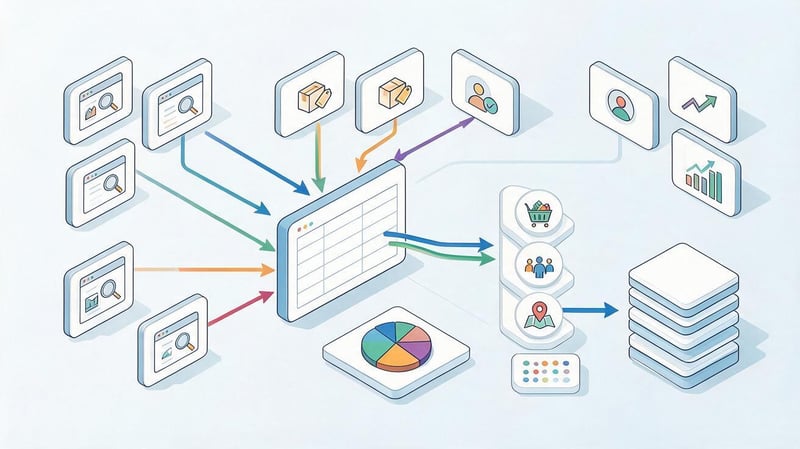
It's best to compile a list of competitors from multiple sources, as search results, marketplaces, and social media each represent different parts of the market. A store might have minimal Google visibility but still be actively capturing demand through Instagram, TikTok, or a marketplace. Therefore, analyzing a store's competitors begins with a broad list, which is then narrowed down based on relevance.
The working sample should include companies with similar product ranges, price points, geographies, and target audiences. A large international brand can be useful as a benchmark for UX or content, but its advertising budget and logistics may not be comparable to those of a local online store.
Direct and indirect competitors
Direct competitors sell similar products to the same audience and often share keywords. For example, two online athletic shoe stores in the same price range are usually direct competitors. It's easy to compare their product range, prices, delivery options, categories, filters, product cards, and promotional offers.
Indirect competitors meet the same need in a different way. A branded clothing store may compete with a marketplace, a multi-brand showroom, or a resale platform. Such companies are useful for analyzing user experience, positioning, purchasing conditions, and the reasons why customers choose an alternative channel.
How to find competitors through Google?
Start with commercial keywords that describe your main categories and products. Check organic results, ads, and Google Shopping, then note domains that appear across multiple searches. A single search rarely tells the whole story, so you need to check different categories, brands, models, and geographic searches.
Take a separate look at which pages rank for the identified domains: homepage, category, filter, brand page, or product page. This immediately provides information about the site's structure and search intent. If a competitor consistently appears for dozens of relevant queries, it's worth including them in the main sample.
How to find competitors on marketplaces?
When using marketplaces, it's worth looking not only at the platform itself but also at individual sellers who consistently hold prominent positions within their category. You can compare their product selection, number of reviews, prices, delivery times, seller ratings, payment options, and product page design.
For the Ukrainian market, it's useful to check out Rozetka, Prom, OLX, and specialized platforms in your niche. If a significant portion of demand is directed toward marketplaces, their terms and conditions become part of the competitive landscape. Buyers compare the store's offerings with what they get on a familiar platform, even if the business models differ.
How to find competitors on social networks?
Instagram, Facebook, TikTok, and YouTube help you find stores that engage their audiences through visual content, user-generated content, influencers, and short commercials. To search, use category names, brands, product names, relevant hashtags, and platform recommendations. Then, check which accounts regularly publish commercial content.
Look beyond just the number of subscribers. It's more useful to evaluate post frequency, comments, offer format, question handling, blogger integrations, promo codes, and website traffic. Social media is a good indicator of audience language and the topics that elicit genuine customer reactions.
How to select stores for comparison?
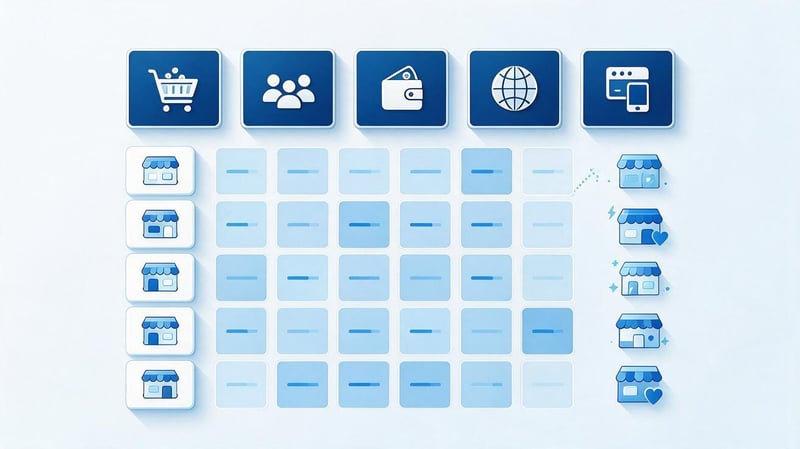
It's best to include websites with which your store overlaps across multiple criteria in the final list. It's helpful to create a simple table and mark them by product range, audience, price, geography, and sales channels. The stores with the highest overlap become the primary group for detailed analysis.
A weak match on one parameter doesn't necessarily render a company irrelevant. For example, a foreign Shopify store may be useful for evaluating product cards and visual content, even though it doesn't compete for Ukrainian search queries. It's best to place such sites in a separate group and not conflate them with direct competitors.
Assortment
Compare key categories, brands, models, product matrix depth, and the share of overlapping items. If the overlap is high, customers can truly choose between these stores. For niche projects, it's useful to separately identify unique categories and products that most retailers don't offer.
Also consider availability, the frequency of new arrivals, seasonal collections, sets, and related products. This data helps you understand how your competitor is expanding their selection and increasing their average order value, as well as which categories may be underdeveloped in your own catalog.
Target audience
Assess who your store is targeting: beginners, professionals, parents, business owners, a younger audience, or premium shoppers. Clues can be found in copy, visual style, brands, prices, payment methods, delivery, content, and advertising.
If the audiences differ significantly, a direct comparison will be inaccurate. For example, a mass-market and a premium clothing store may sell similar categories but use different marketing messages, services, and content. It's useful to compare such sites only on individual elements.
Price segment
To compare, select several identical or closely related products and check the standard price, discount, shipping costs, bonuses, and installment plan. The average price for the entire catalog means little if the selection and brands differ.
It's convenient to divide competitors into the economy, mid-range, and premium segments. This makes it clearer who is truly competing for the same customer, and who operates with a different demand model and shouldn't influence your store's pricing decisions.
Geography
Check where your competitor delivers, whether they have specific delivery options for specific cities or countries, local pages, pickup locations, and offline stores. Geography impacts Google search results, delivery times, order costs, and customer expectations.
For international projects, it's important to differentiate markets. A store might be strong in Poland or Germany, but barely compete in Ukraine. In this case, its data is useful as an industry benchmark, but not suitable for direct comparisons of visibility and prices.
Sales channels
Determine where your competitor sells their products: on their own website, Shopify, marketplaces, social media, or offline. One business may receive the majority of its orders through a website, while another may receive the majority of its orders through a marketplace, so equal visibility in Google doesn't necessarily mean equal market power.
Sales channels also influence the user journey. On a marketplace, the platform shoulders some of the trust and logistics, while an online store must independently explain payment, return, warranty, and delivery terms.
What should you analyze from your online store's competitors?
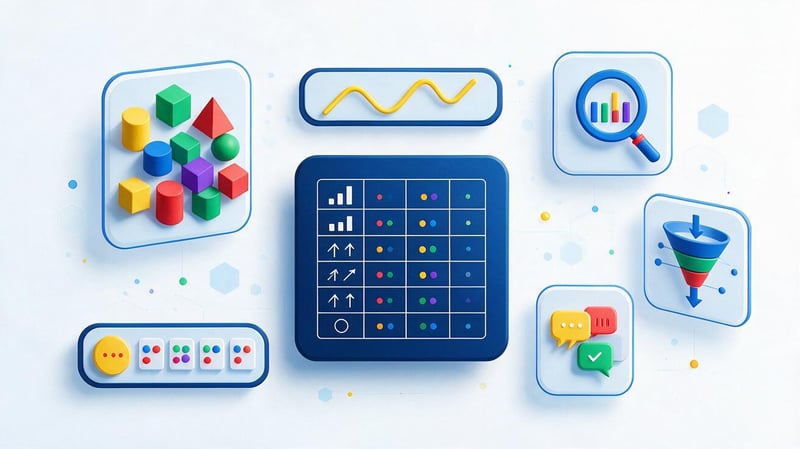
After selecting websites, you need to move from a general review to a consistent set of criteria. If one store is evaluated by SEO, another by design, and a third by price, the final table will be useless. All major competitors should be subject to the same review.
It's more convenient to create a worksheet in advance and record the source of each observation. This way, the team can return to the data, verify it after updating, and distinguish fact from subjective assessment.
| Parameter | What to check | Where to look | What to record |
|---|---|---|---|
| Assortment | Categories, brands, availability, new products | Catalog, search, filters | Strong and missing groups |
| Prices | Product, discount, delivery, bonuses | Product pages and cart | The total cost of the purchase |
| UX | Search, filters, card, checkout | Website and mobile version | Convenient and problematic steps |
| SEO | Structure, queries, traffic, links | Google and SEO services | Pages and growth clusters |
| Advertising | Offers, formats, landing pages | Google, Meta, TikTok | Recurring messages |
| Service | Delivery, returns, support | Website, reviews, contacts | Conditions and common complaints |
Product range and matrix
First, compare the breadth and depth of your catalog. Breadth indicates the number of product categories, while depth indicates the selection within a given category. For this assessment, it's helpful to record brands, models, sizes, colors, new arrivals, bestsellers, seasonal items, sets, and related items.
Then, look at what products your competitor displays on the homepage, promotes through banners, and links them with internal blocks. This can often help you understand their commercial priorities without access to sales. Having a large catalog doesn't necessarily mean a strong offer if most of the items are unavailable.
Categories and subcategories
The catalog structure shows how the store groups demand. Compare the number of levels, section names, navigation clarity, and relevance to actual search queries. Overly broad categories hinder selection, while an overly fragmented structure complicates navigation and site maintenance.
Separately highlight brand, feature, collection, and tag pages. Some competitors receive organic traffic through narrow landing pages, which other stores only offer as filters without a separate URL.
Popular and priority products
Direct sales data from competitors is usually unavailable, so rely on open signals. These include “hits” blocks, product frequency on the homepage, ads, number of reviews, the presence of dedicated landing pages, and active social media promotion.
These signals can't be considered precise sales statistics, but they help understand a store's priorities. If one brand or model appears regularly across multiple channels, it's worth comparing it separately based on price, content, availability, and advertising messaging.
Positioning and USP
Look at the competitor's key selling point on their homepage, categories, ads, and product pages. It could be an official warranty, a large selection, fast delivery, rare brands, expert advice, low prices, or easy returns.
Then check whether the website backs up the claimed benefit. If the store promises fast delivery, the delivery times and locations should be clear. If the emphasis is on expertise, detailed descriptions, instructions, consultations, and informative answers to customer questions will be helpful.
Website structure and UX
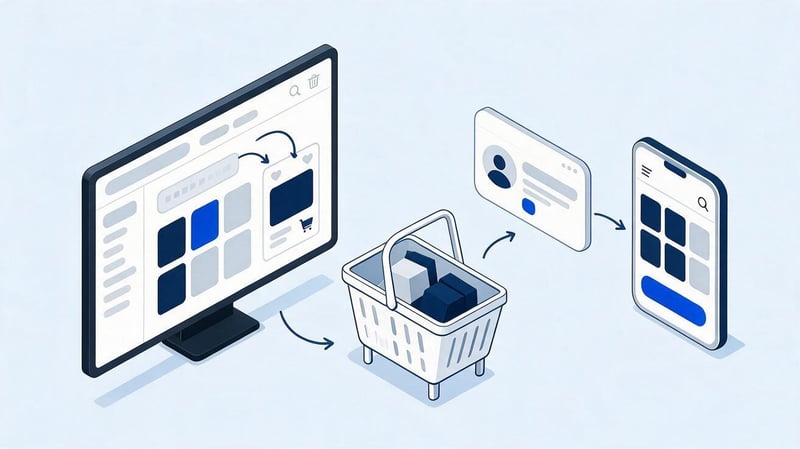
The user experience should be tested using a real-life purchase scenario. Find a product through the menu, use the search, apply filters, open the product page, add it to your cart, and proceed to checkout. This process reveals issues that aren't noticeable during a typical homepage visit.
Compare the number of steps, the clarity of the interface, the presence of errors, and the quality of information at each stage. This test is especially useful on a smartphone, as mobile traffic accounts for a significant portion of visits for many online stores.
Catalog, search and filters
A good catalog helps you quickly narrow your selection based on the characteristics that truly matter to you. Check the sorting, product filters, breadcrumbs, site search, suggestions, typo handling, and zero-result searches.
Filters should be evaluated within the context of the category. For laptops, technical parameters are important, while for clothing, size, color, material, and fit are important. If a competitor takes these scenarios into account better, this is a strong signal for a UX audit of your own catalog.
Product cards
The product page should answer questions that arise before purchasing. Compare photos, videos, specifications, descriptions, availability, product options, customer reviews, delivery and payment options, warranty, recommendations, and related items.
Check how easy it is to find key information. A long card can be convenient if the blocks are logically organized, but a short one can leave the buyer without important data. The required information will vary for different niches.
Cart and checkout
Add the same product to the cart and go through checkout at several competitors. Record the number of steps, required fields, registration requirements, available delivery and payment methods, the ability to change the quantity, and the transparency of the final price.
Additionally, consider cross-selling and upselling. These offers are useful when they complement the main purchase and don't interfere with completing the order. Aggressive pop-ups, hidden fees, and unexpected terms and conditions usually detract from the user experience.
Mobile version
The mobile version should be checked separately, even if the design is responsive. Pay attention to loading speed, button sizes, menus, filters, product gallery, feature tables, option selection, and checkout.
It's helpful to run the entire scenario on a real smartphone and use PageSpeed Insights as an additional source of technical data. Lab evaluations don't reveal all the interface issues that arise during a real purchase.
Prices, discounts and promotions

Compare the total purchase price, not the number next to the product. The price may be lower, but shipping is paid, the discount is only available with a subscription, or the minimum order amount makes the offer less attractive. It's helpful to include the regular price, promotional price, shipping, bonuses, and available payment methods in your spreadsheet.
For regular monitoring, select a representative set of products. These could include bestsellers, high-margin items, and products for which customers frequently compare offers. This approach provides a more useful picture than a one-time check of a few random cards.
How to conduct an SEO analysis of online store competitors?
SEO competitor analysis reveals which pages and topics are already gaining organic visibility in a niche. For an online store, it's especially useful to separate the homepage, categories, brands, filters, product pages, and blog, as each page type plays a specific role in search results.
It's best to start your check with Google and supplement it with data from Ahrefs, Semrush, Serpstat, or SE Ranking. Third-party service figures should be taken as estimates, as precise traffic data is only available to the website owner.
Organic traffic and visibility
Compare estimated organic traffic, the number of keywords, ranking distribution, and the pages that receive the most visibility. A single overall metric is of little use without understanding which sections are driving that result.
If a competitor gets a significant share of their traffic through categories, it's worth examining their structure and semantics. If articles generate a significant share, check the topics, internal linking, and links to commercial pages. This analysis helps isolate useful patterns from the overall domain size.
Semantic core of competitors
Download keywords from several competitors and group them by intent and page type. Separately identify commercial categories, brands, models, geo-queries, and informational topics. Then compare this list with the semantic core of your own website.
Pay special attention to queries for which your competitor has a dedicated, relevant page, but you don't have such a URL. This is often where you'll find quick ideas for expanding your catalog structure or content.
Content Gap
Content Gap shows queries for which several competitors have visibility, while the analyzed site is missing or ranks significantly lower. This list helps identify missing categories, brands, features, informational materials, and commercial clusters.
Not every topic you find needs to be added to your website right away. First, check demand, product range, business priority, and the feasibility of creating a useful page. Otherwise, your website structure will quickly bloat due to weak or duplicate URLs.
Catalog structure and SEO landing pages
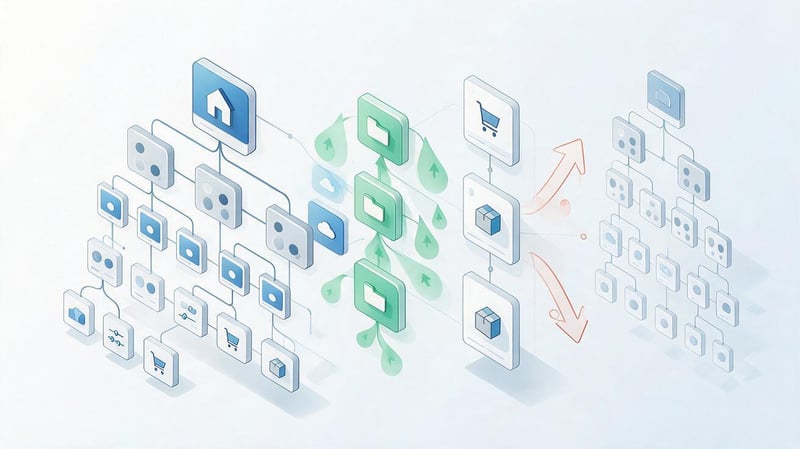
Compare categories, subcategories, brand pages, tag pages, and indexed filters. See which URL types drive traffic and how they are related. Strong stores often have a catalog structure that reflects actual search demand.
However, you can't mechanically copy someone else's hierarchy. Each store has its own product range and priorities. First, you need to align the structure with your own semantics, then decide which landing pages are truly relevant to users and search engines.
Meta tags and headings
Check the Title, Description, H1, and H2-H3 structure on pages of different types. Look at which commercial modifiers, geography, brands, and characteristics are used in meta tags. It's helpful to compare not just one page, but a sample of several categories and products.
Be sure to track duplicates, overly long titles, missing descriptions, and duplicate H1s. These types of errors in competitors highlight gaps where your own website could provide search engines with a more accurate and understandable page.
Content
Compare category texts, product cards, FAQs, instructions, reviews, and blog articles. Assess whether the content answers real customer questions, helps them choose a product, and links to sales pages.
A large volume doesn't provide an advantage in itself. It's more useful to look at the completeness of the topic, its structure, factual accuracy, illustrations, tables, expert commentary, and internal links. The content should be relevant to the purpose of the specific page.
Internal linking
Check how categories relate to products, brands, articles, and adjacent sections. Internal linking helps users continue their journey through the site and distributes internal link weight among important pages.
It's helpful to include “related products” and “also bought” blocks, links from articles, breadcrumbs, and thematic collections. If an important category is deeply located and receives few internal links, this may limit its search visibility.
External links
Compare the number of referring domains, the quality of donors, anchor text, link dynamics, and the pages that receive the most mentions. Also, look at PR publications, reviews, brand directories, partner materials, and relevant media.
A backlink profile is only useful when it comes to quality. A large number of weak domains doesn't necessarily mean a strong strategy. For your own purposes, it's better to look for the types of platforms and publication formats that feel natural for your specific niche.
Lead SEO specialist — Gennady
I don't recommend evaluating competitors solely by overall traffic or homepage position. For an online store, it's more useful to understand which categories and product pages drive search traffic, which queries the catalog structure is built for, and which URLs receive links. Often, growth potential lies in dozens of categories, filters, and content that aren't yet on the site.
How to analyze competitors' advertising?
Advertising analysis helps identify which products and marketing messages competitors are actively promoting. Public sources don't reveal exact budgets or sales, so the task is to compare formats, offers, landing pages, and recurring advertising messages.
It's helpful to track ads by date. If one offer is used for a long time and repeated across multiple channels, it's worth examining more closely. A short launch could be a test, so drawing conclusions from a single ad is risky.
Google Ads and Google Shopping
Check commercial queries in Google and see which stores regularly appear in ads. Compare headlines, prices, benefits, extensions, and landing pages. In the Shopping section, it's especially helpful to look at images, ratings, prices, and delivery terms.
Competitive intelligence services can evaluate advertising activity and display some keywords, but they don't provide an exact advertising budget. For practical analysis, it's enough to understand which categories are being promoted and which messages are repeated.
Meta Ads Library
Meta Ads Library lets you view active ads for Facebook and Instagram pages. It's useful to save creative formats, text, offers, products, promotions, and landing page links for each competitor.
Pay attention to the diversity of creatives and their duration. If a store regularly uses product demonstration videos, user-generated content, or a specific promo code, this indicates the direction of their advertising communications, which can be compared with your strategy.
TikTok and working with bloggers
On TikTok, it's helpful to search for brands, product categories, and posts by creators that feature competitors' products. Consider the video format, product presentation, promo codes, frequency of integrations, and audience response.
When working with bloggers, it's important to separate organic mentions from paid placements whenever possible. For analysis, it's sufficient to note recurring themes, formats, and arguments, rather than attempting to evaluate campaign effectiveness without internal data.
How to Conduct a Shopify Competitor Analysis?
Shopify's competitor analysis follows the same logic as other online stores: product range, pricing, structure, UX, SEO, advertising, and service. Additionally, you can examine platform features, the Collections structure, product page design, and user experience.
Shopify is often used by international D2C brands, so it's important to consider market and geography when comparing. An international store might offer useful insights on interface, subscriptions, or content, but its shipping costs and search visibility aren't suitable for direct comparison with a local project.
How can you tell if a store runs on Shopify?
Shopify's signature can be found in source code, resource URLs, technical headers, and the distinctive structure of individual pages. BuiltWith and similar technology services are also used for quick verification.
The determination isn't always 100% certain, as a store may use headless architecture, a CDN, and additional layers. Therefore, it's best to consider a platform verified only if several matching technical characteristics are present.
What to check with a Shopify competitor?
First, explore the user journey: homepage, Collections, product page, cart, and checkout. Then, evaluate the speed, mobile version, search performance, reviews, subscriptions, bundles, wishlist, and other user-accessible features.
It's also useful to compare the SEO structure of a Shopify store. Look at collection and product URLs, canonical tags, meta tags, internal linking, and indexed pages. This analysis shows how a specific project overcomes the platform's typical limitations.
Collections structure
Collections in Shopify often serve as categories and thematic collections. Compare names, structure depth, filters, sorting, descriptions, internal links, and the presence of dedicated landing pages based on demand.
If the same product is included in multiple collections, check how the store handles URL and canonical issues. For SEO, it's important that the structure remains clear and doesn't create unnecessary duplication.
Product cards
On the product page, compare the gallery, videos, product options, specifications, reviews, delivery, returns, recommendations, and trust blocks. For D2C stores, subscriptions, bundles, and related product offerings are often important.
See how quickly shoppers understand price, availability, and the next step. Even a visually compelling product card loses if key terms are hidden or the product selection is confusing.
Shopify Apps and Additional Features
The interface displays functions related to reviews, wishlists, loyalty, email capture, subscriptions, bundles, and recommendations. Sometimes technology services can help identify the solutions being used, but such data should be double-checked.
For competitive analysis, the feature itself and its role in the user journey are more important. The name of a specific app rarely influences the decision if a similar scenario can be implemented in a different way.
Speed and mobile version
Test several typical pages using PageSpeed Insights and supplement the data with a manual test on a smartphone. Heavy themes, third-party scripts, and apps can significantly impact the loading speed of a Shopify store.
Don't rely solely on Lighthouse scores. Consider Core Web Vitals, time to main content, interface stability, and responsiveness to user actions. These metrics are closer to the actual shopping experience.
How to conduct a competitor analysis for a clothing store?
Analyzing a clothing store's competitors requires special attention to product selection, sizes, visual content, returns, and seasonality. Because customers can't try items on online, product information and exchange policies have a greater influence on their decision than in many other niches.
For comparison, it's helpful to select stores in similar price ranges and styles. Mass-market stores, local designer brands, and premium boutiques all serve different audiences, so they shouldn't be lumped together in the same evaluation without clarification.
Assortment and collections
Compare categories, seasonal collections, sizes, colors, materials, frequency of updates, and product availability. Pay special attention to capsule collections, limited edition lines, basic styles, and accessories that complement your main purchase.
It's helpful to look at how the store displays new arrivals and sales, how quickly sizes sell out, and whether there are back-in-stock notifications. These details help evaluate the store's product strategy and ease of selection.
Clothing cards
For clothing, photos of the model, measurements, size chart, fabric composition, care instructions, and fit description are especially important. A good product page reduces uncertainty and helps the buyer choose the right size without contacting customer support.
Compare the number of camera angles, video, zoom, color options, and the presence of reviews and user photos. If a competitor's information is clearer, note the specific element that's worth checking on your own website.
Returns and exchanges
Read the return policy in full, not just the brief note on the product page. Compare the terms, process, return shipping costs, size exchanges, condition requirements, and exceptions.
For a clothing store, this section directly impacts trust. If the rules are hidden or complicated, customers may abandon their order. Transparent terms are especially important when purchasing from an unknown brand for the first time.
Visual content and UGC
Compare lookbooks, collection photos, videos, user-generated content, image styling, and blogger collaborations. In the fashion category, visual presentation often influences product perception as much as product specifications.
It's helpful to look at how content relates to the sale. If a lookbook or video leads directly to a specific item, it shortens the user's journey. UGC also helps people see how the product fits on different people and reduces hesitation before purchasing.
What tools should I use to analyze my online store's competitors?
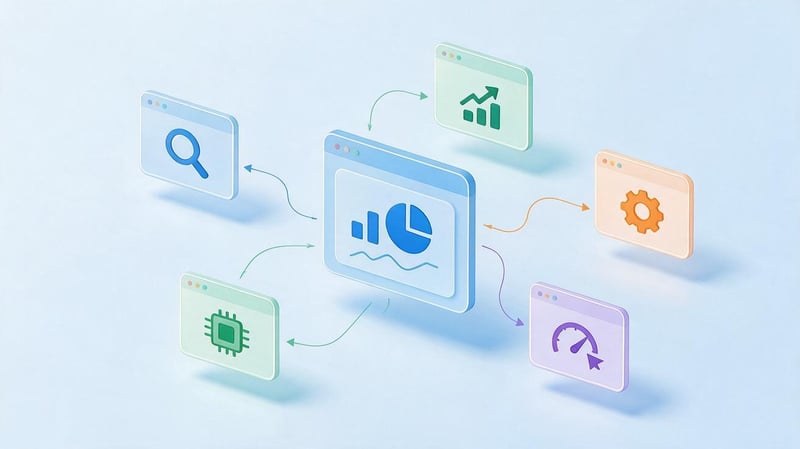
Tools should be selected based on a specific task. Google helps you see actual search results, SEO services evaluate visibility and links, advertising libraries display creatives, and technical services help check the platform and speed.
There's no need to collect the same data across five paid systems. For most projects, one primary SEO service, Google, advertising libraries, and a few free technical tools are sufficient.
| Tool | What to use for | What data you get | Access |
|---|---|---|---|
| Search for competitors and pages | Search results, ads, intent | Free | |
| Google Trends | Comparison of interest in topics | Demand dynamics | Free |
| Ahrefs | SEO and links | Queries, pages, donors | Paid |
| Semrush | SEO and advertising | Visibility, keywords, ads | Paid |
| Serpstat | Semantics and competitors | Keywords, pages, positions | Paid |
| SE Ranking | Positions and competitors | Visibility, queries, pages | Paid |
| Similarweb | Traffic estimation | Channels and audience | Freemium |
| Screaming Frog | Technical audit | URL, meta tags, links | Freemium |
| PageSpeed Insights | Speed | Core Web Vitals and Diagnostics | Free |
| Meta Ads Library | Meta Advertising | Active creatives and texts | Free |
| BuiltWith | Website technologies | CMS, services, integrations | Freemium |
After collecting the data, it's best to consolidate it into a single table. This makes it easier to spot patterns and avoid losing important findings among dozens of tabs and exports.
How to present the results of competitor analysis?
It's more convenient to store your work in Google Sheets or Excel. Each row can hold one competitor, and the columns can hold comparison parameters, links to examples, comments, and tasks. This structure is suitable for both a one-time audit and regular updates.
It's important to distinguish between fact, conclusion, and action. Fact: a competitor has a filter by material. Conclusion: this parameter helps shoppers choose products in this category. Action: check demand and add a similar filter if it's truly useful to our customers.
What data should be added to the table?
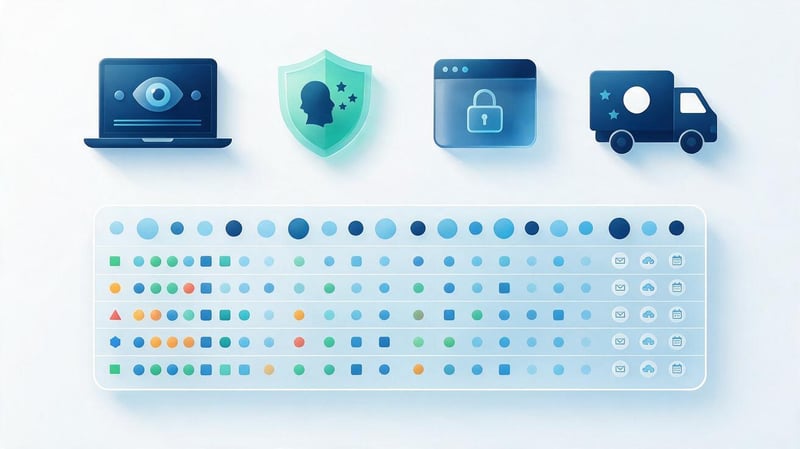
The minimum set includes URL, product selection, prices, unique selling proposition (USP), delivery, payment, catalog structure, UX, SEO, advertising, social media, reviews, strengths, and weaknesses. For each discovery, it's helpful to save a link or screenshot and the date of review.
After collecting the facts, add separate columns for idea, priority, responsible party, and status. This turns the spreadsheet into a working document that can be shared with an SEO specialist, marketer, developer, or content team.
How to identify the strengths and weaknesses of competitors?
Avoid phrases like “good design” or “weak SEO”. They're too subjective and don't provide any guidance on what to do next. Record your observations more specifically: “the category has a size filter”, “return policies are available from the product page”, “the brand page is gaining organic visibility”.
Record weaknesses in a concrete manner: “Checkout requires mandatory registration”, “No information about delivery times”, “Category titles are duplicated”, “Mobile filter obscures the apply button”. These types of notes are easier to review and turn into actionable steps.
How to prioritize after analysis?
For each idea, evaluate the potential impact, effort, implementation costs, and connection to business goals. Quick changes with clear benefits should be prioritized over complex projects that require months of development and lack proven demand.
It's helpful to use a simple priority matrix. The ratings below are tentative and reflect the principle, not the actual results of a specific store.
Sample priority chart:
| Task | Priority |
|---|---|
| Add a missing SEO category | 100% |
| Simplify the mobile filter | 100% |
| Add delivery information to cards | 80% |
| Launch a new blog section | 60% |
| Change the platform completely | 40% |
Following this assessment, a work queue is created with task owners, deadlines, and KPIs. For SEO, this could be visibility and organic traffic, for UX, completed orders, and for content, category click-throughs and engagement.
What mistakes are made when analyzing competitors?
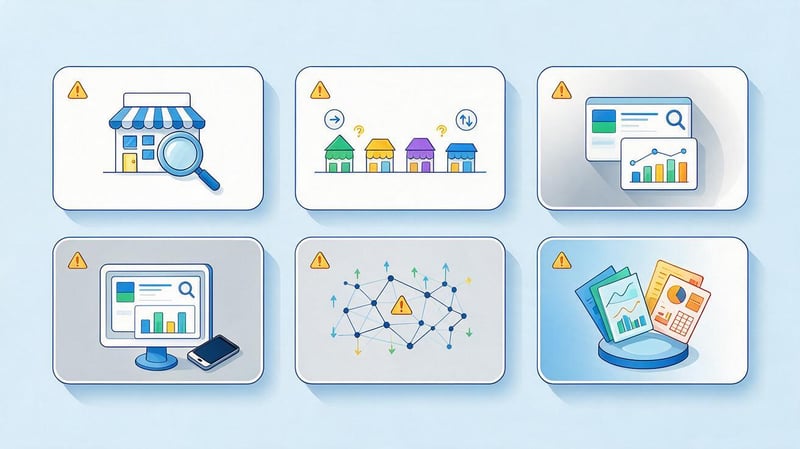
A common mistake is to take a single market leader and copy their solutions without checking them against your own audience. Large businesses may have different budgets, logistics, product ranges, and brand recognition. It's more useful to compare several direct competitors and use the leaders separately as a source of industry benchmarks.
The second problem is collecting a lot of data without a clear outcome. A table of hundreds of indicators means nothing if there's no actionable list after analysis. Every significant finding should answer the question of what exactly to check or change on your website.
Typical errors also include:
- comparison of incomparable stores by price, audience or geography, which makes the conclusions inaccurate;
- focusing solely on SEO without checking the product range, advertising, service, and user experience;
- ignoring the mobile version, although the majority of buyers may come from smartphones;
- trusting third-party traffic and advertising budget estimates as accurate internal data;
- lack of a review date, allowing old promotions and pages to continue to influence decisions.
After creating the list, it's worth reviewing the initial competitor sample and removing sites that prove irrelevant. This reduces noise and makes the final recommendations significantly more accurate.
How to use the results of competitive analysis?
The final step is to translate your observations into a concrete plan. If several competitors have a specific category with significant demand, you need to check the semantics and product range. If customers frequently complain about difficult returns, it's worth revising your own policies and communication methods.
Conclusions for UX, advertising, and content work in the same way. The identified pattern is first tested against our own data, then a hypothesis is formulated, a person is assigned responsibility, and a measurable result is identified. This process reduces the risk of implementing someone else's solutions without clear benefits.
An example of a simple chain of actions:
- Competitors are getting traffic to individual brand pages, but the site doesn't have such pages.
- The team is assessing demand, product range, and the feasibility of creating fully functional landing pages.
- Once the demand is confirmed, URLs, meta tags, content, and internal linking are prepared.
- After indexing, positions, organic traffic, and product clicks are tracked.
After such a review, the table turns into a website development plan. Competitor analysis is most useful when the team identifies a specific challenge, understands its cause, and can verify the results after implementation.
It's helpful to conduct an online store's competitor analysis using a unified system: select comparable projects, compare product range, prices, UX, SEO, advertising, and service, and then transform these observations into testable tasks. This approach helps identify real market patterns and avoid wasting resources on random ideas.
Order a competitive SEO analysis from Seo-Gen to receive an analysis of search results, website structure, semantics, advertising, and growth points, along with a ready-made task list for SEO, content, marketing, and development.


