SWOT analysis of competitors: how to conduct it?


Competitors rarely differ solely in price or service offerings. One has a stronger brand, another has a more user-friendly website, a third excels in service speed, and a fourth is quicker to recognize changes in demand. When comparing companies without a unified system, conclusions quickly degenerate into subjective observations.
A SWOT analysis of competitors helps organize collected data into a clear structure and understand each player's position relative to the market. The method reveals a business's strengths and weaknesses, as well as external opportunities and threats. The results can then be used to assess competitiveness, positioning, marketing strategy, and change planning.
What is a SWOT analysis of competitors and why is it needed?
A SWOT analysis is based on four groups of factors: Strengths, Weaknesses, Opportunities, and Threats. The first two relate to the company's internal state, while the latter describe the impact of the market, technology, demand, legislation, new entrants, and other external factors.
When analyzing competitors, this model helps compare companies using the same logic. Marketers gain a structured picture of how a competitor retains customers, where they are losing ground, what market changes could strengthen their business, and what factors pose risks.
The results are useful when developing positioning, revising pricing policies, launching products, and identifying growth opportunities. SWOT is best considered alongside actual data on the product, service, marketing, reputation, and audience behavior.
How does a SWOT analysis of competitors differ from a regular SWOT analysis?
A classic SWOT analysis is often developed for one's own company. The team evaluates internal resources, processes, products, strengths, and limitations, while simultaneously examining the external environment. In competitive research, the same logic is applied to other market participants, after which the results are compared.
The difference also manifests itself in data sources. For your own company, you can obtain internal statistics, financial indicators, customer inquiries, and sales data. For competitors, you often have to work with publicly available information: websites, prices, advertising, reviews, job openings, public reports, product range, and brand behavior in the market.
The main value emerges after comparing multiple matrices using common criteria. This reveals which characteristics truly distinguish a company from its competitors, and which have long been the industry standard.
When is a SWOT analysis of competitors particularly useful?
This type of analysis is useful before launching a new product, entering a new region, or changing positioning. It also helps to understand the situation when sales are declining, competitors are rapidly growing, or traditional advertising arguments no longer distinguish the company from other market players.
A SWOT analysis of competitors is also used when developing a marketing strategy. For example, a business can compare product range, prices, delivery terms, reputation, and promotion channels to determine where there is real room for differentiation.
The method is especially useful in the following situations:
- the company is entering a new market and does not yet have a good understanding of the balance of power between the main players;
- the business revises the product, plans, service or pricing policy after changes in demand;
- a strong competitor has entered the market with a new offer or an aggressive advertising strategy;
- the marketing team is looking for benefits that are important to the client and are currently poorly represented by other companies;
- management wants to test the business's competitiveness before expanding, launching a new business line, or making major investments.
After this analysis, the team has a basis for concrete decisions. The findings can be linked to product, marketing, sales, service, and website development objectives.
Answers to your questions
What is a SWOT analysis of competitors?
A SWOT analysis of competitors is a systematic assessment of the strengths and weaknesses of selected companies, along with external market opportunities and threats. This method is used to compare competitors in the same niche using a common logic.
Strengths and weaknesses describe a company's internal characteristics. Opportunities and threats arise in the external environment and can affect multiple market participants simultaneously.
Practical results emerge after comparing multiple matrices. This analysis helps identify competitive advantages, unmet audience needs, risks, and areas for further evaluation.
How many competitors should be analyzed using SWOT?
There's no single number, as markets vary in size and structure. It's helpful to first compile a broad list of companies and then select a few of the most significant direct competitors for detailed research.
Analyzing too many players in depth usually degrades the data quality. For the remaining companies, you can maintain a shorter comparison table and refer back to them as needed.
The main selection criterion is related to real overlap in audience, product, geography, and price segment. Brand recognition alone does not make a company a major competitor.
What data is needed for a competitor SWOT analysis?
The minimum set includes the product, prices, purchase terms, service, product range, website, marketing, reviews, and the company's market position. The exact list depends on the niche and the purpose of the research.
For an online store, delivery, returns, and product availability are of great importance, while for a SaaS product, features, integrations, pricing, support, and user-friendliness are more important.
It's advisable to link all significant conclusions to their sources. The fewer assumptions used when filling out the matrix, the more useful subsequent decisions will be.
How does SWOT analysis of competitors differ from competitive analysis?
SWOT describes internal and external factors in four groups. Competitiveness analysis is broader and may additionally include scoring models, quantitative indicators, audience research, market share, and other methods.
SWOT is well suited for systematizing observations and identifying strategic connections. For a precise comparison of multiple companies, it is often supplemented with a common criteria table or weighted assessment.
The choice of method depends on the task and the available data. If you need to understand the reasons for differences between companies, a final assessment without a breakdown of the factors will not be sufficient.
Is it possible to conduct a SWOT analysis of competitors on your own?
Yes, if the team understands the purpose of the study and can collect sufficient open data. Most information is available on websites, in advertisements, catalogs, reviews, social media, and other public sources.
The main challenge is objectivity. People often notice facts that confirm their existing opinions about a competitor, so standardized criteria and keeping sources help reduce the influence of subjective assessments.
For complex B2B markets, publicly available information is sometimes insufficient. In such cases, the analysis is supplemented by interviews, customer research, and data from specialized services.
How often should you update your competitor SWOT analysis?
There is no fixed timeframe for all markets. The analysis should be revised following significant changes in the product, price, demand, legislation, technology, or the composition of key competitors.
In rapidly developing markets, data can become outdated within a few months. In stable industries, some factors remain relevant for much longer.
It's more convenient to focus on events rather than just the calendar. The launch of a strong competitor or a change in consumer behavior is usually more important than the formal date of the previous study.
What to do after creating a SWOT matrix?
First, you need to compare the matrices of several competitors and identify the factors that truly influence customer choice. Then, you select priority growth areas, risks, and competitive advantages.
The next step is to translate the findings into verifiable actions. For each task, an owner, a deadline, an expected outcome, and a metric for assessing the impact are identified.
After some time, the hypotheses are tested against actual data. If the results are not confirmed, the decision is revised and the initial assumptions are updated.
How to prepare for a SWOT analysis of competitors?
Don't fill out the four boxes immediately after opening a competitor's website. First, you need to define the purpose of the research, select companies for comparison, and compile a list of criteria by which each player will be evaluated.
If this step is skipped, the SWOT quickly becomes filled with random observations. One competitor is evaluated based on price, another on advertising, a third on website design, making the resulting table poorly suited for comparison and decision-making.
Before beginning, it's a good idea to document the research date and data sources. The market is changing, so some conclusions may become outdated after a few months.
Step 1. Determine the purpose of the analysis
The objective determines the depth of research and the range of data. For a product launch, product range, price, target audience, and positioning are important, while a marketing overhaul will require a more detailed analysis of advertising messages, content, search visibility, and acquisition channels.
The wording should be specific. Instead of a general goal of “studying competitors”, it's better to ask: why do buyers choose the three largest companies in the market, what advantages do they offer, and where are the unmet needs of the audience?
Other possible goals look like this:
- find the factors that allow a competitor to maintain a higher price;
- identify the weaknesses of the main market players' offers;
- compare service, product range and purchase conditions before changing your own product;
- find positioning options for a new brand;
- check which competitive advantages are really important to buyers;
- assess the risks before a company enters a new region.
Once you've set your goals, it's easier to decide which sources are needed and how deeply to research each market participant.
Step 2. Identify your main competitors
It's helpful to first compile a broad list of companies competing for the same audience or addressing a similar need. Then, select a few of the most significant players for a detailed SWOT analysis.
The number depends on the market size and the objective. For a thorough assessment, it's usually more convenient to compare several key companies using a single table than to cover dozens of websites in a superficial manner without sufficient data.
When choosing, consider overlaps in product, audience, geography, price segment, and sales channels. If a company operates in multiple verticals, the list of competitors may differ for each product.
Direct competitors
A direct competitor offers a comparable product to a similar audience and operates in the same market segment. For example, two dental clinics in the same city with similar services would be direct competitors if they target the same patient group.
These companies are usually prioritized during a detailed SWOT analysis. They make it easier to compare prices, service, product selection, warranties, website, advertising messages, reviews, and purchase terms.
However, formal category matching is not enough. A premium brand and a discounter may sell the same product but operate with different customer expectations, so the comparison will require adjusted criteria.
Indirect competitors
Indirect competitors meet the same need with a different product, format, or service method. For example, in-person courses may compete with online schools, and a specialized online store may face marketplaces where customers can find a similar product range.
Such companies are useful for analyzing audience behavior. They demonstrate alternative solutions to customer problems and are sometimes able to change customer expectations faster than direct competitors.
Indirect players don't necessarily need to be analyzed in the same depth as the main direct competitors. It's enough to determine what share of demand they capture, what attracts their audience, and what advantages they have that can impact the market.
Potential competitors and substitute products
Potential competitors may not yet be operating in a specific niche, but they have the resources to quickly enter. These include large chains, marketplaces, tech companies, international brands, or adjacent services that can add the desired service without completely overhauling their business.
Substitute products also influence the competitive landscape. Consumers may abandon a familiar product if a new technology or format solves the same problem faster, cheaper, or more conveniently.
These factors are especially useful in the Threats section. They help identify risks that aren't currently present among current direct competitors but that could change the market in the near future.
What data should you collect about your competitors before conducting a SWOT analysis?
The quality of a SWOT analysis depends directly on the quality of the underlying data. Statements like “strong brand”, “good service”, or “weak marketing” are almost useless if the team doesn't understand the underlying observations.
Sources can include websites, catalogs, public price lists, reviews, advertisements, social media, apps, public reports, interviews, job postings, and search results. It's best to use the same set of criteria for each company and document links to these sources.
It's more convenient to collect the data in a single table. Then, before completing the SWOT, you can clearly see where competitors differ significantly from each other.
Marketing and positioning
Marketing analysis reveals the associations and needs competitors are trying to tap into in the audience's minds. This is done by examining unique selling propositions, landing page headlines, advertisements, content, promotions, and social media posts.
It's also useful to look at the arguments most players use. If almost everyone promises quality, professionalism, and a personalized approach, such language is of little use in distinguishing oneself.
The analysis tracks acquisition channels, search engine optimization, contextual advertising, targeting, email marketing, partnerships, and social media activity. The depth of analysis depends on the goal and data availability.
Website and user experience
The competitor's website shows how the user is guided from initial contact to an inquiry or purchase. It's important to examine the structure, navigation, mobile version, product or service cards, forms, contact methods, sales blocks, and the visibility of key CTAs.
It's helpful to walk through a typical user journey yourself. Try finding the service you need, comparing options, finding the price, submitting an inquiry, and finding the return or warranty policies.
Analyzing competitors' websites also helps identify which questions the market already considers essential. If most strong players explain timelines, prices, and the process in detail, the lack of such information on your own website can undermine the perceived appeal of your offering.
Reputation and feedback
Reviews reveal what aspects of a product or service customers notice after actual interaction. It's worth studying both positive and negative comments, as both groups help understand audience expectations.
It's helpful to note recurring themes. If customers across different platforms regularly praise delivery speed, this factor may be a strength. If complaints about support or returns are common, this suggests a need to further investigate a potential weakness.
Don't turn a single emotional review into a conclusion about a company. It's more reliable to look for repeating signals and compare them with other public data.
Market position
With publicly available information, you can consider the company's geographic presence, number of branches, partnerships, brand awareness, sales channels, and expansion rate. This data helps understand the company's scale and capabilities.
However, facts must not be replaced by assumptions. The lack of published revenue or market share does not provide grounds for inventing figures or drawing confident conclusions based on indirect evidence.
It's better to directly note where information is insufficient. SWOT remains useful even without closed financial statements, as long as the conclusions are based on verifiable observations.
Product, product range, and prices
First, study the product itself. You need to understand what categories and services the competitor offers, how broad their product range is, what pricing plans are available, and which customers the different offerings are aimed at.
The price is reviewed in conjunction with the purchase terms. A lower price may include a limited set of features, while a higher price may include delivery, a warranty, consultations, support, or additional services.
It is useful to compare:
- main products, services and pricing plans of competitors;
- minimum and maximum cost for comparable offers;
- discounts, loyalty programs and package deals;
- methods of payment, delivery, return and receipt of services;
- warranties, additional services and restrictions;
- depth of product range and availability of specialized solutions.
After reviewing the list, it's worth checking which differences the customer actually notices. Some characteristics appear significant within the company, yet have little impact on the purchasing decision.
How to conduct a SWOT analysis of competitors?
After collecting the information, the data is divided into four groups. It's best to create a separate matrix for each key competitor and then compare the results in a common table.
The basic structure looks like this:
| What we evaluate | Positive factors | Negative factors |
|---|---|---|
| Internal environment | Strengths | Weaknesses |
| External environment | Opportunities | Threats |
The main difficulty lies in the correct distribution of factors. A company can change internal characteristics through its own decisions, while external ones emerge in the marketplace regardless of its actions.
Lead SEO specialist — Gennady
I wouldn't start a SWOT analysis of competitors by filling in the four quadrants. First, you need to align all players with the same comparison criteria: product, price, service, website, reputation, promotion, and other metrics important for a specific niche. Once the facts are collected, you can categorize them into Strengths, Weaknesses, Opportunities, and Threats. Otherwise, the matrix quickly becomes littered with subjective assessments like “strong marketing” or “poor service”, which are difficult to use for decision-making.
Strengths – the competitor’s strengths
Strengths include internal characteristics that help a competitor attract customers, retain them, or operate more sustainably than other companies. These could include a well-known brand, strong distribution, a convenient product, a wide product range, a developed network, or a high level of service.
A good statement should be specific and verifiable. Instead of “good website”, it's better to state that users can place an order without registering, quickly find the price, and get a shipping estimate before proceeding to checkout.
A strength is only meaningful relative to the needs of its audience and other market participants. A characteristic that is the same for most companies rarely creates a significant competitive advantage.
What questions to ask?
To identify strengths, you need to look at the company through the customer's eyes and simultaneously compare it to the market. Questions help you go beyond the first impression of a website or advertising message.
The following list can be used for analysis:
- why buyers might choose this competitor over similar companies;
- what characteristics of the product are significantly stronger than the market level;
- does the client receive more convenient service or better purchasing conditions;
- does the company have a strong brand, network, technology or in-house expertise;
- what benefits regularly appear in positive reviews;
- whether a competitor is able to scale a product or service faster than others.
After the list, it's advisable to support each thesis with concrete evidence. This verification reduces the influence of the analyst's personal preferences.
Weaknesses – the competitor's weaknesses

Weaknesses refer to the internal limitations of a business. They may be related to the product, price, service processes, geography, product range, technology, website, or customer support.
A weakness has practical significance when it impacts a customer's choice or experience. A poorly chosen shade of a brand color hardly merits a place in a SWOT analysis unless it hinders purchases or negatively impacts brand perception.
It's important to check separately whether your own company can exploit the identified weakness. A competitor's problem, in and of itself, doesn't create an advantage for another business.
What questions to ask?
When identifying weaknesses, it's best to start with recurring issues in the customer journey. Reviews, test inquiries, comparison of terms, and completing the order process yourself are especially helpful here.
The following questions can be checked:
- what problems customers most often complain about;
- where a competitor loses out to other companies in terms of price or conditions;
- what popular features, categories or services are missing;
- whether it is difficult to find important information or place an order;
- whether there are restrictions on geography, opening hours or payment methods;
- which service stages create unnecessary steps for the client.
After the list is complete, it's time to separate significant limitations from minor flaws. Priority is given to factors that actually impact sales, retention, or trust.
Opportunities – the competitor's opportunities
Opportunities arise in the external environment and can help a company grow if it manages to seize them. The mere existence of an opportunity does not necessarily mean a competitor will benefit.
This group includes the growth of individual segments, changes in consumer behavior, new sales channels, technological changes, the weakening of other market participants, or the emergence of new demand.
For example, the growth of online orders will be an external opportunity for many companies in the industry. A well-developed delivery system is an internal strength, helping them capitalize on this opportunity faster than others.
What is considered an opportunity?
An opportunity must originate outside the company and create a potentially beneficial change. Therefore, within this block, it's important to avoid describing the business itself.
Typical opportunities include:
- increasing interest of buyers in a particular category of goods or services;
- development of a new sales channel or service format;
- the emergence of technologies that reduce costs or speed up processes;
- demand goes beyond the current region;
- reduction in activity of a major competitor;
- changing audience habits in favor of the company's product.
Once an opportunity has been identified, it's useful to assess which competitors are best positioned to exploit it. This is where SWOT analysis comes into play alongside competitiveness analysis.
Threats – threats to a competitor
Threats also relate to the external environment but can worsen a company's position. These include the emergence of new competitors, substitute products, legislative changes, declining demand, rising costs, or technological shifts.
When filling out this section, it's important not to duplicate weaknesses. For example, an inconvenient checkout process is an internal weakness, while a shift in customer expectations toward a fully automated service could be an external threat.
Threats should be assessed based on their likelihood and potential impact. This approach helps distinguish real risks from events that are theoretically possible but have little impact on current strategy.
How to assess competitiveness using SWOT analysis?
A SWOT analysis of competitiveness requires comparing several companies using the same criteria. A single matrix describes a specific player well, but without comparison, it's difficult to understand how much stronger their advantages are than the market level.
To begin, a single comparison table is created. It includes the characteristics that truly influence a customer's choice: price, product, service, selection, speed, guarantees, website, reputation, and other niche-specific parameters.
Example structure:
| Factor | Our company | Competitor A | Competitor B | Competitor C |
|---|---|---|---|---|
| Price | medium | high | low | medium |
| Product range | wide | medium | wide | narrow |
| Service | fast | medium | slow | fast |
| Brand | developing | well-known | medium | niche |
| Delivery | 1–2 days | 1 day | 2–4 days | 1–3 days |
| Website | convenient | convenient | overloaded | simple |
| Reputation | stable | strong | mixed | stable |
| Marketing | active | active | moderate | niche |
Values in a real study must be supported by data. The table provides a comparison format and does not replace data collection.
Compare SWOT matrices of several competitors
After completing the individual matrices, look for repeating and unique factors. For example, a high price may be common among several market leaders, while only one company offers in-house same-day delivery.
Recurring characteristics help understand market standards. Unique strengths reveal where a specific player has gained a significant advantage, while recurring weaknesses may indicate an unmet audience need.
Comparisons also help avoid erroneous conclusions. If a company appears expensive in isolation from the market, but most of its direct competitors operate in the same price range, price alone may not be a significant weakness.
When is scoring needed?
A scoring system is convenient when the number of factors is large and several companies need to be compared on a single scale. For example, each criterion can be rated from one to five points after defining clear rules.
For a more precise analysis, criteria weighting is sometimes introduced. Price might be 20%, service 25%, product range 15%, speed 20%, and reputation 20%, if this structure reflects the actual priorities of buyers.
Example of the final scale:
| Criterion | Weight | Company | Competitor A | Competitor B |
|---|---|---|---|---|
| Price | 20% | 4 | 3 | 5 |
| Service | 25% | 5 | 4 | 2 |
| Product range | 15% | 4 | 3 | 5 |
| Speed | 20% | 5 | 5 | 3 |
| Reputation | 20% | 4 | 5 | 3 |
Numbers cannot be assigned arbitrarily. Without transparent criteria, scoring creates the appearance of precision, while remaining the team's subjective opinion.
How to find real competitive advantages?
A strong characteristic becomes a competitive advantage when it's important to the buyer and significantly differentiates the company from its competitors. Therefore, the list of advantages should be tested against the needs of the target audience.
It's helpful to look for the intersection of three conditions: the customer values the feature, competitors perform poorly on it, and the company is capable of consistently delivering superior results. For example, fast support can be an advantage if response speed truly influences customer choice and is supported by internal business processes.
Once this selection is completed, the statements can be used in the product, positioning, and marketing strategy. They must be supported by real customer experience, otherwise the promise will quickly become unworkable.
SWOT analysis of competitors: an example
An example of a competitor SWOT analysis is easier to walk through using a hypothetical business, so as not to attribute real weaknesses to specific companies. Let's take an online home goods store that operates throughout Ukraine and wants to improve its positioning.
The company sells tableware, textiles, and storage products. Its main competitors are two large online stores with similar audiences, product ranges, and price ranges.
The purpose of the study is to understand where a store can strengthen its offering without direct price dumping.
Initial data
The hypothetical store has been in business for three years, has a wide selection, and its own warehouse. Delivery to major cities takes one to two days, but brand awareness is still significantly lower than that of market leaders.
Competitor A is more well-known and offers more product categories, but the average price is higher. Competitor B actively offers discounts, but reviews regularly include complaints about slow customer support responses and difficult returns.
Before completing the matrix, the team compares prices, delivery terms, product selection, reviews, website, payment methods, and promotional offers. This data forms the basis for subsequent conclusions.
Example of a competitor's SWOT matrix
As an example, let's consider a hypothetical competitor A. Its strengths and weaknesses relate to the internal characteristics of the business, while its opportunities and threats are associated with market changes.
| Strengths | Weaknesses |
|---|---|
| high brand recognition | higher average price |
| wide product range | some categories are overloaded with similar products |
| well-developed delivery | support responds more slowly during peak hours |
| a large number of reviews | the return procedure is described in a complicated manner |
Internal characteristics show the current position of a competitor, and the following factors describe changes in the external environment that can strengthen or weaken its position.
| Opportunities | Threats |
|---|---|
| growth in online sales of household goods | large marketplaces getting stronger |
| expansion of regional delivery | decline in purchasing power |
| development of private labels | rising logistics costs |
| demand for environmentally friendly products | increased price competition |
This table doesn't yet provide a ready-made solution. The next step is to connect the observations with the company's own actions.
What conclusions can be drawn from the example?
The first conclusion concerns price. Competing solely on discounts is risky, as large players typically have more opportunities for price promotions and better purchasing terms.
The second conclusion is related to service. If customers are truly complaining about customer support and complicated returns, your own store can test the demand for faster support and clearer returns policies.
From the matrix, one can also obtain several working hypotheses:
- strengthen communication around the speed of support and transparent returns;
- check the demand for categories that are only superficially represented by large competitors;
- develop fast regional delivery where the economics of ordering remain acceptable;
- do not repeat the pricing strategy of marketplaces without calculating margins;
- test a separate selection of eco-friendly products after checking real demand.
Every hypothesis requires confirmation with data and testing. SWOT helps determine the direction of testing, but the final decision is made after analyzing the economics and customer reaction.
How to turn a SWOT analysis of competitors into a strategy?
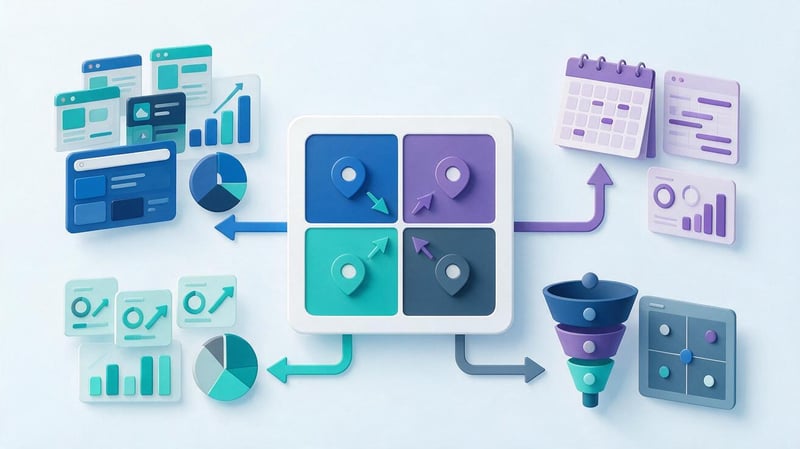
After completing the tables, you need to connect the strengths and weaknesses with external opportunities and threats. Four dimensions are often used for this: SO, ST, WO, and WT.
This approach helps move from market description to action. The team sees which advantages should be exploited more actively, where protective measures are needed, and what internal problems are preventing them from taking advantage of favorable market changes.
The result should be a limited set of priorities. If, after analysis, fifty equally urgent tasks are identified, prioritization has not actually been accomplished.
SO Strategy
SO links the company's strengths to external opportunities. For example, the business already has its own logistics system, and in the regions, demand for fast delivery of certain goods is growing.
In such a situation, strong internal expertise helps to exploit market opportunities more quickly. A possible solution would be to launch delivery to new cities after testing demand and service costs.
When choosing SO solutions, it's important to evaluate the company's resources. Even an attractive opportunity shouldn't automatically be prioritized if its implementation requires disproportionate costs.
ST Strategy
ST highlights the strengths that help mitigate external threats. For example, the market is facing increasing price competition, yet the company boasts strong service, a high repeat business rate, and a solid reputation.
In this case, the strategy may rely on customer retention, loyalty programs, service, and additional value instead of constant price reduction.
This approach is especially useful in mature markets where most companies offer similar products. A well-developed strength helps reduce dependence on a single competitive factor.
WO Strategy
WO links the company's weaknesses to opportunities it hasn't yet fully exploited. For example, the online sales market is growing, but an inconvenient mobile version of the website prevents users from placing orders on smartphones.
Then, improving the mobile interface becomes clearly justified. The team eliminates a specific internal limitation that prevents them from realizing existing demand.
Priority here is given to weaknesses with a direct impact on sales, retention, or customer experience. Cosmetic flaws without a noticeable impact can be left for a later stage.
WT Strategy
WT examines situations where internal weakness is exacerbated by an external threat. For example, a company depends on a single supplier, while the market faces unstable logistics and rising procurement prices.
This combination requires defensive action. Businesses can seek alternative suppliers, revise inventory, contract terms, or product range to reduce dependence on a single source.
These tasks are often given high priority due to the potential damage. However, decisions should be made after assessing the likelihood of the threat and the cost of preventative measures.
Create an action plan
After strategic conclusions have been reached, each point should be transformed into a task with an owner, deadline, and outcome criteria. The wording “improve service” is too broad and doesn't indicate exactly what the team should do.
The worksheet might look like this:
| Action | Priority | Responsible | Deadline | Result criterion |
|---|---|---|---|---|
| reduce support response time | high | support manager | 30 days | median response time of 10 minutes or less |
| simplify the return page | medium | UX team | 21 days | fewer inquiries about return terms |
| test the new category | medium | product team | 45 days | test sales results |
After launching tasks, results need to be measured. If a hypothesis isn't supported by the data, it's revised, regardless of how convincing it appeared in the SWOT.
What mistakes are made when conducting SWOT analysis of competitors?
Most errors are not related to the matrix itself, but to the quality of the data and the method of interpretation. A team can draw the four squares correctly and still obtain a weak result if the initial conclusions are based on gut feeling.
The second common problem arises after analysis. The spreadsheet is ready, participants have agreed on the findings, but specific changes to the product, marketing, or service are not implemented.
Below are listed the errors that most significantly reduce the practical value of the study.
Using assumptions instead of data
The assertion “a competitor has poor service” requires confirmation. This could be based on repeated customer complaints, test inquiry results, slow response times, or other observable indicators.
A single negative comment or an analyst's personal impression doesn't provide a sufficient basis for conclusions. The more important a factor is for a strategy, the more independent evidence it's advisable to gather.
It's helpful to save references, dates, and brief notes for each significant observation. This allows you to return to the source and check the relevance of the data the next time you update your analysis.
Confusing internal and external factors
Strengths and weaknesses describe the company's internal state. Opportunities and threats relate to the market and arise independently of specific business decisions.
For example, high brand awareness is a strength, and growing demand for the category would be an opportunity. Slow delivery is a weakness, and rising logistics costs could be a threat.
If these groups are mixed, the further strategy becomes illogical. The team begins to assign the same factors to multiple blocks at once and arrives at duplicate conclusions.
Analyzing too many competitors
A large list creates a sense of depth in the research, although it often compromises quality. There's not enough time to cover dozens of companies, so the analyst limits themselves to a superficial review of websites and a few obvious characteristics.
It's more practical to first map the market and then select the key players for in-depth research. The rest can be kept in an overview table and revisited when a specific need arises.
This approach also simplifies regular data updates. A detailed SWOT for several key companies is easier to keep current.
Using different comparison criteria
Comparisons become meaningless when one player is judged by price and product range, another by design, and a third by advertising. A common set of criteria is needed even before collecting information.
The list should take into account the specifics of the niche and the purpose of the research. For an online store, product selection, price, delivery, returns, and website are important, while for a B2B service, expertise, support, integrations, and contract terms may be more important.
Once the criteria are selected, the same logic is applied to all companies. Then, the differences in the final table reflect the market, not the method of data collection.
Copying competitors' advantages
The advantage you've discovered shouldn't be mechanically transferred to your own business. It can work thanks to a different brand, audience, economics, processes, or positioning.
If a competitor successfully offers free shipping, you first need to understand its impact on conversion, margins, and repeat purchases. Without such calculations, copying could undermine the product's economics.
It's better to look for the reasons why the solution is attractive to the client. After that, the company can develop its own solution that fits its resources and strategy.
Not updating the results
SWOT captures the market at a specific point in time. Prices, products, advertising messages, technologies, and consumer behavior change over time, so previous conclusions become less accurate.
There is no universal update interval. The study should be revisited after the entry of a strong competitor, a change in demand, the launch of a new product, a significant price movement, or other events affecting the market.
Rapidly changing niches will require more frequent checks. In a stable B2B market, some factors may persist for much longer.
Filling out the matrix without making decisions
Without further action, a table remains an analytical resource. After discussing the results, select several conclusions that impact the product, marketing, sales, or service.
It's best to link each finding to a testable hypothesis. If the team suspects that customers are unhappy with competitors' complex returns process, they can test more clearly defined conditions and measure audience reaction.
This connects the SWOT analysis to real business objectives. The next time the analysis is updated, the initial hypotheses can be compared with the obtained results.
How to supplement a SWOT analysis of competitors?
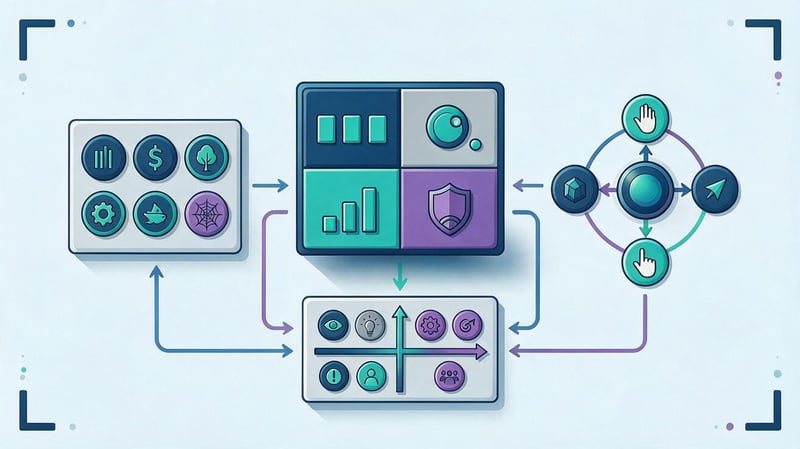
SWOT is useful as a general framework, but certain issues are better addressed by other methods. They help delve deeper into competitive pressures, the macroenvironment, or the relative positions of companies.
The choice of additional method depends on the task. It's not necessary to use multiple models for the sake of increasing the number of tables if the desired answer has already been obtained in the previous step.
Most often, SWOT is supplemented by Porter's five forces, PESTEL analysis and a competitor map.
Porter's Five Forces
Porter's model helps assess industry structure. It considers competition between existing firms, the threat of new entrants and substitutes, and the power of buyers and suppliers.
The method is useful when SWOT reveals general threats, but the team needs to delve deeper into the source of the pressure. For example, the problem may stem not from current direct competitors, but from strong suppliers or the emergence of an alternative product.
The results can be used in the Opportunities and Threats blocks. However, it's best to keep the Porter analysis separate to avoid overloading the SWOT matrix with dozens of similar factors.
PESTEL analysis
PESTEL systematizes political, economic, social, technological, environmental, and legal factors. It is useful for markets where the external environment significantly influences demand or company operations.
For example, legislative changes can impact financial services, and technological advances can rapidly change the software market. Economic factors impact purchasing power and production costs.
PESTEL results help you more accurately fill out the external section of the SWOT analysis. This method is especially useful when entering a new country or a highly regulated industry.
Competitor map
The competitor map shows companies' positions along two selected parameters. The axes can be price and quality, product range and specialization, service level, and automation level.
To create the map, the characteristics that matter to the customer are selected. Companies are then placed relative to each other based on the collected data.
This format helps quickly identify dense and vacant market areas. However, a visually vacant segment doesn't necessarily mean demand, so additional audience testing is necessary before changing positioning.
Competitor SWOT analysis checklist
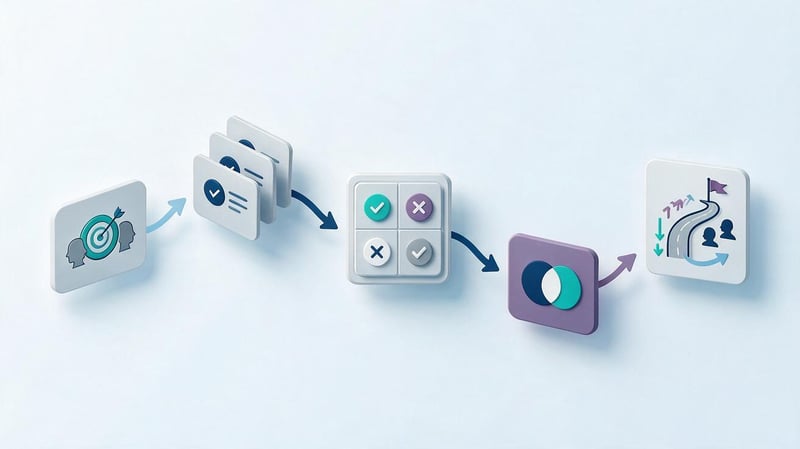
A consistent process reduces the risk of missing important data and simplifies re-analysis after several months. The checklist is conveniently stored alongside competitor tables and source links.
The basic sequence looks like this:
- Identify the specific research objective and the decision for which the data is needed.
- Make a broad list of direct, indirect and potential competitors.
- Select a few key players for a detailed comparison.
- Establish common criteria for evaluating products, prices, services, marketing, and reputation.
- Collect facts from available open sources and save the links.
- Create a separate SWOT matrix for each key competitor.
- Separate internal strengths and weaknesses from external opportunities and threats.
- Compare companies in a single table and find repeating market patterns.
- Highlight competitive advantages, weaknesses, growth points and key risks.
- Translate the findings into tasks with responsibilities, deadlines, and outcome criteria.
- Record the date of your research and update the data after significant market changes.
After going through the list, there should be a clear connection between the original facts and the proposed actions. If there isn't, it's worth revisiting the disputed conclusions and checking the sources.
A SWOT analysis of competitors yields useful results when based on facts and consistent comparison criteria. First, identify competitors, gather data on product, price, service, marketing, and reputation, then categorize the findings into four groups and compare several companies.
After analysis, strengths and weaknesses should be linked to market opportunities and threats. The final stage involves selecting specific actions, responsibilities, deadlines, and performance indicators.
If your company needs a comprehensive competitive analysis for SEO, marketing, or website development, submit an inquiry to Seo-Gen. We'll analyze search results, key competitors' websites, offer structures, and growth opportunities, and then prepare conclusions for further work.


