What is semantic core clustering and how to do it?


After collecting search queries, an SEO specialist receives a list of tens, hundreds, or even thousands of phrases. This list may contain service names, user questions, geo-queries, commercial keywords, and informational topics. Working with such a list without additional processing is inconvenient because it's not yet clear which keywords relate to which page.
Semantic core clustering helps divide the collected semantics into logical groups. For each group, the search intent, appropriate page type, and target URL are then determined. After this processing, the keyword list becomes the working basis for the site structure, content, and internal linking.
What is a semantic core and why is it needed?
A website's semantic core is a set of search queries related to the project's topic, products, services, and informational materials. These phrases demonstrate how users formulate their search needs in Google and which pages can answer them.
Search queries for the semantic core are collected before designing the structure or during its revision. The collected data helps determine demand, identify new directions, prepare landing pages, and distribute topics among existing URLs.
How is the semantic core related to the website structure?
The website structure must reflect actual demand groups if the project expects to attract search traffic. Typically, the work is done in a cascade fashion: first, the website's semantic core is selected, then the list is refined, queries are grouped, and a suitable landing page is assigned to each cluster.
This makes it clearer which categories, services, articles, or filter pages the project needs. A relevance map associates each cluster with a specific URL, and internal linking helps connect thematically related pages within the overall structure.
Answers to your questions
What is semantic core clustering?
Semantic core clustering is the distribution of search queries into groups based on their meaning, intent, and search results similarity. Each cluster is typically associated with one existing or future website page.
This distribution helps design the structure, prepare content, and reduce the risk of cannibalization. After automatic processing, it's advisable to manually check any controversial groups against Google's top 10.
Why is it necessary to group keywords?
Keyword grouping shows which phrases can be promoted on a single page and which require separate URLs. It also helps separate commercial and informational demand, identify content topics, and build internal linking.
Without grouping, a large semantic core remains a simple list of queries. Using it for systematic website optimization is significantly more difficult because the connections between keywords and pages are not defined.
Is it possible to do query clustering for free?
Yes, a small core can be processed manually using Google Sheets, filters, formulas, and search results analysis. This method is more time-consuming, but is suitable for smaller sites and specific subject groups.
To speed up the initial grouping, you can use Seo-Gen's Keyword Clustering Tool. After processing, the resulting clusters should be verified by intent, and any questionable groups should be further compared using Google search results.
How is Soft Clustering different from Hard Clustering?
Soft clustering creates broader groups because queries are typically associated with a central keyword within the cluster. Within such a group, individual keys may have fewer direct intersections with each other.
Hard clustering places stricter requirements on relationships within a group. Clusters are more compact and homogeneous, but some phrases may remain unsorted and require manual processing.
Can clustering be completely trusted to a service?
The automated service significantly speeds up processing of large query sets, but the resulting groups need to be carefully reviewed. Particular attention should be paid to large clusters, mixed intent, and phrases that may require different types of pages.
The final decision is best made after analyzing the SERP and the project structure. The service identifies mathematical or search-based relationships between queries, but it doesn't take into account all the specifics of a specific business.
How many queries should there be in one cluster?
There's no universal number of queries for a single cluster. A group can contain several keywords or dozens of phrases, as long as they describe a common need and can be fully promoted on a common page.
It's important to evaluate the homogeneity of intent, the composition of the search results, and the ability to address the topic without mixing different topics. Cluster size alone doesn't indicate the quality of the grouping.
Should informational and commercial queries be clustered separately?
In most cases, informational and commercial queries require different types of pages. An article answers a user's question, while a commercial URL helps them choose a service, product, or perform a specific action.
Sometimes Google displays mixed results, so the final decision should be confirmed by SERP analysis. If the page types differ significantly, it's better to distribute the queries among separate clusters.
How often should the semantic core be updated?
The semantic core is updated when new services are launched, the catalog is expanded, the structure is changed, and a significant number of new queries appear in Search Console. A check is also necessary if pages begin to compete with each other or lose relevance.
A fixed calendar deadline isn't mandatory for every project. The frequency of updates depends on the site's development pace, seasonal demand, and changes in search results in a particular niche.
What does the semantic core consist of?
The core includes primary keywords, their refinements, word forms, geo-specific queries, and additional user phrases. For each keyword, it's advisable to consider query frequency, search intent, promotion region, and intended page type.
It's also helpful to separately mark commercial, informational, and navigational queries. This tagging simplifies further grouping of keywords and reduces the risk of merging phrases that appear similar but relate to different user tasks.
What is semantic core clustering?

Semantic core clustering is the grouping of search queries by meaning, intent, and similarity of search results. Each resulting cluster contains phrases that can be promoted on a single page without conflicting user needs.
For example, queries like “semantic core clustering”, “what is semantic core clustering”, and “how to create semantic core clustering” typically refer to an informational page. The phrase “semantic core clusterer” may already lead to an online service, so its intent should be verified separately.
How is clustering different from regular keyword grouping?
Conventional keyword grouping is often based on matching words. If the same terminology appears in multiple queries, the system or a specialist places them together. This approach is suitable for pre-sorting large datasets, but it poorly accounts for actual search engine behavior.
Query clustering uses additional features: search intent, page type in SERPs, URL overlap in Google's top 10 search results, and semantic proximity. Therefore, keyword grouping is usually the first filter, followed by more precise verification.
Why do we need query clustering?
Clustering helps determine how many pages a website requires and which queries each should cover. Without semantic grouping, some keywords may end up on inappropriate URLs, and related pages may begin to compete with each other in organic search results.
High-quality clusters are used when designing a website structure, preparing a content plan, assigning tasks to copywriters, and analyzing existing landing pages. They also reveal where a website is missing a page that meets a specific user need.
Site structure
After clustering, it becomes clear which areas of demand deserve their own pages. For an online store, these might be categories and subcategories; for a service website, individual service areas; for a blog, standalone informational articles.
If multiple clusters have different intents, placing them on a single page is usually impractical. This structure complicates content optimization and makes the page less accurate in answering the user's search query.
Landing page relevance
A single, homogeneous cluster helps to more accurately reveal the page's topic and select appropriate headings, text, meta tags, and internal links. The user receives content that matches their query, and the search engine more easily determines the URL's purpose.
When preparing a text, keywords are distributed naturally, without mechanically repeating identical phrases. The primary query defines the topic of the page, while additional phrases help to explore related questions within the same intent.
Query cannibalization
Cannibalization occurs when multiple URLs on a site compete for the same or nearly identical sets of queries. Google may change the relevant page, distribute signals across multiple documents, or choose a URL the site owner didn't intend to promote.
Semantic core grouping allows you to identify such intersections even before creating pages. For an existing website, clusters help determine which URLs should be combined, reworked, or separated by intent.
Content and specifications for a copywriter
After clustering, the copywriter receives a specific page topic and a clear set of related search phrases. This makes it easier for them to determine the structure of the material, address the main user questions, and avoid trying to fit several unrelated topics into a single article.
This approach is also more convenient for SEO specialists, as each technical task is linked to a specific cluster. They can then manage the Title, Description, H1, H2, H3, LSI keywords, and internal linking within a single task.
Internal linking
Clusters show thematic connections between pages, making them a convenient basis for designing internal links. For example, a large article on the semantic core could link to separate materials on keyword collection, clustering, intent, and website structure.
Links should be useful to the user and relevant to the page content. Placing identical links between all materials in a single section rarely helps understand the true hierarchy of topics.
At what stage should the semantic core be clustered?

Clustering begins after the initial collection and cleaning of search queries. Keyword data is collected from Google Keyword Planner, Google Search Console, SEO services, and competitor analysis, then obvious duplicates, irrelevant phrases, and queries from other regions are removed.
After cleaning, the main intents are identified, clustering is performed, controversial groups are manually checked, and the resulting clusters are distributed by URL. This procedure reduces the amount of garbage and simplifies the processing of unsorted requests.
Semantic core optimization continues even after the website's launch. New keywords appear in Search Console, demand changes, and search results may eventually show different types of pages for previously familiar queries.
What methods of search query clustering exist?
Several approaches are used for grouping, as a single method rarely yields equally accurate results for all topics. A small semantic core can be partially analyzed manually, while larger projects typically utilize query clustering services and additional result validation.
In practice, a combination of several features is most useful. First, queries can be separated by keywords and expected intent, then search results can be checked for overlap and borderline groups can be manually sorted out.
Grouping by words and semantic proximity
Word grouping searches for common query parts, identical lemmas, synonyms, and similar phrases. This method quickly divides large lists into thematic groups and is well suited for initial semantic processing.
The problem arises when there is mixed intent. For example, the phrases “query clustering service” and “what is query clustering” share similar vocabulary, but the former typically implies using a tool, while the latter requires explanatory material.
Clustering by search intent
Search intent indicates the task a user wants to accomplish after entering a query. Informational intent is associated with finding an answer, commercial intent is associated with choosing a product or service, transactional intent is associated with a specific action, and navigational intent is associated with searching for a well-known website or brand.
When clustering, you need to consider user intent along with the query formulation. Semantic proximity helps determine the topic, while intent indicates whether multiple queries can be addressed by a single landing page.
Clustering by Google search results
SERP-based clustering is based on search results analysis. The system retrieves Google results for each query and compares URLs that appear in the top 10. The more similar pages rank for two keywords, the higher the likelihood of shared search intent.
The strength of a connection determines the required number of matches. The specific threshold depends on the topic, region, and chosen tool, so using a universal value for every project is risky.
What is Soft Clustering?

Soft clustering typically forms groups around a single primary keyword. Other keywords are compared to the central keyword, so a cluster can contain keywords that overlap only slightly but are closely related to the primary keyword.
This approach produces larger clusters and reduces the number of unsorted queries. After processing, it's useful to manually check the extreme phrases, especially when a cluster contains several different phrases and potentially mixed intent.
What is Hard Clustering?
Hard clustering uses stricter relationships between queries within a group. Phrases must have sufficient overlap with other cluster members, so the results are typically more homogeneous and granular.
The strict approach is suitable for situations where precise separation of landing pages is essential. However, the number of small clusters and queries without a group may increase, so the final result still requires manual evaluation.
| Method | Peculiarity | When it suits |
|---|---|---|
| Soft | Larger groups around the main phrase | Large cores and pre-splitting |
| Hard | Strict relationship between queries within a group | Accurate distribution across landing pages |
| Manual | The specialist evaluates the meaning and SERP independently | Small cores and controversial groups |
| Mixed | Automatic processing is complemented by manual verification | Most of the working SEO projects |
After selecting a method, it's helpful to save the original data and the results of automated processing. This simplifies re-checking if the site structure changes or new query groups appear.
Mixed clustering method
The hybrid method begins with automated core processing and concludes with manual intent and search results verification. The service quickly analyzes a large list, after which a specialist evaluates questionable clusters and queries that the system has left ungrouped.
This approach is suitable for most commercial and informational projects. Automation saves time on repetitive operations, while manual analysis helps consider the business context, future structure, and actual search results.
Is it possible to cluster queries using AI?
LLM can pre-categorize keywords by topic, suggest cluster names, and determine the expected search intent. Artificial intelligence is especially useful during initial list processing, when you need to quickly identify key topics within a large dataset.
When finalizing the distribution of queries by URL, SERP validation is required. The language model evaluates the semantic meaning of phrases, but it does not replace an up-to-date comparison of Google results for the selected region.
How to cluster a semantic core step by step?

The workflow varies depending on the project size, but the sequence of actions remains similar. First, create a semantic core, then remove obvious junk, and only then move on to automatic or manual grouping.
It's best to save each stage in a separate table or column. This way, the specialist can return to the original list, check deleted queries, and compare the results of different clustering methods.
Step 1: Collect search queries
Google Keyword Planner, Google Search Console, competitor data, and specialized SEO services are used for data collection. The existing website is additionally analyzed for queries that are already receiving impressions and clicks in organic search.
A semantic core selection service speeds up work with large numbers of phrases, but it's advisable to verify the data source. The search volume, region, and relevance of queries should match the market where the project is being promoted.
Step 2. Clean up the semantic core
Before clustering, obvious duplicates, irrelevant queries, product names from other companies, inappropriate regions, and words with different meanings are removed. Stop words and negative keywords help quickly filter out recurring junk in large lists.
High competition shouldn't be used as an automatic reason for deleting a keyword. Even a complex query can be important for a website's structure if it accurately describes a product, service, or significant audience need.
Step 3: Determine the search intent
Each major grouping should be assessed from the user's perspective: what page they expect to see after searching. Sometimes the meaning is clear from the wording, but it's best to immediately check questionable queries in real search results.
The types of pages in the top 10 provide a good guide. If articles rank for one query, while categories or services predominate for another, combining these phrases into a single cluster requires additional verification.
Step 4: Separate commercial and informational requests
Commercial and informational intent often require different pages. The query “search query clustering service” implies access to a functional tool, while the phrase “what is search query clustering” requires a detailed explanation.
Sometimes search results are mixed, so it's not a good idea to strictly determine intent based on keywords alone. The final decision is made after analyzing the pages Google already considers relevant.
Step 5: Specify your region and search engine
SERP clustering should take into account the region where the website will be promoted. For the same query, results for Kyiv, Warsaw, or another country may differ in URL composition and page types.
For Ukrainian SEO projects, Google and the specific target geography are most often analyzed. Geo-dependency is especially noticeable in dentistry, repairs, local services, and other niches tied to a city.
Step 6: Choose a clustering method and strength

The settings depend on the core size and the required grouping precision. Soft clustering produces broader clusters, while strict clustering more often separates similar queries into several independent groups.
A threshold that's too high can fragment the semantics more than the site structure requires. A threshold that's too low creates large groups with mixed intent, so the results should be verified after automated processing.
Step 7: Run automatic clustering
Most services work similarly: the user uploads queries, selects a search engine, region, and grouping parameters, and then runs the analysis. The resulting groups can be exported to a spreadsheet for further review.
Semantic core clustering software is especially useful when working with thousands of phrases. Manually processing such an array is time-consuming and increases the likelihood of random errors during sorting.
Step 8: Sort out ungrouped queries
Unsorted queries shouldn't be automatically considered junk. They may contain rare phrases, independent intents, or new topics that the service couldn't reliably associate with existing groups.
Every significant phrase must be manually verified. After verification, the query is assigned to the appropriate cluster, placed in a separate group, or deleted if it is truly irrelevant to the project.
Step 9: Check disputed clusters manually
After automatic processing, it's useful to open the largest and most heterogeneous groups. Clusters where different types of services, commercial and informational phrases, or multiple geographic queries are located nearby require special attention.
Manual verification demonstrates how closely the technical result matches the actual website structure. It takes into account the business logic, product range, content capabilities, and existing URLs of the project.
Checking the intersection of the TOP-10
To check, two boundary queries are selected within the same group and compared in Google's top 10. If most of the pages match, the search engine likely considers the queries to be similar in intent.
When there's minimal overlap, it's important to understand the reasons for the differences. Sometimes, creating separate blocks within a single page is sufficient, but noticeably different search results often indicate the need for two separate URLs.
Checking the intent
The number of matching pages alone isn't enough to make a final decision. You need to consider what types of documents are being ranked: articles, commercial categories, service pages, homepages, online services, or product cards.
This analysis reduces the risk of incorrectly combining semantics. For questionable queries, it's useful to additionally check the titles and content of several pages in the search results.
Step 10: Distribute clusters across pages
After verification, each cluster is assigned an existing or future URL. The worksheet is convenient for storing the primary query, additional keys, intent, page type, target URL, and content preparation status.
This is how a map of the future structure is created. It helps identify missing pages, duplicates, potential cannibalization, and clusters that haven't yet received a suitable URL.
Lead SEO specialist — Gennady
In my work, I don't consider a cluster complete just because the service has sorted queries into groups. I also check the most important and controversial phrases against Google search results. If two similar queries rank for different types of pages, it's best to separate them, even if the wording is nearly identical. This type of check often helps avoid cannibalization and errors in the site's structure.
An example of semantic core clustering

A simple example demonstrates why similar queries sometimes require different pages. Let's say a project works in the field of semantics and offers its own online tool for automatically processing queries.
Some keywords relate to training material, while others describe a specific user action. Placing them on the same page without checking the intent can result in a mixed document that underperforms in each individual demand group.
| Request | Intent | Cluster | Page type |
|---|---|---|---|
| semantic core clustering | informational | clustering | article |
| What is query clustering? | informational | clustering | article |
| How to cluster queries | informational | clustering | article |
| query clustering service | instrumental | clusterizer | online tool |
| semantic core clusterer | instrumental | clusterizer | online tool |
The first three queries can be expanded upon in the detailed guide. The last two phrases are best examined separately, as the user can expect a working interface for loading and grouping queries.
The semantic core for dentistry, apartment renovation, or web studios is processed similarly. For local niches, the city is additionally taken into account, and for service websites, different commercial areas are carefully distinguished.
What services and programs are suitable for query clustering?
Clustering services differ in their grouping principles, available settings, and format for working with source semantics. For a small project, some of the work can be done in tables, but for hundreds or thousands of queries, an online clusterer is more convenient.
When choosing, consider how the service generates groups, whether the source data can be adjusted, and how easy it is to manually verify the results. Automatic processing should reduce the amount of sorting while maintaining control over the resulting clusters.
How to group keywords for free?
Free query grouping is available through Google Sheets, filters, QUERY, REGEXMATCH, and manual semantic sorting. This option is suitable for a small list, allowing a specialist to independently analyze common words, intents, and controversial groups.
You can also create a semantic core for free using Google Keyword Planner, Google Search Console, and your own website data. For hundreds or thousands of keywords, manual sorting takes significantly more time, so it's more convenient to use a specialized clusterer for initial processing.
Seo-Gen offers the Keyword Clustering Tool for this task. You can paste queries along with their search volumes into the tool or upload semantics from CSV, XLSX, and TXT files. The clusterer supports stem words, an editable list of stop words, and dictionaries where you can define synonyms for a specific topic.
The Seo-Gen tool groups queries by common words and, for semantic similarity, displays “Similar in meaning” suggestions, which a specialist manually confirms. This approach is suitable for initial core processing before distributing clusters across pages. The final decision on disputed groups should preferably be made after checking the intent and Google search results.
Automatic clustering services
For automated and semi-automated work, you can use Seo-Gen's Keyword Clustering Tool, as well as Serpstat, Keyword Insights, Keyword Cupid, and other clustering services. The choice depends on the core size, the grouping method, and how deeply the specialist plans to manually check the results.
In Seo-Gen, the source core can be pasted as lines or uploaded as a file, retaining keyword frequency and using thematic dictionaries when parsing queries. The resulting groups are suitable for further website structure design, preparing SEO specifications, and distributing semantics between existing and new URLs.
After automatic processing, clusters should be verified by search intent. If the task requires distributing completed groups among pages based on search results, Google results and URL intersections for keywords are additionally compared.
How to choose a query clustering service?
First, determine which stage of the work the service should cover. For primary thematic grouping, it's important to work with large lists, maintain search volume, customize keywords, and manually adjust keyword relationships.
If SERP-based clustering is required, the region, search engine, and link strength calculation principle must also be considered. The results of any service should be considered as a working basis, which a specialist verifies before creating pages.
For Seo-Gen projects, it's logical to use our own Keyword Clustering Tool during the initial semantic grouping stage. Afterward, clusters can be verified by intent and search results, distributed among URLs, and transferred to the website structure or content specifications.
How to group keywords for Google Ads?

Keyword grouping for Google Ads solves a different problem than SEO clustering. In an advertising campaign, queries are distributed among ad groups based on ad messages, landing pages, negative keywords, and selected match types.
The Google AdWords name is now considered obsolete, although the search query “AdWords keyword grouping” still appears in search results. In current materials, the name Google Ads should be used, and if necessary, the previous service name should be clarified.
When grouping advertising keywords, ensure that within a single group you can write a relevant ad and select a suitable landing page. SEO clusters can be used as a starting point, but they should not be transferred to an advertising account without further processing.
How does clustering differ for different types of sites?
The methodology remains general, but the final structure varies depending on the type of project. Informational websites, landing pages, online stores, and local businesses all distribute demand across pages differently.
Before starting work, it's important to consider what types of URLs the site is technically capable of creating. Sometimes semantic analysis results indicate the need to expand the structure, while other times they confirm that the existing pages are sufficient.
Informational website or blog
Compiling a blog's semantic core typically begins with broad informational topics, which are then broken down into independent user questions. Each cluster should correspond to a specific topic that can be fully explored in a separate article.
The semantic core of an information website is conveniently organized using the pillar-cluster model. The main thematic article is linked to more specific materials that address specific topics and support internal linking.
Landing page
A landing page's semantic core is usually more compact because a single page has a limited set of tasks. Similar commercial phrases can be combined on a landing page if the search results show the same intent and similar page types.
When the semantics are fragmented into several independent services or categories, a single page is often insufficient. In such cases, the structure must include separate landing pages for significantly different needs.
Service or web studio website
A web studio's semantic core may include website development, design, support, SEO, and additional services. Each area should be carefully reviewed, as a common commercial focus does not necessarily translate into consistent search results.
For services, it's especially dangerous to create multiple similar pages without clearly defining their intent. Before launching new URLs, it's worth comparing their semantics and determining the primary query for each page.
Local niches
The semantic core for dentistry or apartment renovation often contains geo-queries, names of districts, cities, and individual services. Such clusters need to be verified in the target region, as local search results are highly dependent on the user's location.
For example, a semantic core for apartment renovations might be divided by renovation type, project, and city. For dentistry, the structure is typically built around services, treatments for specific problems, and local landing pages.
What mistakes are made when clustering the semantic core?

The most common mistake involves mechanically grouping keywords by matching words. Two phrases may look almost identical, but Google displays different page types for them, thus indicating different search intent.
Another problem arises when relying entirely on an automated service. The algorithm speeds up data processing, but it doesn't understand the internal structure of the business, the website's priorities, or the limitations of a specific CMS.
The most common errors encountered during clustering are:
- commercial and informational queries are combined without checking the search results, so the future page receives mixed intent;
- the core is sent for processing without prior cleaning, which causes junk queries to create extra groups;
- region is not taken into account, although the composition of organic search results differs significantly between cities and countries;
- a separate page is created for each low-frequency keyword, although several phrases can be promoted within one document;
- Similar queries are automatically grouped together based on common vocabulary, without comparing Google's actual results;
- Several URLs are created under one cluster, after which the pages begin to compete with each other.
After automatic grouping, it's useful to manually review large clusters. This type of monitoring takes less time than subsequently correcting an incorrect structure after the site has been indexed.
How to check the correctness of clustering?
A completed cluster should describe a single, clear search intent and correspond to a specific page type. If a cluster contains queries for an article, an online tool, and a commercial service simultaneously, it should be reconsidered.
Checking against search results remains the most reliable way to handle controversial keywords. Compare Google's top 10 results, examine document types, and assess URL overlap between the most diverse queries in the same group.
Before approving the structure, it is convenient to go through a short checklist:
- within the group, a single main intent and a clear theme of the future page are maintained;
- search results for extreme queries have a sufficient number of common URLs;
- for a cluster, you can uniquely define an article, category, service, or other type of document;
- the same cluster is not distributed among several pages of the site without reason;
- commercial and information groups are checked separately, especially when search results are mixed;
- the promotion region corresponds to the settings used in the SERP analysis;
- Unsorted queries were manually checked and given a clear status.
After verification, clusters can be transferred to the structure map and content plan. If a particular group still raises doubts, it's better to save it for further review than to create a page without a clear intent.
How to optimize and update the semantic core?
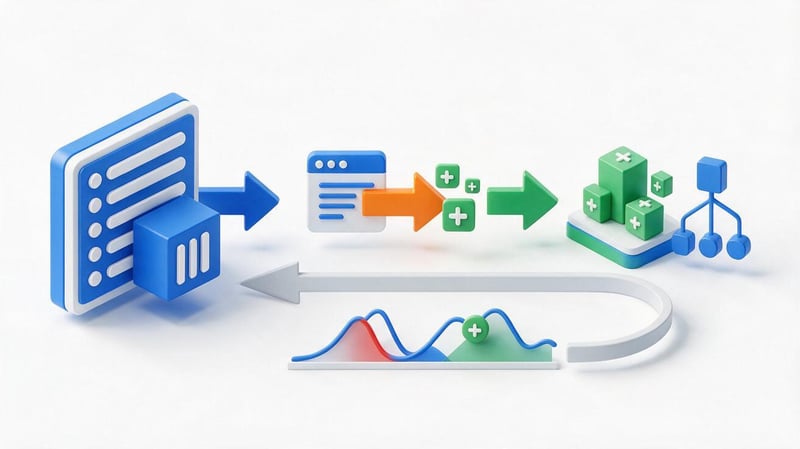
Semantic core optimization continues after the initial clustering. New queries appear in Search Console, the site expands its offerings, services change, and some topics begin to receive a different search result.
It's worth revising the core whenever there are significant changes in structure, the launch of new areas, or the emergence of cannibalization. A complete rebuild of the semantics based on the calendar is not necessary without reason, but it is useful to periodically compare critical sections with current demand.
Semantic website analysis also helps identify pages that are ranking for unexpected groups of queries. This data can be used to expand content, create new URLs, or adjust internal linking.
How much does it cost to compile and cluster a semantic core?
The cost depends on the website size, the number of queries, the number of languages and regions, the depth of competitor analysis, and the amount of manual verification. The core of a small service website and the semantics of a large online store require different amounts of time.
The cost is also affected by the need to build the structure from scratch, distribute queries across existing pages, and check for cannibalization. Therefore, the question of “how much does it cost to create a semantic core” is best assessed after determining the project scope and objectives.
When ordering a service, it's helpful to clarify in advance what the deliverables include: just a keyword list, ready-made clusters, search volume, URL map, site structure, or full page specifications. This scope of work is easier to compare between providers.
Clustering helps connect collected keywords to the actual structure of a website. To achieve high-quality results, it's important to consider the meaning of queries, search intent, region, page overlap in SERPs, and the type of documents Google displays to users.
The optimal workflow is sequential: collect semantics, clean it, determine intent, perform automatic grouping, manually check controversial clusters, and distribute groups by URL.
If you need to quickly sort the assembled core into thematic groups, you can use Seo-Gen's Keyword Clustering Tool. After the initial grouping, all you need to do is check for questionable queries in the search results and transfer the resulting clusters to the site structure, URL map, or content specification.


