Analysis and verification of the website's semantic core


A semantic core rarely remains relevant for long without revision. New pages and services appear on a website, search demand changes, some queries lose relevance, and Google begins showing pages of a different type for familiar keywords. Even a well-compiled semantic core may, after a few months, contain unnecessary phrases, omissions, and incorrectly distributed clusters.
Website semantic analysis helps identify such issues before they begin to hinder website performance. During the analysis, queries are compared with search results, website pages, Google Search Console data, search volume, and competitors. This helps determine which groups need to be retained, which need to be expanded, where a new landing page is needed, and which URLs are competing with each other.
What is a website semantic core analysis?
Semantic core analysis is an examination of the list of search queries, their grouping, and distribution across website pages. The specialist evaluates the relevance of keywords, their intent, search volume, geography, actual Google search results, and their compliance with the existing structure. This analysis is necessary for both new projects and sites that already receive organic traffic.
Checking a website's semantic core provides a more accurate picture than looking at a table of keywords alone. A query may appear to be worded appropriately, but the search results will reveal a different user scenario. For example, Google may rank articles for a phrase the website owner originally intended to target with a commercial service page.
How does semantic core analysis differ from its collection?
Semantic keyword research begins with identifying potential queries related to products, services, user problems, and business topics. This is done using marker queries, Google Keyword Planner, Serpstat, Ahrefs, Semrush, SE Ranking, search suggestions, and competitors' keywords. At this stage, the list is usually extensive and contains phrases of varying quality.
Semantic core analysis begins after receiving the initial list or is repeated for an existing project. Queries are checked for search intent, search volume, search results, target audience, and business relevance. Keyword grouping and URL mapping are then performed, and the pages suitable for promotion within each cluster are determined.
It's also important to check the semantic core after implementing it on the website. Google Search Console data may reveal that actual search queries differ from the initial forecast, and that individual pages are receiving impressions for unexpected keywords. This information is used to update the semantic core and adjust the structure.
What is checked during a semantic audit?
An audit of a website's semantic core covers the quality of the queries themselves and how they are used within the project's structure. The audit begins with relevance, but the work doesn't end there, as even appropriate keywords can be incorrectly combined or linked to inappropriate URLs.
Typically, the following parameters are considered during an audit:
- the completeness of the core and the presence of missed thematic areas that are already receiving search demand;
- compliance of requests with goods, services, geography and the actual target audience of the site;
- informational intent, commercial intent, transactional and navigational needs of users;
- frequency of queries, seasonality of demand, long-tail queries and low-frequency queries;
- the presence of obvious duplicates, similar word forms and groups with identical search results;
- the quality of query clustering and the relevance of each cluster to a specific search task;
- distribution of groups by existing URLs and the presence of pages that still need to be created;
- query cannibalization, when multiple documents from the same domain compete for the same semantics;
- website positions, impressions, clicks and CTR according to Google Search Console;
- Content Gap and Keyword Gap relative to real search competitors.
After such verification, the semantic core becomes a working map for SEO. It can be used to prepare meta tags, a content plan, a site structure, and internal linking, without having to return to the original, unprocessed list of queries each time.
Answers to your questions
What is semantic core analysis?
Semantic core analysis involves checking queries for relevance, intent, frequency, completeness, and correct grouping. Keyword research is also used to compare keywords with existing pages, search results, and actual ranking data.
This analysis reveals which groups are suitable for the site, where there are gaps, and which URLs require improvement. After verification, the core can be used for structure, content planning, meta tags, and internal linking.
How to check the semantic core of a website?
First, they collect existing queries and Google Search Console data, then check relevance, search volume, and search intent. After cleaning, they perform clustering, distribute groups by URL, and look for cannibalization or missing pages.
Additionally, the semantics are compared with competitors and current Google search results. This verification of the site's semantic core helps identify errors that cannot be detected by simply viewing a keyword table.
Is it possible to check a website's semantic core online for free?
You can partially check your website's semantic core online for free using Google Search Console, Keyword Planner, Google Trends, and manual SERP analysis. This is sufficient for a small project or an initial check of individual clusters.
Bulk competitor analysis, position history, Keyword Gap, and automatic clustering are usually more convenient in paid services. However, paid tools don't replace manual intent and relevance checking.
What errors can be found when checking the semantic core?
An audit helps identify irrelevant keywords, incorrect intent, semantic duplicates, missed queries, and clustering errors. It can also uncover pages that compete with each other or important groups without their own target URL.
Additional verification reveals outdated search volumes, incorrect geographic locations, and informational queries on commercial pages. The larger the project, the more these errors impact the structure and subsequent optimization.
How to check if queries are clustered correctly?
First, they compare the meaning of the queries, then check for overlaps between pages in search results. If Google regularly displays the same set of documents and the user intent matches, the keywords can usually be promoted on a single page.
If the results differ significantly, or one query has commercial intent while the other is informational, it's best to rethink the group. It's best to use automatic clustering as a basis, and manually check questionable clusters.
How do I know if a request requires a separate page?
A separate page is needed when a group of queries has a distinct intent and a separate content type is ranked for it in the search results. Additionally, they check whether the topic can be fully addressed on the existing URL without mixing different user tasks.
If the new page will almost completely duplicate an existing one, it's not worth creating it just for the sake of a different word form. First, compare the SERPs and the likelihood of cannibalization.
How often should a semantic core audit be performed?
It's advisable to conduct a review after significant website changes, the launch of new services, and noticeable changes in organic traffic. For actively developing projects, priority sections can be reviewed several times throughout the year.
It's easier to analyze a large website by category, rather than trying to completely recompile tens of thousands of queries each time. The frequency of these analyses depends on the rate of change in product range, demand, and search results.
Can ChatGPT be used to check the semantic core?
ChatGPT can be used for pre-classifying keywords, finding semantic relationships, grouping options, and processing large text lists. This approach speeds up the preparatory stage, especially when working with large numbers of similar phrases.
Search volume, rankings, SERPs, and competition should be supported by real SEO data. Final decisions on intent, clustering, and landing pages are best made after reviewing the search results and the structure of the specific website.
When is it necessary to check the semantic core?

Semantic core audits are not performed on a calendar basis, but rather when changes occur that could impact demand, structure, or ranking. A small, stable website can be audited less frequently, while an online store with a constantly changing product range requires regular analysis of individual categories.
There are several situations when a site audit is particularly useful. These include launching a promotion, changing the structure, introducing new services, a noticeable drop in organic traffic, and a site that has been running for a long time without updating its semantics. The depth of the audit will vary in each case, but the basic logic remains the same.
Before starting SEO promotion
Before optimization, it's advisable to check the website's semantic core, even if it was previously prepared by another specialist or contractor. An error at this stage quickly carries over to the Title, Description, H1, text, category structure, and internal links, after which it must be corrected at several levels simultaneously.
During the initial audit, we determine which queries are relevant to the business, which require separate pages, and which groups are best excluded. We also analyze search results, as similar words can lead users to different types of documents. This audit reduces the risk of creating landing pages without dedicated search intent.
After several months of promotion
After a few months, enough actual data is available to compare the forecast with the site's search performance. Google Search Console displays the queries that actually generate impressions, the site's current rankings, CTR, and the pages Google has selected for specific keywords.
If a page receives impressions for queries not in the initial core, they should be added and checked. If a single cluster consistently generates impressions for different URLs, it's worth investigating possible cannibalization. An analysis of site semantics based on real data is usually more accurate than initial assumptions made before launching the promotion.
After changing the site structure

New categories, filters, service areas, and sections change the distribution of search queries across pages. The old URL mapping may become invalid after such an update, so the site's semantic core is reviewed along with its structure and internal links.
Particular attention is paid to pages that have been merged, moved, or split into multiple new URLs. It's important to ensure that clusters have received new target pages, old URLs are processed correctly, and that similar documents don't target the same query sets. This check helps maintain accumulated search relevance.
When organic traffic drops
A drop in traffic isn't always related to the semantic core, so first, check the period, pages, and query groups for which the decline occurred. If the drop is concentrated in a specific section, analyzing the site's core helps identify changes in intent, the emergence of strong competitors, or the loss of relevance of individual URLs.
It's useful to compare old and current search results, rankings, and actual queries from Search Console. Sometimes Google begins to prefer a different page format, and sometimes two website pages gradually begin to compete with each other. Checking the semantics provides direction for further technical and content analysis.
When expanding your business
New services, products, cities, and language versions require their own semantics, even if a website already has a large core. Simply adding new words to an existing file creates the risk of mixing different intents and regions, especially when the project structure is already quite large.
For a new direction, they first collect marker queries and assess search demand, then compare competitors' semantics and SERP results. After clustering, the new groups are linked to the existing site architecture. If a suitable page isn't available, it's added to the development plan rather than distributing queries among random URLs.
How to check a website's semantic core step by step?
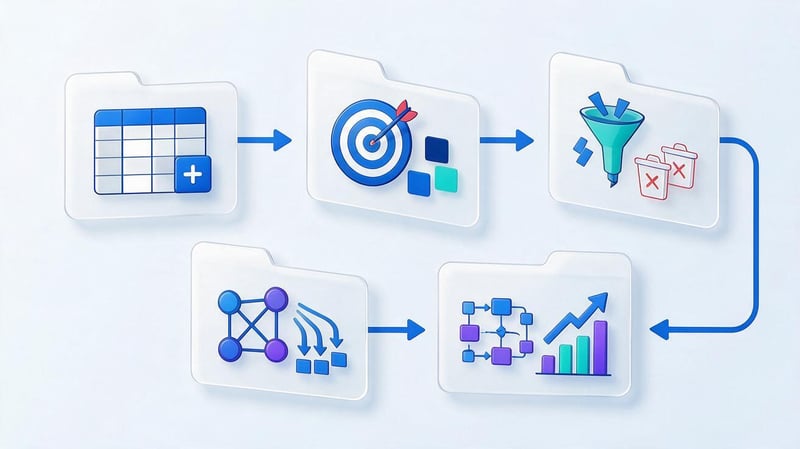
Verifying the semantic core is more conveniently done using a sequential algorithm, since a single review of keyword frequency or a list of keywords doesn't provide a comprehensive overview of the project's state. You should start with the source data, then move on to intent, cleaning, clustering, and matching groups to actual pages.
For a functioning website, it's useful to keep an audit trail in a common table that stores the query, search volume, intent, cluster, landing page, current position, and required action. This format helps prevent any identified issues from being lost and immediately transforms the analysis into a clear plan for further SEO work.
Step 1. Build a current semantic core
First, collect all queries already used in the project or linked to existing pages. If the old semantic core is still in the table, use it as a basis, but be sure to supplement it with actual data. Working solely with the old file is risky, as it doesn't contain queries that appeared after the start of promotion.
For a functioning website, the sources include Google Search Console, the position monitoring system, the current structure, meta tags, and previously prepared documents. Search Console is especially useful for finding keywords that are already generating impressions and clicks. Queries can be exported for each important page and compared to the clusters originally planned.
If semantics are scattered across multiple files, they are first combined and consolidated into a single structure. It's advisable to save the source and current target URL for each key. After this, semantic core analysis can be performed without constantly switching between different tables and services.
Step 2: Check the relevance of keywords
Each search query must be relevant to actual products, services, geography, and business opportunities. High search volume doesn't compensate for weak relevance, because a visitor with an unrelated need rarely completes the target action. Therefore, semantic keyword analysis begins with the question of whether a specific page can provide the user with the desired answer.
For example, a local clinic in Kyiv might receive a large list of search queries for a medical service without any specific city. However, phrases clearly related to other regions will require removal or a separate regional strategy. Similarly, an online store doesn't need queries for product categories it doesn't currently offer, nor does it plan to offer.
It's better to mark irrelevant phrases with a reason for exclusion rather than delete them without a trace. This approach is useful during a repeat audit and prevents the same queries from being reintroduced from another source. After cleaning, the core usually becomes smaller, but subsequent clustering is more accurate.
Step 3: Determine the search intent
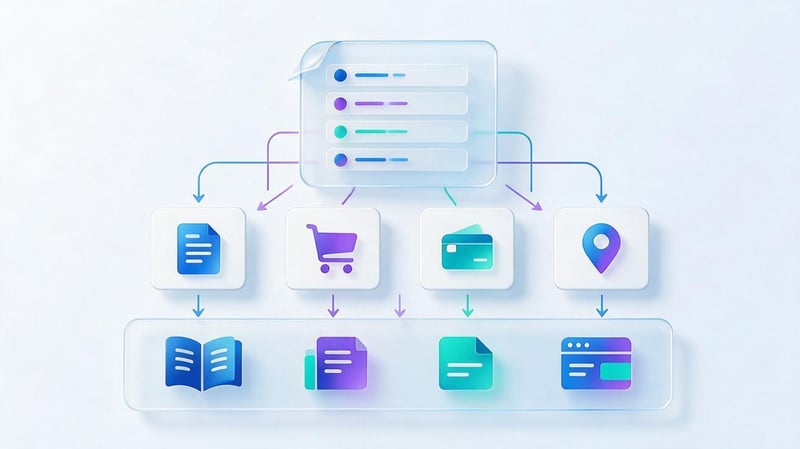
Search intent describes the task a user wants to accomplish after entering a query. One person is looking for a definition of a term, another is comparing options, and a third is ready to order a service or buy a product. If different intents are grouped together, the page will become blurred and will perform worse in search results.
Informational queries often lead to instructions, reviews, and articles, while commercial queries typically require service, category, or product pages. Transactional intent expresses a desire to take action, while navigational intent is associated with searching for a specific brand, company, or category. The boundaries between these types are determined by the actual SERP.
Why should you check intent directly in Google?
The query formulation provides a preliminary idea of the intent, but the final decision is best made after analyzing the search results. Google has already correlated the query with user behavior and the set of pages that most often match their expectations. Therefore, the SERP helps you see the actual format of competing content.
If the top ten results for a query are dominated by articles, and the company plans to promote a short service page, it's necessary to check the intent. Similarly, a large number of online store categories in the search results indicates a commercial nature. If the results are ambiguous, the query can be further verified using similar wording.
When analyzing, they look not at a single result, but at the overall pattern. They consider page types, headings, content, the presence of product cards, information blocks, and commercial elements. This type of SERP analysis helps to more accurately identify the target page and avoid accidental grouping.
You can't combine different intents just because of similar words
Lexical similarity between queries doesn't guarantee the same search intent. For example, the phrases “what is an SEO audit” and “order an SEO audit” contain the same concept but lead the user to different decision steps. The former would logically be explained in informational material, while the latter – on the service page.
The same problem arises when automatically grouping a large core. The algorithm may combine queries based on a common set of words, even though different types of documents are ranked for these words. Therefore, it's always useful to double-check the clustering results against the SERP, especially for commercially important groups.
If two queries require different pages, this is reflected in the relevance map. For each cluster, its intent, target URL, and role in the structure are recorded. Then, the content plan and internal linking are based on a clear logic, not on the coincidence of individual words.
Step 4: Check frequency and actual demand
Search volume helps assess relative demand, but it doesn't determine a query's value on its own. Low-frequency queries often more accurately describe user needs and can generate high-converting traffic. Therefore, when testing, search volume is considered alongside intent, topic, and commercial value.
Seasonality of demand is also checked separately. Some products and services enjoy consistent interest year-round, while others are dependent on the season, holidays, or external events. Google Trends helps compare the dynamics of several terms and identify periods of growth, although this service is no substitute for accurate frequency data.
Long-tail queries shouldn't be removed simply because they have small values. They expand thematic coverage and help more accurately address specific user needs. At the same time, dozens of nearly identical word forms can be combined within a single cluster if the search results support a common intent.
Step 5: Remove junk and irrelevant queries

After checking demand, they move on to clearing the core of keywords that shouldn't be used for further optimization. These include inappropriate cities, third-party services, random topics, incorrect values, and queries unrelated to the target audience. For commercial projects, they also check for informational keywords that were mistakenly included on sales pages.
Other brands are reviewed separately. Such queries are sometimes useful for comparative or informational content, but they cannot be automatically included in the commercial core. The decision is made based on the page's purpose, legislation, the actual value of the content, and the nature of Google's search results.
After cleaning, it's important to re-check the cluster distribution. Removing multiple queries can sometimes change cluster boundaries or make a particular page unnecessary. Therefore, it's best to remove unwanted keywords before finalizing the URL map, rather than after content preparation.
Step 6: Check for duplicates and word forms
Large exports often contain identical queries in different cases, altered endings, rearranged words, and very similar phrases. If each wording is treated as a separate topic, the site structure quickly expands, resulting in pages with identical meanings.
First, technical duplicates are removed, then semantic variants are compared. The queries “website semantic core analysis” and “semantic core website analysis” can refer to the same page if the SERP confirms a matching intent. Unnatural variants do not need to be inserted verbatim into the text for the sake of exact matching.
When working with word forms, we focus on normal language and search results. Google can link many word forms and related constructions, so the text should remain readable. The semantic core can be verified without artificially repeating phrases that the user would never write in a normal sentence.
Step 7: Perform query clustering
Query clustering groups keywords that can be promoted on the same page. A good cluster combines common intent and similar search results, so after grouping, the future site structure becomes clearer. For large keyword cores, automated services save time, but the final groups require manual verification.
Before clustering, it's advisable to remove junk, duplicates, and obviously irrelevant phrases. Otherwise, the algorithm will create groups around queries that will eventually have to be excluded. After automatic processing, commercial clusters are checked especially carefully, as errors in them impact landing pages and conversion rates.
Hard clustering
Hard clustering uses URL intersections in search results and applies stricter query grouping criteria. Keywords are grouped together if they are related through a sufficient number of common results. This approach is often suitable for structures that require clear separation of independent landing pages.
Strict clustering can create more distinct groups, especially in ambiguous topics. Therefore, the results are compared with the actual business architecture and the feasibility of creating a full-fledged page for each cluster. If the two groups differ only minimally and the SERP is unstable, it's best to manually verify the solution.
The hard approach is useful when a merging error could lead to the mixing of different services or product categories. It provides a technical basis, but does not replace an assessment of search intent. The final decision should take into account the content of the future page and the actual needs of users.
Soft clustering
Soft clustering allows for broader relationships between queries and forms groups with less strict matching of search results. It is suitable for informational materials and thematic sections, where a single detailed page can cover several related phrases without losing relevance.
After this distribution, it's necessary to check whether different intents have ended up in the same cluster. This is especially common with queries that share the same keywords but the user expects different actions. In such cases, it's best to use the automatic solution as a rough grouping.
The choice between hard and soft clustering depends on the project structure and the task. In practice, methods can be combined, with disputed groups being sorted out manually. The main goal remains the same: a single page should consistently address a common set of search queries.
Step 8: Distribute clusters by URL
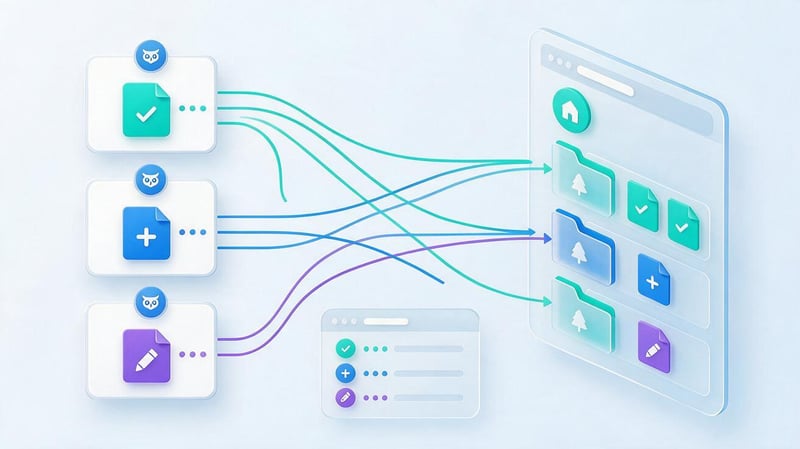
After grouping, each significant cluster is assigned a target page. This stage is often called URL mapping or relevance mapping. The table records queries, intent, the current URL, any need for improvement, and the page status so that the semantics are directly linked to the site structure.
An example of a working map might look like this:
| Cluster | Intent | Landing page | Action |
|---|---|---|---|
| semantic core analysis | informational | /blog/analiz-semantiki/ | finalize |
| order semantics collection | commercial | /services/semantic-core/ | optimize |
| query clustering | informational | /blog/klasterizaciya/ | create material |
| SEO website audit | commercial | /services/seo-audit/ | leave separate |
This table shows where a suitable URL already exists and where a new page is needed. It also helps spot situations where multiple documents are assigned to a single cluster. After assignment, it's worth checking internal links separately to ensure the anchors support the selected map.
It's best to store URL mapping along with the core semantics and update it after changes to the structure. This way, when creating new content, you can see which topics are already assigned to existing pages. This reduces the risk of duplicate content and accidental cannibalization.
Step 9: Find cannibalization
Cannibalization occurs when multiple pages on a single website compete for similar or identical queries without a clear division of intent. Google may periodically change the selected URL, causing rankings to become unstable. This situation is especially common for blogs with many similar articles and online stores with overlapping categories.
One sign can be seen in Google Search Console if different pages are returned for the same query. However, the mere presence of two URLs doesn't necessarily confirm a problem, as the pages may serve different purposes. It's important to compare rankings, search results, document content, internal links, and their purpose within the structure.
Once cannibalization is confirmed, an appropriate action is chosen: merge content, more clearly separate intents, rework meta tags, change internal linking, or remove unnecessary duplicate content with a proper redirect. The decision depends on the URL history, links, and current traffic, so there is no one-size-fits-all approach.
Step 10: Find the missing semantics

Even a large core rarely covers all current demand. New keywords appear in search suggestions, Search Console, and SEO service databases, while competitors gradually create pages on previously unexisting topics. Therefore, analyzing a website's semantic core includes a separate search for gaps.
For Content Gap, a domain is compared with several real competitors from organic search results. Ahrefs, Serpstat, Semrush, and other services help find keywords for which competitors are already ranking, but the site being tested isn't yet there. The resulting list can't be added automatically, as some queries may not be relevant to the product.
Google Search Console shows another type of gap. Sometimes a page already receives impressions for a useful query, even though this keyword isn't in the source table. It's worth adding such phrases, checking their SERPs, and deciding whether the current document needs further refinement or whether a separate piece is needed.
Step 11: Prioritize
After review, more tasks typically emerge than can be implemented simultaneously. Therefore, clusters and pages are prioritized based on the potential impact and complexity of the work. It's helpful to start with requests that are relevant to the business, already have visibility, and require relatively minor changes.
There are several factors that can be taken into account when making an assessment:
- current positions and impression volume according to Google Search Console;
- compliance of the request with the goods, services and commercial objectives of the company;
- search demand, seasonality and potential value of organic traffic;
- the availability of a suitable page and the extent of the required changes;
- competitiveness of search results and the quality of documents that are already in the TOP;
- risk of cannibalization and the impact of the problem on other pages in the section.
After assessing priorities, a schedule for implementation is established. First, pages in positions 5–20 can be refined, obvious URL overlaps can be corrected, and significant structural gaps can be addressed. More complex new sections are moved to a separate content and technical work plan.
A conditional priority schedule might look like this:
| Direction | Priority |
|---|---|
| Queries with positions 5–20 and a suitable URL | 100% |
| Confirmed cannibalization of important pages | 100% |
| Missing commercial clusters | 80% |
| New information topics | 60% |
| Low-frequency irrelevant directions | 20% |
This chart is used only as an example of logic, as actual priority is calculated based on site-specific data. For one project, the primary factor will be category revenue, while for another, it will be the volume of existing visibility or the cost of creating a new page.
How to check a website's semantic core online?

Checking a website's semantic core online involves several separate tasks, as a single service is insufficient for a comprehensive audit. Some tools provide actual website queries, while others show search volume, rankings, competitors, or search results overlap. Therefore, data is usually collected from multiple sources.
If the task is to “check a website's semantic core online”, you first need to determine what exactly needs to be checked. Google Search Console is suitable for assessing actual visibility, Keyword Planner for demand, and SEO services for competitive analysis. Clustering and intent are additionally checked using search results.
Free semantic core check
A partial online semantic core analysis of a website can be performed for free using Google data and manual work. This option is suitable for a small project or initial diagnostics when you need to identify key errors. For a large online store, manually checking thousands of queries quickly becomes too labor-intensive.
The free package may include Search Console, Keyword Planner, Google Trends, and regular search results. This is enough to find real queries, estimate demand, check seasonality, and compare intent. For mass keyword gap analysis, position history, and automatic clustering, specialized platforms are usually more convenient.
Google Search Console
Google Search Console displays actual queries for which website pages have already appeared in search results. Reports include impressions, clicks, CTR, and average position, and the data can be filtered by page, country, device, and time period. For a running project, this is one of the most valuable sources of semantic insights.
It's especially useful to look for queries with a high number of impressions and rankings between fifth and twentieth. The page already has a certain relevance, so you can check it for completeness of topic coverage, meta tags, and internal links. It's also worth looking for keywords that trigger Google to show an unexpected URL.
Search Console doesn't provide a comprehensive market overview and doesn't replace competitor analysis. The service reflects Google's interactions with your website specifically, so its data is best combined with external keyword databases and manual SERP analysis.
Google Keyword Planner
Google Keyword Planner helps you find keyword ideas and evaluate search demand. It's convenient for expanding keywords, comparing wording, and conducting initial analysis of new directions. When reviewing an old core, you can see which phrases have lost their relevance or have more popular variations.
Keyword Planner data was created primarily for advertising purposes, so SEO specialists need to consider the specifics of displaying ranges and grouping queries. The values should not be taken as an exact forecast of future organic traffic. Search volume is used as one of the criteria, along with intent and actual search results.
For a small website, Keyword Planner often covers basic tasks without additional charges. When analyzing thousands of keywords, bulk processing of competitors, or detailed demand history is required, it's more convenient to use specialized services.
Google Trends
Google Trends shows changes in interest in a topic over time and helps compare multiple phrases. It's useful in niches with pronounced seasonality, where a consistent monthly average can mask a sharp increase in demand in specific months. The service also helps identify long-term declines or developments in a topic.
Trends data is presented as relative values, so it can't be used as an exact measure of search volume. However, it complements Keyword Planner and website statistics well. A semantic audit can help you determine whether a decline in impressions is related to the page itself or whether interest in the topic has declined in the market.
For seasonal categories, it's advisable to conduct such a check before drawing conclusions about SEO results. Comparing several years helps distinguish between a normal seasonal cycle and a real loss of visibility.
Paid semantic analysis services

Paid SEO platforms speed up work with large data sets and competitors. Serpstat, Ahrefs, Semrush, and SE Ranking contain keyword databases, ranking data, related queries, and domains from search results. The range of features varies, so the service is selected based on the specific needs of the project.
When auditing through such platforms, the following is usually checked:
- keys for which the domain and individual pages are already in organic search results;
- competitors' semantics and query groups that are not present on the website being checked;
- dynamics of positions for priority keywords and sections;
- related query options to extend existing clusters;
- search competitors that actually intersect with the site in SERP;
- queries and pages that can complement the future content plan.
The obtained data must be filtered, as the database of any third-party service contains errors and doesn't fully understand the constraints of a specific business. A keyword from Ahrefs or Serpstat is first checked for relevance, then compared with the SERP, and only then added to the working core.
The cost of a tool alone does not determine the quality of an audit. One service may provide more initial data, but the decision on the structure and distribution of clusters is still made after project analysis.
Is it possible to automatically check the semantic core?
Automation is effective at processing large tables, removing technical duplicates, extracting search volumes, and performing preliminary clustering. Some services also determine intent, find similar keywords, and compare the semantics of multiple domains. This significantly reduces the amount of manual work.
Leaving the decision entirely to an algorithm is risky because the service doesn't understand all the product's specifics, structure, and business plans. An automated group might combine two areas with different business logic or suggest a request that's technically relevant but doesn't align with the company's services.
AI can be used for preliminary classification, synonym search, and processing of large lists. A specialist then checks key groups against actual SEO data and search results. Commercial pages, regional semantics, and controversial clusters are given special attention.
How to analyze the semantics of an existing website?

A functioning website provides data that's missing during the initial core collection stage. Therefore, it's best to start the audit with actual impressions and pages, then incorporate external databases and competitor analysis. This approach helps focus on queries that Google already associates with the domain.
It's useful to check a website's semantic core both for the entire project and for individual sections. For a large store or portal, the latter option is usually more convenient, as thousands of URLs are difficult to analyze accurately in a single pass. First, select a priority segment, then repeat the process for the remaining categories.
Compare the core with Google Search Console
Extract queries from Google Search Console over a sufficiently long period and compare them with the current semantic core. Separately mark keywords that aren't in the spreadsheet but are already receiving significant impressions. They may suggest new subtopics or show that an existing page covers a topic more broadly than originally planned.
It's useful to identify queries with positions 5-20, high impressions, and low CTR. After that, check the snippet, the page's relevance to the intent, and the completeness of the content. If the URL is suitable for the user, a small tweak can yield results faster than creating a completely new document.
Also, compare the pages Google selects for the same query. If they change frequently, conduct an additional check for cannibalization and internal linking. Sometimes, the problem can be solved by clearly distributing semantics between existing URLs.
Compare queries to existing pages
For each priority cluster, a target page must be identified that actually matches the queries. If such a URL does not exist, the group is marked for creation of a new page. If there are multiple matching documents, it is necessary to determine whether their intents differ or whether there is unnecessary overlap.
They check the Title, H1, content, internal links, and the page's role in the site architecture. Sometimes, semantics are distributed correctly in the old table, but after updating templates or content, the actual page no longer covers the intended topic. Therefore, it's advisable to conduct a core audit in conjunction with a basic on-page analysis.
The results are conveniently recorded in the “keep”, “revise”, “merge”, “create”, and “delete” columns. This turns the semantic core review into a list of specific tasks for the SEO specialist, developer, and copywriter.
Compare semantics with competitors
For comparison, we select websites that regularly rank alongside the project in search results, not just those of well-known market players. A business competitor and a search competitor may differ, as an information portal sometimes ranks for the same queries as a commercial website.
Using Keyword Gap or a similar report, they identify keywords that competitors use to gain visibility, while the domain being tested is missing. The list is then purged of third-party brands, irrelevant services, and topics with inappropriate intent. The remaining keywords are then distributed across current or future pages.
Copying a competitor's structure entirely is not recommended, as their product range, geography, and business model may differ. Competitive analysis is necessary to identify gaps and search results patterns, and the final decision is made based on your own project.
Lead SEO specialist — Gennady
When auditing, I don't evaluate the semantic core by the number of queries. First, I check whether each cluster matches the search intent and whether the site has a corresponding page. Then, I check whether multiple URLs are competing for the same queries. In projects, removing irrelevant keywords and properly reorganizing groups often yields more benefits than mechanically expanding the file with thousands of new phrases.
Common mistakes when checking the semantic core

Most problems arise not from a lack of SEO services, but from misinterpreting data. It's possible to collect tens of thousands of keywords and end up with an inconvenient core if you don't consider the site's intent, structure, and actual capabilities. Therefore, the quality of the audit depends on the consistency of the decisions.
Errors that scale across hundreds of pages are especially dangerous. Incorrect clustering affects the structure, meta tags, and content, while mixed intents lead to documents without a clear search intent. It's best to detect such issues before mass deployment.
Focus only on frequency
A high-volume search query can attract a large audience that doesn't match the product or purchase stage. If keywords are chosen solely based on search volume, a commercial page quickly becomes overwhelmed by a wide range of keywords with varying user expectations.
Search volume should be considered in conjunction with intent, current rankings, competition, and traffic value. Sometimes, several specific, low-frequency keywords generate more targeted inquiries for a business than a single, broad information keyword. This difference is especially noticeable in complex services and B2B.
Seasonality and geography are also considered during the analysis. A high value for the entire country may be practically meaningless for a local business operating only in one city.
Ignore search intent
Queries with similar words may require different pages, so mechanically combining them often creates problems even at the structure stage. A user looking for instructions expects different content than someone already choosing a contractor or product.
To verify intent, look at the types of documents in search results, their content, and commercial elements. If the SERP clearly distinguishes between two groups of queries, it's better to build the core with the same user task in mind. Lexical similarity in this case remains a secondary factor.
Intent should be reconsidered whenever search results change significantly. Google may interpret a query differently over time, especially in rapidly changing topics.
Create a separate page for each formulation
Trying to create a separate URL for each word form results in a large number of nearly identical documents. They begin to compete with each other, resulting in weak content and complicating internal linking. For the user, such a structure also appears redundant.
Before creating a page, the SERPs for several queries are compared and checked to see if they can be covered by a single piece of content. If the set of ranking documents and the intent are the same, the phrases are more likely to belong to the same cluster. Different endings and word order do not, in themselves, require new URLs.
The depth of the structure should correspond to the topic's independence. A new page appears when it has a distinct search query and sufficient content to fully answer it.
Mix informational and commercial requests

Informational content helps clarify the issue, while a sales page should outline the terms, features, price, benefits, and the ability to complete the target action. When both scenarios are inappropriately mixed on a single URL, the page may underperform in both scenarios.
For example, the query “how to check a website's semantic core” would logically be expanded into detailed instructions. The phrase “order semantic core compilation” is focused on service selection and requires a different structure. They can be linked with internal links, but don't necessarily need to be promoted on the same page.
When in doubt, a decision is made after a SERP analysis. If Google consistently shows different page types, this is a strong argument for separating the clusters.
Don't analyze Google's actual search results
Services speed up data collection, but a keyword database doesn't provide the full context of search results. A search page helps you see the format of content, the type of intent, competitors, additional SERP elements, and the degree of similarity between multiple queries.
Manual verification is especially necessary for priority clusters and controversial decisions. There's no need to open the search results for every single one of the tens of thousands of keywords, but key groups that influence the architecture are worth examining separately.
Also consider the region and language of the search. Results for the same keyword can vary significantly between countries and language versions of the site, so semantics shouldn't be automatically transferred between locales.
Do not update semantics
The semantic core captures the state of demand at a specific point in time, so after several years without verification, it inevitably accumulates outdated data. Products, user terminology, competitors, and the structure of search results change. A functioning website also acquires its own statistics.
Updating your semantics doesn't mean completely rebuilding them every month. For a stable project, it's sufficient to regularly review priority sections and conduct a more in-depth audit after significant changes. The frequency depends on the site's scale and the pace of change in the niche.
A good guideline is to analyze semantics when launching a new direction, after restructuring a section, and when there is a noticeable change in organic traffic.
Trust AI or automated clustering completely
AI is convenient for pre-categorizing large lists, finding thematic links, and preparing classification options. Automatic processing reduces time, especially when the source semantics contain tens of thousands of rows.
However, the model doesn't see the actual search results without the relevant data and may make mistakes about business relevance. Even correctly recognizing the meaning of a query doesn't guarantee that Google will combine it with adjacent keywords on the same page.
It's advisable to confirm the final clustering using SERPs, and take search volume and rankings from specialized sources. AI remains an auxiliary stage of analysis, not a source of metrics.
What should be the outcome of a semantic core audit?

The audit results in a working data structure that can be used to plan further optimization. It contains cleaned keywords, intents, clusters, search volumes, target URLs, and specific actions. This file should be understandable to anyone who wasn't involved in the initial semantic data collection.
Additionally, a list of problems and growth areas is compiled. This includes missed pages, cannibalization, content gaps, groups for expansion, and queries that are already close to the top. If the audit is conducted before a website redesign, the map is used as the basis for the future architecture.
A typical result can be presented in the table:
| Problem | How to detect | What to do |
|---|---|---|
| Irrelevant keywords | Check your business and SERPs | Exclude from the working core |
| Different intents in the group | Compare Google search results | Split the cluster |
| Multiple URLs in one cluster | Search Console and positions | Check for cannibalization |
| There is no page for important demand | URL Mapping | Create a target URL |
| Missed requests | Content Gap and Search Console | Expand the core |
| Obsolete groups | Demand, SERP, structure | Update or delete |
After corrections, the core can be linked to the content plan, meta tags, and internal linking. For new pages, the main cluster and related topics are determined in advance, and for existing pages, the scope of necessary changes is determined.
This format is also convenient for monitoring implementation. The SEO specialist sees what has already been corrected, the copywriter receives specific semantics, and the developer understands where page creation, merging, or redirection is needed.
How often should the semantic core be checked?
There's no single interval for all websites, as the pace of change depends heavily on the niche and scale of the project. A small corporate website with a stable set of services can get by with a scheduled review several times a year, while a marketplace or large store requires ongoing work on individual categories.
It's advisable to conduct a review after changes to the structure, the launch of new services, the addition of regions, and a noticeable drop in organic traffic. These events directly impact query distribution and can quickly render an old relevance map inaccurate.
For large projects, it's convenient to audit semantics in stages. Commercially important categories are analyzed first, followed by information clusters and lower-priority sections. This approach allows for immediate implementation of fixes, without waiting for the entire domain to be audited.
If your site is actively developing, it's helpful to regularly compare your core keywords with Search Console and your competitors. This helps you identify new queries before gaps become visible in overall traffic.
Semantic core analysis helps verify whether search demand matches the actual site structure and whether keywords are distributed correctly across pages. The audit examines intent, search volume, clusters, positions, competitors, Search Console, cannibalization, and missed topics.
A high-quality core doesn't necessarily need to contain the maximum number of keywords. For promotion, a clear structure is more useful, where each significant cluster is linked to a relevant URL, and queries correspond to real products, services, and user needs.
If the semantic core was compiled a long time ago, the site structure has changed, or several pages compete for the same keywords, start with an audit of the priority section. Seo-Gen will analyze the site's semantic core, identify overlaps and missed clusters, and prepare recommendations for further SEO optimization.


